Thursday, October 12, 2006

But, What If They're Right Steve?


Stephen Harper has no plan to address global warming. He doesn't even intend to deal with it. His shuck'n jive act yesterday in Vancouver made that pretty obvious. Oh sure, he's going to deal with global warming, he's going to tackle greenhouse gas emissions - he's going to get around to that, uh, well, sometime.

Of course this is the same clown who continues to quietly undermine the scientific community by backing global warming deniers and making vague references to how the science is "still evolving" on this threat. Little Stevie says he might be able to find better ways to solve the problem. Yeah, like what? Maybe, just maybe, if he does nothing it will simply go away.

What if he's wrong? What if the scientific community is right? What if The Royal Society and guys like Dr. James Lovelock actually do understand what they've been studying for decades while Stevie was busy learning to count beans? What if the coal and oil lobby is waging a war against the environmental science community so that it's industry can steamroller ahead despite the probable consequences? What if?

Imagine if a dozen fire inspectors came through your home and eleven of them pointed out what they claimed to be severe fire hazards. Would you let your kids sleep there and just ignore the warnings or would you fix the problems that have been pointed out to you? Would you tell yourself that it's just the opinion of only eleven out of twelve so there's no need to do anything yet? You might, but only if you were a complete idiot.

The science is in. The warnings have been given, the risks clearly stated. The industrial nations have to deal with this.

Harper, like his friends in the fossil fuel industry (which includes the premier and cabinet of Alberta), like to take swipes at the Kyoto accord. They create an illusion that Kyoto is an end unto itself and then point out that, because it doesn't include India and China, it's pointless. They also argue that global warming will continue even if the Kyoto targets were met.

Let's get the facts straight. Kyoto was never intended to solve global warming. It was more like teaching us to ride a bike without training wheels. You have to learn to ride halfway down the block before you can ride that bike all the way to school. Kyoto is to get us to change our outlook on this danger. It's a way to show us that we can tackle greenhouse gas emissions without our societies collapsing and to show us what is possible. Kyoto is a way to show the developing nations that the already developed nations are willing to lead the way and that they should join us.

Kyoto is not the answer. It just points to the answer.

What is the downside of taking action to address global warming, to cut back our emissions of greenhouse gases? We get told all manner of dire consequences will befall us, just so long as you define "us" as the fossil fuel industry and its friends. Compare that with the downside of doing nothing if the scientific concensus is right.

In whose interests is it to postpone or simply avoid measures to combat greenhouse gas emissions? Is it in your interests, or your children's or your neighbours'? No, of course not. It is, however, very much in the interests of the major greenhouse gas producers and, when it comes to them, there's no bunch quite like the oil sands companies. While Stephen Harper is prime minister, he'll make sure that they win, you lose.

If there's one thing Stephen Harper has shown us it's that he's no "Mr. Dithers." When he wants to act, he acts. He acts even when he hasn't got the country behind him. He doesn't let principles or rights stand in his way. That's why it's so easy to see right through his environmental blather this week.

Canada produces the dirtiest oil on the planet. The Athabaska tar sands are an environmental nightmare because they produce about as much pollution getting the gunk out of the ground and turning it into SUV juice as will be produced when it's burned in some American parade float. Look at that equation for a minute: Americans get the fuel, their oil companies get the profits, the Alberta government gets a little taste of the action and Canada and the world get the awful pollution left behind. That sounds fair, doesn't it?

Alberta is insistent that it's fossil fuel revenues not be included for the purpose of the provincial equalization calculations. Well, if the oil is Alberta's and the boon from that oil is exclusively Alberta's, why don't we in the rest of Canada insist that, fair is fair, and the pollution ought to be entirely Alberta's responsibility? What's wrong with telling Alberta that, if it wants to export this stuff, it first must solve the land, water and air pollution fallout from the tar sands development? Solve it as in end it. Let's demand Kyoto level greenhouse gas limits from Alberta. They've certainly got the money to pay for it. Why should they be allowed to line their pockets and leave their environmental mess to everyone else?

We can't let Little Stevie get away with this one. We just can't. If the scientific community is right, the clock is ticking and we have a matter of years, not decades, to take meaningful action to curb greenhouse gas emissions.

Wednesday, October 11, 2006

Not A Clue

Two months ago today I e-mailed the Department of National Defence in Ottawa with three, simple questions:

1. What are the estimates of the strength of insurgents in Kandahar province?
2. Is it known how many of these are Taliban and how many al-Qaeda?
3. How is the insurgency organized and how does it operate in Canada's region of control?

Here's the reply that arrived today from Paul Villeneuve at NDHQ:

"Unfortunately we have no information available concerning the Taliban and al-Qaeda's organization or numbers."

Say what? This isn't 'secret' information. The bad guys already know their numbers and organization and I'll bet they know that we know too.

This is something we're going to have to keep an eye on because, in neighbouring Helmand province, a tight lid is being kept on what the military can reveal to the British public, not by the military for security reasons, but by the Blair administration for political reasons.

British TV crews are being kept out of the action in Helmand, journalists being restricted to military briefings at headquarters in Kandahar. What video does come out is either from the Ministry of Defence or from soldiers' cell phone cameras that is fed out surreptitiously.

As The Guardian's Alex Thomson puts it:

"The politicians appear to have concluded that the media are welcome to come along for the ride when things are fine and effectively put out good PR videos - but if it all goes a bit rum then we can just get lost."

We all know that the Harper government is no booster of free and open journalism. It controls the message very narrowly, very tightly. Lately there have been signs that our media is beginning to get as cowed as their colleagues in the U.S. and that's very dangerous for our democracy.

It's Time to Cut and Run


In recent years there have been no more hackneyed and discredited terms than "cut and run" and "stay the course." They've been used, quite disgracefully, by the American administration and their cronies to butress gross incompetence bordering on criminal negligence by impugning the patriotism and motives of their critics. Anyone notice how Harper and MacKay slipped so seamlessly into this same nonsense?

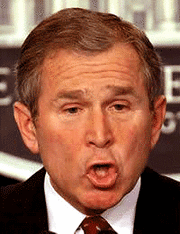
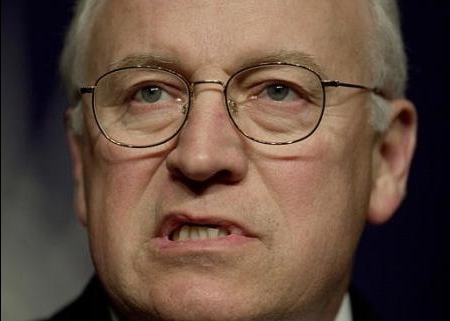
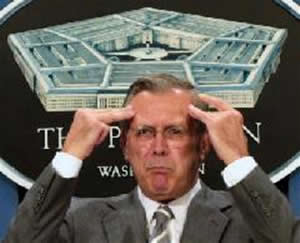
Iraq and Afghanistan are and may be doomed to remain "failed states" but a lot of the blame for that lies squarely with the failed leadership of Bush, Cheney, Rumsfeld and Rice. They've shown the world, with breathtaking clarity, that the greatest military might on the planet can be ground down and broken by incompetent political leadership.


We need to cut and run, not from Islamic terrorism, but from the American executive. They have amassed a record of persistent failure over the past six years. They failed to prevent the 9/11 attacks. They didn't even try. They failed to exterminate bin Laden's al-Qaeda and the Taliban when they had them on the ropes in 2001. They failed to support the Karzai government when it most needed their help. They failed to quash the warlords and drug lords who, quite independent of the Taliban, destabilize the Karzai government. They invaded Iraq but failed to win the peace in the wake of the ouster of Saddam Hussein. They couldn't be bothered. They failed to salvage a Palestinian state by forcing Israel back to its pre-1967 borders (there is no other solution, we all know it). They failed to uphold the integrity of western democracy by creating secret prisons, imprisonment without arrest, charge or trial and resort to torture.


This president, this vice-president, this defence secretary, this secretary of state - they're all utter and complete failures. Despite that, they expect the free world to follow them. The time has long passed to "stay the course." That course is set by a bunch of people with no vision, who can neither navigate nor steer. Their course puts us up on the rocks every time.


It's time to "cut and run". We need to cut ourselves free of this failed leadership. We need to run in a new direction and run hard because we have so much wasted time to make up. We need to tell Bush/Cheney that they've had their chances, plenty of them, and we just can't afford to keep failing. We don't have the luxury of tolerating another two years of their bungling.

We need true statesmen with vision who can give us a new course. Unfortunately we don't have anyone of that measure in our government so we will have to look to Europe.

We can't run away from Islamic terrorism. Bush/Cheney have so stoked the fires of radical Islam that turning our backs on the problem is not an option. We know they can't be defeated by force of arms so we might as well stop beating our heads against the brick wall of reality. There will always be an essential military role in defusing this threat but it can only be a small part of a much greater effort.

A good first step is to start to listen to the "Arab street." There is a lot of discontent among the Islamic peoples, particularly in the Middle East. While only a tiny minority of them become terrorists or jihadists, it is their discontent, their legitimate grievances that serve as the essential fuel for terrorism.

We need an honest examination of what we in the west have contributed to this unrest. Let's look at the tyrants we have propped up - from Mubarak in Egypt to the House of Saud to Saddam Hussein himself - not to help their people but to secure our supply of their oil. We need to recognize how our often unbalanced support for Israel has created such an enormous rallying force for Islamic extremism.

We have to stop treating these people as though they're some species of bloodthirsty subhumans. They need to know that we're going to fully respect their culture, their religion and their social values in our dealings with their nations. They need to know that, until they have democratically formed whatever sort of government they choose, we will support the individual over the state and abandon our policy of supporting undemocratic government suppression of the individual.

We need to drive a wedge between the Islamic peoples and the Islamic terrorists. That may seem an impossible goal but I believe it can be done if we're willing to go forward with the necessary degree of commitment, honesty and good faith.

We simply have to stop failing.

Tuesday, October 10, 2006

Here's an Exit Strategy - Phased Withdrawal

There has been a lot of talk in Washington about a policy of "phased withdrawal" to extricate American forces from Iraq. The idea, as I understand it, is to hand increasing responsibility for security over to the Iraqi government while withdrawing American troops in phases. That idea upsets the "stay the course" brigade in the White House and it does have its shortcomings - in Iraq.

Phased withdrawal might not be workable for Iraq but why don't we try it in Afghanistan? My thinking is based on the "you break it, you own it" theory. NATO forces are over there battling an almost impossible situation that has to be blamed, in large part, on the Bush administration's deliberate choice to neglect the Afghan war so it could conquer Iraq. There have been very real consequences to that decision which begs the question of why NATO troops should bear the brunt of it?

NATO went in to Afghanistan to free up American forces for their Iraq adventure. Fair enough. That doesn't mean that America shouldn't be expected to get out of Iraq and come back to Afghanistan to again take over its very own Global War Without End on Terror.

It was American intervention that toppled the Taliban. It was America that placed Hamid Karzai in charge of the place. It was America that had the Taliban and al-Qaeda on the run in the mountains of Tora Bora and it was America that botched the whole thing up by not finishing the job in order to go after Saddam Hussein. It is America that should take responsibility for cleaning up its own mess in Afghanistan. That's mess is neither NATO's doing nor should it be the alliance's burden.

There are any number of places where NATO's forces could be put to much better use to alleviate suffering and end oppression, places like Darfur. We could actually be saving lives and rescuing innocents - even if they are black and have no oil. What will be the price of staying in Afghanistan? Stuck in that quagmire, what unfortunates will have to pay that price?

My God, has it really come to this? Is this what it means to be warriors in George Bush's delusional adventures?

No, it's time to tell George we have better things to do and we're getting out. He made the mess, let him clean it up. Give him a timetable of phased withdrawal and let him take responsibility for his actions.

This is Why the Guy Creeps Me Out

Last month the Ottawa bureau chief of the Toronto Star set out to analyze Stephen Harper's truly irritating style of governing. See if you agree with this:

"Eight months into his tenure as Prime Minister, and now, as the fall political season is grinding into gear after the Labour Day weekend, it is possible to identify some of the defining characteristics of Harper's leadership style — beyond the spare descriptions of "bold" or "decisive" management.

Here are some other techniques from the Harper playbook, which may prove a useful guide to understanding his public strategies in the weeks and months ahead:

Declare victory, even if the problem isn't solved.

Harper has yet to implement one concrete solution to resolve the so-called "fiscal imbalance" between Ottawa and the provinces. He's not even planning to hold a meeting on the issue before the end of the year. But, somehow, it is now being called the "fiscal balance." Problem solved.
The same is true with the long-running softwood dispute with the United States. As far back as March, when Harper sat down with U.S. President George W. Bush, he was starting to refer to the dispute in the past tense. The deal with the United States was announced before it was complete; the victory was repeatedly being hailed even as Ottawa was still negotiating with the lumber industry over whether the terms would be accepted.

Harper, as a student of history, knows that prime ministers often get caught up in long-running, intractable disputes, national unity being chief among them. He seems to have decided it's better to just declare the problem solved and label the leftover, outstanding issues as mere housekeeping.

It's not clear if this could work with the Quebec separatism drama, but Harper may try the approach.


Surround yourself with symbols and props.

Harper pays more attention to the staging of his events than any other prime minister in recent memory. He needs flags, podiums, the backdrop of the Commons doors, even cabinet ministers, whom he often forgets to introduce.

In the world of professional speechmaking, these are called "visual aids" and they are used to reinforce his authority. Leesa Barnes, the award-winning president of Toronto's Business Toastmasters club, which helps business leaders with public speaking, says: "I think he uses those props in order to feel comfortable on that stage."

The props, in other words, serve the purpose of distracting from Harper's body language, which is generally neither comfortable nor friendly. Barnes finds Harper actually a very good public speaker, with no "uhs" or "ums" punctuating his message. "He comes across as very honest," and also seems to know what he's talking about, she says.

Slogans are also part of the prop-filled mix. This is not simply the government, but "Canada's New Government," and that phrase is plastered over almost every issuance from Harper's PMO.


Keep the opposition divided.

By now, Harper's fixation on the Liberals is well established. He wastes no opportunity to present the Liberals as divided and, when he can, drive further wedges into their caucus, as he did with last spring's vote in the Commons on extending the mission in Afghanistan.
This is, in part, a lesson Harper learned from his own time in opposition, when prime minister Jean Chrétien reaped enormous political benefit from an opposition fractured among four parties.

The presence of 10 candidates in the Liberal leadership race also serves Harper's interests, as does any squabbling between the Liberals and New Democrats. If there is any way he can feed those divisions, he will.


It is not a lie if you tell it to the media.

Believe it or not, a senior Ottawa journalist was told this several years ago by one of Harper's chief advisers and confidants.

He hasn't said outright whether he shares this sentiment, but Harper evidently does not believe reporters can or will hold him accountable for shifting stories and positions.

One of his first blatant mistruths concerned the subject of his plans for a trip to Afghanistan — his first foreign foray. Some reporters in Kandahar had seen prime ministerial advance officials in late February, scouting out the terrain for a Harper trip. Some defence officials as well had inadvertently discussed the prospect in a briefing with Canadian Press journalists around the same time.

But Harper, talking to the media on March 1 after these reports surfaced, actually went out of his way to lead the media astray. Asked a general question about Afghanistan, he began his remarks this way: "Let me just say I do actually occasionally read the papers and, according to those papers, I've been to and from Afghanistan several times in the last couple of weeks. I don't have any plans to go there."

In fact, he did have plans to go there — plans he was making in February, as he subsequently told reporters who travelled with him to Afghanistan less than two weeks after that press conference. (There are times when for national security reasons, the media are indeed kept in the dark.)


Retreat, but never admit retreat.

This was a classic Chrétien strategy, which Harper has obviously borrowed. Its corollary is: "Learn from your mistakes but don't publicly acknowledge them."

His decision to ban media coverage of fallen soldiers returning to Canada sparked huge controversy, for example, so Harper subsequently declared that the ban was instituted at the request of families. When some of the families said they hadn't been consulted, Harper then said the ban didn't exist. At no point did he acknowledge that he'd reversed his position.

The disappearance of the medical wait-times guarantee from Harper's five-priorities list is another reversal that hasn't been spun that way. Now Health Minister Tony Clement is calling the guarantee a "process," not an end in itself.


Speak French first.

It was only a matter of weeks into Harper's prime ministership when everyone started to notice he always begins his public statements in French.

Harper has subsequently been asked about his French-first policy. He told La Presse and an Alberta radio interviewer that there are a number of reasons: French is Canada's first national language, he says, but the discipline of speaking it first helps him collect his thoughts.

"I have to think much more carefully, in a much more structured sense about what I'm going to say and how I'm going to answer questions. It actually helps me in a press conference, to do it that way," he explained to Dave Rutherford.

It doesn't hurt politically either in his continuing bid to woo Quebec.


If you want to avoid a course of action, challenge your opponents to provoke it.

Harper has only a minority government. On average, minorities don't last much longer than a year and a half in Canada. Earlier this year, Harper declared that he wouldn't call an election until October of 2009 — a full three years from now; basically, a majority-length term in office.
In declaring this, Harper was laying the groundwork to shame the Liberals and other opposition parties into postponing defeat of his government. He is banking on the Liberals wanting to avoid any negative media they might receive for provoking an election earlier than anticipated.

Former prime minister Paul Martin recently believed the same thing, however — that Canadians would punish any political parties who provoked a snap, winter election late in 2005. Martin is not prime minister any more.


Don't look to be liked, seek respect.

Harper is one of the most unsocial prime ministers since Pierre Trudeau. He doesn't try to radiate warmth or charm or likeability. At a recent 60th birthday party for his former communications director, the well-liked Tory consultant Geoff Norquay, video tributes were sent by former prime ministers Martin, Brian Mulroney and Joe Clark, as well as Quebec Premier Jean Charest. Harper refused repeated offers to send any message at all to the large Tory gathering.

As the once-Liberal, now-Conservative cabinet minister David Emerson observed to an ex-staffer earlier this year, Harper's interpersonal style is best described as "hard ass." His approach is disciplined and disciplinary, as is evident from the extreme fear that he's generated among potentially talkative cabinet ministers.

Short-term, this strategy has worked.

All of his signature traits, in fact, have had some significant short-term effectiveness. The question is whether they can work over the long term and help him secure the majority government he's bent on obtaining."

The Harperites and the U.S. Christian Right

If you're concerned about Stephen Harper's connections with the extreme right in the U.S., visit this link:

http://dawn.thot.net/harperstiestousa/

This is a well-researched and documented study of just how far the Harperites are engaged with some disturbing organizations.

A Blast From The Past - Trivia Fun

Okay folks, here are a couple of passages from a speech. This one is for the car and the Hawaiian holiday (in your dreams). Who said this?

"The way chosen by the United States was plainly marked by a few clear precepts, which govern its conduct in world affairs.

"First: No people on earth can be held, as a people, to be enemy, for all humanity shares the common hunger for peace and fellowship and justice.

"Second: No nation's security and well-being can be lastingly achieved in isolation but only in effective cooperation with fellow-nations.

"Third: Any nation's right to form of government and an economic system of its own choosing is inalienable.

"Fourth: Any nation's attempt to dictate to other nations their form of government is indefensible.

"And fifth: A nation's hope of lasting peace cannot be firmly based upon any race in armaments but rather upon just relations and honest understanding with all other nations."

And continued:

"The worst to be feared and the best to be expected can be simply stated.

"The worst is atomic war.

"The best would be this: a life of perpetual fear and tension; a burden of arms draining the wealth and the labor of all peoples; a wasting of strength that defies the American system or the Soviet system or any system to achieve true abundance and happiness for the peoples of this earth.

"Every gun that is made, every warship launched, every rocket fired signifies, in the final sense, a theft from those who hunger and are not fed, those who are cold and are not clothed.

"This world in arms is not spending money alone.

"It is spending the sweat of its laborers, the genius of its scientists, the hopes of its children.

"The cost of one modern heavy bomber is this: a modern brick school in more than 30 cities.

"It is two electric power plants, each serving a town of 60,000 population.

"It is two fine, fully equipped hospitals.

"It is some 50 miles of concrete highway.

"We pay for a single fighter with a half million bushels of wheat.

"We pay for a single destroyer with new homes that could have housed more than 8,000 people.

"This, I repeat, is the best way of life to be found on the road the world has been taking.

"This is not a way of life at all, in any true sense. Under the cloud of threatening war, it is humanity hanging from a cross of iron."

As Roy said to Dale, "Happy Trails."

Redefining NATO


The North Atlantic Treaty Organization, NATO, was created for one purpose: to deter Soviet aggression against Western Europe and North America. It was designed to operate in the territories of its member states and in the seas and oceans that connected them: the North Atlantic ocean, the North Sea and the Meditteranean. It was a nice, simple, cohesive package with a membership united by a strong community of interest.

When the Soviet Union collapsed, NATO lost its defining purpose. The alliance needed to be scrutinized and redefined but, instead, it just sort of wallowed along, picking up former satellite states of the defunct Warsaw Pact.

NATO found a new job when it chose to intervene against Serbia to thwart genocide in Kosovo. This consisted of member states assembling a combined air force that bombed Serbian military targets and civilian infrastructure until Slobodan Milosevic cried "uncle." After that, NATO and Russian ground forces rolled into Kosovo as peacekeepers.

Kosovo took NATO into a new dimension. None of its members had been attacked by Serbia so, legally, it really had no right to attack. Hardly anybody paid any attention to such niceties and the alliance was allowed to morph into something new yet still undefined.

The terrorist attacks of September 11, 2001 saw the United States invoke Article 5 of the NATO charter, the provision that obliges all member states to consider an attack on one of them an attack on all. At first there was some confusion about the true identity of the attacker but, in the emotionally-charged shadow of the collapsed twin towers, that really didn't seem important.

It didn't take long to identify the enemy as the terrorist group, al-Qaeda. This wasn't a country or some alliance of states. It was a terrorist faction, a criminal organization. Other NATO members had themselves endured attacks by criminal, terrorist movements but the alliance didn't mobilize to intervene. This, however, was an attack on the United States and that made all the difference. Faced with a president who proclaimed "you're either with us, or you're with the terrorists" the distinction hardly seemed to matter. Five years down the road it's becoming clear that we ignored that vital distinction at our peril.

NATO was intended to confront real threats to the very sovereignty of its member states. The al-Qaeda attacks, while undoubtedly traumatic to generations who had no experience of attacks on their own country, fell far short of the threats NATO was created to deter. Not to worry, we managed to come up with a country - Afghanistan. Now we had something to invade and defeat, at last.

We all know that Afghanistan didn't attack the United States. It had allowed a bunch of former, anti-Soviet fighters, mujahadeens calling themselves al-Qaeda, to maintain bases and training facilities in Afghanistan. Like al-Qaeda, the governing Taliban were religious fanatics. Okay, close enough - let's get'em.

Fortunately for us, the good guys, the bad guys had been at each other's throats in a vicious civil war that had gone on for years, leaving them exhausted. We chose our bad guys, the Northern Alliance, and helped them oust the other bad guys, the Taliban. Washington then installed its boy, Hamid Karzai, and everything was supposed to be sweetness and light.

With the Taliban ousted and driven into the hills along with al-Qaeda, it could be argued that NATO still had a role to play in helping the Americans track down and eliminate these fugitives. In for a penny, in for a pound. It was decided that we would secure Kabul for the fledgling Karzai government while the United States finished the job in the hills of Tora Bora.

Warning bells should have sounded furiously when the U.S. commanders decided not to go after the terrorists themselves but to hire rag-tag forces from the Northern Alliance to do the job for them. Wait a second, weren't these guys on the run the very people who had planned and executed the 9/11 attacks? Of course they were. Who could the Americans possibly want more than these animals? Oh, I suppose maybe Saddam Hussein.

When the Americans called off their war in Afghanistan, NATO should have done the same. Washington clearly didn't consider itself in mortal danger from al-Qaeda any longer or it wouldn't have dumped the Afghanistan effort to pursue an unnecessary war of whim in Iraq. Yet, once again, NATO had failed to define what it was actually doing in Afghanistan and so, we were stuck there. We stayed so that George Bush could pursue his lark in Iraq. We served as an adjunct to this man's folly, enablers of America's quagmire.

As an aside, imagine how this all might have played out if, when the Bushies turned their gaze toward Baghdad, NATO had stood up for itself and publicly announced that, if the U.S. withdrew forces from Afghanistan, the NATO forces would be withdrawn. The whole Iraq disaster might never have happened. The al-Qaeda leadership might have been hunted down and destroyed. The Northern Alliance warlords might have been restrained from asserting de-facto rule over Northern Afghanistan. Hamid Karzai might, just might, have had a chance to establish a genuine, legitimate and effective national government. Today, five years down the road, these are all just "might have beens", opportunities long lost, perhaps irretrievably.

We're still playing dupe to Washington's imperial strategies. Britain moved into Helmand province while Canada took over neighbouring Kandahar province to take some of the Afghanistan load off the shoulders of U.S. forces who find themselves in dire straits in Iraq. Other NATO nations and associates have sent troops into the northern Afghan provinces. Even with the remaining American contingent, NATO fields roughly a quarter of the force deployed in Iraq to control a rugged, mountainous country half again larger than Iraq.

Bush is using NATO as his Foreign Legion and we'd better come to realize that. It wasn't that long ago that Bush, Cheney, Rumsfeld and Rice made loud noises about NATO shouldering some of the load in Iraq itself. It took quite a while for them to realize that idea was a complete non-starter.

It's clear that the United States intends to continue looking to NATO to advance its own foreign policy. Just today, neo-con loudmouth David Frum (yes, Barbara's little boy), is floating the idea of NATO expanding into Asia to oppose North Korea and (I'm not making this up) China:

"A new approach is needed: step up the development and deployment of existing missile defence systems; end humanitarian aid to North Korea and pressure South Korea to do the same; encourage Japan to renounce the Nuclear Non-Proliferation Treaty and create its own nuclear deterrent; and invite Japan, South Korea, Australia, New Zealand and Singapore to join NATO - and even invite Taiwan to send observers to NATO meetings.

"Perhaps North Korea and China imagine that the nuclear test has tilted the strategic balance in the Pacific in their favours. Now would be a good time to disabuse each of them of any such illusion. We need a tighter and stronger security arrangement in the Pacific region, one from which rogue states and those who support them are pointedly excluded. The NATO allies have agreed to expand the organisation well beyond Western Europe; now we need to persuade them to make it global ...

"Countries such as North Korea and Iran seek nuclear weapons because they imagine that those weapons will enhance their security and power. The way to contain them is to convince them otherwise. When proliferation can be prevented by negotiation, that is always preferred. But when negotiation fails, as it has failed in North Korea and is failing in Iran, rogue regimes must be made to suffer for their dangerous nuclear ambitions."

The North Atlantic alliance is already straining to the point of fracture over the Afghanistan fiasco. Even if Washington and Ottawa refuse to see how the organization is coming undone, the people of many of its member states see that quite clearly and question whether NATO has outlived its purpose. Without their backing, NATO may not have much of a future. I think the alliance is doomed if it continues to do little more than shore up America's foreign policy blunders.

Monday, October 09, 2006

From that Socialist Hotbed - Calgary

One doesn't expect to find a load of left-wing, hand-wringing namby-pamby from the Wild Rose province, so it might come as a surprise to read the latest piece from the Calgary Sun's Bill Kaufman on Afghanistan. I'm not even going to try to edit it. -


"How many yellow ribbons does it take to paper over reality?

"It's hard to say, but it's a cinch our prime minister is hoping meaningless jingoistic cliches will help us "stay the course."

"He's also counting on Canadians' ignorance of some sobering facts on the ground in Afghanistan and its environs.

"Stephen Harper won't want Canadians hearing how weary British troops in Helmand province struck a truce with Taliban forces, agreeing to a mutual withdrawal from the area that's likely to revert to an exclusively guerrilla sanctuary.

"It's time for Harper to cram some re-bar into the spines of our appeasing British allies.
In the same region, Canadian troops were forced to rescue besieged British soldiers and were greeted warmly. "When we arrived in Sangin, the locals began throwing rocks and anything they could at us; this was not a friendly place," a Canadian officer told the U.K.'s Independent newspaper.

"A leaked e-mail from a British soldier also supplies a rather different picture from what we've been getting.

"'We are not having an effect on the average Afghan. We are no better than the Taliban in their eyes, as all they can see is us moving into an area, blowing things up and leaving, which is very sad," he wrote.

"Canada's Defence Minister Gordon O'Connor openly admits our foes in Afghanistan can't be defeated militarily, yet we've sent over a squad of tanks to take on shadowy guerrillas.

"The 59% of Canadians who now believe our troops are locked in a futile struggle would have even more company had they listened to Afghan MP Malalai Joya speak recently in Ottawa of the heroin runners, misogynists, and brutal warlords "governing" the country under U.S. auspices.

"Joya, who says women's rights in most of her country are non-existent, expects to be assassinated -- not necessarily by the Taliban.

"Another tidbit you likely haven't read in your newspaper is the conclusion given by Republican Senate Majority Leader Bill Frist that the Taliban should be courted into joining the government. They'd certainly feel at home.

"During a tour of Afghanistan last week, Frist concluded the war can't be won militarily, the Taliban are too strong and supported by a wide swath of their countrymen.
"Military versus insurgency one-to-one doesn't sound like it can be won. It sounds to me ... that the Taliban is everywhere," he said.

"Our Tory warmakers are obviously not willing to listen to the Canadian people, but surely they'll heed one of their Republican mentors.

"Afghan puppet president and warlord-enabler Hamid Karzai -- rightly given the bum's rush by a gaggle of MPs during his recent Ottawa visit -- let slip the untidy fact "the source" of his country's insurgency problems lies in Pakistan.

"We're sending our Leopard I tanks into the wrong country?

"Canadians who might not favour invading Pakistan should view with foreboding the recrimination flying between Karzai and Pakistan's Pervez Musharaff over the growing chaos.
It speaks to the cauldron of dysfunction our troops have been sent into.

"Just as our "ally" Musharaff demeans Canada's sacrifice, it's widely believed his intelligence agents are aiding the Taliban.

"The cycle of betrayal continues with George W. Bush's Iraq fiasco, which U.S. intelligence services have concluded spawns and spreads jihadi violence.

"Canadian troops who've freed up U.S. forces to lose their war for terror in Iraq are reaping that whirlwind.

"Serving up schoolyard rhetoric like "we can't let the terrorist win" or dubbing outgunned guerrillas "cowards" won't alter Afghanistan's intractable realities."

What more can be said?

Saturday, October 07, 2006

Are We Fighting the Wrong War?


From remarks made by top NATO generals in Afghanistan, both Canadian and American, it seems there are two wars underway in that country, ours and the Taliban's. When our generals give us body counts and talk about decisive victories, they're talking about our war which they depict as a military war. That war is a dangerous distraction.

The war that matters is the Taliban's war and that's a political war. The Taliban isn't out to destroy our forces, they know they can't. They fight our weaknesses not our strengths. They retain the initiative, giving battle only when it suits them. Their war is aimed at discrediting the government, driving a wedge between the Karzai government and the Afghan people.

We declared victory in the recent battle of Panjwai. We won, militarily, because when it was all over the insurgents had left the field. That was our war. What we didn't do was to deny the Taliban a victory in their war, the political war. They stood and took everything we threw at them: small arms, artillery, rockets, attack helicopters, jet strike fighters. They showed the Afghan peasants they could take everything we had and still retire, on their own terms, in good order. They didn't kill many of our people but that wasn't important to their war. They won their war.

Of the two wars, theirs is the only one that really matters. This is their country, these are their people. We are aliens in that country. Our languages are foreign to them, we come from far-distant lands with foreign cultures, foreign religions and foreign lifestyles. Many Pashtun may not like it but the Taliban are the home team and they have the home team advantage. Even those who may not like the Taliban probably take some ethnic pride in watching the local boys best yet another foreign occupier in a long list of foreign occupiers.

If we were defending an honest, effectual government that the people supported, everything would be so much better. But the population is turning against Karzai and all the corruption and, when they do that, they're also turning against us. At this point reconstructing the Karzai government may be a lot more important than building new schools and roads. First, however, our political and military leaders must realize we need to fight the other guy's war, the one that matters.

Has Bush Thrown In the Neo-Con Towel?

Wolfowitz, Feith and Perle banished; Cheney, Rumsfeld and Bolton in retreat; Kissinger, Baker and Scowcroft returned, triumphant. What a difference a war can make!

When George Bush first ran for President, Cheney recommended himself as his running mate. After the election Cheney proceeded to fill most major cabinet positions with a new breed of political animal, the neo-conservatives or "neo-cons." This nasty gaggle of supremacists had been stewing about since the days of Bush I. They even had their own organization called "The Project for the New American Century."

The neo-cons wanted Washington to use their nation's unquestioned military supremacy to cement America's dominion over the planet: economically, politically and militarily. They wanted the United States to become the new Rome but on a genuinely global scale. Their platform was positively bellicose to foe and friend alike.

The U.S. would use its military force to transform smaller nations, particularly in the Middle East, into American-style, pro-Israel democracies. In respect of more advanced, industrial nations, Washington would use its force to prevent any other nation or bloc of nations from ever being able to rival the United States militarily. Any nation or bloc that threatened America's military dominance would be attacked and reduced.

After the September 11, 2001 attacks on New York and Washington, the neo-cons had no trouble persuading Bush to embrace their policies of world domination, repackaging it as the "Bush Doctrine." From that moment on, America would honour no treaty except on its own terms, accept no restraint on its absolute global supremacy. Co-operation, henceforth, would be very much a one-way street and leaders such as Tony Blair were quick to fall into line. These people, Bush included, absolutely believed they could make the world do their bidding in perpetuity.

Following the twin towers disaster, planning began almost immediately for the invasion of Iraq. Even though Iraq had no connection to the 9/11 plotters, Bush was determined to oust Saddam Hussein. The neo-cons welcomed the attack, not because of terrorism concerns, but because it would offer other nations a lesson in what America could do to any of them, any time it wanted. Iraq was going to send a clear message that a new world order was in place. Iraq was going to be made an example for any other little countries that might deign to defy Washington.

The history books are full of accounts of leaders of powerful nations who believed themselves stronger than they were and saw their enemies as weaker than they turned out to be. George Bush will soon join their ranks. The neo-con adventure in global empire began in Iraq and that is where it will end.

Bush, Cheney and Rumsfeld believed their nation's power irresistable. They completely ignored military history and sent an army to invade Iraq that was plainly unsuitable to anything beyond destroying a few, second-rate army divisions in the field. They didn't plan for an occupation because they didn't intend to stay. That's why they didn't send an army of occupation. When they found themselves as occupiers they still stubbornly refused to accept reality and wound up spending years instead of weeks wrestling with an insurgency that they never had the numbers or tactics to defeat. Like Napoleon in Moscow, they created their own fiasco, a complete quagmire.

The neo-conservative fantasy died in Iraq and the world should be thankful that Washington wasn't able to pursue any more adventures like it. The American army got bogged down in Iraq, strained to the limit if not broken. A relatively small insurgency demonstrated the very real limits of American power and its inability to adapt. America learned, again, that it had very little prospect of winning anything without the co-operation of other nations.

Having squandered its power swinging at shadows of its own making in Iraq, America hasn't been able to tackle genuine threats, particularly North Korea. For all the talk from the White House about 'staying the course' in Iraq there is a growing realization that America needs to extricate itself from that nightmare in order to be able to meet greater dangers.

After scorning his father's presidency and his father's policies, Bush very quietly made way for the realist camp to return to Washington. Kissinger was revealed to have become a key advisor to Bush and Cheney. Meanwhile, Dick Baker III quietly set up an Iraq advisory group, gathering America's best experts on that country with a political core made up equally of Republicans and Democrats. This group meets in total secrecy and there are no leaks to the media. Baker's group is expected to present Bush with a strategy to get out of Iraq - but not until the November elections are over.

The Baker group are, if nothing else, realists, not idealogues. I expect they will fully recognize the role that the Palestinian question has played and will continue to play in Middle Eastern affairs until a settlement is reached. They will also likely acknowledge that a negotiated settlement is unlikely and that terms may ultimately have to be imposed on Israel.

Despite all their talent and best intentions, it remains to be seen if George W. can actually bring himself to completely part company with the neo-cons. He has a lot of hurdles. His vice-president and his defense secretary are neo-cons. He has staked his legacy on their policies. He risks making himself appear gullible and ineffectual if he abandons the Bush Doctrine and its imperial underpinnings. We have to remember that this is a guy who believes that God works through him. Bush's messianic tendencies may be tough to shake.

Are The Kurds Ready to Bolt?

Moustaffa Barzani, Victim of Saddam
and Father of Kurdistan

For more than a decade, Iraq's northerners, the Kurds, have been teetering on the edge of secession. They've remained in Iraq reluctantly probably as much out of concern of triggering an angry Turkish response as any other factor.

According to Peter Galbraith, who has had more than 20-years involvement with the Iraqi Kurdish leadership, America went into Iraq expecting the Kurds to be grateful and compliant. Those expectations weren't met. The Kurds were grateful, to a point, but hardly willing to give up the autonomy they had developed and enjoyed in the years during which America held Saddam at bay.

When Saddam fell, American proconsul Paul Bremer took it for granted that the Kurdish leadership would sign on to the new Iraqi federation, whatever that happened to be. Instead they moved to draft their own constitution and presented it to the Shia and Sunni leadership on a 'take it or leave it' basis. Either the Kurdish constitution would be recognized in the new Iraqi constitution or the Kurds were going to walk. In the end the Kurds got their way.

In the past weeks tensions have been rising, as they were bound to, between the Kurdish leadership and the Baghdad government. It's all over a controversial provision embodied in the Kurdish constitution reserving to the Kurds exclusively all benefit and control over the largely untapped oil reserves within their territory.

Angry words have been exchanged between Kurdish prime minister Barzani and Iraqi oil minister Shahristani. The Kurds have even raised the suggestion they'll secede if they don't get their way. This has finally caught the attention of Washington.

Yesterday U.S. state secretary, Condoleeza Rice, paid a 'surprise' visit to Baghdad following which she flew up to Kurdistan for a meeting with Barzani in his capital of Erbil. What brought Rice to Barzani was the fear of a breakup of Iraq.

At a joint press conference after their talks, Rice and Barzani appeared before a backdrop of American and Kurdish flags. Missing was the flag of Iraq which Barzani has banned from Kurdistan.

This is a tense, and potentially high-stakes, situation. If the Kurds were to secede, they would need protection, some muscle. Recent statements out of Erbil suggest that Turkey, rather than being a threat to a sovereign Kurdish state, might actually support it - for now. It would also send tremors through Baghdad where Shia and Sunni Arabs are already waging a low level civil war. If the Kurds go there would be powerful motivation for the Shia to go their own way, under the protection of their ally, Iran.

Washington dreads the idea of Iraq's southern oil fields falling under the influence of Iran. That would create a huge oil source threatened by and hostile to the United States.

What happens in Erbil in the coming months may alter the Middle East from Turkey to Iran. It may even reshape America's war in Iraq.

Thursday, October 05, 2006

The Largest Walk-In Closet in Washington

I just had to share this. It's an excerpt from a piece in today's Guardian written by former Clinton advisor, Sidney Blumenthal, about, naturally, the Foley Scandal:

"As Republican control of Congress in the mid-term elections teeters on the precipice, party leaders suddenly find themselves rediscovering the harsh reality of Richard Nixon's commentary on the Watergate scandal - that it's not the crime that kills you, but the cover-up.

"Foley was elected in the so-called Republican revolution of 1994. He was a voluble and genial member, involved in various plots against the then speaker, Newt Gingrich - a shrill rightwinger - for not being hardline enough, and yet at the same time adopting the stance of a social moderate. Foley's particular interest was legislation to protect children, most recently sponsoring a bill to deter cybersex predators.

"From the moment he arrived on the scene, it was well known to people in the press and politics that Foley was gay, part of a gay network that honeycombs the Republican party. As the Republicans demonised gays for partisan advantage, the party became the largest walk-in closet in Washington. After the scandal broke, one gay Republican described Foley to me as incredibly indiscreet. Almost everyone on Capitol Hill knew that Foley spent an inordinate amount of time hanging out with pages."

If Blumenthal is accurate and the Republicans are the "largest walk-in closet in Washington," it will be interesting to see if damage caused by the Foley Affair will trigger some knee-jerk, homophobic purge of the party ranks. Just don't hold your breath. No one is doing anything until after the elections next month, except maybe to force the House Speaker, Hastert, to resign in disgrace.

Wednesday, October 04, 2006

Posterity - Not a Quaint Notion

Global warming, population growth, resource depletion and pollution - all of them share a common element that we're going to have to change if we're going to save this planet. They all are fueled by a myopic, self-destructive way of thinking that has plagued us for decades. We have to go back to a different way of thinking, a long past time, when posterity was an essential factor in our thinking.

In the the post WWII years, the issue of posterity began to fade from our way of life. We became self-absorbed, thought in terms of the "here and now" and "how much and more." We so filled our world with our immediate wants that we left no room for the needs of those who would have to follow us, who would inherit our world. As Lewis Lapham suggested, our society became unhinged in the early 70's when we began to equate wealth with virtue.

When wealth becomes a dominant value or virtue it motivates us to pursue growth. Because we see wealth of itself as virtue, how we achieve that growth is less relevant. The end surely justifies the means, right? Today it's all about growth whether that is in the form of larger workforces or increased production or more and better clothes on our backs of bigger houses, bigger cars and yachts.

This seemingly universal thirst for growth has afflicted us as individuals and as societies and nations. Look at Canada. Our government encourages immigration as a means to grow our population, ensuring an ever greater number of future taxpayers to fund what we, today, think we'll need. Who is going to provide for these future generations?

If you're reading this you have a computer. Take a minute and find a spectacular NASA photo of the earth taken from space. From a distance of thousands of miles our planet is a stunningly beautiful place. But the earth you see from the moon landing pictures of the 60's and the earth you would see from there today is pretty much the same, at least in size.

We're not growing the earth because we cannot. We are not growing non-renewable resources because they're, well, non-renewable. We're not creating more air to breathe, more water to drink or more land to till. In fact, we're rapidly depleting or degrading many of these core elements of life itself and yet we still cling to the pursuit of growth.

The United States of America just passed the 300-million population mark. That population is expected to grow to 400-million by 2050. Some time ago I read a study that suggested another 100,000 Americans had the environmental footprint of a million new Africans. Why? Because Americans live better and consume more resources and products. They drive cars, fly to distant holiday spots, have 3.5 TVs and consume vast amounts of meat and delicacies. A hundred million Americans equals a billion third-worlders, that is to say another India or another China.

I doubt the situation is much different up here in Canada and yet we are determined to grow, every day, in every way. Imagine a sea of lemmings racing toward the cliff's edge. See any similarities?

It's not just us rich folks who have an insatiable bent for growth. Look at India or China or most of Africa. Those people have it a lot rougher than we do in the privileged west but that doesn't mean they don't want to consume more today than they consumed yesterday. Their populations continue to grow, rapidly, and they need more of everything because they have so many more in need. Precisely because they don't have the resources of the wealthier societies, they deplete what they have much more quickly. Water becomes scarce and what there is becomes contaminated. Once-fertile farmland becomes exhausted and, incapable of supporting plant life, dries up and turns to desert.

When we ignore posterity, we avoid seeing the growing dangers. Instead we look to quick fixes. We learn to be more efficient at food production, for example, getting constantly higher yields per acre; using better fertilizers and herbicides; improving our transportation systems to get more food to the consumer before it goes off. We just keep increasing our dependence on these quick fixes instead of considering how we can cope when these fixes run out, when they no longer work, when the problems outgrow the fixes.

What of the coming generations, those who will be charged with providing comfort and security for our generation in the immediate future? How much growth will be necessary to play this shell game for them? Where will they come up with the quick fixes they'll need to keep their societies going smoothly? Unfortunately they're going to have to figure that out for themselves because we can't be bothered to help them even as we expect them to help us. Neat trick, eh?

Posterity is really nothing much more than inter-generational harmony. It's an existing generation, the one that is in the decision-making position, recognizing what future generations will need and accommodating the future in the present. We have to accomodate the future in the present because we won't be around in the future. Those future generations - our grandchildren, our great-grandchildren and their children in turn - need us to be making these accomodations for them right now. If we don't, they'll pay dearly for our selfishness and neglect.

When our pursuit of wealth blinds us to this truth, wealth becomes a malignancy not a virtue.

How do we accomodate these generations yet to come? The key is to accept that we, all of us, at all levels - individuals, communities, nations - have a duty to posterity. Just as so many generations past built the society that serves us so generously today, so must we ensure that the foundations for a healthy society will exist for those who will follow us. That's a grand statement but how do we achieve that goal?

We have to break our addiction to growth. We have to learn to do with less. As James Lovelock would put it, we have to give up the illusion of "sustainable growth" and embrace the necessity of "sustainable retreat." We don't have to go back to living in mud huts but we have to realize that we must shift the focus to our needs, not our wants. We have to find our accomodation of posterity, our contribution to future generations, in the gap between our needs and our wants. How well we adapt to this new reality will be reflected in the world we leave behind us.

Some of this adaptation will be of necessity. Soaring gasoline prices this summer caused a drop in demand for big SUVs and an increase in demand for fuel-efficient, economy cars. There are still, however, plenty of folks who continue to drive their Hummers to the store for groceries.

We can't be building 5000 square foot houses for two people. They consume too many resources in construction and far too much energy to heat and cool. We have to discover that we can live modestly - in comfort.

We need to take real action to address global warming. Better we do it now while we can have maximum control over the process than to wait until the cost and consequences of extreme weather conditions take our options away from us. The sooner we get on with it, the more we're going to save and the easier the time we'll have of it in decades to come. It's like a contagion in its nature. You have to go after it aggressively now because, if you don't, it will surely spread.

We need to understand that there are powerful forces that are even now working furiously to try to prevent us from attacking global warming. These are the forces of the "here and now" of the "how much and more". They have names like Exxon and they're working hard to throw you off track.

Think I'm making this up? Do a couple of Google searches on "global warming" and see how many, many climate change denial sites pop up. They're all over the place because there are enormously powerful and wealthy companies who see it in their best interests to fund these miserable sites.

In coming posts I'll get into more detail on the global warming denial industry. It's time to fight back hard against these people. They need to be dragged out from behind the cover of their fake institutes and bogus foundations and brought out into the light where we can all get a real good look at them and see them for what they are. They're waging a war against you and yours. We have to hit back.

The UglyFace of the Right-Wing

It was only a matter of time before America's right-wingers came slithering out from under their rocks to lash out over the Mark Foley scandal.

These are the guys who patented attack politics. Don't worry about the truth, forget all notions of basic decency, just attack, attack, attack. This time it's really sickening.

Now they're blaming the children who were on the other end of this predator's e-mail. Internet sniper Matt Drudge called the pages "beasts" and said the 16-year old in question "wasn't coerced" but "was having fun with this." Drudge accused the underage, former pages of "egging the Congressman on."


Sadly, Drudge isn't the only right-wing dirtbag blaming the victims. Nationally-syndicated radio pundit, Michael Savage, blamed the former page for "gay baiting". This reprobate called the boy a "sleaze ball" and a "greedy, aggressive child." Savage questioned whether the boy even exists and, if he does, whether he's a Democrat.


ABC News investigative reporter Brian Ross disclosed that his sources on the Foley scandal were Republicans. That didn't stop right-wing degenerate and junkie, Rush Limbaugh, from going on the air to claim that, "these e-mails were planted by a liberal" and it was all a carefully staged plot by the Democrats. Limbaugh's guest, none other than Republican House Speaker Dennis Hastert himself, stated his Democratic colleagues "put this thing forward to try to block" the Republican agenda.


Limbaugh, however, wasn't finished. He went on to argue that the Dems might have set the whole thing up with the underage pages to document Foley's perverted behaviour.

Fox News talk show host Sean Hannity didn't waste any time debasing himself either. Like all the others, this blackguard chose to bury the fact that the ABC sources were Republican so he could pitch his own conspiracy, "I want to know why these instant messages were held back until now. Who knew about them? Why did they hold them back? ...We see a lot of things unfolding just before an election. You see that this is just pure politics."


Frustrated neo-con Bill Kristol of the "Weekly Standard" sought to spread the smear all around, "Well, foley is responsible for it, and the voters in Florida, I guess, who elected him. Maybe they should have known better."

The religious right hasn't been far behind. This from Tony Perkins, president of the Family Research Council: "...there's no defense of this behaviour...it shouldn't be totally surprising when we hold up tolerance and diversity as the guidepost for public life. ...This is what you end up getting: a congressman chasing 16-year old boys down the halls of Congress."


CBS correspondent Gloria Borger reported that an unnamed senior House Republican suggested to her that "a network of gay staffers and gay members" of Congress had conspired to do Hastert a "disservice."

If nothing else, the venomous right-wing reaction to the Foley scandal serves to show us what kind of people these creeps really are. There is nothing they won't stoop to in their tirades. They have no decency, none.

Congressional GayBait Beasts Waive to Bush

The "K" Word

On 60 Minutes on Sunday night, Bob Woodward revealed that Henry Kissinger is back, serving as an advisor to both Cheney and Bush. Henry's fingerprints are still to be found almost everywhere in the Middle East.

The return of Kissinger means a lot of things to a lot of people, especially the Kurds of northern Iraq. For these Kurds, Kissinger is a name associated with treachery and betrayal.

America has exploited these Kurds pretty shamelessly and more than once. Here's an account from Peter Galbraith's "The End of Iraq":

"'Covert action should not be associated with missionary work.' With these words, Henry Kissinger shrugged off the consequences of his abrupt termination of a covert operation to assist Iraq's Kurds. On March 11, 1970, Kurdish leadere Mullah Mustafa Barzani and Iraqi Vice President Saddam Hussein reached a framework agreement for a semiautonomous Kurdistan (sound familiar?). The Shah of Iran, who had supported the Kurds in their rebellions against Baghdad, viewed the agreement with alarm since it would strengthen Iraq's Ba'athist regime and Iraq itself. Over the next few years, the Shah tried to induce Barzani to... ...resume the Kurdish revolt. Barzani, however, did not trust the Shah, a face of which the Shah was well aware.

"So, the Shah enlisted the Americans. On May 30, 1972, President Richard Nixon and Kissinger made a twnety-two-hour visit to Tehran. In addition to giving the Shah almost unlimited access to U.S. weapons, Nixon and Kissinger agreed to support a covert assistance program to Iraq's Kurds, a program so secret that the American Ambassador in Iran was not informed. Believing the Amercans were committed to his cause, Barzani now toughened his negotiating stance with the Iraqi state, and in 1974 rejected a final offer from Saddam. The Kurdish revolt resumed.

"A year later, on March 6, 1975, Saddam and the Shah conferred during an OPEC meeting in Algiers. Saddam agreed to the Shah's demand that the border between their countries be at the thalweg of the Shatt al-Arab, or the midpoint of the deepest channel. In return, the Shah agreed to turn over to Iraq 210 square miles in the central sector of the two countries' border and to end Iran's support for Barzani and his Kurdish rebels.

"By this time, Nixon was gone but Henry Kissinger was now President Ford's secretary of state. Without a word of protest, he accommodated the Shah's about-face, endng the CIA's program for the Kurds. Barzani was now a refugee along with 30,000 peshmerga (rebels) and family members.

"In his first visit to Kurdistan in May 2003, Ambassador L. Paul Bremer III looked at one of the many portraits of Mullah Mustafa Barzani and asked his son Massoud, "Who's that?" The Kurds were dumbfounded. Bremer was Kissinger's protege, but he seemed not to know about the man his old boss had double-crossed."

Massoud Barzani is now the President of what is loosely called the Kurdistan Regional Government which may well become the foundation for a completely sovereign, breakaway Kuridstan state. Massoud Barzani rejected Bremer's pressures to fall into line in the "new Iraq."

If conflict comes between Iraq and a secessionist Kurdistan, the Kurdish constitution will probably be the spark of revolution. The Kurds want a great deal of control over their rich oilfields and they want the city of Kirkuk. As a sop to the "new Iraq" they introduced a Kurdish constitution that cedes control over the existing oil wells to Baghdad for the benefit of all Iraqis; Sunni, Shia and Kurds alike; but retains exclusive control, ownership and benefit of all new oil discoveries to and for the benefit of Kurdistan and the Kurdish people.

Less than two weeks ago the Kurds and Baghdad appeared to be nearing a showdown. The Kurdistan government has been negotiating oil agreements for new fields that it claims as its own, exclusively. Iraq's oil minister. Hussein Shahristani, fired back, announcing that his ministry was not bound by these contracts.

You may not have heard about it elsewhere but this heralds the moment of truth for the notion of a unified Iraq. Kurdistan's Prime Minister, Nechirvan Barzani, (yeah, that's right, yet another Barzani) fired back aggressively with a statement warning Baghdad to back off:

"...I resent Dr. Shahristani's efforts to sabotage foreign investment in Kurdistan's oil sector. The KRG is working to develop petroleum in Kurdistan, an area that previous Iraqi regimes had declared off limits as means of punishing our people...

"The people of Kurdistan chose to be in voluntary union with Iraq on the basis of the constitution. If Baghdad ministers refuse to abide by that constitution, the people of Kurdistan reserve the right to reconsider our choice."

It's too early to predict whether these tensions will erupt into an independence movement but, plainly, the gloves are coming off. In other circumstances America might be expected to play honest broker to smooth this over and restore peace. But Washington has long since squandered its political capital with the Kurdish leadership and the resurfacing of Henry Kissinger as Bush's Machiavelli isn't going to help that one bit.

Tuesday, October 03, 2006

Here's the Problem - And Here, and Here, and Over Here

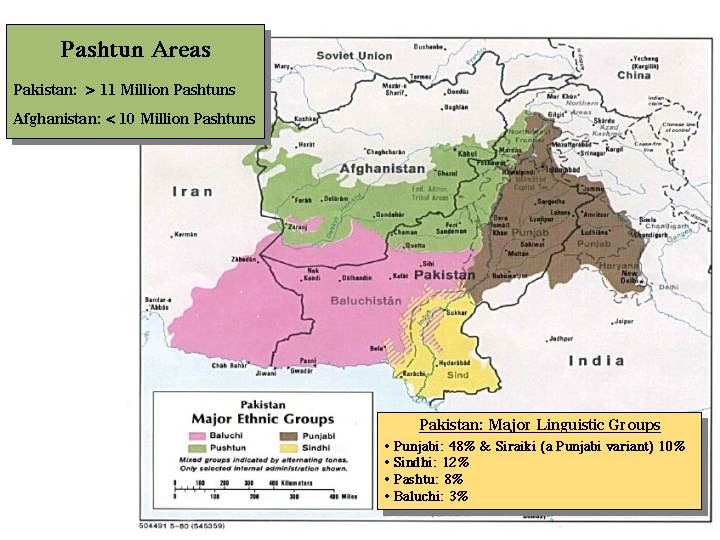
There's been no end of talk lately about how the Taliban slip in and out of Pakistan to wage guerrilla war in southern Afghanistan. Sounds pretty simple: Afghanistan, Pakistan and Taliban. Actually it's a little more complex than that. Nobody, it seems, is too eager to mention Pashtunistan, the "land of the Pashtun."

The Taliban are mainly ethnic Pashtuns. So is Hamid Karzai. But Pashtunistan isn't neatly in Afghanistan. Almost half of it is in Pakistan. Here's a map:


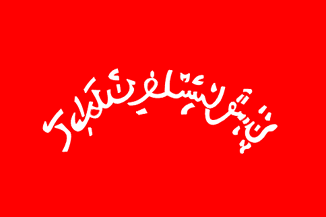
Now the green bits are the Pashtun homeland and you can see from the numbers above that there are actually more Pashtuns living in Pakistan than there are in Afghanistan. These people even have their own flag:


So, when the Taliban slip across the border into Paksitan, they're not running away from home they're still very much at home with their own people. See how that makes the problem much more difficult?


Business is Booming - No, Seriously, It's Booming

Just hope it doesn't start booming anywhere near you.

According to a piece in yesterday's Guardian, global weapons sales have hit an all time high. Arms sales are expected to break a trillion dollars (U.S.) this year, about 15-times the amount spent on international aid.

In Canada, the U.S. and Britain, arms manufacturers are learning how to get around arms embargoes without upsetting their governments:

"In their report, Arms without Borders, the agencies claim US, EU, and Canadian companies can get round arms regulations by selling weapon components and subcontracting arms manufacturing to companies overseas. Weapons, including attack helicopters and combat trucks, are being assembled from foreign components and manufactured under licence in countries including China, Egypt, India, Israel and Turkey.

"The report shows how these or similar weapons have ended up in Colombia, Sudan and Uzbekistan where they are reported to have been used against civilians.

"The report says that the EU has an arms embargo against China, and the US and Canada have banned the sale of armed helicopters to Beijing. Yet China's new Z-10 attack helicopter would not fly without weapons parts and technology from Anglo-Italian company (Augusta Westland), the Canadian firm Pratt & Whitney Canada) a US company (Lord Corporation) and a Franco-German company (Eurocopter), it says. There is no suggestion any of the companies are breaking the law.

"The report points out that China has previously sold attack helicopters to a number of countries including Sudan, which is under a full EU arms embargo."

Do our governments know about this? Damned right they do and they're not lifting a finger to put an end to it.

Don't forget our special, Kids' Discount

Damned If We Do ...you know the rest


It really makes my day to start it reading some clear-headed story. This morning that arrived in the form of a first-person account by one Sarah Chayes of the cancerous state of corruption in Afghanistan.

Chayes has been over there for five years. She went there as a radio reporter with NPR and wound up staying to help with reconstruction. Apparently she now runs a small co-op that makes skin care products for export to North America.

In Chayes opinion, Afghanistan is going down the toilet, not just due to the Taliban but also due to rampant, debilitating, corrosive government corruption.

Those who've read my earlier posts will realize this is a topic I've been harping about since I began this blog. Government corruption undermines any counter-insurgency effort, the very thing NATO is struggling to achieve right now in Afghanistan. We've gone out on a limb to battle the Taliban only to find government corruption is sawing off the branch behind us.

Let me explain. A cornerstone strategy of guerrilla warfare is to drive a wedge between the people and their government. The essence of terror attacks is to make the populace very afraid. This makes their government appear weak and unable (or unwilling) to protect them from the terrorists. These people then get angry at their government for leaving them vulnerable while, by default, they come to see the guerrillas as the outfit that is strong and entitled to demand their loyalty.

This is what Canadian forces are fighting against and dying to prevent. It's as simple as that. We want to hold the Taliban at bay so that the Afghan people can feel secure enough to want to support their government, Karzai and Company.

Unfortunately, while we're fighting and dying to keep this government alive, the government officials themselves are doing the guerrillas' work for them. Government corruption is driving its own wedge between the people and the Karzai regime. The people are afraid not only of the terrorists but of the government's soldiers and police who shake them down and abuse them. These corrupt officials, like the drug lords and the warlords are the Taliban's best friends.

Just who are the good guys? Well, surely the late Safia Ama Jan was one of them, right? Safia gained fame as a provincial director of Afghanistan's Ministry of Women's Affairs who was gunned down by the Taliban. Just last week, Laura Bush released an official, White House statement in tribute: "American women stand with the women of Afghanistan, and with leaders like Safia Ama Jan. We are proud to support them in their efforts to build Afghanistan's new democracy... " Maybe this was all propaganda, designed to get us at home to support "the misson."

According to Ms. Chayes, Safia Ama Jan wasn't all that she was hyped up to be:

"..She used her office to monopolize money earmarked for Kandahar women, pocketing much of it and using the rest to favour exclusively the members of her own ethnic group. Afghans currently dread interaction wth officials like Safie Ama Jan. Bribes are extracted for the least administrative task; soldiers manhandle people or shake them down; principals steal humanitarian assistance earmarked for their students."

Oh dear, this is what we're fighting to uphold?

Ms. Chayes calls on Stephen Harper to put Hamid Karzai on notice that he must clean up his government and speak harshly to Pakistan's Pervez Musharraf also. She then recommends that Little Stevie have a few blunt words with his pal, Shrub. Good luck. I understand her frustration, her sense of the need for action, but what's the point?

Only a couple of days ago George Bush boldly pronounced Afghanistan as a great achievement. He's already being pilloried for the astonishing mess he made of Iraq. Think he wants to make that same admission about Afghanistan? Not hardly.

Besides, as I've noted time and again, what could Karzai do about this if he wanted to? Sweet Fanny Adams, that's what. Can he have his corrupt police force arrest themselves? Can he have his corrupt army take up arms against themselves? Can he place his warlords in irons (no, forget that one, he's already made them provincial police chiefs).

What NATO has taken on is a lot different than what we were given to understand. We were told we were there to defend the Afghan people and their democratic government. It turns out we can't defend the Afghan people against their own government which, itself, is failing. We're defending what is little more than a power vacuum and, ultimately, that is indefensible.

Ms. Chayes described the situation when she arrived in Afghanistan in December, 2001:

"..it seemed that U.S. officials were ushering discredited warlords into positions of power, though the Afghan people wanted nothing of them, and gave President Hamid Karzai a resounding mandate to expel them from the body politic. In 2002 and 2003, the U.S. government prevented Mr. Karzai from moving against these warlords, and then he, discouraged, gave up trying. The result is a government that is devoured by corruption, with offices up for sale, and officials whose entire motivation is to extract money and favours from their countrymen."

The Karzai government was set up to fail by Bush's insane rush to get at Iraq. It wasn't that Bush wanted Karzai to fail but he didn't care enough to prevent it. His neglect was enough to doom this experiment almost from the start.

How is this going to play out? It's anybody's guess. Do you think the NATO nations are willing to raise yet another army, one to do battle with the corrupt army and police officials as well as the warlords and drug lords? That's not going to happen and yet not amputating the gangrenous limbs of Karzai's government means that its death is just a matter of time.

One thing about power vacuums is that they always get filled but usually not without an awful lot of spilled blood in the process. Corruption begat the alienation of the Afghan people from Karzai which begat the power vacuum in the Pashtun south which begat the resurgence of the Taliban.

I'm beginning to have doubts that the NATO alliance is going to be able to survive this. That may be the lasting legacy of Afghanistan.


If you're interested in some of my previous posts on this topic, have a look at these:

21 August - Bush having second thoughts about democracy for Iraq
22 August - Reality check - the real picture on the ground in Afghanistan
24 August - Democratic Deficit - troubles plaguing the Karzai government
2 September - On to Islamabad
6 September - Into the Arms of the Taliban
7 September - Just What Are We Fighting For?
8 September - Another Day, Another Dollar, Another Gordo
12 September - When Fighting Shadows
12 September - Eating Soup With a Knife
14 September - Mystery of Panjwai
17 September - Okay We Won, Let's Go Home
18 & 19 September - Not Your Granddad's War I & II
20 September - Voices of Afghanistan
23 September - Bagful of Hot Air
23 September - Operation Medusa
27 September - Just Asking, That's All
30 September - There's Reality and Then There's Reality

Monday, October 02, 2006

Bush is No Liar

Canada's newspaper of record, The Globe & Mail, has fallen from its once mighty perch and it came down with a real thump. It perceptibly shifted from a centre or middle of the road paper and drifted to the right. It's not as far right as The National Post but it's not the paper it was once, not by any measure.

One of the more mysterious moves was the decision to appoint Marcus Gee as head of the paper's editorial board. This guy isn't very bright but he makes up for that by being an ideologue. He loves Bush and Harper and he supported the invasion of Iraq and he absolutely loves "the mission" in Afghanistan.

Time and again, Marcus Gee blindly accepts whatever nonsense comes out of Washington. He embraces it and redistributes it as truth, as though by him repeating it the message somehow became even more true.

Marcus Gee has a splendid record - of getting just about everything wrong. He's gullible and he's dim. Like the paper's Margaret Wente, Gee bought the ridiculous pap spread by the Iraqi exiles before the invasion. He bought everything Bush said before the invasion. He absolutely knew that Iraq was littered with WMDs. He knew that, thanks to the America invasion, the whole Middle East was going to be reformed and become democratic. He knows that Canada's "mission" in Afghanistan is the right thing to do.

It is sad that the Globe doesn't have enough self-respect, enough concern for its own credibility that it doesn't go through Gee's pronouncements over the past five years, see how wrong he's been again and again and get somebody intelligent in that job.

Here's an example. On Wednesday, November 16, Mr. Gee vouchsafed for the honesty and integrity of George Bush. He did this relying on comments in two studies that specifically avoided considering how the White House used (that is to say stretched and twisted) the intelligence it had on Iraq. Bush is no liar, proclaimed Gee.

A lot of us thought otherwise. This scribe saw Mr. Gee as an ever-willing dupe of the right. We didn't have trouble seeing through the claims.

Now, Bob Woodward's book, "State of Denial" demonstrates that Bush & Company haven't been telling the truth to Congress, to the American people, why they haven't even been telling the truth to their fan, Marcus Gee. They've been lying about nearly everything for six years from social security reform, to tax cuts, to Hurricane Katrina, to Afghanistan and the state of Iraq.


Even as recently as last Friday, George Bush was out proclaiming Afghanistan to be some terrific success. Huh? Is this guy drinking again, is he back on cocaine? To Bush, post Taliban Afghanistan is a "great achievement."

According to Johathan Landay:

"The president acknowledged setbacks, such as faltering police reform.

"But he made no mention of the key reasons for the Taliban's resurgence: the diversion of U.S. troops to Iraq; America's failure to make good on a promise of a reconstruction program akin to the rebuilding of post-World War II Europe; endemic corruption; and the support the Taliban receive from Pakistan. Bush instead praised Pakistan as a strong ally in fighting terrorism.
Several of the president's statements about Afghanistan's judicial and legal reforms were misleading:

-He praised Karzai for naming new Supreme Court judges. But he failed to mention that the Afghan parliament rejected Karzai's nominee for chief justice, a conservative cleric blamed for stalling reform, who favored Islamic laws mandating that adulterers be stoned to death and thieves have their hands amputated.

-He praised Italy for helping to train Afghan judges and prosecutors. Many Western officials and experts say the effort is seriously flawed and that Afghanistan's legal system is in a state of collapse.

-He said the Afghan National Police "have faced problems with corruption and substandard leadership." He contended that Karzai's government began tackling the problem after appointing a new leadership team this summer. But he didn't mention that Karzai named to his team 14 senior police generals whom U.S., European and U.N. officials opposed because of their alleged involvement in human-rights abuses and corruption."

Sorry, nope, this guy doesn't tell the truth, he may not even know what it is.

He's Gone Too Far

Brigadier General David Fraser
David Fraser is a curious man. The commander of Canada's forces in Afghanistan says some very strange things.
General Fraser has been hyping "the mission" since he arrived in Afghanistan. Fair enough, that's his job. His soldiers need to see a commander resolute in his commitment to their effort. I expect the general probably believes what he's saying.
Unforunately a good deal of what we've heard from General Fraser hasn't been quite right and some of his pronouncements have been downright strange.
When Operation Medusa was nearly over Fraser boasted that he didn't need to send his troops in to attack the insurgents because he had them surrounded and wanted them to stew about it for a while. It turns out he didn't have the Taliban surrounded. They were freely bringing reinforcements in through Fraser's lines and they left the same way. When Fraser finally sent his troops in all they came up with were abandoned Taliban positions. That didn't stop him or his boss from declaring a great victory even as U.S. air force intelligence tracked these same insurgents resurfacing in other provinces to keep fighting.
When a suicide bomber attacked a Canadian patrol, killing one soldier, Fraser launched into a rant, calling the Taliban "cowards" and telling them to come out in the open and fight. Memo to Fraser: a suicide bomber is many things: low, fanatical, full of hate, perfectly evil but definitely not a coward. As for challenging the Taliban to come on out for a street fight against soldiers with artillery, helicopters, strike fighters and armour, well, get real. Their manual says to go after your weaknesses, not your strengths.
It's pretty obvious that Brigadier Fraser's pronouncements are for the benefit of the folks at home to build up their support for "the mission." To a point that's okay even if some of the stuff he says does sound pretty wingy. But there is a point and Fraser just crossed it.
A few days ago Fraser told a reporter from the Toronto Star that it's the Canadian public and not the Taliban that is the greatest threat to peace and prosperity in Afghanistan. Say what? Anything other than complete, unlimited and unqualified support for "the mission" from you and me is apparently more dangerous than Taliban attacks.
As evidence of our success over there, Fraser points to the great increase in the number of Taliban attacks. Apparently these attacks are increasing because we're winning. Gee, that's so obvious, why didn't I think of that? It's all so clear to me now.
If General Fraser wants our support, it's about time he got straight with us. When he tells us he's got these guys corraled, surrounded and ready to annihilate at his leisure and then they wind up walking away, unnoticed, it's his credibility on the line.
To follow up that gaffe by claiming the Canadian people are a greater threat than the Taliban and that increased enemy attacks are a sure sign we're winning, doesn't build up my confidence in General Fraser and his vision. Fraser's song and dance routine gets pretty thin, pretty fast. If he wants to build up Canadian support for "the mission" over the long haul, he'd better start treating us like adults and show a lot more respect for the citizens he's supposed to be serving.

Get the Alligator Clips, Crank Up the Generator - We're Gonna Have Some Dancin'

Ex-Republican Congressman Mark Foley had better head for the hills. U.S. House Speaker Dennis Hastert has written to Attorney General Alberto Gonzales to launch an investigation into Foley's relationship with congressional pages. We all know how Gonzales prefers to investigate:

Cambodian Waterboard

Both Gonzales and Bush and just about every Republican in the House approves of waterboarding as a means to extract information. Why not give Foley a little time on the rack? He'd talk - that's for sure. That'd teach him not to fool with young boys.

The poor Republicans. Five weeks away from mid-term elections and struggling to pull themselves out of the hole they've dug for themselves. Along comes Foley and they have to start digging that hole even deeper.

Let's be fair. It's not as though he was trying to marry these boys. No sir, nothing like that. He was only chatting them up, talking about pulling their pants off and asking if he made them horny. Mere pillow talk, eh?

The worst part of the scandal may be the knowledge of other House Republicans. Speaker Dennis Hastert started off saying he'd just heard about the messages. It turns out that some House Republicans have known about this stuff - perhaps not all the details - since last fall. It's now claimed that Hastert himself was told about it this spring and yet did nothing.

The ever sanctimonious GOP House Speaker, Hastert, has been caught with his pants down on this one. The best he can come up with is to claim he doesn't remember being told about this business in the spring. It's looking dark for the Republicans. They knew Foley was gay. They've been aware for a year that he was sending inappropriate e-mails to congressional pages. They did nothing to investigate, nothing to ensure the safety of the young boys who serve as pages.

Will there be more resignations as the Foley scandal spreads? Probably. Some prominent Republicans have already come forward to say that Hastert's handling of this situation is intolerable.

And so - as they say - it goes

Sunday, October 01, 2006

It's So Much Worse Than I'd Imagined

Just out of curiosity I went to the website of the Washington Post this morning to glance through some excerpts of Bob Woodward's new book, "Denial." There were two stories; the first one was bad, the second gave me a sinking feeling in my stomach.

There's been a great controversy over who did what - or didn't - since ABC ran that disgusting propaganda smear "9/11". That, in turn, led to Bill Clinton's bitchslap of that hack, Chris Wallace, on Fox when Wallace tried to sandbag him on Osama bin Laden.

Clinton made it clear that he recognized the threat of al-Qaeda and tried to find and kill bin Laden and then pointed out that, despite the urgings of his outgoing administration, the Bushies were simply not interested in bin Laden or al-Qaeda or the clear threat of attacks against the United States.

This brought Condi Rice charging out like the U.S. Cavalry in some B Western, claiming that, despite what Clinton claimed, his people didn't leave the incoming Bush team with a strategy or a plan on al-Qaeda and, besides, her bunch did at least as much as the Clinton team before 9/11.

That volley was fired straight back over the net by Richard Clark, counterterrorism czar to Regan, Bush Sr., Clinton and Little Shrub himself. He told Charlie Rose on PBS that, yes, in fact Clinton ordered him to prepare a briefing and plan specificially for the incoming administration and it was complete even to the point of listing options and their costs. They'd even priced it out for Bush.

This whole business obviously struck a raw nerve in the Bush camp. Both Bush and Rice have been furiously trying to deny all of these allegations. Of course they also know that, no matter how clear the facts, they have a core constituency of right-wing fundamentalists who'll believe anything they say just so long as they say it.

Richard Clark's own statements should be enough to convince anyone that Bush and Rice are flat out lying but, if that's not enough, there are further revelations on this topic in Woodward's book. He recounts how, two months before the attacks, the FBI and CIA were getting swamped with indications that al-Qaeda was about to pull off "the big one."

When Rumsfeld dismissed Tenet's mountain of evidence, out of hand, Tenet and his counter-terrorism wizard, J. Cofer Black, decided to simply march into Condi's office to lay it all out for her, hoping that would shake up the administration.

"Tenet hoped his abrupt request for an immediate meeting would shake Rice. He and Black, a veteran covert operator, had two main points when they met with her. First, al-Qaeda was going to attack American interests, possibly in the United States itself. Black emphasized that this amounted to a strategic warning, meaning the problem was so serious that it required an overall plan and strategy. Second, this was a major foreign policy problem that needed to be addressed immediately. They needed to take action that moment - covert, military, whatever - to thwart bin Laden.

"The United States had human and technical sources, and all the intelligence was consistent, the two men told Rice. Black acknowledged that some of it was uncertain "voodoo" but said it was often this voodoo that was the best indicator.

"Tenet and Black felt they were not getting through to Rice. She was polite, but they felt the brush-off. President Bush had said he didn't want to swat at flies. "

"Afterward, Tenet looked back on the meeting with Rice as a tremendous lost opportunity to prevent or disrupt the Sept. 11 attacks. Rice could have gotten through to Bush on the threat, but she just didn't get it in time, Tenet thought. He felt that he had done his job and had been very direct about the threat, but that Rice had not moved quickly. He felt she was not organized and did not push people, as he tried to do at the CIA.

"Black later said, "The only thing we didn't do was pull the trigger to the gun we were holding to her head."

This stuff was interesting but I'd already realized, years ago, that, to this administration, truth is simply something else to be manipulated for their benefit at every opportunity. It was the following piece, however, entitled, "Secret Reports Dispute White House Optimism", that really hit home.

The focus of this article, for its intended American audience, is that Bush, his administration, even his Joint Chiefs of Staff, have been lying to everyone, even Congress itself, in their assessments of the situation in Iraq. They know this fiasco is going south fast but they assure everyone else that they're making real progress. Okay, if you're really able to still swallow that garbage after everything that's gone wrong with their assurances over the last five years, good luck to you. Bush lying, say it ain't so. Lying to Congress, however, is a felony but we'll just have to wait and see if this gets any traction. Congress has gone into recess for mid-term electioneering and it has a notoriously short memory. I'm sure there are several generals who are banking on it.

No, what chilled me in this piece was the reference to the scurrilous Henry "the K" Kissinger.


A powerful, largely invisible influence on Bush's Iraq policy is former secretary of state Kissinger:

"'Of the outside people that I talk to in this job,' Vice President Cheney told me in the summer of 2005, 'I probably talk to Henry Kissinger more than I talk to anybody else. He just comes by and, I guess at least once a month, Scooter [his then-chief of staff, I. Lewis Libby] and I sit down with him.'

"The president also met privately with Kissinger every couple of months, making him the most regular and frequent outside adviser to Bush on foreign affairs.

"In a column in The Washington Post on Aug. 12, 2005, titled 'Lessons for an Exit Strategy,' Kissinger wrote, 'Victory over the insurgency is the only meaningful exit strategy.'

"He delivered the same message directly to Bush, Cheney and Hadley at the White House.
Victory had to be the goal, he told all. Don't let it happen again. Don't give an inch, or else the media, the Congress and the American culture of avoiding hardship will walk you back.

"He also said that the eventual outcome in Iraq was more important than Vietnam had been. A radical Islamic or Taliban-style government in Iraq would be a model that could challenge the internal stability of the key countries in the Middle East and elsewhere.

"Kissinger told Rice that in Vietnam they didn't have the time, focus, energy or support at home to get the politics in place. That's why it had collapsed like a house of cards. He urged that the Bush administration get the politics right, both in Iraq and on the home front. Partially withdrawing troops had its own dangers. Even entertaining the idea of withdrawing any troops could create momentum for an exit that was less than victory.

"In a meeting with presidential speechwriter Michael Gerson in early September 2005, Kissinger was more explicit: Bush needed to resist the pressure to withdraw American troops. He repeated his axiom that the only meaningful exit strategy was victory.

"'The president can't be talking about troop reductions as a centerpiece,' Kissinger said. 'You may want to reduce troops,' but troop reduction should not be the objective. 'This is not where you put the emphasis.,'

"To emphasize his point, he gave Gerson a copy of a memo he had written to President Richard M. Nixon, dated Sept. 10, 1969.

"'Withdrawal of U.S. troops will become like salted peanuts to the American public; the more U.S. troops come home, the more will be demanded,' he wrote."

Henry Kissinger is one of those people who believes that an insurgency can be defeated militarily. In his war, Vietnam, America was actively fighting for ten years with a steadily escalating force that peaked out at just under 600,000 U.S. servicemen actually in country, with entire wings of B-52s and strike fighters, thousands of helicopters and more tonnage of bombs and shells than were consumed by all sides in WWII. And this guy figures they had it in the bag.

In case you haven't noticed, our very own Little Stevie is now aping the Kissinger line that, "victory is the only exit strategy." He even uses the very same words. Stevie has hitched Canada's wagon so tightly to the White House that he doesn't even bother coming up with his own lines anymore. He just parrots, verbatim, what he gets from the likes of Henry Kissinger.

So, Stephen Harper is getting his Afghanistan strategy from Henry Kissinger. My God, could this get any worse? Harper is taking his lead on Afghanistan from a guy wanted around the world for war crimes involving the deaths of hundreds of thousands.

For those of you who don't know, Kissinger has been openly accused of being a war criminal for his support of Chilean dictator Pinochet in the murder of President Salvadore Allende and the mass murder of socialists thereafter. He's wanted for questioning in connection with other atrocities in Central America, Argentina and Cambodia.

Kissinger can't travel to a number of countries these days because, if he does, he'll be thrown in irons and made to answer for his skullduggery. Of course that doesn't mean he lacks the credentials Little Stevie looks for when he needs advice on being a "Wartime Prime Minister." It's enough to make you sick.