A friend sent this along and I thought it too good not to share
On her radio show, Dr Laura Schlesinger said that, as an observant
Orthodox Jew, homosexuality is an abomination according to Leviticus
18:22, and cannot be condoned under any circumstance.
The following
response is an open letter to Dr. Laura, written by a U.S. man, and posted on
the Internet. It's funny, as well as informative:
Dear Dr.
Laura:
Thank you for doing so much to educate people regarding God's Law.
I have learned a great deal from your show, and try to share
that knowledge with as many people as I can. When someone tries to defend
the homosexual lifestyle, for example, I simply remind them that Leviticus
18:22 clearly states it to be an abomination ... End ofdebate.
I do
need some advice from you, however, regarding some other elements of God's
Laws and how to follow them.
1. Leviticus 25:44 states that I may possess
slaves, both male and female, provided they are from neighboring
nations.
A friend of mine claims that this applies to Mexicans, but not
Canadians.
Can you clarify?
Why can't I own Canadians?
2. I would like
to sell my daughter into slavery, as sanctioned in Exodus21:7. In this day
and age, what do you think would be a fair price for her?
3. I know that
I am allowed no contact with a woman while she is in her period of Menstrual
uncleanliness - Lev.15: 19-24.
The problem is how do I tell? I have tried
asking, but most women take offense.
4. When I burn a bull on the
altar as a sacrifice, I know it creates a
pleasing odor for the Lord -
Lev.1:9. The problem is my neighbors.
They claim the odor is not pleasing to
them. Should I smite them?
5. I have a neighbor who insists on working on
the Sabbath. Exodus 35:2clearly states he should be put to death.
Am I
morally obligated to kill him myself, or should I ask the police to
do it?
6. A friend of mine feels that even though eating shellfish is
an
abomination, Lev. 11:10, it is a lesser abomination than
homosexuality. I don't agree. Can you settle this? Are there 'degrees' of
abomination?
7. Lev. 21:20 states that I may not approach the altar of
God if I have a defect in my sight. I have to admit that I wear reading
glasses. Does my vision have to be 20/20, or is there some wiggle-room
here?
8. Most of my male friends get their hair trimmed, including the
hair around their temples, even though this is expressly forbidden by Lev.
19:27. How should they die?
9. I know from Lev. 11:6-8 that touching
the skin of a dead pig makes me unclean, but may I still play football if I
wear gloves?
10. My uncle has a farm. He violates Lev.19:19 by planting
two different crops in the same field, as does his wife by wearing
garments made of two different kinds of thread (cotton/polyester
blend). He also tends to curse and blaspheme a lot. Is it really necessary
that we go to all the trouble of getting the whole town together to stone
them? Lev.24:10-16.
Couldn't we just burn them to death at a private
family affair, like we do with people who sleep with their in-laws? (Lev.
20:14)
I know you have studied these things extensively and thus enjoy
considerable expertise in such matters, so I'm confident you can
help.
Thank you again for reminding us that God's word is eternal and
unchanging.
Your adoring fan,
James M. Kauffman, Ed.D. Professor
Emeritus,
Dept. Of Curriculum, Instruction, and Special
Education
University of Virginia
P.S. It would be a damn shame if we
couldn't own a Canadian.
Friday, June 21, 2013


Coyne- Have Tories Lost Their Way or Have They Simply Lost Their Minds?
Andrew Coyne sums up what won't but should be on the delegates' minds at next week's Conservative Party convention:

Do they get it? Do the delegates understand what a fix the party is in, and why? And are they prepared to push the party to mend its ways?

It has become a commonplace of late to say the Tories have “lost their way.” That’s not about their navigational skills but their state of mind: an acute lack of self-awareness that blinds them to what they have become, a blinkered conviction of their own superior cleverness, a closed loop of defensiveness that interprets every criticism as proof of the rightness of the course they are on.

For if everyone — the courts, the bureaucracy, Elections Canada, the media, oh yes especially the media — is biased against them (for what else could possibly explain this heap of opprobrium?) then of course they must constantly be on the attack, and of course they cannot allow themselves to be weakened by internal dissent, and of course they cannot be open with the public about their plans. For that would only provide their enemies with ammunition.

This is the laager mentality that has taken hold in the upper reaches of the Tory party. It is the attitude of parties that have lost touch, not just with their principles or their supporters, but with reality. Toryism, in its current incarnation, resembles less an ideology than a pathology.

...a great many people of all persuasions or none have lately formed the same impression, that the Tories have taken politics in worrisome new directions. One has the sense, not just that they do not respect limits that had previously been observed, but that they don’t know where they are.

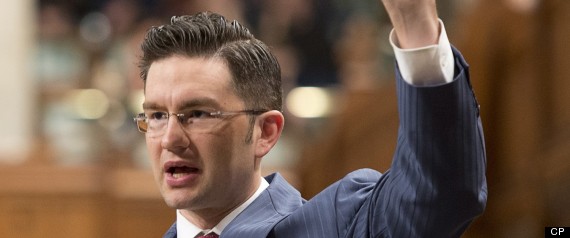
How to put this into words? Perhaps it is best expressed by what is not the case. You simply cannot count on this government to do what it says it will; to be straight with people; to take the high road; to behave with anything resembling spontaneity or goodwill. I mean it may, but you’re almost surprised when it does. Its default demeanour is sullen, wary, bullying, moronic. Its characteristic face is that of Peter Van Loan or Pierre Poilievre, and it is very much the face it deserves.


Do they get it? Do the delegates understand what a fix the party is in, and why? And are they prepared to push the party to mend its ways?
It has become a commonplace of late to say the Tories have “lost their way.” That’s not about their navigational skills but their state of mind: an acute lack of self-awareness that blinds them to what they have become, a blinkered conviction of their own superior cleverness, a closed loop of defensiveness that interprets every criticism as proof of the rightness of the course they are on.

For if everyone — the courts, the bureaucracy, Elections Canada, the media, oh yes especially the media — is biased against them (for what else could possibly explain this heap of opprobrium?) then of course they must constantly be on the attack, and of course they cannot allow themselves to be weakened by internal dissent, and of course they cannot be open with the public about their plans. For that would only provide their enemies with ammunition.

This is the laager mentality that has taken hold in the upper reaches of the Tory party. It is the attitude of parties that have lost touch, not just with their principles or their supporters, but with reality. Toryism, in its current incarnation, resembles less an ideology than a pathology.

...a great many people of all persuasions or none have lately formed the same impression, that the Tories have taken politics in worrisome new directions. One has the sense, not just that they do not respect limits that had previously been observed, but that they don’t know where they are.

How to put this into words? Perhaps it is best expressed by what is not the case. You simply cannot count on this government to do what it says it will; to be straight with people; to take the high road; to behave with anything resembling spontaneity or goodwill. I mean it may, but you’re almost surprised when it does. Its default demeanour is sullen, wary, bullying, moronic. Its characteristic face is that of Peter Van Loan or Pierre Poilievre, and it is very much the face it deserves.

 |
| Harper Vision |
June, Alaska, 96 Degrees
NASA apparently hit a nerve when it released a remarkable satellite photo of the state of Alaska taken June 17. What made the picture stand out is that there are almost no clouds in a state that has the cloudiest areas in the U.S. From SFGate.com:

At first glance, it’s just a great photo of nearly the entire state of Alaska on an exceptionally clear day. What could be the problem?
“Our research found that a ‘heat dome’ of warm southerly winds over
the ice sheet led to widespread surface melting. These jet stream
changes over Greenland do not seem to be well captured in the latest
Intergovernmental Panel on Climate Change (IPCC) computer model
predictions of climate change, and this may indicate a deficiency in
these models. According to our current understanding, the unusual
atmospheric circulation and consequent warm conditions of summer 2012 do
not appear to be climatically representative of future ‘average’
summers predicted later this century.


At first glance, it’s just a great photo of nearly the entire state of Alaska on an exceptionally clear day. What could be the problem?
Well, turns out that photo shows an anomaly that
some are fretting signifies yet another big shift in global climate – a
shift toward the hot.
NASA writes (without saying “global warming”):
“The same ridge of high pressure that cleared
Alaska's skies also brought stifling temperatures to many areas
accustomed to chilly June days. Talkeetna, a town about 100 miles north
of Anchorage, saw temperatures reach 96°F on June 17. Other towns in
southern Alaska set all-time record highs, including Cordova, Valez, and
Seward. The high temperatures also helped fuel wildfires and hastened
the breakup of sea ice in the Chukchi Sea.”
Oh, crap.
Now a study released Monday from the United Kingdom provides more fodder for freaking out over that picture of Alaska.
In a press release from the University of Sheffield,
whose scientist led the research, jet stream changes were blamed for
the big ice melt in Greenland … and may signal another big year of heat
and melting. (Note: “GrIS” = Greenland ice sheet)
Here’s the main part of the news:
“Taken together, our present results strongly
suggest that the main forcing of the extreme GrIS surface melt in July
2012 was atmospheric, linked with changes in the summer North Atlantic
Oscillation (NAO), Greenland Blocking Index (GBI, a high pressure system
centred over Greenland) and polar jet stream which favoured southerly
warm air advection along the western coast.
“The next five-10 years will reveal whether or not
2012 was a rare event resulting from the natural variability of the NAO
or part of an emerging pattern of new extreme high melt years. Because
such atmospheric, and resulting GrIS surface climate, changes are not
well projected by the current generation of global climate models, it is
currently very hard to predict future changes in Greenland climate. Yet
it is crucial to understand such changes much better if we are to have
any hope of reliably predicting future changes in GrIS mass balance,
which is likely to be a dominant contributor to global sea-level change
over the next 100-1000 years.”

Pentagon Top Dog Admits F-35 Edge Lost to Hacking
When you've got a super-secret technology, it's a good idea to keep it under wraps at least until you're ready to deploy the device. It's a really bad idea for you to let your prospective adversary steal your secrets, especially early in the game.
“A lot of that is being stolen right now and it’s a major problem for us,” [U.S. defense acquisitions chief Frank] Kendall told a Senate hearing on development of the Lockheed Martin fighter, a so-called fifth generation aircraft capable of evading radar and integrated air defense systems.
“What it does is reduce the costs and lead time of our adversaries to
doing their own designs, so it gives away a substantial advantage,”
Kendall said.
“It’s the amount of time and effort they’re going to
have to put into getting their next design and staying with us,” he
added. “And as you’re probably well aware, at least two nations are well
into developing fifth-generation aircraft right now, so that’s a
concern.”
What nobody seems to want to talk about is how the F-35's target adversaries, the same countries now flying their own, remarkably similar stealth warplanes, Russia and China, are using all that stolen data to suss out exploitable weaknesses in the F-35 design and fragile technology. Word is they're as busy on developing stealth counter-systems as they are on building their own stealth warplanes.
But, hey, Canada doesn't have to worry. We've got these two right on this. What could possibly go wrong?

Thanks, Lockheed. When I looked at the blog reports and found you had hit this site four times today with Rippers.0, I figured something must be up. You guys can't help yourselves, can you?
“A lot of that is being stolen right now and it’s a major problem for us,” [U.S. defense acquisitions chief Frank] Kendall told a Senate hearing on development of the Lockheed Martin fighter, a so-called fifth generation aircraft capable of evading radar and integrated air defense systems.
 |
| Chinese J-20 |
 |
| Chinese J-31 and, No, It Only Looks Just Like an F-35 |
 |
| Russia's PAK-50 |
But, hey, Canada doesn't have to worry. We've got these two right on this. What could possibly go wrong?

Thanks, Lockheed. When I looked at the blog reports and found you had hit this site four times today with Rippers.0, I figured something must be up. You guys can't help yourselves, can you?
Thursday, June 20, 2013
Hey, It's Not Even July, Yet Arctic Ice Levels are Nearing All-Time Record Lows.
Arctic sea ice is currently receding at about 100,000 sq. kms. a day. Because of it, we'll not only be breaking a record for sea ice loss this year but we'll be breaking it really soon, perhaps just next week.
"Unless something really unusual happens we will see the record broken in the next few days. It might happen this weekend, almost certainly next week," Julienne Stroeve, a scientist at the US National Snow and Ice Data Centre (NSIDC) in Boulder, Colorado, told the Guardian.
"In the last few days it has been losing 100,000 sq km a day, a record in itself for August. A storm has spread the ice pack out, opening up water, bringing up warmer water. Things are definitely changing quickly."
Because ice thickness, volume, extent and area are all measured differently, it may be a week before there is unanimous agreement among the world's cryologists (ice experts) that 2012 is a record year. Four out of the nine daily sea ice extent and area graphs kept by scientists in the US, Europe and Asia suggest that records have already been broken. "The whole energy balance of the Arctic is changing. There's more heat up there. There's been a change of climate and we are losing more seasonal ice. The rate of ice loss is faster than the models can capture [but] we can expect the Arctic to be ice-free in summer by 2050," said Stroeve.
"Only 15 years ago I didn't expect to see such dramatic changes – no one did. The ice-free season is far longer now. Twenty years ago it was about a month. Now it's three months. Temperatures last week in the Arctic were 14C, which is pretty warm."
And if you think this isn't weird, take a look at Alaska. Valdez hit 90F, causing the U.S. National Weather Service to issue a release, all in caps.
IN VALDEZ . . . THE DAILY HIGH TEMPERATURE RECORD OF 75 DEGREES SET IN 1997 WAS SHATTERED WHEN . . . AT 45 MINUTES AFTER 3 PM…THE MERCURY IN OUR THERMOMETER SHOT UP TO 90 DEGREES. AFTER A BRIEF DIP BACK INTO THE UPPER 80S . . . THE MERCURY AGAIN REGISTERED 90 DEGREES AT 15 MINUTES BEFORE 6 PM.
THIS ALSO CRUSHED THE ALL-TIME RECORD HIGH TEMPERATURE FOR ANY DAY OF THE YEAR . . . AND FOR THE MONTH OF JUNE . . . WHICH WAS 87 DEGREES AND WAS ACHIEVED TWICE . . . ON BOTH THE 25TH AND THE 26TH OF JUNE IN 1953. A LOCAL WEATHER SPOTTER IN TOWN RECORDED A HIGH TEMPERATURE OF 87 DEGREES NEAR THE HOSPITAL DURING THE MID-AFTERNOON HOURS TODAY AS WELL.
Oh, forget about it. Don't worry, be happy. This whole global warming thing is all a hoax perpetrated by those thousands of scientists chasing their damned five-figure incomes. :)
"Unless something really unusual happens we will see the record broken in the next few days. It might happen this weekend, almost certainly next week," Julienne Stroeve, a scientist at the US National Snow and Ice Data Centre (NSIDC) in Boulder, Colorado, told the Guardian.
"In the last few days it has been losing 100,000 sq km a day, a record in itself for August. A storm has spread the ice pack out, opening up water, bringing up warmer water. Things are definitely changing quickly."
Because ice thickness, volume, extent and area are all measured differently, it may be a week before there is unanimous agreement among the world's cryologists (ice experts) that 2012 is a record year. Four out of the nine daily sea ice extent and area graphs kept by scientists in the US, Europe and Asia suggest that records have already been broken. "The whole energy balance of the Arctic is changing. There's more heat up there. There's been a change of climate and we are losing more seasonal ice. The rate of ice loss is faster than the models can capture [but] we can expect the Arctic to be ice-free in summer by 2050," said Stroeve.
"Only 15 years ago I didn't expect to see such dramatic changes – no one did. The ice-free season is far longer now. Twenty years ago it was about a month. Now it's three months. Temperatures last week in the Arctic were 14C, which is pretty warm."
And if you think this isn't weird, take a look at Alaska. Valdez hit 90F, causing the U.S. National Weather Service to issue a release, all in caps.
IN VALDEZ . . . THE DAILY HIGH TEMPERATURE RECORD OF 75 DEGREES SET IN 1997 WAS SHATTERED WHEN . . . AT 45 MINUTES AFTER 3 PM…THE MERCURY IN OUR THERMOMETER SHOT UP TO 90 DEGREES. AFTER A BRIEF DIP BACK INTO THE UPPER 80S . . . THE MERCURY AGAIN REGISTERED 90 DEGREES AT 15 MINUTES BEFORE 6 PM.
THIS ALSO CRUSHED THE ALL-TIME RECORD HIGH TEMPERATURE FOR ANY DAY OF THE YEAR . . . AND FOR THE MONTH OF JUNE . . . WHICH WAS 87 DEGREES AND WAS ACHIEVED TWICE . . . ON BOTH THE 25TH AND THE 26TH OF JUNE IN 1953. A LOCAL WEATHER SPOTTER IN TOWN RECORDED A HIGH TEMPERATURE OF 87 DEGREES NEAR THE HOSPITAL DURING THE MID-AFTERNOON HOURS TODAY AS WELL.
Oh, forget about it. Don't worry, be happy. This whole global warming thing is all a hoax perpetrated by those thousands of scientists chasing their damned five-figure incomes. :)
Why Won't Alberta Do the Right Thing, Refine Their Bitumen There?

Why build two pipelines instead of just one? Why transport dangerous dilutent from the Pacific coast all the way to Athabasca just so it can be transported right back again? Why import dilutent only to then export it? Why run an oversize diluted bitumen pipeline from Athabasca to the Pacific coast when a much smaller pipeline transporting fully refined synthetic crude is all that's really necessary? Why not use just a fraction of supertankers to export fully refined synthetic crude instead of far more tankers making far more trips to bring in dilutent and carry out hazardous dilbit? Why all the extra, unnecessary supertanker traffic that can only increase the likelihood and frequency of tanker accidents? Why export all those processing jobs when they could be kept right on site in Alberta?
When you look at it, no matter the angle, the whole dilbit trafficking business is counter intuitive. It makes no sense. It multiplies the tanker traffic. It multiplies the pipelines needed to move the product for export. It multiplies the pipeline costs. It multiplies the shipping costs. It increases energy costs and resulting emissions. And for what? So that somebody can do the refining in Asia? The stuff is still going to have to be refined into a useable product. They're going to have to refine out the dilutents. They'll have to refine out the particulates and other contaminants in the bitumen.
Often when things like this seem to make no sense at all, it's because something is being overlooked, perhaps even concealed. So what is all this energy-wasting, hazardous, convoluted dilbit business really about?
I'm going to guess there are two things not being addressed - carbon emissions and petcoke. This is all about exporting both of those problems.
Alberta is already leading all Canadian provinces and territories in greenhouse gas emissions. And, unlike most other provinces, Alberta's emissions are set to increase rapidly as Tar Sands production is ramped up.

In other words, Alberta stands out like a sore thumb when it comes to greenhouse gas emissions and even exporting dilbit it's going to get much worse in the years ahead.
Refining that dilbit into fully processed synthetic crude would consume a lot of energy and other resources, upping Alberta's greenhouse gas emissions even further.
And then there's the petcoke problem. This issue came to the fore in, of all places, Detroit where a small quantity of Tar Sands dilbit was sent for refining. Once you refine the crude oil out, you're left with a form of really filthy carbon called petroleum coke or petcoke. With the Ambassador Bridge in the background here is a pile of petcoke belonging to Koch Carbon which, as you might have guessed, is owned by the Koch brothers, Charlie and Manfred.

The Guardian calls petcoke the "dirty secret of Alberta's tar sands."
Every barrel of crude that comes out of the Alberta tar sands throws off between 60-130lbs of pet-coke. By May 2012, Alberta had stockpiled 70m metric tons of the stuff, driving down prices.
"They are drowning in it. It just can't be absorbed any more in the refining process," Gordon said.
Until now, the industry had shipped pet-coke off to Asia or southern Europe as a cheaper alternative to coal.
Most power plants in the US or Canada will not burn pet-coke for fuel because it is so polluting. Burning pet-coke for electricity require expensive equipment to clean up the sulphur – although a plant in Nova Scotia announced this week it would begin chipping away at the mound in Detroit.
And suddenly it all makes sense why Ottawa and Alberta are so insistent on exporting dilbit, regardless of the hazard to British Columbia's pristine coast and the interior pipeline route. This isn't about selling oil, it's about exporting their environmental nightmare to places where it can be handled out of sight/out of mind. They can sell their refined crude oil anywhere. It's their petcoke problem they need solved and the Northern Gateway is their solution.
Google's Eye On the World.

Google Alerts is a fine source of news from around the world on almost any topic that interests you. Every day Google delivers to your inbox an array of linked headlines that you can then pore over at your leisure.
Some of the topics I monitor through Google Alerts include drought, floods, the water crisis, climate change, inequality, war and arms races. Through these alerts you can access a lot of information that would never make it into our domestic media. Over time you build up a picture of what's happening where and when and the magnitude of the issue from one region to another.
One place of particular interest when it comes to freshwater issues is our neighbour to the south. Even ordinarily soggy Oregon, it turns out, is facing a serious water problem in its Klamath valley that could see water being cut off to hundreds of cattle ranches and hay farms this summer.
In New Mexico there's talk about saving the state from a crushing freshwater crisis by building nuclear power plants on Texas' Gulf coast to operate desalinators that would then ship water via pipeline to meet New Mexico's needs.
In Utah, the town of Lehi faces the prospect of running out of drinking water by week's end. Tap water is now proclaimed "culinary water" for human consumption solely.
The Miami Herald reports that California's wine country faces a serious water crisis from aquifers beginning to run empty. And across drought-stricken parts of the U.S., farmers and homeowners are having to compete with the fracking industry for already stressed freshwater reserves.
It could be argued that these stories are isolated instances, anecdotal, even alarmist. Taken on any given day that is at least arguable. It's when these stories are taken over the span of weeks and months and years that their significance and impact becomes unassailable. It's the cumulative factor that makes manifest a serious and worsening state of affairs that is going on literally at our doorstep. Yet it's a state of affairs that generally goes unnoticed even as it steadily worsens.
Did Harper Deal BlackBerry a Body Blow?

Is there anything Stephen Harper won't do to degrade his office and our country? Time and again Harper reveals his chronic dark, gutter side. The man has the integrity and instincts of a pimp.
I don't know where Harper's bottom line is. I don't even know that he has such a thing. Perhaps the floor for this character is his sense of plausible deniability. If his base, his core of supporters, are willing to believe him or even just give him the benefit of the doubt, it's a green light for Steve to indulge his instincts.
At times Harper's misfits, or in Tory lexicon his "cabinet", behave like frat boys on a bender. It's as though they just can't wait to get in with the Big Boys, especially the Americans and the Brits. Now there are indications we did just that in 2009 when it was decided to spy on delegates to the G20 summit.
Leaked documents suggest Canada helped the United States and Britain spy on participants at the London G20 summit four years ago.
Britain's Guardian newspaper says spies monitored the computers and intercepted the phone calls of foreign politicians and officials at two G20 meetings in London in 2009.
The newspaper says the effort included penetration of delegates' BlackBerry smartphones to monitor their email messages and calls.
The Guardian published PowerPoint slides describing the operation, including one featuring the emblem of the Communications Security Establishment, Canada's electronic eavesdropping agency, known as CSEC.
It appears alongside the logos of key allies — the U.S. National Security Agency and Britain's Government Communications Headquarters — as well as an icon labelled Joint Apps.
The Guardian says special Internet cafes were set up in 2009, allowing authorities to install an email interception program and key-logging software to spy on delegates' computer use. In addition, a team of analysts had access to summaries of phone calls.
The Turkish finance minister and Russian leader Dmitry Medvedev were singled out for special attention, the paper reported, and it appears information was passed to British cabinet ministers.
"Delivered messages to analysts during the G20 in near real-time," reads the slide with the CSEC logo.
"Provided timely information to UK ministers."
A CSEC spokesman had no immediate comment Tuesday.
There was a long time, pre-Harper, when Canada enjoyed - and reaped the rewards of - a hard-earned reputation for independence and fair play on the world stage. That's over and what have we gained for becoming the American's underling? Apparently less than nothing.
Did we go to this G20 summit ready to deliver up the secrets to Blackberry's vaunted encryption technology, its last remaining key selling point?
Wednesday, June 19, 2013
Gandolfini, Dead at 51

HBO has confirmed that actor James Gandolfini has died. Gandolfini, best known for his role as gangster Tony Soprano, died while traveling in Italy. He was 51.
Buycott - A Smartphone App Whose Time Has Definitely Come

Tired of unwittingly lining the pockets of the same oligarchs who would happily sell you and your democracy down the river? Wish you could tell just who was really behind the products lining your store shelves? Well, there's an App for that.
It's called Buycott, the handiwork of 26-year old freelance programer Ivan Pardo.
Pardo decided to create Buycott after hearing Congressional candidate Darcy Burner (D-Wash.) propose the idea of an app that allows consumers to see the corporations behind the products on supermarket shelves during her keynote speech at last year’s netroots nation. Beyond tracing the corporate family tree of everyday goods, Buycott also allows users to create and join campaigns that sort companies according to how their practices affect certain issues. For example, if you join the campaign “Demand GMO labeling,” you’ll be alerted when a product you’ve scanned is linked to one of 36 companies identified as having opposed the mandatory labeling of genetically modified food.
When you use Buycott to scan a product, it will look up the product, determine what brand it belongs to, and figure out what company owns that brand (and who owns that company, ad infinitum). It will then cross-check the product owners against the companies and brands included in the campaigns you've joined, in order to tell you if the scanned product conflicts with one of your campaign commitments.
Buycott can be downloaded for free from Apple’s App store and Android’s Google Play.
Apparently Buycott is still a bit buggy and won't work on all devices but it's an idea that has legs.
The Great Unwinding

Has America come undone or has it simply reverted to its natural state as the inner sanctum of social Darwinism? That's the subject of George Packer's new book, The Unwinding.
Packer discusses the question of whether today's America is the "real America" in an op-ed published in The Guardian.
In or around 1978, America's character changed. For almost half a century, the United States had been a relatively egalitarian, secure, middle-class democracy, with structures in place that supported the aspirations of ordinary people. You might call it the period of the Roosevelt Republic. Wars, strikes, racial tensions and youth rebellion all roiled national life, but a basic deal among Americans still held, in belief if not always in fact: work hard, follow the rules, educate your children, and you will be rewarded, not just with a decent life and the prospect of a better one for your kids, but with recognition from society, a place at the table.
This unwritten contract came with a series of riders and clauses that left large numbers of Americans – black people and other minorities, women, gay people – out, or only halfway in. But the country had the tools to correct its own flaws, and it used them: healthy democratic institutions such as Congress, courts, churches, schools, news organisations, business-labour partnerships. The civil rights movement of the 1960s was a nonviolent mass uprising led by black southerners, but it drew essential support from all of these institutions, which recognised the moral and legal justice of its claims, or, at the very least, the need for social peace. The Roosevelt Republic had plenty of injustice, but it also had the power of self-correction.
...The large currents of the past generation – deindustrialisation, the flattening of average wages, the financialisation of the economy, income inequality, the growth of information technology, the flood of money into Washington, the rise of the political right – all had their origins in the late 70s. The US became more entrepreneurial and less bureaucratic, more individualistic and less communitarian, more free and less equal, more tolerant and less fair. Banking and technology, concentrated on the coasts, turned into engines of wealth, replacing the world of stuff with the world of bits, but without creating broad prosperity, while the heartland hollowed out. The institutions that had been the foundation of middle-class democracy, from public schools and secure jobs to flourishing newspapers and functioning legislatures, were set on the course of a long decline. It as a period that I call the Unwinding.
...The rules and regulations of the Roosevelt Republic were aberrations brought on by accidents of history – depression, world war, the cold war – that induced Americans to surrender a degree of freedom in exchange for security. There would have been no Glass-Steagall Act, separating commercial from investment banking, without the bank failures of 1933; no great middle-class boom if the US economy had not been the only one left standing after the second world war; no bargain between business, labour and government without a shared sense of national interest in the face of foreign enemies; no social solidarity without the door to immigrants remaining closed through the middle of the century.
Once American pre-eminence was challenged by international competitors, and the economy hit rough seas in the 70s, and the sense of existential threat from abroad subsided, the deal was off. Globalisation, technology and immigration hurried the Unwinding along, as inexorable as winds and tides. It is sentimental at best, if not ahistorical, to imagine that the social contract could ever have survived – like wanting to hang on to a world of nuclear families and manual typewriters.
...Much has been written about the effects of globalisation during the past generation. Much less has been said about the change in social norms that accompanied it. American elites took the vast transformation of the economy as a signal to rewrite the rules that used to govern their behaviour: a senator only resorting to the filibuster on rare occasions; a CEO limiting his salary to only 40 times what his average employees made instead of 800 times; a giant corporation paying its share of taxes instead of inventing creative ways to pay next to zero. There will always be isolated lawbreakers in high places; what destroys morale below is the systematic corner-cutting, the rule-bending, the self-dealing.
...It is no wonder that more and more Americans believe the game is rigged. It is no wonder that they buy houses they cannot afford and then walk away from the mortgage when they can no longer pay. Once the social contract is shredded, once the deal is off, only suckers still play by the rules.
Chomsky - Don't Let the Commons Be Devoured by Private Interests
Noam Chomsky delivered some blunt warnings at the Global Media Forum in Bonn.
One was that private capital is taking over everything, even the Global Commons.
"Widely regarded as the intellectual father of the Occupy Movement, Chomsky spoke about the current conflict in Gezi Park in Istanbul, saying that "the protesters are trying to save the last part of the commons in Istanbul from the wrecking ball of commercial destruction." The renowned 85-year-old linguist and philosopher gave a lecture at the Global Media Forum entitled "Roadmap to a Just World - People Reanimating Democracy."
Chomsky emphasized that our last, best hope depends on our media actually changing course and doing its job at last.
Professor Chomsky asserted that the general public can only act when they are informed. He talked about the larger forces working in the background, especially those that endanger world peace. "Here the free press enters," he said. His closing message was to ask the media to "tell the truth about important things."
Chomsky's address begins at the 8:02 mark.
One was that private capital is taking over everything, even the Global Commons.
"The commons have been steadily dismantled by the principle that
everything has to be privately owned." These were the words of American
political critic Noam Chomsky at the Global Media Forum (GMF) in Bonn.
"Widely regarded as the intellectual father of the Occupy Movement, Chomsky spoke about the current conflict in Gezi Park in Istanbul, saying that "the protesters are trying to save the last part of the commons in Istanbul from the wrecking ball of commercial destruction." The renowned 85-year-old linguist and philosopher gave a lecture at the Global Media Forum entitled "Roadmap to a Just World - People Reanimating Democracy."
Chomsky emphasized that our last, best hope depends on our media actually changing course and doing its job at last.
Professor Chomsky asserted that the general public can only act when they are informed. He talked about the larger forces working in the background, especially those that endanger world peace. "Here the free press enters," he said. His closing message was to ask the media to "tell the truth about important things."
Chomsky's address begins at the 8:02 mark.
So Who Will Defend Us from The Damned Martians Now?
Slim Whitman, he's dead, age 90. His song, "Indian Love Call", was all that saved mankind from maurading aliens in Mars Attacks.
Hamid Has Seen This Script Before
Washington is positively giddy at the prospect of engaging Taliban leaders in Qatar to work out some sort of peace deal for Afghanistan.
Afghan leader Hamid Karzai doesn't want any part of it and says he's of half a mind to tell the Americans to clear out entirely next year.
So, if the Talibs want to take peace and the Americans want to talk peace, what crawled up Hamid's backside and died? Well this is the 40th anniversary of the Paris Peace Accords. Maybe that's what is on Hamid's mind.
40-years ago Washington was looking to bail out of another failed foreign war, the war in Vietnam. Everyone, especially the North Vietnamese, knew Washington wanted out and just needed a pretext to let them claim "peace with honour" and di di mau. And so they inked a deal that was to grease the wheels for an American withdrawal based on peace between the North and South.
The Americans promised Saigon that if Hanoi pulled anything, U.S. forces would be back in a heartbeat to kick ass. Only when precisely that did happen and the North began rolling up the South Vietnamese army like a cheap carpet the Americans let the place fall.
That's what happens with unpopular wars. Once you get them damped down, the folks at home are in no mood for a sequel. Hamid knows there's a very good - make that an excellent - chance that Afghanistan will go the way of South Vietnam and for him, personally, that could mean dancing at the end of a very short rope from an elevated tank barrel.
Karzai doesn't have many options and zero good options. He either rolls over for the Americans and let's them sell him out to the Talibs for a bucket of face-saving empty promises or he stands up to the Americans and takes the same consequences in the aftermath of the withdrawal of Western forces next year. Maybe he can cut a better deal with the Chinese.
Afghan leader Hamid Karzai doesn't want any part of it and says he's of half a mind to tell the Americans to clear out entirely next year.
So, if the Talibs want to take peace and the Americans want to talk peace, what crawled up Hamid's backside and died? Well this is the 40th anniversary of the Paris Peace Accords. Maybe that's what is on Hamid's mind.
40-years ago Washington was looking to bail out of another failed foreign war, the war in Vietnam. Everyone, especially the North Vietnamese, knew Washington wanted out and just needed a pretext to let them claim "peace with honour" and di di mau. And so they inked a deal that was to grease the wheels for an American withdrawal based on peace between the North and South.
The Americans promised Saigon that if Hanoi pulled anything, U.S. forces would be back in a heartbeat to kick ass. Only when precisely that did happen and the North began rolling up the South Vietnamese army like a cheap carpet the Americans let the place fall.
That's what happens with unpopular wars. Once you get them damped down, the folks at home are in no mood for a sequel. Hamid knows there's a very good - make that an excellent - chance that Afghanistan will go the way of South Vietnam and for him, personally, that could mean dancing at the end of a very short rope from an elevated tank barrel.
Karzai doesn't have many options and zero good options. He either rolls over for the Americans and let's them sell him out to the Talibs for a bucket of face-saving empty promises or he stands up to the Americans and takes the same consequences in the aftermath of the withdrawal of Western forces next year. Maybe he can cut a better deal with the Chinese.
Change, Change, Change
One of the blessings of living in a small, coastal town is being able to observe change. It doesn't come often. We don't have a forest of construction cranes obscuring our horizon. There are some two-storey buildings, a few, but that's it. Anything higher than that is an apartment or condo.
So when the town pub, the 124-year old former railway hotel, the Rod & Gun, gets a makeover, it's news. It's so small town that while the pub is closed for renos, the owners have bought their regulars temporary memberships at the Legion right behind it.

Change, change, change. Humpback whales have returned after an absence of 40-years. Back then we hunted them to extinction. Now they seem to have figured out it's safe to come back. Not so safe for boaters, however, as a couple have recently discovered. These whales are big - up to 52-feet in length and 79,000 pounds and, for all their size, they like to launch themselves out of the water, often getting most of their mass airborne.
 What the locals have discovered is that humpbacks don't pay attention to small boats so if they breach and you're in the way, you have a problem. And, since they can remain underwater for 15-minutes, a sport fisherman can enter their area with no idea the whale is below until it isn't.
We're also more attuned to the reality of climate change. One form is in species migration. Salmon and other cold-water fish stocks are already moving out of warmer waters to the south and into our still cold Pacific waters. Pelicans have reached Victoria harbour. Anchovies are moving in to territory where herring once dominated. The Humboldt squid has migrated from the Sea of Cortez to show up in mass strandings on the beaches of Tofino. The giant sunfish, once a rarity, is being seen much more frequently basking on the surface.
In this morning's Victoria Times Colonist, the lead editorial addresses our warming climate.
At Fruit Trees and More Nursery in North Saanich, Bob Duncan gets hundreds of lemons from his tree. Over on the Lower Mainland, Art Knapp nurseries have seen a 20 per cent increase in sales of species like olives and figs.
Global warming is often debated in the big picture, but the details of gradual changes around us bring the debate down to earth. The devastating march of the pine beetle is one effect of warmer temperatures that is clearly visible across vast areas of B.C.’s forests. New crops close to home are another sign of the change.
In the Cowichan Valley, Teafarm planted 200 tea plants of the same type found in India and Sri Lanka; all but one survived. Owners Victor Vesely and Margit Nellemann plan to add more camellia sinensis this year, and hope to harvest their own tea in the next few years.
Across the water on Saturna Island, Michael Pierce’s Saturna Olive Consortium is a nursery that doesn’t sell olives but grows 12 varieties of olive trees for those who want to plant a bit of the Mediterranean in their corner of B.C. On the consortium’s website, he advises: “Growing olives in British Columbia should be seen as a grand and wacky experiment. It is not for the risk averse.”
Like Bob Duncan, however, some Islanders are taking risks, not only with lemons, but also oranges. Pineapple guavas are a smaller version of a tropical fruit that shows promise for our climate. And six kinds of figs will now grow here, where once only two types could survive, says Wim Vander Zalm of Art Knapp Nurseries.
Tea, oranges, lemons, guava, olives and all manner of figs? Whales and monster squid and giant sunfish? On our island we're a Petri dish for change but, then again, we have the most benign climate to absorb the impacts and adapt to change. Most of the remainder of the world is not so lucky.
So when the town pub, the 124-year old former railway hotel, the Rod & Gun, gets a makeover, it's news. It's so small town that while the pub is closed for renos, the owners have bought their regulars temporary memberships at the Legion right behind it.

Change, change, change. Humpback whales have returned after an absence of 40-years. Back then we hunted them to extinction. Now they seem to have figured out it's safe to come back. Not so safe for boaters, however, as a couple have recently discovered. These whales are big - up to 52-feet in length and 79,000 pounds and, for all their size, they like to launch themselves out of the water, often getting most of their mass airborne.


We're also more attuned to the reality of climate change. One form is in species migration. Salmon and other cold-water fish stocks are already moving out of warmer waters to the south and into our still cold Pacific waters. Pelicans have reached Victoria harbour. Anchovies are moving in to territory where herring once dominated. The Humboldt squid has migrated from the Sea of Cortez to show up in mass strandings on the beaches of Tofino. The giant sunfish, once a rarity, is being seen much more frequently basking on the surface.
In this morning's Victoria Times Colonist, the lead editorial addresses our warming climate.
At Fruit Trees and More Nursery in North Saanich, Bob Duncan gets hundreds of lemons from his tree. Over on the Lower Mainland, Art Knapp nurseries have seen a 20 per cent increase in sales of species like olives and figs.
Global warming is often debated in the big picture, but the details of gradual changes around us bring the debate down to earth. The devastating march of the pine beetle is one effect of warmer temperatures that is clearly visible across vast areas of B.C.’s forests. New crops close to home are another sign of the change.
In the Cowichan Valley, Teafarm planted 200 tea plants of the same type found in India and Sri Lanka; all but one survived. Owners Victor Vesely and Margit Nellemann plan to add more camellia sinensis this year, and hope to harvest their own tea in the next few years.
Across the water on Saturna Island, Michael Pierce’s Saturna Olive Consortium is a nursery that doesn’t sell olives but grows 12 varieties of olive trees for those who want to plant a bit of the Mediterranean in their corner of B.C. On the consortium’s website, he advises: “Growing olives in British Columbia should be seen as a grand and wacky experiment. It is not for the risk averse.”
Like Bob Duncan, however, some Islanders are taking risks, not only with lemons, but also oranges. Pineapple guavas are a smaller version of a tropical fruit that shows promise for our climate. And six kinds of figs will now grow here, where once only two types could survive, says Wim Vander Zalm of Art Knapp Nurseries.
Tea, oranges, lemons, guava, olives and all manner of figs? Whales and monster squid and giant sunfish? On our island we're a Petri dish for change but, then again, we have the most benign climate to absorb the impacts and adapt to change. Most of the remainder of the world is not so lucky.
Monday, June 17, 2013
Chicago's Busy Fathers' Day Weekend
Big Fathers' Day weekend in Chi-town. 46 people shot in under 72-hours. That's approaching Baghdad-level violence.
What do kids buy Dad for Fathers' Day in Chicago - ammo?
While mass shootings are more likely to attract the headlines — by ThinkProgress’ count there have been 14 since December — everyday gun violence in the U.S. adds up to a Newtown every single day (Slate counts more than 5,000 gun deaths since December).
Gun advocates tend to use Chicago to argue that gun violence laws are not effective. Chicago has some of the strictest laws in the nation — it had a ban on handguns until 2010 — but the city has long suffered from violence that is on an uptick the past two years. The total number of weekend’s shootings is actually slightly down compared to the same period last year, when 53 had been shot.
What do kids buy Dad for Fathers' Day in Chicago - ammo?
While mass shootings are more likely to attract the headlines — by ThinkProgress’ count there have been 14 since December — everyday gun violence in the U.S. adds up to a Newtown every single day (Slate counts more than 5,000 gun deaths since December).
Gun advocates tend to use Chicago to argue that gun violence laws are not effective. Chicago has some of the strictest laws in the nation — it had a ban on handguns until 2010 — but the city has long suffered from violence that is on an uptick the past two years. The total number of weekend’s shootings is actually slightly down compared to the same period last year, when 53 had been shot.
Have Canadians Won the Man-Powered Helicopter Challenge?
The Canadian team, AeroVelo, may have won the prize for the first, man-powered helicopter flight.
Here's the tweet they sent yesterday:
"Hit 3.3 metres & 65 sec on our flight. Submitted the flight to the American Helicopter Society; waiting for validation before commenting."
The competition requires helicopter flight, solely human-powered, to a height greater than 3-metres for a duration of 60-seconds. The helicopter has to remain within a small, 10-square metre area.
The winner takes the Sikorsky prize of $250,000. Here's the AeroVelo Atlas. The pilot is on the bicycle in the middle. It's impossible to see the structures that connect him to and drive the four rotors.
Here's the tweet they sent yesterday:
"Hit 3.3 metres & 65 sec on our flight. Submitted the flight to the American Helicopter Society; waiting for validation before commenting."
The competition requires helicopter flight, solely human-powered, to a height greater than 3-metres for a duration of 60-seconds. The helicopter has to remain within a small, 10-square metre area.
The winner takes the Sikorsky prize of $250,000. Here's the AeroVelo Atlas. The pilot is on the bicycle in the middle. It's impossible to see the structures that connect him to and drive the four rotors.
Out of This World - What Does Walt Natynczyk Have That Canada Needs for Space?
In my humble opinion, no Canadian general directly associated with the fiasco of our war in Afghanistan should be a candidate for government perks. That's certainly true for Rick Hiller who, by all accounts misled then prime minister Martin, into approving Canada's shoestring Kandahar combat caper. It should likewise hold true for the army general who succeeded Hillier and headed the armed forces for the past four years, Walt Natynczyk.
Afghanistan wasn't Walt's only failed war. He also led the 35,000 strong Multi-National Corps (Iraq) during Operation Iraqi Freedom, the disastrous Bush/Cheney/Blair conquest of Iraq that pretty much handed control of the region to Iran.
Harper has decided to reward Walt Nat for some reason by appointing a guy who has no aerospace credentials whatsoever the next head of the Canadian Space Agency. Walt Nat is a qualified paratrooper but I'm not sure that exactly qualifies him for the scientific aspects of space exploration.
Of course now that Harper is slashing funding for the Canadian Space Agency maybe what he was looking for was an undertaker.
Afghanistan wasn't Walt's only failed war. He also led the 35,000 strong Multi-National Corps (Iraq) during Operation Iraqi Freedom, the disastrous Bush/Cheney/Blair conquest of Iraq that pretty much handed control of the region to Iran.
Harper has decided to reward Walt Nat for some reason by appointing a guy who has no aerospace credentials whatsoever the next head of the Canadian Space Agency. Walt Nat is a qualified paratrooper but I'm not sure that exactly qualifies him for the scientific aspects of space exploration.
Of course now that Harper is slashing funding for the Canadian Space Agency maybe what he was looking for was an undertaker.
When He's Not Kissing Ass, He's Kicking Ass - It's the Only Game Harper Knows

On the eve of the G8 summit, Steve has denounced Putin for backing "the thugs of the Assad regime" in Syria. And then, as though that wasn't enough diplomacy, Steve added another Putin smackdown, “I don’t think we should fool ourselves. This is G7 plus one. OK, let’s be blunt.”
Chinese Dissident Says We're Becoming Just Like Them

Chinese artist and persecuted dissident, Ai Weiwei, has an interesting take on the U.S. NSA Prism scandal in today's Guardian in which he says America is behaving like China.
I lived in the United States for 12 years. This abuse of state power goes totally against my understanding of what it means to be a civilised society, and it will be shocking for me if American citizens allow this to continue. The US has a great tradition of individualism and privacy and has long been a centre for free thinking and creativity as a result.
In our experience in China, basically there is no privacy at all – that is why China is far behind the world in important respects: even though it has become so rich, it trails behind in terms of passion, imagination and creativity.
Of course, we live under different kinds of legal conditions – in the west and in developed nations there are other laws that can balance or restrain the use of information if the government has it. That is not the case in China, and individuals are completely naked as a result. Intrusions can completely ruin a person's life, and I don't think that could happen in western nations.
But still, if we talk about abusive interference in individuals' rights, Prism does the same. It puts individuals in a very vulnerable position. Privacy is a basic human right, one of the very core values. There is no guarantee that China, the US or any other government will not use the information falsely or wrongly.
...we have never exposed ourselves in this way before, and it makes us vulnerable if anyone chooses to use it against us. Any information or communication could put young people under the surveillance of the state. Very often, when oppressive states arrest people, they have that information in their hands. It can be used as a way of controlling you, to tell you: we know exactly what you're thinking or doing. It can drive people to madness.
When human beings are scared and feel everything is exposed to the government, we will censor ourselves from free thinking. That's dangerous for human development.
To limit power is to protect society. It is not only about protecting individuals' rights but making power healthier.
Civilisation is built on that trust and everyone must fight to defend it, and to protect our vulnerable aspects – our inner feelings, our families. We must not hand over our rights to other people. No state power should be given that kind of trust. Not China. Not the US.
Subscribe to:
Posts (Atom)