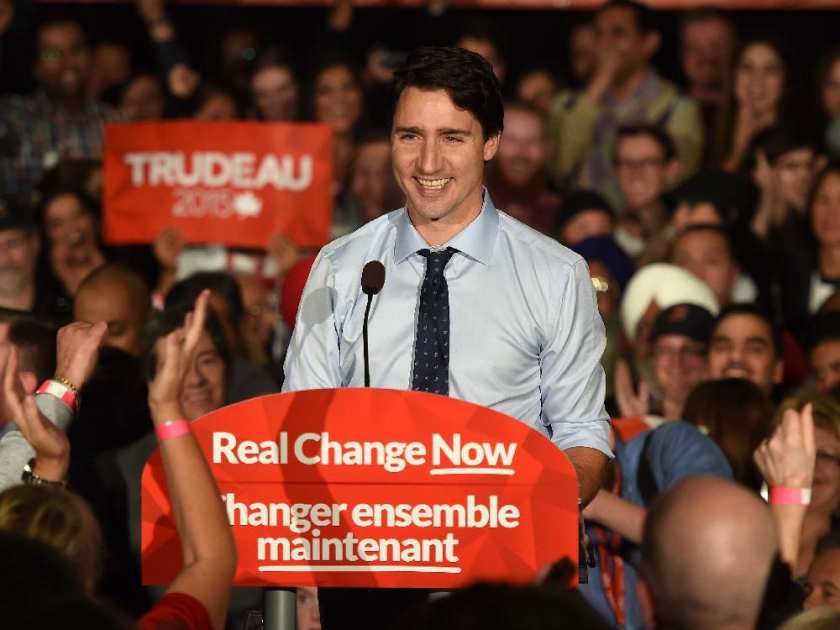
As analysis and reports stack up laying bare how much we know and everything we don't know about dilbit and Kinder Morgan's Trans Mountain pipeline, it is looking like this has nothing to do with the "national interest" as claimed by prime minister Trudeau. Instead it looks as though Trudeau is in service to some rather powerful special interests. Who is he serving?
An article in The Tyee suggests that perhaps we're seeing the face of Canada's own Deep State, the Fossil Fuelers.
It all began with a Greenpeace energy researcher and a bundle of freedom of information documents he received that somehow had briefing notes for Andrew Leslie, parliamentary secretary to Christia Freeland. One set was for a meeting Leslie had with the CEO of a major pipeline company. The other was for a meeting between Leslie and officials of the oil patch lobby, the Canadian Association of Petroleum Producers.
...the briefing notes revealed that while Prime Minister Justin Trudeau’s Liberal government was presenting itself publicly as a stalwart defender of all things Canadian against the bullying new regime south of the border — on the environment, trade and NAFTA especially — in this instance there was celebration of the fact that Donald Trump and his administration were pro-oil and pro-pipelines.
In particular, they expressed delight over the U.S. president’s decision to approve building the Keystone XL (KXL) pipeline, which TransCanada is constructing, overturning Barack Obama’s rejection of the project.
“We support TransCanada’s KXL project and efforts to expand its market in North America” was one of the notes’ talking points Leslie was given, consistent with the government’s public position on the pipeline. The briefing notes omitted any hint that climate change was on the agenda — and CAPP confirms the topic was not discussed during its meeting with Leslie. TransCanada and Leslie refused to respond to questions about these meetings.
For years Stewart has seen this sort of language in internal government memos, with cabinet ministers, MPs and civil servants seeing themselves as allies and partners of the energy industry.
It’s one reason Stewart believes the oil industry constitutes a so-called “deep state” in Canada.
“When we’re talking about a ‘deep state,’ it’s usually when supposedly democratic institutions and the will of the people is being replaced by the will of special interests,” he observes. “And I think if you look at the development of environmental policy in this country, the oil industry is so powerful, their influence is so pervasive that I think it’s fair to call it a deep state.”
...to academics, deep state is another way to refer to governments that have been captured by corporate or military/intelligence interests, or both.
“Captured state is a term political scientists have used for a very long time to characterize the relationship in which the government is essentially under the influence of the dominant sector of the economy,” explains Laurie Adkin, a political scientist at the University of Alberta.
Has the federal government — along with certain provincial governments — been captured by Canada’s energy sector?
Kevin Taft, a former leader of Alberta’s Liberal Party (2004-08) believes so. He’s the author of a new book, Oil’s Deep State. “In Canada, the fossil fuel industry has captured really key democratic institutions and in some ways has captured so many of them that it has formed what I call a deep state,” explains Taft. “So democracy stops functioning for the people and begins to function first and foremost for the fossil fuel industry.”
Those who believe the oil industry has become a deep state point to how the political elites, whether Liberal, Conservative or NDP — from Justin Trudeau to Stephen Harper to Rachel Notley — go to bat for the industry, even if it means Canada’s greenhouse gas emissions rise and jobs are needlessly lost. Or how Canada has never forced the oil industry to curb emissions — even as the impacts of global warming become more catastrophic. And why Canada is highly unlikely to reach its targets under the Paris climate agreement.
...Deep states ...emerge in countries that are democracies. “With a captured state, there is a strong heritage of democracy,” notes Taft. A deep state occurs when numerous government departments and regulators are captured and serve specific corporate interests at the expense of public interests. “When that happens, you end up with the appearance of democracy but really you have a state within a state,” says Taft.
...it affects all political parties, no matter whether they’re on the left or right. Hence, elections become less relevant as political parties who win office eventually succumb to the fact so many government agencies are captured.
Oil sand development was largely created by government fiat. After Peter Lougheed became Alberta’s premier in 1971, the sole oil sands operation, Suncor Energy, was producing a mere 30,000 barrels a day. Now the oil sands produce 2.5 million barrels a day.
While Lougheed encouraged development of the oil sands, he took an interventionist approach with industry, making the oil companies abide by laws, regulators and legislators. When the industry boomed in the mid-’70s, Lougheed raised royalty rates, while the federal government hit it with taxes.
But by 1993, the balance of power was shifting. Both Premier Ralph Klein in Alberta and Prime Minister Jean Chrétien were desperate to ramp up oil sands production to boost the economy. In return, the oil industry wanted less regulation, oversight and taxation.
Chrétien and Klein obliged. Royalties were dropped to one per cent and taxes rolled back, while environmental regulations were weakened.
“From then on, oil sands projects would have fewer standards of accountability to democratic institutions and more accountability to investors,” says Taft. “The system of governing and managing the publicly-owned oil sands had been captured by private interests.”
The industry boomed. By 2015, one quarter of all business investment in Canada was going to the energy sector, while oil and gas topped Canada’s exports.The Harper Era.
The impact of this lobbying was visible when Harper was in office. From 2008 to 2012, 27 oil companies and eight industry associations registered 2,733 meetings with federal government officials. During this time, the Harper government withdrew Canada from the Kyoto climate accord, government scientists were discouraged from doing climate science and barred from speaking to the media, while the RCMP, CSIS and Canada Revenue Agency were tasked to spy on and audit groups and activists opposed to pipelines and the tar sands.
But the coup de grâce were two omnibus bills Harper rammed through Parliament in 2012 that gutted Canada’s environmental laws, most notably the Fisheries Act and Navigable Waters Protection Act, which were viewed as impediments for building oil pipelines.Think Tanks - Captured
The most famous is the Vancouver-based Fraser Institute, which has received funding from the U.S. oil billionaire Koch brothers and long campaigned in favour of the oil sands and pipelines while opposing climate change measures. Its staff produce a relentless stream of oped pieces for newspapers across the country.
Canada 2020, the Ottawa-based “progressive think tank” closely allied with Trudeau, has been instrumental in shaping the Liberals. It lets industry leaders and lobbyists rub elbows with cabinet ministers and senior government officials. Among the corporate “partners” of Canada 2020 are CAPP and oil industry giants Shell, Suncor and Enbridge.
The influence of think tanks is not to be minimized: representatives from Canada’s 10 leading think tanks appeared at least 216 times before parliamentary committees between 2000 and 2015 and were cited in the Canadian media almost 60,000 times. “It gave them and their research priceless exposure and influence in shaping government policy,” noted the Globe and Mail in December.
The Media - Captured
The oil industry advertises heavily in newspapers, on television and online. In 2013, CAPP and the Postmedia newspaper chain struck a deal whereby the media company promised to further the industry’s interests. The Postmedia papers are famous for championing the energy sector while belittling the environmental movement. A study published in 2013 by University of British Columbia and Memorial University researchers found that the Globe and Mail and National Post were failing to provide readers with a complete picture of global warming issues and underemphasizing the impacts.Academia - Captured
The oil industry also pours millions into universities — in particular in Alberta. The University of Calgary has been beset by scandals in this regard.
In 2011, one of its political scientists, Barry Cooper, was discovered to have transferred research funds to a climate change denial group called Friends of Science. (Cooper was also a long-time columnist with the Calgary Herald, where he poured relentless scorn on the environmental movement and any opponents of the oil sands.)
But the topper was the Bruce Carson scandal. The federal government spent $40 million to finance a University of Calgary think tank chaired by Carson, a former senior advisor to Harper and a convicted fraudster. The institute worked with the industry on a plan to rebrand the oil sands as responsible and sustainable, and Carson co-ordinated some of his activities with CAPP.
In 2016, Carson was found guilty of violating lobbying laws in connection with his work at the University of Calgary and fined $50,000.Canada's Regulatory Agencies - Captured
Some critics believe key elements of the federal bureaucracy are under the industry’s sway — in particular Natural Resources Canada (NRCAN) and Environment and Climate Change Canada.
“I think NRCAN has become the Department of Oil and Gas and I think Environment Canada was converted under Harper from a public service agency to a corporate concierge service to speed along the approval of oil sands projects,” says [Elizabeth] May.
In 2015, after the Liberal government was elected, Jim Carr, the new natural resources minister, appointed Janet Annesley as his chief of staff. Annesley had spent five years working for CAPP as a vice-president, and nine years at Shell Oil before that. (Annesley was replaced earlier last year by Zoë Caron, a long-time environmental activist).
When Catherine McKenna became environment minister, her deputy minister was Michael Martin, who had been appointed by the Harper government as chief climate negotiator for the 2009 Copenhagen climate summit, which set no firm targets for reducing greenhouse emissions.
May feels Martin pressed the Liberals to stick with the former government’s target. “There was a shift and suddenly Harper’s target was Trudeau’s target.”
But it’s not just the federal government. Last year, internal B.C. government documents [Christy Clark's Liberals] were unearthed that revealed the province’s climate plan unveiled in 2016 had been secretly drafted jointly with CAPP and its members — in part at CAPP’s offices in Calgary.The Crown Jewel - Captured
Then there is the National Energy Board (NEB), which has the task of reviewing things like pipeline applications.
In recent years, the board has been accused of being heavily biased in favour of the oil industry. In 2015, for example, NEB board members met privately with Jean Charest, a former Quebec premier, who was a lobbyist for the pipeline company, TransCanada. This led to the resignation of NEB panel members when the meeting was exposed the following year.
The NEB is also accused of not upholding the public interest when it comes to pipelines. Unifor, a trade union that represents nearly 12,000 workers in the oil industry, is opposed to pipelines designed to ship raw bitumen out of Canada, arguing it should be refined and upgraded in Canada. Over the past 30 years, nearly 20 refineries have been shuttered in Canada.
Unifor has argued before the NEB that it should stop this trend. In a brief presented to the NEB in 2016, the union noted that by exporting raw bitumen “Canada will forego the enormous economic and employment benefits of adding value to Canadian resources through upgrading, refining, and secondary manufacturing. Not only does the bitumen export model undermine investment in value-added production over the long term, it actually threatens the security of supply to existing Canadian refineries… Incredibly, in 2014 Canada actually became a net importer of refined petroleum products: with imports of product now more than offsetting our own exports.”The Biggest Capture of Them All - Justin Trudeau - Captured
As I argued recently, with Trudeau, just like Trump, you have to judge this prime minister by his deeds, not his words. All too often one has no relation to the other.
At the Paris climate talks his government pushed for a higher-than-expected goal — holding the planet’s rise in temperature to 1.5 degrees Celsius rather than two degrees. Trudeau also announced a plan to reduce methane emissions by up to 45 per cent from 2012 levels within the next seven years.
But Trudeau has also undermined those goals by supporting three pipelines the industry desperately wants — Kinder Morgan, Enbridge Line 3 and Keystone XL. He also approved the $11.4-billion Pacific NorthWest LNG project to convert fracked gas in B.C.
Prior to the election, Trudeau had promised to cut $1.6 billion in federal subsidies to the oil industry. More than two years later, this has still not happened. While recommendations to overhaul the NEB have been made, they’ve not been implemented. And the environmental laws Harper gutted have not been reinstated, although are under review.
Even the promised carbon tax on industry has been altered to give big breaks to industrial emitters like the oil and gas sector. And regulations on methane emissions have also been delayed.
Most crucially, Trudeau has refused to place limits on the oil and gas sector’s greenhouse emissions.
“If you take a look at the climate plan that Canada articulated… it lays out very aggressive and ambitious plan for decarbonizing the nation,” says Abreu of Climate Action Network. “It impacts almost every sector of the Canadian economy — except the fossil fuel sector.”A Government Wearing Petro-Blinders
Canada’s capture by the oil and gas industry’s deep state is proving ill-timed.
“The harsh reality is that global warming is real,” says Kevin Taft. “And while much of the rest of the world is moving aggressively away from fossil fuels, Canada is going to get left behind in that transformation if we’re not really careful.”The Tyee article provides a wonderful backdrop to help make sense of the Trudeau government's energy policy so riddled with contradictions, inconsistencies, outright falsehoods and, ultimately, cognitive dissonance.
It makes sense of the radical transformation from Trudeau 2015 to Trudeau 2018. Liberals, I'm sorry but your boy has been processed, remanufactured, and reissued to someone's liking - just not Canada's.


