Saturday, January 06, 2007

Iraq War, Mark V


George Bush is nothing if not tenacious. He's determined to fight one Iraq war after another untl he finds one that works, damn the expense and casualties.

It all began with Iraq War, Mark I. That was the lightning invasion of the country, the quick and dirty war that was supposed to see a government in exile drop right into Baghdad and take over. This is the war that Donald Rumsfeld doubted would last more than six months. Military objective: defeat Iraq army in the field and compel surrender. Outcome: Iraq army dissolved, Hussein government fled. No conquest, no surrender. Failure.

That didn't work so it was replaced by Iraq War, Mark II. This one had Iraq governed by American pro consul Bremer who was going to preside over reconstruction and the creation of a new Iraqi government from the security of the fortified Green Zone. Militarily, this war was styled as a battle to defeat the "terrorists" and "dead-enders", nuisances that would be quickly swept away. Outcome: Evolution of a conventional insurgency coupled with expanded terrorist campaign. Failure.

We all know how well Mark II worked out and so did Bush when he launched Iraq War, Mark III, the war to support the creation and consolidation of an Iraqi central government and pursue reconstruction. The military objectives of this war were to train an Iraqi army so that, "as they stood up, American units could stand down." That didn't work so well either. Outcome: Iraqi units chose to leave the field rather than stand up. American forces remain bogged down. Failure.

Unable to withdraw his army, the US president launched Iraq War, Mark IV, the war to contain or at least babysit the emerging civil war. This did not go at all well. The Iraqi army and security services were found to be thoroughly infiltrated and compromised to the point where the good guys and the bad guys were sometimes one and the same. The loss of confidence in the goverenment's security forces caused Iraqis to fall back on sectarian militias for protection. These militias grew in power and influence to the point that they rivalled the central government itself. During this war, the military objective focused on battling the insurgents, particularly the Sunni groups. Outcome: Insurgency continued accompanied by ascendancy of militias as combattants. Failure.

When the Iraq War, Mark IV faltered, Bush faced his greatest predicament. His support at home tanked. The American people turned against the Iraq war. The opposition Democrats recovered both houses of Congress. Demands for withdrawal of American forces flooded in from the American people, study groups and think tanks, both parties in Congress and even from top generals. Faced with a wall of often-hostile critics, Bush retreated in order to regroup and craft a strategy for yet another Iraq War.

This week George W. Bush will unveil his strategy for the next Iraq War. Whether this will be Mark V or merely Mark IVb remains to be seen. Most observers believe it'll be Mk. IVb, essentially a repeat of Mk IV but with another 30,000 American soldiers in the form of a "surge" created by delaying the departure of already deployed Marines and accelerating the arrival of replacement Army personnel to create an overlap that will constitute the surge.

What will it accomplish? According to various generals who commented on the idea of more troops when it was first proposed, not much. Those generals are being pulled, Abizaid retiring and Casey being relieved of his command. New generals - true believers or sycophants depending on your outlook - will be taking the helm of the next Iraq War.

Will the next war succeed where the others have failed? It's not easy to see how. Yes there will be more American forces deployed, mainly in Baghdad, but the increase is still pretty modest especially given that conditions on the ground have significantly worsened.

Of course announcing a plan and carrying it through are not the same thing. Bush no longer has any meaningful degree of popular support for his war. He is confronted by a solidly anti-war Congress with only one Democrat and roughly one in four Republicans willing to support him.

The Iraq War, Mark V may be fought and lost, not in Baghdad but in Washington. That sort of defeat appears to be the only way to compel Bush to confront the reality of failure in Iraq and the need to withdraw the American occupation force.

There are options other than repeating the same mistakes over and over again but they require a president with a mind open to considering them and willing to accept that his adventures have been a remarkable succession of ruinous failures.

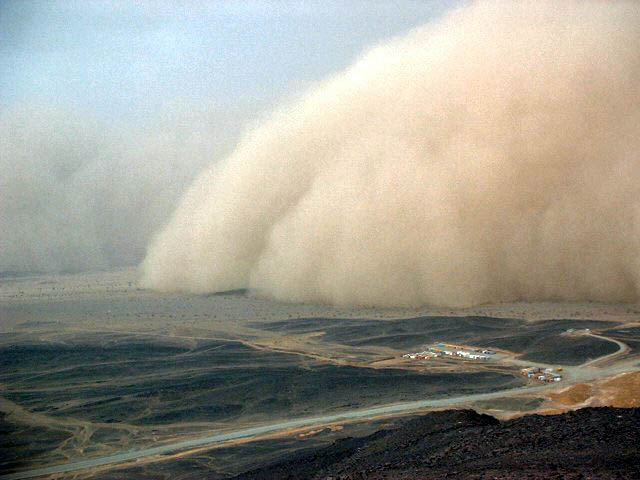
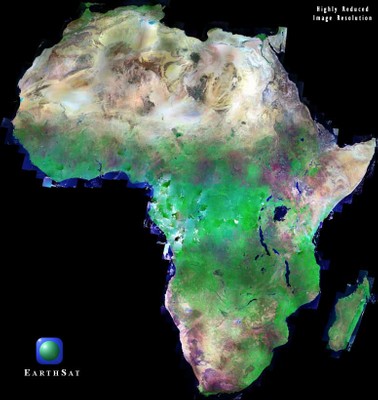
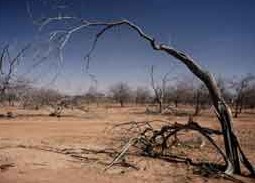
The Sahara Reaches Europe


The Sahara Desert in Europe? Can't be, surely not. Guess again.

Going back as far as the colonial era, British and French scientists sounded alarms that the Sahara was expanding southward into West Africa. It still is.

One of these early scientists coined the name "desertification" to describe the transformation of viable land into desert.

In the 1990's a UN commission surveying the problem warned that up to a quarter of the earth's lands faced the threat of desertification.

In a feature story written by Andrew Goudie, a professor of Geography at Oxford, The Guardian describes the process and consequences of the spreading desert:

"The environmental impacts of desertification include a reduction in crop yields, a loss of plants and a deterioration in the quality of plant foodstuffs available to human and animals.

"A lowering of the water table decreases water availability, sand dunes encroach, and winds can generate damaging dust storms, blowing away previously productive soils.

"In addition, remaining soils can become saline when the heat of the sun evaporates moisture, leaving toxic salts behind.

"Desertification is a form of land degradation. Unfortunately, geographers still have few firm data on the rate at which desertification is occurring, and there is some controversy over the way that desert-like conditions spread.

"Contrary to popular misconception, it does not happen over a broad front, like a wave overwhelming a beach. Rather it is like a rash, tending to appear in local patches around wells, roads, settlements and other intensively used areas. "

For decades the desertification problem was dismissed as something confined to Africa. That's no longer the case. Now even parts of the United States are succumbing:

"In the United States of America, insatiable demands for water in the form of the spread of large irrigation schemes and burgeoning recreation have led to accelerated wind erosion in the High Plains.

"These pressures have also caused the desiccation of lakes such as Owens Lake in California. The 1930's American Dust Bowl is a well-documented developed-world example of land degradation under the pressure of inappropriate land-use and cycles of drought."


"Research by the UK Met Office's Hadley Centre in Bracknell has shown that the world's drylands that will tend to suffer the greatest reductions in water availability with global warming. As temperatures increase, most soil water is lost by evaporation but, in addition, the main rainfall belts will also shift.

"Some areas, like the interior of southern Africa, may see a reduction of over 60% of flow in their streams. If this is the case then the world's deserts will indeed expand further, and desertification will affect more of the world's population."

Now the Sahara has jumped the Meditteranean to spread into Europe. Portugal, Spain, Italy and Greece have are all losing valuable land to desertification.

"A fifth of Spanish land is so degraded that it is turning into desert, according to figures released for the first time yesterday, and in Italy tracts of land in the south are now abandoned and technically desert.

"One expert, Maurizio Sciortino, said that there were many causes of the soil degradation, including changing weather patterns and the rise of global farming, which is making it uneconomic to run smallholdings and is driving people from the land.

"'Land that has been carefully cultivated and preserved for 2,000 years, with terracing for soil conservation and careful irrigation to keep up productivity, is being abandoned and lost,' he said. 'The walls of the terracing break down, the soil is washed away and we are left with bare rock. Once that happens there is no way back.'


"'The conditions are particularly bad in southern Italy, Spain and Greece. Even southern France is not immune but so far they do not admit it for political reasons.'"

Other nations are also experiencing desertification including Hungary, Romania, Moldova, Bulgaria and Russia. Beyond the Black Sea, swathes of degraded lands stretch east to Mongolia and include China.

"Domingo Jimenez-Beltran, executive director of the European Environment Agency, said: 'In some parts of Europe, the degradation is so severe that it has reduced the soil's capacity to support human communities and ecosystems and resulted in desertification. Because it can take hundreds or thousands of years to regenerate most soils, the damage occurring today is, for all purposes, irreversible.'"

Once land can no longer support agriculture or grazing, it can no longer support its human population either. Already Africa is experiencing climate change-driven migration at levels of hundreds of thousands.

Europe is bracing for migration pressures from Africa. Within a decade the Europeans predict they'll have to either accept or confront refugees from desertification numbering in the millions.

And what lies ahead for Canada? We can expect some degree of similar land degradation, especially in the dry grassland regions of the Western prairie. Prominent Albertans already know this is coming, they've known it for years.

A few years back former Alberta premier Peter Lougheed wrote a lengthy article published in The Globe and Mail warning against yielding to pressures to see Canadian fresh water for export. It seemed a bit strange to read a politician from the ultimate free-trading, anti-regulation province calling for guarding Canada's borders against water traders.

Toward the end of Peter Lougheed's article it all became clear. He didn't want water-rich provinces selling their resource abroad, he wanted it available to meet Alberta's coming needs. That's right folks, the Blue Eyed Sheiks will be coming in search of water. Let's see - we do as much to create the rain as they did to create the oil under their ground so what would be a fair value for this water? I think they should start saving their pennies for a rainy day, if you know what I mean. Or not.

Friday, January 05, 2007

Chirac Puts the Knife In, And Twists


French President Jacques Chirac and US President George Bush don't have much in common. One thing they do share is that neither of them will seek re-election.

Perhaps because he's on his way out anyway, Chirac today lambasted his American counterpart's screwup in Iraq.

"At Europe's gate, the Middle East has become an epicenter of international tensions," Chirac said. "Crises are building up and spreading."

"As France foresaw and feared, the war in Iraq caused upheavals whose effects have not yet finished unraveling," he said.

"The venture exacerbated the divisions between (Iraqi) communities and undermined the very integrity of Iraq," he said. "It weakened the stability of the region, where every country is now worried about its security and independence. It gave terrorism new terrain for expansion."

Now, "more than ever, the priority is to return sovereignty to the Iraqis," Chirac said.

Yeah Chirac, that's easy to say now - oh, forget it, they said it at the time, didn't they? It sounds as though the French president wants to rub a little salt into Bush's wounds. Payback is a bitch, non?

A Scary Scientific Frontier, But Necessary?


It's all about cloning. It's all about genetic engineering. Yawn - been there, done that. It's about developing a mixed animal/human embryo. WHAT?

British scientists want to create hybrid human embryos using the unfertilized eggs of cows or rabbits. These eggs would be fused with human genetic material to create the hybrid embryo. I realize it sounds downright ghastly but consider this. The human DNA would be taken from a skin cell of a patient suffering with a particular disease such as Alzheimer's or Parkinson's disease. After the embryo is six days old and not more than 14 days old, scientists would extract the stem cells for research.

The British scientists are expected to run into a brick wall when the Human Fertilisation and Embryology Authority rules on the proposal next week.

The Labour government has already opposed hybrid embryo development citing, "considerable public unease with the possible creation of embryos combining human and animal material".

The scientists pursuing the idea point out that the cells would not be used for treatment but merely to create "disease-in-a-dish" models for research.

Leave It To The French


Ever since George Bush took it into his mind that he was going to conquer Iraq, the French have been fair game. They didn't go along with George, in fact they were openly critical of his war lust and that was enough for the administration and the American people who were as keen to kick ass as was their appointed president. Remember Freedom Fries?

Let's face it, we've all taken a few swipes at the French from time to time. Not as many or as angry as what happened in the states but enough in any case. That's why it feels good when, every now and then, we can give the French a thumbs up.

Today the French deserve a nod for accepting the challenge of solving a problem most of us pretend not to even see - the homeless. What's more, all parties save the two on the far-right have signed on to this effort described in today's The Independent:

"In the past few days, political parties from the centre-right to the far left have signed up for the six-point "Canal Saint-Martin" charter, calling for "an end to the [homelessness] scandal which shames a country like ours".

"The only parties to refuse to sign are the far-right Front National and the ultra-Catholic conservative Mouvement pour la France. Both blame the crisis on illegal immigration.

"In his televised new year address to the nation, President Chirac ordered his government to prepare snap legislation to make the right to a home legally enforceable in France. This was one of the six points in the charter drawn up by M. Legrand and his organisation, Les Enfants de Don Quichotte (The children of Don Quixote)."

The French are right, homelessness does shame a country, at least the prosperous nations of the West. If we dismiss the homeless as "bums" and "drunks" we conveniently ignore the reality that many of them are simply unfortunates who have fallen through the cracks in society, while others have been made destitute by mental or physical health problems.

Canada is a wealthy country. There's more than enough to go around that we don't have any good excuse not to follow the French lead. Damn those Frenchies!

A National HIV Test?


A Toronto judge is about to sentence Vincent Walkem for infecting a lover with HIV. Walkem ignored orders of health officials requiring him to notify his lovers of his condition. Eight years ago he infected his lover who was 18 at the time. Walkem refused to inform her or another woman he put in harm's way.

The fate of Vincent Walkem is not particularly significant. If any good is to come out of this trial, it is the warning of Toronto doctor Brian Cornelson that upwards of one in four people who are HIV positive don't know it. This, according to Dr. Cornelson, plays a big role in the recent increases in the spread of the disease.

Dr. Cornelson advocates universal testing of all residents of Canada to identify those with the disease and make a serious reduction in the spread of HIV. While there is no cure for the disease, modern medicines can greatly extend a victim's useful life and these drugs are known to be more effective the earlier the disease is diagnosed and treatment begins.

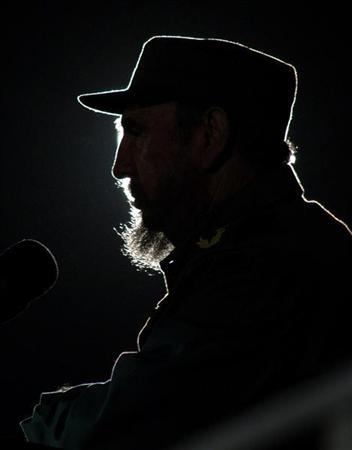
Foiled Again - By Fidel


It was a wet dream for many Cuban-Americans. Fidel would lose his grip on power, Cuba would fall into chaos as its long-suffering people rose up in revolt, and the exiles would be able to step back in and take the reins of power. They've been dreaming of it for four decades and now - DOH!

This should have all transpired by now. Cuba should have already been back under the American umbrella. Hmm, something went wrong with the plan.

No one, it seems, was counting on Fidel carefully arranging his own succession. A new bunch has taken over. What's more, there's been no uprising by the people. They're still content with the notion of defending their country against US aggression and attacks on their sovereignty.

Experts believe reform will come to Cuba but only very gradually.

What went wrong? America passed up the opportunity to "make nice" with Cuba when it could have made a difference. This ought to have been done as far back as Bush Sr., certainly during the Clinton years, but it wasn't and the Cuban exiles have themselves to thank for that.

Finding even a modest rapproachement with Cuba has never been as important as winning the votes of the 1.5 million Cuban Americans in Florida and New Jersey. America's foreign policy options were kidnapped by domestic considerations. That left Washington stuck with only one policy toward Cuba - regime change, something that struck a deep chord with the Cuban people.

Throughout the Caribbean, Central America and South America, US foreign policy is coming apart at the seams. America needs to realize that its policies have failed. These nations have changed. They've grown and have largely become more democratic. Natives are actually getting elected to power. Go figure. The shape of the world south of the Rio Grande has changed dramatically even as US foreign policy has remained static.

There is an important role for American influence in these areas. However, if America is to play that role and if all parties are to benefit from it, Washington needs to scrap the old policies and devise new approaches of a type that can be welcomed by these many nations. Maybe Fidel can give them some tips on how to start.

But You're Stealing from Jesus!

The New York Times reports on a study by Villanova University in which 85% of parishes that participated reported having suffered embezzlement in the past five years.

Slightly more than one in ten reported having lost more than $500,000.

“The Villanova study does not come as a surprise,” said Bishop Dennis M. Schnurr, treasurer of the United States Conference of Catholic Bishops. “This is something that the bishops in this country have been looking at for some time. They are aware of a need to look for mechanisms that can assist parishes in accountability and transparency.”

While the Catholic Church has the most trouble with embezzlement it is a phenomenon that seems to reach all churches in the US. The exception seems to be the Salvation Army which, "is widely considered exemplary among nonprofits in handling cash collections. The red buckets in which bell ringers collect donations are covered and locked, and all buckets must be returned to a central location, where at least two people count the number and type of bills, coins and checks, said Major George Hood, the charity’s national spokesman."

"The money must be deposited in the bank within 24 hours, and different people reconcile the initial tallies with bank records, Major Hood said."

Word to the wise. Remember, if you're dipping into the collection plate, Jesus is watching.

"Tories Get Fresh Shot at Environment"


So reads the headline in the National Post, a virtual house organ of the Reform Conservatives. A fresh shot? Did they have a stale shot?

Scribe John Ivison claims the story of the year for 2006 was the "mutation" of global warming from a nagging fear to, "a much more urgent fear that our way of life is under threat unless drastic action is taken." Either way, Ivison seems to have the issue pegged as just a fear, albeit an urgent one.

According to the Post, "Stephen Harper made a tacit admission that he misjudged how big a factor climate change was going to become in people's voting intentions." So, it appears that Little Stevie sees global warming, not so much as a threat to our very future, but as a threat to his numbers in the next election. Gee, who could have imagined?

As proof that Harper now 'gets it', Ivison points to his choice for our new Enviromin, "Treasury Board president John Baird, a man who has already proven to the Prime Minister's satisfaction that he has the right stuff to handle the most sensitive file on the government's agenda." Did I read that right? "Baird" and "sensitive" in the same sentence?

Of course Ivison's take, in the very latest right-wing hack style out of the states, is to blame the people for Harper's failure on this issue: "As proof that the average voter has the institutional memory of a fruit fly, polls suggest the public has accepted the Liberal contention that the Conservatives are climate change deniers who will only be convinced that there is a problem when they are forced to travel to work on Parliament Hill by boat." It's us damned pinheads, we're the problem here, right?

Senior hack Ivison just can't hold Harper's charade together. He let this cat slip out of the bag about the qualities that Baird offers Harp as Enviromin: "It is asking a lot of Mr. Baird to change those perceptions, although he is better equipped than Ms. Ambrose to turn defence into attack on the floor of the House of Commons."

So what are the lessons, or lesions, to be gleaned from the National Post? Global warming (or "climate change" to use the phrase favoured by deniers) is really still just a fear, even if an urgent fear. Harper sees global warming primarily as a Tory electoral vulnerability. Canadians are just too damned stupid to understand Stevie's plan anyway and Bully Baird was picked to handle this "sensitive" matter because he's the guy "to turn defence into attack on the floor of the House of Commons."

Want to know what I think about Ivison? I believe he's got Harper's take on global warming down pat. Of course Harper's own idol has spent six years spinning lies and distortions to delude his nation so why shouldn't the Tories do the same on global warming?

Delusions Of - Why, Everything

It's hard not to feel pity for Myriam Bedard and her strange odyssey in recent years with her partner, Nima Mazhari.

A dozen years back Bedard won two, Olympic gold medals competing for Canada. That, sadly, was the zenith of her life. Since then she's been swamped in controversy sparked by some pretty bizarre behaviour.

The 37-year old is being returned to Quebec today to face charges of child abduction. Bedard surrendered to police in the US prior to Christmas on learning a warrant had been issued for her arrest.

Keeping (or perhaps "creeping") true to form, Bedard is lacing these latest events with a fresh battery of just plain weird allegations. She claims she was left to languish in a Maryland cell by the Canadian government to punish her for her testimony in the sponsorship scandal. Her lawyer says she believes it's pure retaliation.

Her lawyers also contend that a minor car accident last week involving Mazhari might have been staged by the Canadian government to somehow affect Bedard's court case.

Perhaps the best bit of bizarro was Bedard's claim that it was her boyfriend, Mazhari, who talked Chretien into staying out of the Iraq war.

I realize Bedard is upset it's taken a couple of weeks to return her to Canada but what I don't understand is why the aliens just didn't beam her home directly.

Thursday, January 04, 2007

Making Carbon Trading Meaningful


In the fight against greenhouse gases, carbon trading is the rage. A company that wants to avoid the cost of curbing its own emissions puts money into a fund that goes to reducing a like amount of GHG emissions in the Third World. It's a form of pollution control on the cheap but it's also an emissions neutral practice and a bargain at that.

Why should we measure the offset this way? Why not set a figure somewhat higher, since it's so cheap anyway?

We could tell our polluters that they could resort to carbon trading on a 2:1 basis. For every credit they wished to buy they would have to pay for twice the excessive carbon output they wish to maintain. I'll bet it'd still be a bargain and it would result in a meaningful carbon reduction to boot.

Alternately we could assess the "opportunity cost" of avoiding the cleanup (why should conscientious competitors be put at a disadvantage?) and fix a figure, say of 2/3rds to fund carbon reduction projects elsewhere.

As George Monbiot writes, the 1:1 ratio in carbon trading is akin to moving your food around on your plate. Simple offsets are not nearly enough and we're doing ourselves a real disservice by embracing that mentality.

Arnie's Getting It - Slowly


California governor Arnold Schwarzenegger is expected to announce on Monday a plan to provide health insurance to all California children. If approved by his legislature, it would extend coverage to some 763,000 children who now do without healthcare coverage.

The Terminator's main opponents are expected to be his own Republicans who are angry that their governor's proposal would also cover the kids of illegal aliens.

The proposal is believed to extend coverage to people earning up to three times California's official poverty level. That would cover a family of four with an annual income of $60,000 per year. This is the point at which 90% of children are thought to be without healthcare insurance.

Allawi Weighs In on Iraq


Hard to say if Ali Allawi is giving George Bush a taste of pre-emption but he sure isn't pulling any punches on what went wrong in the occupation of Iraq and where he believes peace is to be found.

Writing in The Indpendent, Allawi made it clear the invasion and occupation were botched:

"The Iraqi state that was formed in the aftermath of the First World War has come to an end. Its successor state is struggling to be born in an environment of crises and chaos. The collapse of the entire order in the Middle East now threatens as the Iraq imbroglio unleashes forces in the area that have been gathering in virulence over the past decades.

"It took the American-led invasion and occupation of Iraq, and the mismanagement of the country by both the Coalition Provisional Administration and subsequent Iraqi governments, to bring matters to this dire situation.

"What was supposed to be a straightforward process of overthrowing a dictatorship and replacing it with a liberal-leaning and secular democracy under the benign tutelage of the United States, has instead turned into an existential battle for identity, power and legitimacy that is affecting not only Iraq, but the entire tottering state system in the Middle East."

Right, so it's all screwed up and Iraq is a destabilizing danger to the entire Middle East. Got that.

"The seeds of another 100 years of crisis are being sown, with the Middle East consigned to decades of turbulence and the persistence of unmitigated hatreds and grudges. The most serious issue that is emerging is the exacerbation of sectarian differences between Shia and Sunni. That is a profoundly dangerous issue for it affects not only Iraq but also Saudi Arabia, Syria, Lebanon and the Gulf countries.

"It is plausible that the cost of a Shia ascendancy in Iraq, if it is marked as such, will be further pressure on the vulnerable Shia communities in the Gulf countries. There is already the rekindling of anti-Shia rhetoric in a remarkably similar rerun to the pattern that accompanied the Saudi-led campaign to contain the Iranian revolution in the 1980s. The effect of that was the rise of the jihadi culture that was the harbinger of mass terrorism and suicide bombings.

"This may drag the entire area into war or even the forced movement of people as fearful countries seek to "quarantine" or expel their Shia population."

Allawi sees five steps necessary to resolve the Iraq and greater Middle East dilemma:

"The first step must be the recognition that the solution to the Iraq crisis must be generated first internally, and then, importantly, at the regional level. The two are linked and the successful resolution of one would lead to the other.

"No foreign power, no matter how benevolent, should be allowed to dictate the terms of a possible historic and stable settlement in the Middle East. No other region of the world would tolerate such a wanton interference in its affairs.

"That is not to say that due consideration should not be given to the legitimate interests of the great powers in the area, but the future of the area should not be held hostage to their designs and exclusive interests.

"Secondly, the basis of a settlement must take into account the fact that the forces that have been unleashed by the invasion of Iraq must be acknowledged and accommodated. These forces, in turn, must accept limits to their demands and claims. That would apply, in particular, to the Shias and the Kurds, the two communities who have been seen to have gained from the invasion of Iraq.

"Thirdly, the Sunni Arab community must become convinced that its loss of undivided power will not lead to marginalisation and discrimination. A mechanism must be found to allow the Sunni Arabs to monitor and regulate and, if need be, correct, any signs of discrimination that may emerge in the new Iraqi state.

"Fourthly, the existing states surrounding Iraq feel deeply threatened by the changes there. That needs to be recognised and treated in any lasting deal for Iraq and the area.

"A way has to be found for introducing Iran and Turkey into a new security structure for the Middle East that would take into account their legitimate concerns, fears and interests. It is far better that these countries are seen to be part of a stable order for the area rather than as outsiders who need to be confronted and challenged."

The sad thing is that Allawi's vision is probably right. He has identified the thorny issues that beset Iraq and the Middle East generally and that also bind them together. I suspect he realizes that his proposals are too late. If they were to work it would be in the context of 2003, not 2007.

The Great Game is in play. There is already a Sunni versus Shiite proxy war that has already caused plenty of suffering and death in Palestine, Lebanon and Iraq and may soon surface in Afghanistan. The proxies, notably al-Qaeda for the Sunnis and Hezbollah and Hamas for the Shia, are free agents beyond the direct control of any particular state.

Allawi's proposals are also dependent upon the willingness of the United States to recognize that its days as the dominant and controlling influence in the Middle East are over. George Bush, Dick Cheney, Don Rumsfeld, Richard Perle, Doug Feith, Paul Wolfowitz and Ken Adelman have presided over the tragic events out of which Washington's authority has emerged gutted.

If America doesn't accept this new reality (of its own making) gracefully - and it won't - then this disaster is doomed to continue and worsen. However reality has never been George Bush's long suit. His is a faith-based fantasy of imaginary prowess that he cannot shed no matter how powerful the events arrayed against him.

Allawi's initiative is a non-starter but it does offer all of us a powerful matrix by which to measure America's new Iraq solutions to be unveiled next week by The Decider, George W. Bush.

How Far Can They Be Pushed?


A Decima Research poll shows the environment is the top issue of concern to Canadians and its importance is growing.

Among Tory respondents, health care narrowly won but, even there, the Harper government was seen as having done a poor job on environmental issues.

Overall, 74 per cent of the respondents polled by Decima said the government was doing a poor job on the environment.

If he's not to pay for this in the next election, Stephen Harper is going to have to make real progress on greenhouse gas emissions, especially CO2 and methane. That means pushing hard on both Alberta and Ontario and it's anything but clear he's willing to do that. The Athabasca Tar Sands (no, they're not "oil sands") need to be cleaned up, not only as to greenhouse gases but also in regard to land and water use and pollution issues.

My guess is that Harper, in appointing Baird his enviromin, isn't planning to do much of substance. Look for a lot of hot air and vague policies that won't amount to much if the Harpies survive the next election.

And Now for Japan


Nothing sparks paranoia in a nation's leaders than to find their country cut off by menacing states. It's a situation that has given rise to more than one European war and now it seems to be happening to China.

Al Jazeera reports that Japan's new leader, Abe, has come out in favour of renewed and strengthened ties between Japan and the United States. National security is the top priority for the new Japanese prime minister, Shinzo Abe:

"The security situation surrounding Japan has changed drastically with the proliferation of weapons of mass destruction and missiles as well as a series of regional conflicts," Abe said.

"In order to guarantee peace, stability, independence, freedom, democracy and to protect the lives of Japanese people, we need to further strengthen the US-Japan alliance."

As part of that alliance, Tokyo and Washington are to discuss plans in February for their troops to jointly deal with a potential conflict between China and Taiwan.

Defence and foreign affairs officials are to assess possible crisis situations that could occur across the Taiwan Straits, the Kyodo news agency reported, citing officials from both countries.

Speak of the Devil


The following post concerns China and its rapidly expanding influence throughout the Third World. It was a bit of a suprise, however, to learn in today's Christian Science Monitor that the Pentagon is about the create "Africa Command":

"The creation of the new command will be more than an exercise in shuffling bureaucratic boxes, experts say. The US government's motives include countering Al Qaeda's known presence in Africa, safeguarding future oil supplies, and competing with China, which has been courting African governments in its own quest for petroleum, they suggest.

"The expected new command 'speaks to the fact that Africa now matters to the US government as it never has in the past,' says Melvin Foote, chief executive officer of Constituency for Africa, a nonprofit group devoted to strengthening US relations with African governments.

"The idea of an Africa Command has been discussed for years, but Mr. Foote says it has taken on new urgency in light of recent events.

• Islamists took over Somalia last June and ruled until this week, when Ethiopian troops drove them out of power.
• China hosted a conference of African presidents in Beijing last year - and made about $5 billion in deals to build infrastructure in Africa for oil.

"The US gets about 10 percent of its oil from Africa, notes Foote. Some experts say it may need to rely on the continent for as much as 25 percent by 2010. 'With all the instability in the Middle East, there's some thought that we had better build partnerships in Africa,' he says."

Some 3-million people have died in the Congo in recent years and hundreds of thousands more in Darfur and the West did virtually nothing. Is it simply coincidence that this sudden interest in Africa coincides with China's growing and powerful influence in that continent?

Roads - Arteries of Empire


America's foreign policy has been a classic example of the repercussions of biting off more than you can chew.

George Bush has the US military tied down in Iraq while a growing majority of Americans turn solidly against this venture. It's "all Iraq, all the time" for the White House. This fiasco has left the US flat-footed elsewhere, something that hasn't gone unnoticed or unexploited by many nations including America's emerging rival, China.

China is beginning to supplant the United States in regions it has been neglecting including Asia, Africa, even some parts of South America. America's dependence on cheap, Chinese goods has left that country awash in greenbacks that are now being put to use to cement China's influence abroad.

In poor Asian countries such as Cambodia, Laos and Myanmar, Chinese aid is constructing bridges and roads that will not only assist the recipients but will also facilitate the supply of natural resources to China and delivery of Chinese products to these regions. Call it economic colonialism if you like but that's hardly a new reality in Southeast Asia.

Chinese aid comes without the judgments and conditions usually attached to Western foreign aid or World Bank loans. This has been especially welcome in Africa where it buys oil and gas. China has shown few, if any qualms at dealing with repressive states such as Nigeria, Sudan and Angola.

Even traditional US client states such as the Philippines find Chinese aid very much to their liking. The World Bank and the Asian Development Bank have offered $200-million in loans but China stepped in to allow the Phillipines loans of $2-billion a year for three years. This gambit ruffled some feathers in Tokyo and Washington because they are key players in the Asian Development Bank which happens to be headquartered in Manilla. Oh dear.

As China extends its global reach, a quiet arms race is underway in Asia. The US has entered a military pact with India which itself is going full bore to expand its already formidable navy and air force. The US is also pursuing a joint, missile defence programme with Japan - ostensibly designed to protect against a North Korean attack.

Ever since Mao transformed China into a unified, communist state, the country has been known for its enormous army of infantry with rudimentary training and weaponry. That no longer suits the Chinese leadership's vision of the country's military needs. Infantry divisions are being cut back as China instead works to expand its air and sea power as well as pursuing a space initiative. Today, China's military stands at 2.3 million - still the largest in the world - but down a full 1.7 million since its peak in 1985.

Washington keeps casting anxious glances over its shoulder at China's growing military power and international influence but there's really not much the administration can do to counter it while its hands are full of the immediate political and security problems it has created for itself in Iraq. By the time that is over, China may well be the world's major, de facto empire.

Geroge Will's Modest Proposal for Minimum Wage

Right-wing pundit George Will has predictably weighed in against the Democrats' intention to raise the federal, minimum wage. Where does Will think the minimum wage should be set? His views from the Washington Post may surprise you:

"Most of the working poor earn more than the minimum wage, and most of the 0.6 percent (479,000 in 2005) of America's wage workers earning the minimum wage are not poor. Only one in five workers earning the federal minimum lives in families with earnings below the poverty line. Sixty percent work part time, and their average household income is well over $40,000. (The average and median household incomes are $63,344 and $46,326, respectively.)

"Forty percent of American workers are salaried. Of the 75.6 million paid by the hour, 1.9 million earn the federal minimum or less, and of these, more than half are under 25 and more than a quarter are between ages 16 and 19. Many are students or other part-time workers. Sixty percent of those earning the federal minimum or less work in restaurants and bars and earn tips -- often untaxed, perhaps -- in addition to wages. Two-thirds of those earning the federal minimum today will, a year from now, have been promoted and be earning 10 percent more. Raising the minimum wage predictably makes work more attractive relative to school for some teenagers and raises the dropout rate. Two scholars report that in states that allow people to leave school before 18, a 10 percent increase in the state minimum wage caused teenage school enrollment to drop 2 percent.

"The federal minimum wage has not been raised since 1997, so 29 states with 70 percent of the nation's workforce have set minimum wages between $6.15 and $7.93 an hour. Because aging liberals, clinging to the moral clarities of their youth, also have Sixties Nostalgia, they are suspicious of states' rights. But regarding minimum wages, many have become Brandeisians, invoking Justice Louis Brandeis's thought about states being laboratories of democracy.

"The problem is that demand for almost everything is elastic: When the price of something goes up, demand for it goes down. Obviously were the minimum wage to jump to, say, $15 an hour, that would cause significant unemployment among persons just reaching for the bottom rung of the ladder of upward mobility. But suppose those scholars are correct who say that when the minimum wage is low and is increased slowly -- proposed legislation would take it to $7.25 in three steps -- the negative impact on employment is negligible. Still, because there are large differences among states' costs of living and the nature of their economies, Sen. Jim DeMint (R-S.C.) sensibly suggests that each state be allowed to set a lower minimum.

"But the minimum wage should be the same everywhere: $0. Labor is a commodity; governments make messes when they decree commodities' prices. Washington, which has its hands full delivering the mail and defending the shores, should let the market do well what Washington does poorly. But that is a good idea whose time will never come again."

Will engages in a handy bit of sophistry in these arguments. Yes, when price goes up, demand goes down. The flip side to that is that prices are relative to wages. The more we earn, the more we're willing to spend.

Henry Ford understood this when he designed his first, mass-produced cars. Ford wanted a car that the people who were building it could afford to buy. That meant keeping the car simple and keeping his workers' wages healthy. It worked.

Iraqi Women Slide Back into Dark Ages


Saddam was a murderous butcher but, under his regime, Iraqi women enjoyed equality and a level of freedom unparalleled in the Muslim world. Those days seem gone forever as Iraq reverts to Islamic fundamentalism. In other words, half the population of Iraq is being put back in a position of demeaning servitude.

Kavita Ramdas, head of the Global Fund for Women, describes the current plight of Iraqi women:

"Almost four years into the Bush administration's ill-fated adventure in Iraq, Iraqi women are worse off than they were under the Baathist regime in a country where, for decades, the freedoms and rights enjoyed by Iraqi women were the envy of women in most other countries of the Middle East.

"Before the U.S. invasion, Iraqi women had high levels of education. Their strong and independent women's movement had successfully forced Saddam Hussein's government to pass the groundbreaking 1959 Family Law Act, which ensured equal rights in matters of personal law.

"Iraqi women could inherit land and property; they had equal rights to divorce and custody of their children; they were protected from domestic violence within the marriage. They had achieved real gains in the struggle for equality between women and men. Iraqi women, like all Iraqis, certainly suffered from the political repression and lack of freedom, but the secular -- albeit brutal -- Baathist regime protected women from the religious extremism that denies freedom to a majority of women in the Arab world.

"The invasion of Iraq changed the status of Iraqi women for the worse. Iraq's new colonial power, the United States, elevated a new group of leaders, most of whom were allied with ultraconservative Shiite clerics. Among the Sunni minority, the quick disappearance of their once dominant political power led to a resurgence of religious identity. Consequently, the Kurds, celebrated for their history of resistance to the Iraqi dictator, were able to reclaim such traditions as honor killings, putting thousands of women at risk.

"While many believed that interventions in Afghanistan and Iraq would result in greater freedoms for women, international women's rights organizations such as the Global Fund for Women were highly skeptical of the Bush administration's claims from the start. U.S. representatives in Iraq failed to even listen to, much less validate, the voices of independent and secular Iraqi women leaders such as Yana Mohammed during the process of drafting the constitution."

When Bush or Blair or Harper boast about all that their War Without End on Terror has achieved for the people of Afghanistan and Iraq, remember that they have all turned their backs on half the populations of those countries, the weakest and most vulnerable half.

A Breath of Hot Air, Just What Canada Needs - Not!


Ambrose is out, Baird is in.

Stephen Harper has moved former treasury board minister John Baird to the environment ministry. The hapless but cute, sort of, former enviromin, Rona Ambrose, has been tucked away in intergovernmental affairs where she can't do Harper too much harm and will barely be noticed.

What's wrong with Baird for environment minister? Just about everything beginning with his puerile attitude. He's a combative thug given to outbursts and rants that border on verbal abuse. This critical ministry needs a velvet glove, a concensus builder who can get powerful concessions from the provinces, particularly Alberta and Ontario. If the provinces can't be brought willingly to the trough, they can dig their heels in and Baird will get nowhere.

One thing Baird will be able to do as Harp's environmin - that's bluster. Unfortunately, ranting and raving will almost certainly get Baird - and Canada - nowhere. If you want to measure Harpie's committment to the environment, and global warming in particular, ask yourself why he chose to give this ministry to Baird instead of Prentice?

Wednesday, January 03, 2007

Wait Till Virgil Hears This - They're Letting in Buddhists Now!

GOP Uber-Bigot Virgil Goode, Representative of the vilest segment of the Republican Party in the US House of Representatives, flew into an absolute tizzy when he raged against US immigration policy as likely the path to more Muslims, like Representative-elect Keith Ellison, entering Congress. Virg claimed to be particularly incensed at the notion that Ellision might be sworn into office on a Koran rather than a bible.

Here's some news for Representative Goode: sure there's a Muslim coming in but he'll be joined by two Buddhists!

The New York Times asked the two freshmen Buddhists for their take on the controversy:

"Representative-elect Hank Johnson, a Georgia Democrat who ousted Representative Cynthia McKinney in the Democratic primary, became a Buddhist decades ago, though his family does not share that faith. A spokesperson said that Mr. Johnson plans to use a Bible, citing tradition.

"Besides, there is no book in Buddhism that’s equivalent to the Bible or the Koran, said Representative-elect Mazie Hirono, a Hawaii Democrat. She said she probably would not use any book, but that in the past, when she was sworn in as lieutenant governor, she used a friend’s family Bible."

The NYT also pointed out something that idiot Goode seems to have forgotten, congressmen aren't sworn in on a Bible, a Koran or even a phonebook. " Mr. Ellison is not swearing in on the Koran. And no incoming members of Congress swear in on the Bible. Everyone is sworn in together during a private ceremony without any religious text. It’s only during a ceremonial photo-op that a book may be brought out."

Virgil Goode, moron and bigot in the finest Republican tradition.

NATO Aims to Cut Civilian Afghan Deaths


NATO has acknowledged that the collateral deaths of civilians in its battles with the Taliban have damaged the ability of our forces to win the hearts and minds of the Afghan people. Admitting the problem is a good start.

According to NATO spokesman, RAF Squadron Leader Dave Marsh, "We've been doing everything we can to try and reduce that number."

No NATO commander wants to kill Afghan civilians but it's not a matter over which they have much choice. NATO forces are seriously understrength. When they get into trouble they sometimes have to rely on "force multipliers", the heavy firepower advantage of artillery or attack aircraft, to save their skins. The weapons used in aerial or artillery bombardment are extremely powerful and have a large "kill radius." These weapons can't discriminate between insurgent and innocent civilian. If they're within the kill radius, they're probably going to be killed.

It's not as though Canadian soldiers aren't willing to stand and fight. Lord knows they've shown they don't shirk from taking casualties. It's just that they're so few in numbers that they're more likely to find themselves having to call in heavy weapons just to survive.

We don't have enough soldiers in Kandahar to do the job. According to recent US counterinsurgency studies, we don't have 10% of the number needed in Kandahar. When you're that understrength, you're mainly on the defensive. When you're on the defensive, the bad guys hold the initiative. When the insurgents have the advantage of the initiative, they can choose to take their time and fight you at your weak spots, putting you in the situation where you have to rely on aerial and artillery bombardment of civilian areas.

Taking civilian lives is an inevitable cost of business the way we're doing it and we're not likely to change the way we're doing business in Kandahar anytime soon.

Bush Hasn't Watched the Video


We know George Bush isn't squeamish about executions. He was in a near-permanent state of writers' cramp from signing death warrants while governor of Texas. So it was a bit surprising when the White House announced today that Bush hasn't seen the controversial video of the hanging.

White House spokesman Scott Stanzel put it this way: "The president has said that he was pleased that the Iraqi people carried forward a judicial process, tried someone who has murdered hundreds of thousands of Iraqi citizens, and carried forward justice that was unimaginable during his reign. And that's where the president's focus was."

Asked why Bush had not seen the video, Stanzel replied: "Because that's not his focus."

Was Saddam's Hanging a Death Squad Lynching?

Special Today: Morons
Buy 1, Get 1 Free

Iraqi government officials are falling all over themselves trying to explain why the execution of Saddam Hussein was so miserably botched.

Immediately after Hussein was hanged, a senior Iraqi administration official who had been present claimed it all went without a hitch - unless, of course, your first name rhymed with "Madam". He assured the world that the execution had been conducted with the utmost solemnity and respect for the condemned. As we now know, this guy was lying through his teeth. Saddam, and through him many Sunni Iraqis, was taunted, mocked and humiliated before and after he dropped through the gallows floor.

Within hours, gruesome, cellphone camera video was circulating on the internet showing the grisly event and the lynch mob spectacle that attended it.

The Maliki government was caught completely unprepared. They obviously knew how the events had unfolded but they plainly didn't expect video of it to leak out. In the days that followed, their stated concerns related almost exclusively to the unauthorized video with hardly a word of rebuke for what had gone bad with the execution itself.

Lies and coverups like these unravel gradually but unravel they do. First they blamed a rogue guard, actually arrested one who they blamed for making the cellphone video. They tried to blame the whole thing on the guards. However the audio track recorded the voice of one of the prosecutors yelling at the mob to stop taunting Saddam. This prosecutor subsequently said he saw two "officials", one of them senior, using their cellphone cameras. Not guards, officials. Of course, no officials have been arrested.

Today we get another account. Now, according to Reuters, they claim the whole execution was hijacked by a militia lynch mob:

"'Whoever leaked this video meant to harm national reconciliation and drive a wedge between Shi'ites and Sunnis,' said National Security Adviser Mowaffaq al-Rubaie, one of a group of 20 officials and other witnesses who were present at the execution at dawn on Saturday.
'There was an infiltration at the execution chamber.'

"Echoing those accusations, a senior Interior Ministry official said the hanging was supposed to be carried out by hangmen employed by the Interior Ministry but that "militias" had managed to infiltrate the executioners' team.

"'The execution was carried out by militias and outsiders. They put aside the team from the Interior Ministry that was supposed to carry it out,' the official said. "

So, let's get this straight. It has been reported that US troops secured the execution site. They supposedly searched the witnesses and execution officials on their way into the gallows chamber. Despite the prohibition on cellphones a number were carried in, right past American military security.

Then, at some point well prior to the execution, minutes earlier at the very least, a gaggle of thugs got past security and "put aside" the Interior Ministry team and - no one noticed? They marched right in, took their sweet time hanging the guy and no one, including the Interior Ministry officials, said a thing? Yeah, sure.

Obviously the Maliki government is panicking to the point where it is conjuring up irrational, ludicrous explanations and excuses. They've had days to come up with something believable, even remotely plausible, and yet they toss out tall tales that are contradicted by the very same video that started their problems. Earth to Maliki - if you're going to play this game, make sure your fabrications at least loosely fit the recording everyone has seen and heard.

It was hoped that the execution of Saddam Hussein would restore credibility to the wobbly Maliki government. What they got out of it instead was a body blow to their legitimacy that will destabilize even further Sunni-Shia tensions inside and beyond Iraq itself.

Tuesday, January 02, 2007

2007 - The Iraq End-Game


Experience has shown me that, when it comes to Middle Eastern affairs, Asian news sources often differ considerably from their Western counterparts and, when they do, the Asian take usually turns out right.

The latest Asia Times features an article that predicts 2007 will see the end game for Iraq as the US and Britain engage the Sunni Arab states to tackle their Shiite nemesis Iran and its surrogates. As the Asia Times sees it, their escape route seems to depend on setting Persian Shiite Iran against America's Sunni Arab allies:

"The year 2003 marked the implementation of bold and reckless strategies aimed at handing the US and Britain virtual ownership of the crucial Middle East region and far beyond, but 2006 was the year all the negative repercussions of their failed policies finally converged, obliging the two reckless powers to stare into the yawning chasm of a regional forfeiture.

"Now, 2007 is the year that marks the full-blown arrival of the endgame in the Middle East, when the US, Britain and Israel attempt somehow to pull a "win" from the mauling flames of regionwide failure. Their desperate policy of "one last push" to achieve that win is already shoving all the region's fractious players into a similar endgame stance, powerfully accelerating the region's descent into instability and upheaval as all its players take postures to make their final moves to prevent the loss of their respective goals and interests, each one attempting to win the game before time and opportunity run out.

"However, while the region is certainly characterized by a multitude of fractious entities all struggling for advantage and ascendancy, the negative effects of the ill-fated US/British invasion and occupation of Iraq and now their "one last push for a win before defeat" policies are causing the region's varied sectarian, political and militaristic factions to polarize. They are lining up on only two fundamental sides, with the ever more distinct dividing line between them constituted as the issue of Shi'ite against Sunni in a struggle for regional ascendancy and domination.

"Thus the entire region is sharply mirroring the bipolar sectarian configuration of Iraq itself - with Shi'ites and their sympathizers and supporters on one side and Sunnis and their sympathizers and supporters on the other.

"When the US and Britain removed the oppressive and bloodstained Sunni-based Saddam Hussein regime in 2003, they simultaneously unleashed the very real prospect of Shi'ite regionwide ascendancy. The Hussein regime effectively and strategically kept Shi'ite Iran contained, and worked to keep its regionwide tentacles (such as Hamas and Hezbollah) weak and manageable.

"Prior to the 2003 invasion, there existed a rough balance of power between Shi'ite and Sunni factions across the region - neither was able to achieve inordinate regionwide power or dominance. The US and Britain took directly on themselves the enormous task and responsibility of maintaining that rough regional balance of power when they crashed into the Hussein regime. They were entirely unprepared to assume that strategic responsibility, however.

"They permitted and, by rushing along Iraq's troubled political process, they even facilitated and encouraged the steady rise toward ascendancy of one faction over the other, and not merely within Iraq. They facilitated the regionwide ascendance of the Iran-friendly Shi'ite faction.

Thereby, they set the stage for a fundamental, lopsided power imbalance, one that has pointedly inspired the hopes and determination of the rising Shi'ite faction with respect to the achievement of (1) freedom from its perceived cruel domination by Sunnis, (2) increased regional influence and power, and even (3) regional domination.

"At the same time, as that US/British-instigated imbalance of power continues to tip in Iran's favor, it has acutely disturbed and frightened the oil-rich Sunni Arab regimes who legitimately fear a regional takeover by ascendant Iran. In 2007 the final consequences of the United States' failed policies will arrive. Those consequences are extremely unlikely to include anything resembling the "win" still hoped for by the US, Britain and Israel, for the simple reason that all the evidence points to the conclusion that the regional tipping point toward ascendancy by the Shi'ite faction may already have been reached.

"Now, the US and Britain are faced with the insurmountable problem of finding a way, at this extremely late date, to restore a rough balance of power to the region by attempting to reconstruct something similar to the mechanisms they eliminated and failed to replace in 2003. And they now have but one last chance, and they must be successful before the sectarian tinderbox they helped create is set aflame by only one of many impending sparks. All the odds are entirely against them.

"The two powers realize they cannot literally reconstruct a dominant Sunni regime in Iraq to face down the Shi'ites and Iran in a bid to revive power-balancing mechanisms. Those former mechanisms are gone and they cannot be revived. Those are no longer workable strategies and policies, anyway.

"But if Iran and the region's Shi'ite factions are to be faced down and counterbalanced, only the Sunnis can hope to accomplish the task and hold it in place on a strategic basis, because the US, already severely over-stretched and bogged down in Iraq, cannot genuinely accomplish the feat by itself.

"What Blair and US President George W Bush have obviously come up with is a strategy to pit the region's Sunnis against its Shi'ites, backing the Sunnis for the moment because they are in a weakened position with respect to Iran, yet not entirely abandoning the Shi'ites in Iraq, as long as they remain separate enough from Iran and its regional goals and proxies.

"The more radical Shi'ite militias, such as that of cleric Muqtada al-Sadr, will have to be de-fanged in the "one last push" strategy when many thousands of additional US troops soon arrive. The policy of supporting both sides to achieve a balance of power (stalemate) is not new - the US pursued that strategy for decades before 2003, supporting both Saddam and Tehran during the Iran-Iraq War of the 1980s, for just one example.

"But now the old strategy of indirect US/British involvement has a new twist, seeing that Iran and its proxies have advanced on the region to such a great extent since 2003. US and British military forces, primarily naval forces, are being massively increased inside and outside the Persian Gulf to facilitate certain "measured" actions against Iran.

"If the US and Britain imagine they can play the Sunni-Shi'ite sectarian rivalry card and somehow keep the repercussions contained within the realm of orderliness or "manageable chaos" by means of their naval and other forces, they are every bit as dense now as they were when they went into Iraq in the first place, imagining that that strategy would succeed.

"Sectarian passions on both sides are already running far too high across the region to facilitate any form of manageable transition from the current simmering and mounting chaos to a hoped-for return to a rough balance of power. The US and Britain are playing with the lighting of the fuse of a regionwide sectarian explosion.

"Are the two powers any more prepared to handle its multi-sphere implications and repercussions than they were prepared for those resulting from their 2003 invasion of Iraq? No, they most certainly are not prepared - but they are decidedly desperate to pull a "win" from the flames of failure, even if it means intentionally orchestrating a regional sectarian explosion whose outcome they imagine they can succeed in controlling.

"When the US and Britain stubbornly ignored repeated warnings and invaded Iraq, they allowed themselves to be tied into a Gordian knot whose compound filaments are much stronger than high-tensile steel. The more vigorously they have struggled to free themselves from that self-made knot, the tighter it has constricted their interests and goals in the region, so at present they are near to being crushed. The "one last push for victory before defeat" strategies represent what they hope will be their ingenious insight to raise the sword and cut across the knot.

"As the endgame arrives prompted by destructive US/British policies and strategies, Iraq will almost inevitably break apart along sectarian lines as its factions vie for ascendancy. That will oblige the surrounding states of Iran, Turkey and Syria to intervene to secure their respective, and conflicting, interests. Additionally, the Sunni Arab states will also intervene on behalf of their Sunni brethren in Iraq.

"As the US and Britain work to instigate the return to a regional balance of power by implementing their last-ditch strategies and policies, they will instead bring on the full-blown arrival of the Middle East endgame in which something other than the regionwide stalemate they envisage will be the result. One of the region's sectarian factions will win the game, thereby rising to ascendancy across the region.

"Not a restoration of a balance of power, but rather a further chaotic tipping of the balance toward one faction will be the most likely result of the implementation of their strategies. The Bush and Blair administrations are not known for their ability to conceive truly brilliant strategies and wisely implement them on the ground - hence the impending exhibition of their latest foreign-policy "talents" in the Middle East should be more than sufficient cause for alarm."

You may have noticed one element completely absent in this discussion: George W. Bush's vaunted "War on Terror." Why is it not a central issue? Because it's no longer relevant except as a cloak to cover the inevitable withdrawal of US forces in some contrived vestige of dignity or honour.

It's over folks. They're scrambling to get out of Dodge. We can only hope George will give Stevie a heads up on his way out the door - but don't count on it.

Thanks For the Thought


A few months back some parliamentary drone decided it would be good and fitting to stage a state funeral for Canada's last WWI veteran, at least when he died.

Everybody jumped on the gun carriage and, before you knew it, the Commons passed the requisite motion unanimously.

Actually there were three dissents - or there would have been if anybody had taken the time to consult the three surviving candidates as to whether they wanted to go out with all the grandeur and flourish, pomp and ceremony. Turns out they're not interested, not one of them.

Now, apparently, Veterans Affairs is looking at other options but doesn't want to say just what those might be. Duh!

He Won't Shoot His Way Out This Time


Not everybody welcomed in the New Year. One of those who probably wishes he could have stayed safely within 2006 is the US Vice President, Dick Cheney.

2007 doesn't bode well for the Dickster, not at all well, as this summary from the Financial Times reveals:

"Dick Cheney has forged a reputation as the most powerful but also least visible vice-president in recent history. In the next few weeks, however, he will be forced to fight some of his battles in the open – in the courtroom and on Capitol Hill.

"The first test will come in the criminal trial of his former chief of staff, Lewis “Scooter” Libby, charged with lying to a grand jury during an investigation into how a CIA agent’s name was leaked. The trial, due to begin in two weeks, is likely to set an ignominious precedent when Mr Cheney becomes the first vice-president to testify in a trial.

"Mr Cheney’s legal team are also steeling themselves for the launch of legislative investigations by the new Democrat-controlled Congress.

"In 2004 the vice-president felt confident enough to dismiss questions from Patrick Leahy, then a powerless Democrat, with a lewd invitation for him to do something sexually impossible. Now, he faces political revenge: Mr Leahy, the incoming chairman of the judiciary committee, has said he will issue subpoenas to secure documents that show whether the Bush administration authorised torture as part of its “war on terror”.

"He also vowed to look into no-bid Iraq contracts, including those awarded to Halliburton, a company the vice-president once ran. He said: “At the risk of incurring another of Vice-President Cheney’s special season’s greetings, I ask: ‘Where did all the money go?’ ”

"Mr Cheney enters this spotlight a weakened but not necessarily chastened figure, with fewer allies. Disaffected Republicans blame him as much as President George W. Bush for their minority status. His image for gravitas has been tarnished by public mockery. A dead deer recently found outside his residence revived mocking stories of when he went hunting and accidentally shot his friend in the face. "

I hope Cheney gets his comeuppance for he so richly deserves a full measure of that.

We Can't Find Them So We Must Have Won

That's the reasoning underlying the claim of Brigadier General Tim Grant's assessment of NATO's latest offensive in Kandahar, "Operation Falcon's something-or-other." The general maintains there is "significant evidence that low-level Taliban have simply put down their weapons and run away."

What about the crap they were feeding us via our gullible press corps three weeks ago that we had 900-villains cornered with no way out, their capture or demise a sure thing? We supposedly had Afghans, Brits, Americans and our own guys on all sides of these Taliban, an airtight cordone from which there would be no escape. We had the whole enchilada - tanks, armoured fighting vehicles, artillery, machine guns, attack helicopters, strike fighters, you name it - and the guerrillas were doomed.

Remember, this was their pitch, not mine. I've reposted my skeptical take on this, originally posted on 22 December, in the item that now immediately follows this. Read it and you'll see how ridiculous this whole business has become. It's positively breathtaking how these commanders can claim great victories when they come up empty-handed.

It's Guerrilla Warfare 101, real entry-level stuff. Insurgents win if they retain the initiative. While they hold the initiative they decide when to fight and when to deny combat. When they find themselves outmanned and outgunned, they leave to return to fight another day in advantageous circumstances.

When we have them surrounded and they leave on their terms, WE LOSE. That's how we lost Operation Medusa and that's how we lost this time. Our people face a real challenge when the insurgents launch their Spring offensive. If we can't understand the rules of their form of warfare, what it means to win and what it means to lose, how are we going to handle them a few months down the road?

Insurgents don't try to control territory because that would require them to defend that territory against a superior force and they're not made to fight that way. Our side has to "control" territory, our side has to defend that territory - that's our job, not theirs. We have one rifle on the ground in Kandahar province for every 20-square miles of territory. How in God's name are we supposed to control and defend that territory with one rifle for every 20-square miles? I guess that's a lot easier so long as you can claim victories where there are none.

Let's Hope They're Right This Time

THIS ITEM WAS ORIGINALY POSTED ON 22 DECEMBER.

We've heard this before. Our guys have the Taliban surrounded. There's no way out. It's surrender or die time for the insurgents. The last guy who said that was Canadian General David Fraser and, when the dust settled, he came up empty-handed still claiming a great victory but with almost nothing to show for it.

Now, according to CanWest, we've got'em again:

"HOWZ-E MADAD, Afghanistan -- There is no place to hide, and nowhere to run for hundreds of Taliban insurgents now squeezed into a box near here by NATO forces.

"They only have two options: Surrender, or attempt to fight their way out.

"Such is the situation in and around Howz-e Madad, a farming village 40 kilometres west of Kandahar city.

"Once tight-lipped about their objectives, and their chances of success, Canadian officers leading their army's effort in the campaign are practically boastful of its swiftness and its efficacy. "This is the first time we've projected (this) much combat power forward," said Canadian battle group commander Lt.-Col Omer Lavoie. "(NATO) and Afghan forces are surrounding them, 360 degrees."

"The Taliban are hemmed inside 10-square-kilometres of mud fortresses and walled farm compounds, terrain that is well-suited to their guerrilla tactics but which also makes it difficult -- if not impossible -- to escape.

"As Lavoie noted with satisfaction, British and American troops sit approximately 10 kilometers south of Howz-e Madad.

"More British soldiers line the west, sealing that corridor, and Canadian combat teams rolled on Wednesday through Howz-e Madad.

"About 30 vehicles and hundreds of soldiers now hold the northern flank.

"To the east, running in a straight line to the Arghandab River, is impenetrable Route Summit, the 4.5 kilometre roadway established in September, during Operation Medusa.

"Operation Baaz Tsuka succeeded Operation Medusa; it was not meant to duplicate it, especially not the violence that defined it.

"The primary objective, soldiers can recite, is to help civilians and protect them from the Taliban, and to do it within 48 hours of the first Canadian deployment.

"Isolating the Taliban to the south and, by surrounding them on all side, creating an impenetrable box, is described a secondary benefit.

"Meanwhile, during operational briefings, engaging the enemy unless first provoked is declared off limits."

The Army claims there are about 900-Taliban fighters now cornered. That should net them a lot of prisoners or a mountain or corpses. Then again if there's a hole in their net, they might come up with an empty hold, again. Colonel Lavoie was involved in Operation Medusa and was boasting plenty then too. Let's hope he gets it right this time.

Monday, January 01, 2007

There is Hope


Encouraging insights on the renaissance of American conciousness from Arthur M. Schlesinger Jr. There is reason to hope:

"We are the world’s dominant military power, and I believe a consciousness of history is a moral necessity for a nation possessed of overweening power. History verifies John F. Kennedy’s proposition, stated in the first year of his thousand days: “We must face the fact that the United States is neither omnipotent or omniscient — that we are only 6 percent of the world’s population; that we cannot impose our will upon the other 94 percent of mankind; that we cannot right every wrong or reverse each adversity; and therefore there cannot be an American solution to every world problem.”

"History is the best antidote to delusions of omnipotence and omniscience. Self-knowledge is the indispensable prelude to self-control, for the nation as well as for the individual, and history should forever remind us of the limits of our passing perspectives. It should strengthen us to resist the pressure to convert momentary impulses into moral absolutes. It should lead us to acknowledge our profound and chastening frailty as human beings — to a recognition of the fact, so often and so sadly displayed, that the future outwits all our certitudes and that the possibilities of the future are more various than the human intellect is designed to conceive.

"Sometimes, when I am particularly depressed, I ascribe our behavior to stupidity — the stupidity of our leadership, the stupidity of our culture. Three decades ago, we suffered defeat in an unwinnable war against tribalism, the most fanatic of political emotions, fighting against a country about which we knew nothing and in which we had no vital interests. Vietnam was hopeless enough, but to repeat the same arrogant folly 30 years later in Iraq is unforgivable. The Swedish statesman Axel Oxenstierna famously said, “Behold, my son, with how little wisdom the world is governed.”

"A nation informed by a vivid understanding of the ironies of history is, I believe, best equipped to manage the tragic temptations of military power. Let us not bully our way through life, but let a growing sensitivity to history temper and civilize our use of power. In the meantime, let a thousand historical flowers bloom. History is never a closed book or a final verdict. It is forever in the making. Let historians never forsake the quest for knowledge in the interests of an ideology, a religion, a race, a nation."

2006 - Goodbye


Privatized Health Care - Even the Mob Gets It!


One thing the Mafia is known for is its ability to spot and get in on good things. According to The Guardian, the latest good thing the Mafia has found in Sicily is privatized health care:

"A wave of deaths in Sicilian hospitals has highlighted a crisis in the island's health service, linked by a senior politician to the draining of public funds by the mafia.

"After drug trafficking, the control of public and private contracting is the second most lucrative activity for organised crime in Italy, amounting to a turnover of about €17.5bn (£11.8bn), of which the Sicilian mafia is responsible for €6.5bn.

"Sicily has about 1,800 private health centres compared with 150 in the rich northern region of Lombardy, said Mr Forgione. Such clinics offer government-subsidised services in order to reduce the workload for public hospitals. 'But that has diverted funds from public hospitals, which are falling into a state of disrepair,' he said. 'Sicily is the first region in Italy for the financing of private health centres and the first for patient deaths.'

"Mr Forgione, who was appointed to head the anti-mafia commission by the centre-left government of Romano Prodi, has said that investigating mafia penetration of the health business will be a priority in Sicily and Calabria. In 2005 Francesco Fortugno, number two in the regional assembly, was murdered by the 'Ndrangheta crime syndicate while investigating the awarding of hospital contracts.

'In Sicily, the mafia is not only investing in private clinics but is also involved in steering public health contracts towards friendly companies, said Mr Forgione. 'During the hunt for mafia boss Bernardo Provenzano it was even discovered that some Palermo neighbourhood bosses were themselves doctors or lawyers, part of a new mafia bourgeoisie.'"

Privatized health care - the Mob and the Tories agree, it's a good thing!

The Necropolis in My TV Set


Maybe it's just my viewing pattern. I tend to watch history programmes and documentaries with a smattering of science shows and movies thrown in for balance. Over the holidays I started to get a creepy feeling. Finally it dawned on me that I was watching hour after hour of dead people.

When I was a kid you tended to see only live people on the tube. In the subsequent decades a lot of those folks died... but their shows lived on. At first it wasn't a big deal. It was sort of nice watching someone you remembered fondly from the past. But back then you didn't see all that much of them, not nearly as much as you see today.

Today when you flick on the set you're apt to see someone who now dwells on the other side, from John Wayne to Jacque Cousteau to John Ritter, Cary Grant, Steve Allen, George Burns - you name it. Whatever happened to "life is for the living"?

My guess is that we're going to be saddled with a lot more necro-entertainment as the years go on. Some of these folks were very talented while they drew breath and, let's face it, their old shows are pretty cheap to run.

Imagine what our descendants will be thinking about us when they watch these same shows a century from now? Everything will seem so antiquated to them: our technology, our mores, our innocence, villainy, greed and waste. Imagine if we were able to sit back and watch film from our ancestors in the 18th and 19th centuries? The mind boggles.

2007 - International Polar Year


Say goodbye to the International Year of Deserts and Desertification. That was soooo 2006! Now you can welcome the UN World Meteorological Organization's International Polar Year, 2007. It's the first "polar year" since the 1950's and, this year, there is no shortage of research deemed urgent.

So far about $500-million has been dedicated to Arctic and Antarctic research projects. Canada is the biggest contributor with some $150-million in funding. Canada is followed by the Scandinavian countries and then the US which has committed to $60-million in contributions. According to the APF news service, the research will be highly focussed:

"Close to 60 per cent of what is known about the polar regions, particularly the Arctic, comes from research carried out in 1958," said Louis Fortier, scientific director of ArcticNet, a Canadian research network on the Arctic.

"The difference today is that the new polar year will occur in the context of global warming," Fortier told AFP.

Scientists studying the Arctic in the past limited their work to biological, geographical and physical sciences, but they will now examine the impact of climate change on humans.

"The other difference between this year and the previous polar years is the very explicit inclusion of what we call the human dimension," said David Hik, an Arctic expert at the University of Alberta.

"The previous polar years were an effort to understand the physical sciences and to a less extent the biological sciences, but this polar year embraces all science disciplines," Hik said.

"And particularly in the Arctic, it is really difficult to do science the way we did 50 years ago. The science has to be relevant to people who live in the North, and the reason to include them in the scientific research is to make sure they share the benefits of investment in the polar year," Hik said."

Twelve Good Men and True


A cornerstone of our Anglo-Saxon heritage is our legal system, the Common Law and trial by jury of one's peers.

Well, about that jury thing, it may be a lot less comforting that it seems.

A survey reported in the Sydney Morning Herald reveals most of the juries questioned in 25 child sex assault cases did not realize what verdict they had just delivered:

"The first question was "What was the verdict in the case?" But in only six of 25 juries surveyed could all the jurors correctly state their verdict.

"In one trial 10 jurors reported reaching three different verdicts. In two other trials, jurors said they had found the accused innocent of some charges, when they found the person guilty of all of them.

"The NSW Bureau of Crime Statistics and Research, which received permission to interview the jurors, had been conducting a study into the use of video evidence and had not expected to make a finding about the post-trial puzzlement of jurors.

"In 40 per cent of the trials at least one juror - and as many as four - who returned a not guilty verdict said, erroneously, that the judge had directed them to do so.

"A barrister who has reviewed jury trials for the Law Reform Commission, Paul Byrne, SC, said the results were disturbing and that most juries seemed to have a good grasp of their role.

"'It is a fairly surprising thing that a jury, when surveyed, would get something as fundamental as a verdict wrong,' Mr Byrne said.

"'In sex assault prosecutions there are often a number of different incidents and the jury is told pretty clearly that they are to give different verdicts for each count. I find it hard to believe they would not appreciate that. I would think that it is a relatively straightforward task and so important that they would not get it wrong.'"

Fighting the Urge to Surge


We now know that Fred Kagan and the NeoCons have got George Bush's ear yet again, enticing him with the allure of victory if he only adds another 20 to 30,000 US troops in Iraq. If you could bring yourself to believe this, how could you resist this option?

That's the US president's problem - not a lot of people are convinced. Before the emperor's wishes became known, his military chiefs said more troops either weren't needed or couldn't accomplish much. Once their master's desires were telegraphed a number of them popped up saying, "Yes, we can use those extra troops; they'll make all the difference."

So, George Bush has his generals onside, not to mention Senator John McCain. What's the problem? Part of the problem is the Democrats with their newly won majorities in the Senate and House. Another part is the American people who've stopped believing the laughable claims and promises and have turned against their leader's war of whim. As if that opposition wasn't enough, Bush now faces an angry Republican party whose surviving senators and congressmen tend to blame him and his war for their misfortune in the last elections.

According to uber right-wing pundit, Robert Novak, Bush's proposed surge is a definite non-starter with Republican senators:

"President Bush and McCain, the front-runner for the party's 2008 presidential nomination, will have trouble finding support from more than 12 of the 49 Republican senators when pressing for a surge of 30,000 troops. 'It's Alice in Wonderland,' Sen. Chuck Hagel, second-ranking Republican on the Foreign Relations Committee, told me in describing the proposal. 'I'm absolutely opposed to sending any more troops to Iraq. It is folly.'

"What to do about Iraq poses not only a national policy crisis but profound political problems for the Republican Party. Disenchantment with George W. Bush within the GOP runs deep. Republican leaders around the country, anticipating that the 2006 election disaster would prompt an orderly disengagement from Iraq, are shocked that the president now appears ready to add troops."

What does George Bush do if he can't get the support he needs in the senate and house? Does he defy congress? Does he force their hand, make them shut down the Iraq adventure and then blame them for its failure? If the war is a loser, more troops or no, what better option can there be than to set up someone else to carry the blame?

Hogmanay Horror


There'll be a lot of Scots in a grumpy mood this morning. Last night's big Hogmanay bashes in Edinburgh and Glasgow were cancelled due to high winds and torrential rain that swept across Scotland.

More than 100,000 had been expected to turn out for the Edinburgh festival and better than 25,000 for Glasgow's. Organizers had to scrap scheduled outdoor concerts and Hogmanay fireworks displays.

Mutiny on the Vatican?


The Swiss Guard are steamed and it's not just the silly constumes. According to The Independent, they're on the verge of mutiny:

"The focus of discontent at the barracks is what many papal bodyguards see as the heavy-handed policies of the current commanding officer, Colonel Elmar Theodore Mader, who has banned men from holding the traditional year-end parties on the terrace atop their barracks. Even senior officers have been forbidden to give cocktail parties, say Vatican sources.

"Ordinary guardsmen are angry that rules preventing them from staying out at night in Rome after midnight are being rigidly applied in the holiday season while Capt Mader himself is frequently out at parties until the early hours of the morning.

"One of the halberdiers was angry after discovering that the commanding officer had ordered the confiscation of a crate of wine that admirers of the corps frequently send the soldiers from Switzerland. "We received 25 bottles of good Swiss wine but when we came back from guard duty there were only five left in my room," said the guard. "The other 20 had been seized on orders of the commander, evidently for his own use."

"Capt Mader in private remarks has shrugged off suggestions that he might fall foul of mutinous tendencies, claiming that, far from being a martinet, he has a "meaningful dialogue" with his 130 Roman Catholic troops. Many guards would question that, however, complaining of double standards inconsistent with the traditions of sacrifice celebrated this year during ceremonies to mark the 500th anniversary of the corps."

2007 - Hottest Year Ever?


A powerful el Nino combined with the effects of global warming may turn 2007 into the hottest year ever recorded"

"The warning, from Professor Phil Jones, director of the Climatic Research Unit at the University of East Anglia, was one of four sobering predictions from senior scientists and forecasters that 2007 will be a crucial year for determining the response to global warming and its effect on humanity.

"Professor Jones said the long-term trend of global warming - already blamed for bringing drought to the Horn of Africa and melting the Arctic ice shelf - is set to be exacerbated by the arrival of El Niño, the phenomenon caused by above-average sea temperatures in the Pacific.

"Combined, they are set to bring extreme conditions across the globe and make 2007 warmer than 1998, the hottest year on record. It is likely temperatures will also exceed 2006, which was declared in December the hottest in Britain since 1659 and the sixth warmest in global records.

"...the World Meteorological Organisation (WMO), the United Nations agency that deals with climate prediction, issued a warning that El Niño is already established over the tropical Pacific basin. It is set to bring extreme weather across a swath of the planet from the Americas and south-east Asia to the Horn of Africa for at least the first four months of 2007.

"The cause of the phenomenon is not fully understood but in an El Niño "event" the pool of warm surface water is forced eastwards by the loss of the westerly trade winds. The sea water evaporates, resulting in drenching rains over South America, particularly Peru and Ecuador, as well as western parts of the United States such as California.

"Parts of the western Pacific, including Indonesia and Australia, suffer drought. The effects can last for anything from a few weeks to 18 months, causing extreme weather as far afield as India and east Africa."

The Independent also carried an interview today with Dr. James Hansen, Director of the NASA Goddard Institute for Space Studies and a leading US climate change expert. Hansen says we've got 10-years left to turn around the growth in greenhouse gas emissions:

If we go another 10 years, by 2015, at the current rate of growth of CO2 emissions, which is about 2 per cent per year, the emissions in 2015 will be 35 per cent larger than they were in 2000. But if we want to get on a scenario that keeps global temperature in the range that it's been in for the last million years, we would need to decrease the emissions by something of the order of 25 per cent by the middle of the century, and by something like 75 per cent by the end of the century."
The continuing rise in carbon dioxide emissions and average global temperatures is on schedule to cause the eventual collapse of the ice sheets on both Greenland and the west Antarctic, with a catastrophic rise in sea levels.
"If we follow business as usual, and we don't get off this course where year by year we're getting larger and larger emissions of CO2, then we'll have large sea-level rises this century and I think that will become more apparent over the next decade or two," Dr Hansen said.

"The last time it was 3C warmer, sea levels were 25 metres higher, plus or minus 10 metres. You'd not get that in one century, but you could get several metres in one century," he said.

"Half the people in the world live within 15 miles of a coastline. A large fraction of the major cities are on coastlines. And the problem is that once you get the process started and well on the way, it's impossible to prevent it. That's why we need to address the issue before it gets out of control."

Many species of animals and plants are not going to cope with rising temperatures, which are causing isotherms - lines of equal temperature - to travel polewards at the rate of 50km a decade, compared with the average rate of species migration of 6km per decade.

"Those species at high latitudes have no place to go to. Many of them will be in trouble. They will effectively be pushed off the planet," Dr Hansen said.