Wednesday, February 04, 2015

They've Already Shown You Their True Colours. And You'll Vote for Them, Why?

My party has only one voice in Parliament but it's a voice against which all the rest are to be measured and, when you do that, you get to see them clearly for what they are, their true colours.

In today's Toronto Star, columnist Tom Walkom calls out Mulcair and Trudeau for what they are - spineless opportunists for whom serving themselves will always trump serving Canada.


So far, the only opposition MP with enough guts to critique the content of the Conservative government’s new anti-terror bill is Green Party Leader Elizabeth May.

She said Monday in the Commons that it would turn CSIS into a “secret police force.”

She also asked if the bill’s remarkably broad definition of crimes against the security of Canada included anti-pipeline protests (and got no answer)
.

Now that experts have had a chance to plow through the omnibus bill, other critics are surfacing.

In a statement released Monday, the Canadian Civil Liberties Association asked the most trenchant question: Why are these extraordinary new security powers needed?

“There are still no answers as to why our existing laws and powers didn’t work — or if they didn’t work,” CCLA executive director Sukanya Pillay wrote.

She also pointed out that criminalizing something as vague as the advocacy of terrorism could have a chilling effect on academics and journalists.

The British Columbia Civil Liberties Association has gone even further, saying that Bill C-51 would create “an unprecedented expansion of powers that will harm innocent Canadians and not increase public safety.”

In a release, it said it is alarmed by proposals that would expand the amount of time a terror suspect can be jailed without charge and that would allow judges to impose stringent conditions — including house arrest — on people who have not been convicted of any crime.

Stripping a person’s liberty where no crime is committed or suspected runs counter to our “most basic principles of fundamental justice,” the B.C. association wrote.

But none of this stopped the Liberals or New Democrats from supporting Harper's odious bill.  Walkom cuts to the chase.

Why are Canada’s usually obstreperous opposition parties so meek? Alas, they are afraid — afraid that if they criticize the substance of Bill C-51, Harper will paint them as soft on terror.


Yes, they're afraid.  Mulcair and Trudeau had to choose whether to stand up for Canada and oppose this egregious assault on our democratic freedom or buckle to Harper's will out of fear.  If they're this spineless in opposition you can be certain they'll be worms if they ever get power.

It was precisely this political malignancy that The Guardian's George Monbiot wrote of just a few days ago.


We are told at every election to hold our noses, forget the deficiencies and betrayals and vote Labour yet again, for fear of something worse. And there will, of course, always be something worse. So at what point should we vote for what we want rather than keep choosing between two versions of market fundamentalism? Sometime this century? Or in the next?

Perhaps there was a time when this counsel of despair made sense. No longer. The lamps are coming on all over Europe. As in South America, political shifts that seemed impossible a few years earlier are now shaking the continent. We knew that another world was possible. Now, it seems, another world is here: the sudden death of the neoliberal consensus. Any party that claims to belong to the left but does not grasp this is finished.

Trudeau and Mulcair just wiped their boots on you.  This country has no need of their kind or their parties.

h/t Lorne, Politics and its Discontents

Tuesday, February 03, 2015

The Clean Energy Light at the End of the Tunnel


High carbon energy's days are numbered.  A report from IRENA, the International Renewable Energy Agency, predicts a 40% drop in the cost of renewable energy over the next few years.  That should more than offset the recent drop in oil prices and consign the highest cost/highest carbon fossil fuels to the dustbin of history.

IRENA's report, "Renewable Power Generation Costs in 2014, states that biomass, hydropower, geothermal and onshore wind are all competitive with or cheaper than coal, oil and gas-fired power stations, even without financial support and despite falling oil prices. The report was released at IRENA's annual conference in Abu Dhabi this month.

Solar photovoltaic (PV) power generation is leading the cost decline, with solar PV module costs falling 75% since the end of 2009 and the cost of electricity from utility-scale solar PV falling 50% since 2010.

In a separate report issued by Deutsche Bank this month, the cost to generate power through solar power was predicted to drop by 40% over the next three to four years. Deutsche Bank has also reported that the cost of rooftop solar power is expected to beat coal and oil-fired plant energy costs in just two years.

All of this is in keeping with the warning UBS, the world's largest private bank, circulated to its clients this summer.  The bank warned investors that conventional power utilities were on their way out due to the cost efficiency of solar power and battery technology advancements.

In language more closely associated with green NGOs, the bank with assets of more than $1.5tn says it expects a paradigm shift away from large-scale conventional power plants. “Power is no longer something that is exclusively produced by huge, centralised units owned by large utilities. By 2025, everybody will be able to produce and store power. And it will be green and cost competitive, ie, not more expensive or even cheaper than buying power from utilities,” say the authors, who urge their financial clients to “join the revolution.”

“Solar is at the edge of being a competitive power generation technology. The biggest drawback has been its intermittency. This is where batteries and electric vehicles (EVs) come into play. Battery costs have declined rapidly, and we expect a further decline of more than 50% by 2020. By then, a mass [produced] electric vehicle will have almost the same price as a combustion engine car. But it will save up to €2,000 (£1,600) a year on fuel cost, hence, it will begin to pay off almost immediately without any meaningful upfront ‘investment’. This is why we expect a rapidly growing penetration with EVs, in particular in countries with high fossil fuel prices.”
The expected 50% reduction in the cost of batteries by 2020 will not just spur electric car sales, but could also lead to exponential growth in demand for stationary batteries to store excess power in buildings, says UBS. “Battery storage should become financially attractive for family homes when combined with a solar system and an electric vehicle. As a consequence, we expect transformational changes in the utility and auto sectors,” it says. “By 2020 investing in a home solar system with a 20-year life span, plus some small-scale home battery technology and an electric car, will pay for itself in six to eight years for the average consumer in Germany, Italy, Spain, and much of the rest of Europe.”

Clearly this is the death knell of Harper's bitumen boosters. Institutional investors won't want to tie up their assets in long-term commitments to high carbon fossil fuel production.


Could Greece Become the Salvation of Western Democracy?


Greece is revered as the nation that gave mankind democracy.  Could it now become the nation that restored democracy to mankind?

Around the world, democracy has taken a pounding from the fist of neoliberalism.  Market fundamentalism and democracy are simply incompatible over time.  Neoliberalism promotes illiberal democracy, ultimately leading to political capture and the rise of plutocracy as the populace is steadily reduced economically and politically, their power quietly transferred to a select minority.

The Guardian's George Monbiot writes that we're witnessing "the sudden death of the neoliberal consensus."  This he sees in the triumph of the Syriza movement in the recent Greek elections.

The lamps are coming on all over Europe. As in South America, political shifts that seemed impossible a few years earlier are now shaking the continent. We knew that another world was possible. Now, it seems, another world is here: the sudden death of the neoliberal consensus. Any party that claims to belong to the left but does not grasp this is finished.

Foreign Policy's Philippe LeGrain agrees with Monbiot and foresees Syriza's win spreading to Spain and beyond.

"Yes we can" may be a stale slogan in Obama's America but in crisis-hit Spain it is the rallying cry of a year-old radical-left party that is taking the country by storm. In a show of strength, more than 100,000 supporters of Podemos (the party’s name means “We Can” in Spanish) filled the streets of Madrid on Jan. 31 to protest against austerity, crushing debts, and the country’s corrupt political system — and demand change. The demonstrators don’t represent a fringe group, either. Podemos is leading in the polls, ahead of both the mainstream center-left and center-right parties in elections that will be held by the end of the year.

The election of a radical-left Syriza-led government in Greece on Jan. 25 has electrified European politics. After years of being told that there is no alternative to bowing to German demands for crushing austerity and wage cuts, the plucky Greeks have dared to stand up to Angela Merkel’s government in Berlin — and other Europeans have stood up and noticed. While the immediate focus is on the showdown between the new Greek government and eurozone authorities over demands for debt relief — and the (unlikely) possibility that Greece could end up ejected from the currency union — Athenian defiance is already having wider political repercussions.


...Debtor-country governments that have obediently complied with the German diktat — notably, Spain, Portugal, and Ireland — suddenly feel very exposed politically. Governments that have mounted a mild challenge to Merkel (think France and Italy) are in a delicate position: They spy an opportunity to advance their own agenda, while fearing that they may be outflanked by those with a more radical one. And not without reason; anti-establishment parties of various stripes have the wind in their sails.

Whenever voters throw out a government, as they have done in nearly every election since the crisis began in 2008, officials from Berlin, Brussels, and Frankfurt — whom they did not elect and cannot hold to account — loudly insist that the incoming administration must stick to the failed policies of the outgoing one. Since voting for establishment parties of the center-left or center-right makes little difference, it’s hardly surprising that voters are seeking a genuine alternative. And for the moment this exists only on the extremes.

Sometimes, as in Greece and Spain, the insurgents are on the radical left. In Ireland, which is not due to vote until next year, Sinn Féin, a left-wing party that was formerly the political wing of the Irish Republican Army, has a narrow lead in the polls. In other cases, the upstarts are on the far-right. In France, Marine Le Pen’s racist National Front is out in front,winning by-elections and pulling ahead in polls for the 2017 presidential election. In Italy, where reformist Prime Minister Matteo Renzi remains popular, all three main opposition parties — the far-right Northern League, the anti-establishment Five Star Movement, and former prime minister Silvio Berlusconi’s center-right Forza Italia — are now anti-euro.

Meanwhile, The Tyee's Crawford Killian ponders whether Canada's politically disaffected could provide the core for our own version of Syrzia or Podemos.

Radical or not, Syriza and Podemos pose a powerful challenge to the narrow centre-right spectrum of acceptable thought. That could encourage some of our cautious Liberals and New Democrats to try out some ideas that are radical only by comparison with the dull orthodoxy of Stephen Harper. If they do, they might find that many Canadians are way ahead of them -- including the two out of five who didn't even bother to vote in the last election.

I agree.  The Liberals and the New Democrats too easily threw in the towel to embrace market fundamentalism and an unhealthy degree of neoliberalism as though these were inevitabilities.  In their unseemly quest for power (NDP) and redemption (LPC) both have abandoned the progressive Left.  They might both do well to lift their eyes, take a look around, and mend their ways.

I'm With George. End the Politics of Fear. Vote Green.


The Guardian's George Monbiot sees the neoliberal consensus collapsing.  This, he argues, is the time to let go of the politics of fear.  He is addressing his fellow Brits who are heading to the polls in May but his message is one that should resonate with all Canadian progressives.

Here is the first rule of politics: if you never vote for what you want, you never get it. We are told at every election to hold our noses, forget the deficiencies and betrayals and vote Labour yet again, for fear of something worse. And there will, of course, always be something worse. So at what point should we vote for what we want rather than keep choosing between two versions of market fundamentalism? Sometime this century? Or in the next? Follow the advice of the noseholders and we will be lost forever in Labour’s Bermuda triangulation.

Perhaps there was a time when this counsel of despair made sense. No longer. The lamps are coming on all over Europe. As in South America, political shifts that seemed impossible a few years earlier are now shaking the continent. We knew that another world was possible. Now, it seems, another world is here: the sudden death of the neoliberal consensus. Any party that claims to belong to the left but does not grasp this is finished.

A survey by the website voteforpolicies.org.uk reports that in blind tests (the 500,000 people it has polled were unaware of which positions belong to which parties), the Green party’s policies are more popular than those of any other. If people voted for what they wanted, the Greens would be the party of government.

Fearful voting shifts the whole polity to the right. Blair’s obeisance to corporate power enabled the vicious and destructive policies the coalition now pursues. The same legacy silences Labour in opposition, as it pioneered most of the policies it should oppose. It is because we held our noses that there is a greater stink today. So do we keep voting for a diluted version of Tory politics, for fear of the concentrate? Or do we start to vote for what we want? Had the people of this nation heeded the noseholders a century ago, we would still be waiting for the Liberal party to deliver universal healthcare and the welfare state.

Society moves from the margins, not the centre. Those who wish for change must think of themselves as the sacrificial margin: the pioneering movement that might not succeed immediately but which will eventually deliver sweeping change. We cannot create a successful alternative to the parties that have betrayed us until we start voting for it. Do we start walking or just keep talking about the journey we might one day take?

Change arises from conviction. Stop voting in fear. Start voting for hope.

Jeffrey Simpson's Eulogy for John Baird

John Baird got out while the getting was good.  According to The Globe's Jeffrey Simpson, Baird's departure won't leave much of a vacuum.

His departure weakens a cabinet of distinctly modest talents, and further shrinks the influence of the old Mike Harris Conservatives in what is essentially a modernized Reform Party government.

...Mr. Baird did not make Canadian foreign policy; he certainly was not a foreign policy expert or thinker. He executed foreign policy as conceived by the Prime Minister with whom he shared a common perspective on the world.

He leaves the foreign affairs ministry with morale at rock-bottom. Diplomats despaired at the idiosyncratic nature of the government’s foreign policy, the selling of Canadian embassies abroad, the petty rules imposed on entertaining abroad, parties he organized for friends at Canadian missions, the rejection of speeches prepared by the department, but more than anything else the impulsive and ideological directives imposed, often on short notice, by the youthful enthusiasts in Mr. Baird’s office.

But, of course, Mr. Baird and his staff would reply that the ministry remains full of Pearsonian internationalists more intent on saving the world and being nice to everyone than pursuing Canada’s national interests. Many are the examples of this tension, but nowhere was this more evident than in the Middle East, where the government’s absolute fidelity to every jot and tittle of Israel’s behaviour – rewarded by a massive swing to the Conservatives among Jewish voters – drove seasoned diplomats to distraction.

Indeed, in every portfolio, it is hard to think of where Mr. Baird left an imprint, except stylistically. He executed the government’s first major piece of legislation, the Accountability Act, the outline of which had figured in the Conservative platform as an antidote to alleged corruption under the Liberal government. It turned out to be a massive piece of legislation that spawned new agencies and expanded others, required new paperwork burdens and generally increased inefficiency in exchange for putative gains in probity.

At environment, like all holders of this portfolio, Mr. Baird ragged the puck, since the government had little interest in the file. There, his rhetorical abilities came in handy, when he blunted all attacks with fusillades of indignation.

Mr. Baird was given a somewhat longer leash as a minister than most in this highly centralized government, perhaps because he had earned respect as a faithful and effective public advocate for the government’s positions. Still, his latitude was always limited, for such is the nature of this government, so it would have been difficult for him, as for any minister, to leave a substantive mark, as opposed to a rhetorical one.

Harper's Bitumen Policy - Don't Ask, Don't Tell


The Harper government has gone to extraordinary lengths to avoid the public learning just what's in bitumen and the risk that stuff poses to our rivers, our lakes, our groundwater supply and our oceans.  Mum's the word.

Two things we've learned about Harper by now.  He's secretive and pathologically dishonest.  The man is a born liar.

One of those subjects Harper wants to keep out of the public eye is bitumen, his Athabasca Tar Sands bounty.  His government commissioned a study in 2003 and promptly buried it.  It has now surfaced but it raises a massive number of questions and delivers damned few answers.


Here's what the Canadian Press says is missing from the report.

Toxicology: Research on the biological effects of oilsands products is lacking. Report found no peer-reviewed articles at all.

Bitumen in water: There is little information on how bitumen, diluted bitumen or products used to dilute bitumen behave in water, including whether bitumen sinks or floats.

Metals: Although bitumen has different heavy-metal concentrations and components than conventional oil, their behaviour in a spill hasn't been studied.

Condensate: Not much is known on the toxicity of condensate — a lighter hydrocarbon used to dilute bitumen for pumping — once it enters a body of water.

Pathways: The mechanics of how bitumen and other oilsands products interact with organisms is unknown.

Air toxicity: More research is needed on the toxicity and deposition of oilsands hydrocarbons through the air.

Specific water bodies: Little research has been done on the effects of hydrocarbon spills specific to Canadian waters such as the Great Lakes.

Photo-toxicity: Studies should be conducted on whether chemicals in bitumen are made more toxic by sunlight, as happens with some hydrocarbons

Dispersants: More needs to be known about the interaction of bitumen, the environment and dispersants, which are chemicals sometimes used to break up and speed the decomposition of oilspills.

Ice: The behaviour of oil, bitumen and dispersant in the ice-choked, cold and dark waters of the Canadian Arctic is largely unknown.

The government has been sitting on this report since 2013.  A spokesman for Fisheries & Oceans tried to fend off criticism by saying that a peer reviewed version of the report will be released soon.  Peer reviewed?  What is there that warrants peer review?  The report simply lists, item by item, all the critical information we don't have, all the matters that haven't been studied.  How do you peer review that?  

The industry responded quickly and, as expected, the bullshit flowed hot and heavy.

"There have been a number of studies by reputable third-party and scientific organizations ... that demonstrate that diluted bitumen behaves just like any other type of crude oil product that's transported through our pipeline," he said.

In an emailed statement, Phillipe Reicher of the Canadian Energy Pipeline Association made a similar point.

"Generally speaking, we have no operational evidence that indicates that diluted bitumen behaves differently than other forms of crude oil," he said.

Claiming that dilbit behaves just like any other type of crude oil and that there's no operational evidence to indicate that dilbit behaves differently than other forms of crude is an outrageous and very deliberate lie.  Just two words are needed to put the lie to that - Kalamazoo River.  


Let's Rebrand Measles. Call it "ISIS-Pox"


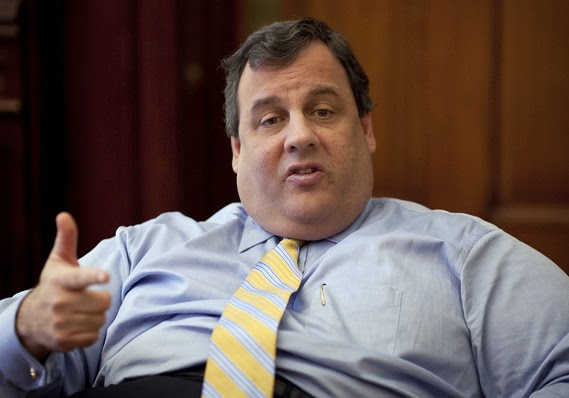
It's political correctness stood on its head.  New Jersey governor and Republican presidential nomination contender, Chris Christie, thinks American parents should have "a measure of choice" as to whether to have their kids vaccinated against measles.

No sooner did El Bloato blurt that out than he started to backpeddle.

"I didn't say I'm leaving people the option, what I'm saying is that you have to have that balance in considering parental concerns because no parent cares about anything more than they care about protecting their own child's health. And so we have to have that conversation. But that has to move and shift, in my view, from disease type. Not every vaccine is created equal, and not every disease type is as great a public health threat as others."


Meanwhile the measles outbreak has now spread to 14-states and Mexico.


This being America and all there's an obvious solution.  Rebrand measles as "ISIS Pox" and get it out via FOX News that murderous Islamist radicals are trying to attack America by exploiting its unvaccinated children.  Let that circulate for a day or two and they'll be shipping the parents of unvaccinated kids to Guantanamo.


Texas Proclaims "American Sniper" Day


It's official.  February 2nd will be Chris Kyle Day in the great state of Texas.

Governor Greg Abbott wasn't content to honour this mass killer and self-confessed murderer, he also sought to cloak Kyle in the honour of "every man and woman who has ever worn the uniform of the United States Military."

That there might be more than a few men and women veterans who want nothing to do with this now thoroughly discredited killer is obviously of no moment in the Lone Star State.

Monday, February 02, 2015

Two Feet, Please.

Only in North America would this be a big deal.  In HarperLand it would be an impossibility.

Barack Obama has signed into law a provision requiring federal infrastructure - such as roads and wastewater plants - to be built 2-feet higher as a hedge against climate change and sea level rise.  Existing infrastructure is to be raised as it comes up for maintenance.

What's remarkable about this is how contrary it is to anything undertaken by Harper & Co.  This is the United States of America not merely acknowledging but actually responding to climate change.  The Harper regime, perhaps shell-shocked by the reality of collapsed world oil prices, does nothing to prepare Canadians for the challenges in store.

Will Our Grandkids Be Smarter, Smart Enough to Fix Everything We've Broken?

It's called the Flynn Effect.  Put simply, we're getting smarter at the rate of .3 IQ points every year.  That's 3 IQ points every decade and it's happening everywhere, not just in the advanced, advantaged nations.

Here's James Flynn.


Perhaps our civilization's best hope is that our grandkids will be smart enough by the time they take the reins of power to fix everything we've broken.  Let's hope.

Are Canada's Disaffected the Raw Material for a Leftist Renaissance?


Europe is still reeling from the victory of the Syriza party in the recent Greek elections.  It was a matter of days before that spread to austerity-wracked Spain's Podemos movement that has gone from nothing to the country's second largest political party in just six months.

Now The Tyee's Crawford Killian asks whether Canada's politically disaffected might provide the fuel for a similar movement to displace our neoliberal parties.

Could we see a Syriza or Podemos in Canada? It's clear that our dismal voter-turnout numbers reflect a political alienation far deeper than we would like to admit, especially among our young people. But as bad as their experience has been since 2008, it hasn't been as brutal as that of young Greeks and Spaniards. Even our Occupy movement was more a fad than a coherent political challenge to the status quo.

...In a recent New York Times column, economist Paul Krugman damned and blasted the austerians and said, "If anything, the problem with Syriza's plans may be that they're not radical enough."

Radical or not, Syriza and Podemos pose a powerful challenge to the narrow centre-right spectrum of acceptable thought. That could encourage some of our cautious Liberals and New Democrats to try out some ideas that are radical only by comparison with the dull orthodoxy of Stephen Harper. If they do, they might find that many Canadians are way ahead of them -- including the two out of five who didn't even bother to vote in the last election.


The Liberal left has been left behind as their former party shifted decisively to the right and embraced neoliberalism.  Many New Democrats bridle at the centrism imposed on their party under Layton and Mulcair, the Blairification of the NDP.  And then, as Crawford points out, there is this massive disaffected population that feels no meaningful connection to our current political apparatus.

It's apparent that neither Trudeau nor Mulcair is reaching out to this segment of the electorate.  It may be high time for a new political movement, one that understands the value of political philosophies consigned to the dustbin by those who have implemented dysfunction as the status quo for Canadian politics today.

Alberta - Yet Again, Number One!


It seems that Alberta has claimed another world record.  This time it's for the magnitude of a fracking-induced earthquake, a 4.4-magnitude temblor last week at Fox Creek.

"The location of the earthquake is consistent with being induced by hydraulic fracturing operations," confirmed Peter Murchland, a spokesman for the Alberta Energy Regulator.

"The AER regards all changes in seismicity that have the potential to indicate an increased risk associated with hydrocarbon production seriously," Murchland added.

...For years industry and fracking experts argued the technology wouldn't cause quakes that could be felt on the surface.

But specialists in earthquake hazards such as Gail Atkinson, who holds the Canada Research Chair in Induced Seismicity Hazards at Ontario's Western University, argued the opposite.

"I have consistently maintained this kind of thing can happen," said Atkinson. "With fracking, the magnitudes have been increasing every year."

Natural Resources Canada reported a swarm of at least 15 earthquakes this January west of Fox Creek in a region where Encana, Talisman, Apache, Chevron Canada and ExxonMobile intensified the drilling and fracking of two-kilometre-long horizontal wells nearly a year ago.

These fracked earthquakes may also impact on the feasibility of underground carbon sequestration.  The fossil fuelers regularly promise to capture CO2 emitted from extraction and processing that will then be liquefied under intense pressure and pumped underground.  That CO2, if it leaks to the surface, is deadly and all it might take is a failed well cap or seismic rift to allow that to happen.

The Seven Deadly Traits of a Permanent Warfare State

Classic military science holds that war is a state of affairs that exists between periods of peace.  In other words, war is intended to achieve peace on terms acceptable to the victor.  War is not an end unto itself.  Well, guess what?  That was then, this is now and, today, war is a highly profitable end unto itself.

How is it possible to turn a democracy into a permanent warfare state? Former colonel turned academic, William J. Astore, identifies the seven keys to perpetual war.

1. The privatization of war: 

The U.S. military’s recourse to private contractors has strengthened the profit motive for war-making and prolonged wars as well. Unlike the citizen-soldiers of past eras, the mobilized warrior corporations of America’s new mercenary moment—the Halliburton/KBRs (nearly $40 billionin contracts for the Iraq War alone), the DynCorps ($4.1 billion to train 150,000 Iraqi police), and theBlackwater/Xe/Academis ($1.3 billion in Iraq, along withboatloads of controversy)—have no incentive to demobilize. Like most corporations, their business model is based on profit through growth, and growth is most rapid when wars and preparations for more of them are the favored options in Washington.

2. The embrace of the national security state by both major parties: 

Jimmy Carter was the last president to attempt to exercise any kind of control over the national security state. A former Navy nuclear engineer who had served under the demanding Admiral Hyman Rickover, Carter cancelled the B-1 bomber and fought for a U.S. foreign policy based on human rights. Widely pilloried for talking about nuclear war with his young daughter Amy, Carter was further attacked for being “weak” on defense. His defeat by Ronald Reagan in 1980 inaugurated 12 years of dominance by Republican presidents that opened the financial floodgates for the Department of Defense. That taught Bill Clinton and the Democratic Leadership Council a lesson when it came to the wisdom of wrapping the national security state in a welcoming embrace, which they did, however uncomfortably. This expedient turn to the right by the Democrats in the Clinton years served as a temporary booster shot when it came to charges of being “soft” on defense—until Republicans upped the ante by going “all-in” on military crusades in the aftermath of 9/11.

Since his election in 2008, Barack Obama has done little to alter the course set by his predecessors. He, too, has chosen not to challenge Washington’s prevailing catechism of war.

3. “Support Our Troops” as a substitute for thought. 

You’ve seen them everywhere: “Support Our Troops” stickers. In fact, the “support” in that slogan generally means acquiescence when it comes to American-style war. The truth is that we’ve turned the all-volunteer military into something like a foreign legion, deploying it again and again to our distant battle zones and driving it into the ground in wars that amount to strategic folly.

4. Fighting a redacted war. 

War, like the recent Senate torture report, is redacted in America. Its horrors and mistakes are suppressed, its patriotic whistleblowers punished, even as the American people are kept in a demobilized state. The act of going to war no longer represents the will of the people, as represented by formal Congressional declarations of war as the U.S. Constitution demands.

5. Threat inflation: 

There’s nothing new about threat inflation. We saw plenty of it during the Cold War (nonexistent missile and bomber gaps, for example). Fear sells and we’ve had quite a dose of it in the twenty-first century, from ISIS to Ebola. But a more important truth is that fear is a mind-killer, a debate-stifler.

Back in September, for example, Senator Lindsey Graham warned that ISIS and its radical Islamic army was coming to America to kill us all. ISIS, of course, is a regional power with no ability to mount significant operations against the United States. But fear is so commonplace, so effectively stoked in this country that Americans routinely and wildly exaggerate the threat posed by al-Qaeda or ISIS or the bogeyman du jour.

6. Defining the world as a global battlefield: 

In fortress America, all realms have by now become battle spheres. Not only much of the planet, the seas, air, and space, as well as the country’s borders and its increasingly up-armored police forces, but the world of thought, the insides of our minds. Think of the 17 intertwined intelligence outfits in “the U.S. Intelligence Community” and their ongoing “surge” for information dominance across every mode of human communication, as well as the surveillance of everything. And don’t forget the national security state’s leading role in making cyberwar a reality. (Indeed, Washington launched the first cyberwar in history by deploying the Stuxnet computer worm against Iran.)

Think of all this as a global matrix that rests on war, empowering disaster capitalism and the corporate complexes that have formed around the Pentagon, the Department of Homeland Security, and that intelligence community. A militarized matrix doesn’t blink at $1.45 trillion dollars devoted to the F-35, a single under-performing jet fighter, nor at projections of $355 billion over the next decade for “modernizing” the U.S. nuclear arsenal, weapons that Barack Obama vowed to abolish in 2009.

7. The new “normal” in America is war: 

The 9/11 attacks happened more than 13 years ago, which means that no teenagers in America can truly remember a time when the country was at peace.“War time” is their normal; peace, a fairy tale.

What’s truly “exceptional” in twenty-first-century America is any articulated vision of what a land at peace with itself and other nations might be like. Instead, war, backed by a diet of fear, is the backdrop against which the young have grown to adulthood. It’s the background noise of their world, so much a part of their lives that they hardly recognize it for what it is. And that’s the most insidious danger of them all.

Yes, this is all true of America but ask yourself to what extent these have taken hold in Canada, especially during the Harper years.  Have we not become a Surveillance "national security state"?  Of course we have.  Do we not cleave to the "support the troops" mantra so readily exploited for political gain and manipulation of the public?  Have we not inflated the threats we face, especially ISIS?  When was the last time Canada did not have military personnel deployed in an active combat zone?  Has the Canadian military not become a de facto Foreign Legion for the United States?  Is that not what the F-35 is all about?

We may not qualify as a permanent warfare state but we're a branch plant operation of one.  

We were warned.  We were all warned.


Is the F-35 the West's Flying Maginot Line?


The overpriced, overdue and under-performing F-35 could actually weaken the defences of America and her allies, including Canada.  Even pretending, for the sake of argument, that the Lockheed light attack bomber could meet the expectations we all had for it at its inception, the sheer cost of the project, especially at a time of austerity, is crippling.

The hard-right Washington Examiner compares the F-35 to France's Maginot Line.

Between the two world wars, France chose to build an impregnable defense against the sort of invasions it suffered in 1870 and 1914. The Maginot Line was over 900 miles long, took 10 years and cost billions of francs to build. The Germans rendered it irrelevant in 1940 by driving their tanks around it.

When it comes to defence budgets, the F-35 is a money magnet.  It sucks money that could be put to better use for other things.  Some purchasers, like the Netherlands, have tried to cope by paring their orders.  The Dutch initially planned to buy 85 light bombers.  They're now in for just 37.  Perhaps 37 would do less damage to the Dutch than being on the hook for 85.

As an untried and unproven weapon system, the F-35 is a potential basket full of surprises.  We're told what it can do but that's a lot like listening to a salesman pitch a car he won't let you take for a drive.  Every other warplane on the market is available for testing and evaluation.  Only the most expensive allows you to kick the tires only after your cheque has cleared the bank.

The Germans knew the Maginot Line was too tough to crack but they also knew that didn't matter if they were willing to send their tanks pouring through the Ardennes forest.  And so they did and so France fell.

The F-35 boasts the invincibility of stealth technology.  While the airplane has been mired in development challenges and setbacks, its intended adversaries, Russia and China, have made good use of their time unlocking the secrets of America's stealth technology, developing and fielding counter-stealth systems and even producing their own stealth warplanes that, quite by coincidence I'm sure, will be operational about the same time as the F-35 (if we're lucky).  

A few years ago it was reported that the Chinese were pleased at the acceptance of the F-35 as the default warplane for the West.  They were happy because they were confident it could be countered and would, like the Maginot Line and the French, drain the defence budgets of America and her allies.

So Far This Century, We're 14 for 15


Bad news for the tinfoil hat brigade.  The UN World Meteorological Organization reports that 14 of the 15 hottest years on record have occurred since 2000.  Only one year this century hasn't been a record year.  Just one.  One out of fifteen.

The WMO report combined data sets from Britain's Met Office, NASA, NOAA and others.

Friday, January 30, 2015

Not Sure How Jeb Gets Past This

It's looking like former Florida governor, Jeb Bush, intends to seek the Republican presidential nomination.  There's a big slate of aspirants this year and plenty remaining even after Mitt Romney stood down.

I'm guessing here but I expect some of Jeb's rivals might just suggest he take his mother Barbara's advice.  (Go to 2:20)

Could "Rapidly Proliferating Threats" Derail the F-35?


(Remember, this is the plane that the Harper government wants to saddle our aircrews with for half-a-century, fifty years.  But, I digress.)

Trying to keep tabs on the development of Lockheed's F=35 requires no end of reading between the lines.

One thing that comes through, admittedly in snippets and from different angles, is that the Americans are starting to conclude that their wunder-plane is less wunderful than they had hoped.

Months ago the journal of the US Naval Institute fretted that the F-35 was operationally flawed because it lacked "all-aspect stealth."  Its stealth cloaking is mainly frontal aspect which means the F-35 remains detectable from the sides, above, below and behind.

The head of the US Air Force air combat command, General Hostage, has said the F-35 isn't a stand alone warplane but requires fighter cover, that is to say the F-22 Raptor, to survive.

Word has leaked out that the F-35 has to steer clear of thunder storms and night flying is out, for now.  More recently it got out that the F-35 has a "heat management" problem that prevents it from flying fast at low altitude, the very place an airplane like this has to operate.  The proposed solution is to re-engine the already over-priced warplane in a few years as a new, adaptive engine is developed.  Keep those cheque books open, fellas.

One thing that has emerged in snippets is that both the US Air Force and US Navy are pressing hard for a new warplane to replace the F-35 ASAP.  They're not sure that its limited stealth cloaking can stand up to rapidly proliferating threats.

There is a saying in Washington defense circles: The threat always gets a vote. It means that a valid strategic threat can influence decision-makers to derail or accelerate a weapons program. In the case of the most expensive aircraft program in history, the Joint Strike Fighter (JSF), senior Pentagon officials have begun considering what might happen if the still-developmental F-35 were compromised by the proliferation of ever-more-capable air defenses.

...There is a “growing concern” among senior officials in the Office of the Secretary of Defense about the proliferation of advanced air defense radars and anti-aircraft weapons, says an industry official familiar with these discussions. “We took a long time on this. The threat is taking some turns on us.” Senior officials are loath to cause alarm and jeopardize the coalition behind the F-35 and are thus tight-lipped about it.

The situation is not at a crisis point yet, one industry source says. Obsolescence is inevitable for any weapon system; the discussion now is about when that could happen for the F-35 and how to address it if it is sooner than hoped. “We are starting to see the emergence of some stressing capabilities to our conventional forces,” Al Shaffer, acting assistant secretary of defense for research and engineering, told Aviation Week during an interview last March. He was referring to the emergence of radars operating in very-high-frequency bands that can detect stealthy aircraft at long range. The concern is that these VHF radars could eventually pass targeting data to fire control elements for air defense systems.


Bear in mind that killing off the F-35 would be about as simple as dismembering Goldman Sachs. It's the biggest military aquisition programme in American history and there is a consensus in military, industrial and political circles that it's simply too big to kill.  There are too many people with too much at stake to shut it down as Obama did when he killed off F-22 production.  This isn't a 'white elephant.'  It's a diamond-encrusted elephant and, right now, everybody's still prepared to double down.

My guess is that the military types see the way out from under the F-35 is to move on to a newer-technology plane, manned or unmanned, that, put up against the F-35, will be irresistible.  Keep the F-35 as a bomb truck while deploying a "6th generation" successor to the F-22 that will have full-aspect state of the art stealth and a genuine multi-role capability.  This is the scenario predicted by Pierre Sprey, one of America's "fighter mafia" types responsible for the highly successful F-16 and A-10, who expects the US to wind up cutting the build of F-35s from the roughly 2,500 figure common today to around 500, no more.


"I do predict that they will have that much trouble within the next few years, and that we will never see them build more than 500 of these airplanes. That the airplane will become technically such an embarrassment that they'll pretend they did not really need it anyhow, and that 'it’s alright we have a better idea, we are working on a new airplane and forget about the F-35.'"

Foreign customers will have to realize their "F-150" is the Ford pickup variety, not the Ferrari of the same designation.  But, so?  The only Ferrari part will be the price tag.


Thursday, January 29, 2015

A Costly Fix for One of the F-35's Achilles' Heels?

Word is out of yet another problem for the F-35.  It has an overheating problem that is said to keep it from going fast at low altitude, right where this less than stellar warplane needs to operate.


Two big drawbacks to the F-35 are its limited range and mediocre speed.  It doesn't go very far in stealth mode on its internal fuel and it is incapable of the modern fighter sine qua non, supercruise.  Those are enormous shortcomings, especially for an uber-expensive warplane.

Good news.  It seems the Americans have noted the problems and have come up with a partial answer - a new engine.  Think of it as a cross between your kid's Transformer toy and a modern, high-powered jet engine.  It still won't achieve supercruise but it's a significant but very costly improvement.

The future fighter will be required to not only fly farther than today’s aircraft, but will also need more speed and power when engaging the enemy. But from a propulsion perspective, up until now these objectives have been mutually exclusive. Longer range and subsonic loiter require lower fuel burn and good cruise efficiency, while higher thrust for supersonic dash demands larger cores and much higher operating temperatures, neither of which is good for fuel burn or stealth.

To solve this conundrum and combine both capabilities in one propulsion system, engine makers are working under the U.S. Air Force Research Laboratory’s (AFRL) Adaptive Engine Technology Development (AETD) program to test technology for a new generation of engines that can be reconfigured in flight. Although AETD is set to end with a flight-weight core demonstration in 2016, the Air Force is planning a follow-on initiative called the Adaptive Engine Transfer Program (AETP). This will pave the way for an adaptive, 45,000-lb.-thrust-class combat powerplant for sixth-generation combat aircraft as well as the possible reengining of the Lockheed Martin F-35 in the 2020s.


Adaptable engines use an array of variable geometry devices to dynamically alter the fan pressure ratio and overall bypass ratio—the two key factors influencing specific fuel consumption and thrust. Fan pressure ratio is changed by using an adaptive, multistage fan. This increases the fan pressure ratio to fighter-engine performance levels during takeoff and acceleration, and in cruise lowers it to airliner-like levels for improved fuel efficiency.

The AETP-based engine design “is more aggressive than today’s standard F-35 requirements but not to the level of [powering] directed energy weapons,” comments McCormick. Instead, the potential benefits of the third stream would be aimed at opening up the low-altitude/high-speed corner of the F-35’s flight envelope to enable extended operation at Mach 0.8/0.9 and 500 ft. “Today, the F-35 has flight restrictions at lower altitudes because of thermal management. You just can’t get heat off the airplane,” he adds. “The program we have laid out says you could be in the F-35 before mid-2020s. It depends on funding profiles and how big AETP is, but it’s early in the 2022-24.”

The F135 engine currently equipping the F-35 costs about $16-million a copy. Given its advanced and more complex engineering it's a safe bet that the AETP engine will cost at least as much, probably a good deal more.

As a light, first-strike bomber, the F-35 needs to be able to go very low and very fast to defeat a sophisticated enemy's air defences.  With the existing engine's heat problems, it can't do that.  This raises the question of whether customers should buy now and be prepared to take a big hit to re-engine the fighter with the AETP engine or be content to remain with an over-cost, under-performer.  Or, they could play it safe and just look elsewhere.

Wednesday, January 28, 2015

The Taliban Finally Have Something to Worry About - ISIS

The Taliban have a new enemy, ISIS.  The Talibs figure ISIS is trying to take over their turf and, when former Taliban stalwart, Mullah Abdule Rauf Khadim, returned to Afghanistan after being released from Guantanimo, they took him down.

[Rauf] recently joined the IS, a jihadi group which controls large swaths of land in Iraq and Syria, and has been leading hundreds of masked gunmen in northern districts of Helmand.

A Taliban commander in Helmand, wishing anonymity, told Pajhwok Afghan News they disarmed Rauf and his 45 gunmen and detained them on Wednesday in compliance with directives from the Taliban’s governor for Helmand, Mullah Abdul Rahim Akhund.

Maybe we could hire a gaggle of Talibs to give us a hand in Iraq.

That Salman Guy, the Saudi King Whose Ass We're Lining Up to Kiss? Brace Yourself.


Maybe we should just paint the ISIS logo on those armoured fighting vehicles we're supplying to the Saudis.

An eye-opener in Foreign Policy magazine notes that, far from being the "moderate reformer" as our governments and media portray newly minted Saudi king Salman, he's actually steeped in Sunni extremism.


Salman was appointed by his full brother and close political ally King Fahd to direct the Saudi High Commission for Relief of Bosnia and Herzegovina (SHC) upon its founding in 1992. Through the SHC, Salman gathered donations from the royal family for Balkan relief, supervising the commission until its until its recent closurein 2011. By 2001, the organization had collected around $600 million — nominally for relief and religious purposes, but money that allegedly also went to facilitating arms shipments, despite a U.N. arms embargo on Bosnia and other Yugoslav successor states from 1991 to 1996.

And what kind of supervision did Salman exercise over this international commission? In 2001, NATO forces raided the SHC’s Sarajevo offices, discovering a treasure trove of terrorist materials: before-and-after photographs of al Qaeda attacks, instructions on how to fake U.S. State Department badges, and maps marked to highlight government buildings across Washington.

The Sarajevo raid was not the first piece of evidence that the SHC’s work went far beyond humanitarian aid. Between 1992 and 1995, European officials tracked roughly $120 million in donations from Salman’s personal bank accounts and from the SHC to a Vienna-based Bosnian aid organization named the Third World Relief Agency (TWRA). Although the organization claimed to be focused on providing humanitarian relief, Western intelligence agencies estimated that the TWRA actually spent a majority of its funds arming fighters aligned with the Bosnian government.

...The SHC’s connection to terrorist groups has long been scrutinized by U.S. intelligence officials as well. The U.S. government’s Joint Task Force Guantanamo once included the Saudi High Commission on its list of suspected “terrorist and terrorist support entities.” The Defense Intelligence Agency also once accused the Saudi High Commission of shipping both aid and weapons to Mohamed Farrah Aidid, the al Qaeda-linked Somali warlord depicted as a villain in the movie Black Hawk Down. Somalia was subject to a United Nations arms embargo starting in January 1992.

...Many in the West wish for a Saudi king who will pass meaningful reforms and push back against incitement by local extremists. Sadly, Salman does not look to be that man.

For a better insight into Saudi's shady king, read the entire article here.