Showing posts with label CSIS. Show all posts

Monday, May 21, 2018

A Question Worth Asking - Has Canada Been Captured?


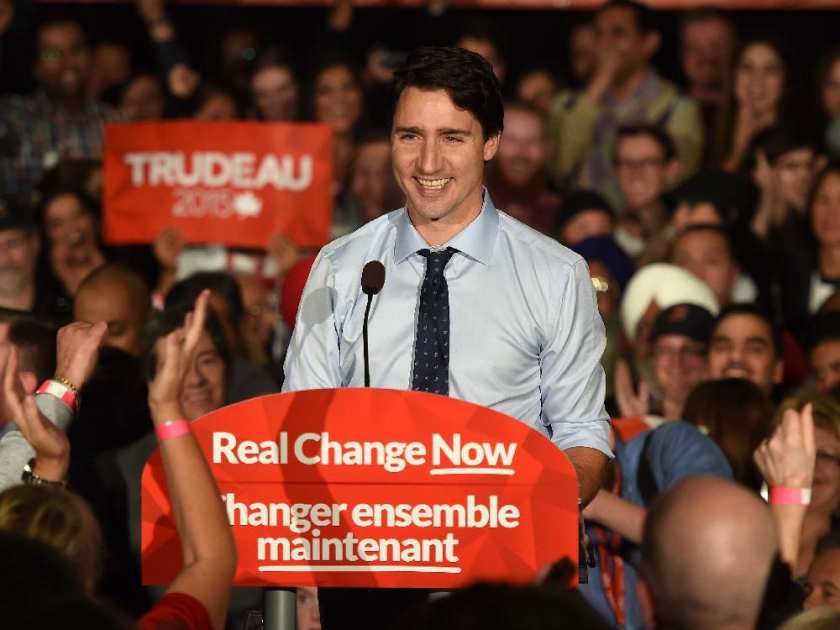
As analysis and reports stack up laying bare how much we know and everything we don't know about dilbit and Kinder Morgan's Trans Mountain pipeline, it is looking like this has nothing to do with the "national interest" as claimed by prime minister Trudeau. Instead it looks as though Trudeau is in service to some rather powerful special interests.  Who is he serving?

An article in The Tyee suggests that perhaps we're seeing the face of Canada's own Deep State, the Fossil Fuelers.

It all began with a Greenpeace energy researcher and a bundle of freedom of information documents he received that somehow had briefing notes for Andrew Leslie, parliamentary secretary to Christia Freeland. One set was for a meeting Leslie had with the CEO of a major pipeline company. The other was for a meeting between Leslie and officials of the oil patch lobby, the Canadian Association of Petroleum Producers.
...the briefing notes revealed that while Prime Minister Justin Trudeau’s Liberal government was presenting itself publicly as a stalwart defender of all things Canadian against the bullying new regime south of the border — on the environment, trade and NAFTA especially — in this instance there was celebration of the fact that Donald Trump and his administration were pro-oil and pro-pipelines.
In particular, they expressed delight over the U.S. president’s decision to approve building the Keystone XL (KXL) pipeline, which TransCanada is constructing, overturning Barack Obama’s rejection of the project. 
“We support TransCanada’s KXL project and efforts to expand its market in North America” was one of the notes’ talking points Leslie was given, consistent with the government’s public position on the pipeline. The briefing notes omitted any hint that climate change was on the agenda — and CAPP confirms the topic was not discussed during its meeting with Leslie. TransCanada and Leslie refused to respond to questions about these meetings.

For years Stewart has seen this sort of language in internal government memos, with cabinet ministers, MPs and civil servants seeing themselves as allies and partners of the energy industry. 
It’s one reason Stewart believes the oil industry constitutes a so-called “deep state” in Canada. 
“When we’re talking about a ‘deep state,’ it’s usually when supposedly democratic institutions and the will of the people is being replaced by the will of special interests,” he observes. “And I think if you look at the development of environmental policy in this country, the oil industry is so powerful, their influence is so pervasive that I think it’s fair to call it a deep state.”
...to academics, deep state is another way to refer to governments that have been captured by corporate or military/intelligence interests, or both
Captured state is a term political scientists have used for a very long time to characterize the relationship in which the government is essentially under the influence of the dominant sector of the economy,” explains Laurie Adkin, a political scientist at the University of Alberta. 
Has the federal government — along with certain provincial governments — been captured by Canada’s energy sector? 
Kevin Taft, a former leader of Alberta’s Liberal Party (2004-08) believes so. He’s the author of a new book, Oil’s Deep State. “In Canada, the fossil fuel industry has captured really key democratic institutions and in some ways has captured so many of them that it has formed what I call a deep state,” explains Taft. “So democracy stops functioning for the people and begins to function first and foremost for the fossil fuel industry.” 
Those who believe the oil industry has become a deep state point to how the political elites, whether Liberal, Conservative or NDP — from Justin Trudeau to Stephen Harper to Rachel Notley — go to bat for the industry, even if it means Canada’s greenhouse gas emissions rise and jobs are needlessly lost. Or how Canada has never forced the oil industry to curb emissions — even as the impacts of global warming become more catastrophic. And why Canada is highly unlikely to reach its targets under the Paris climate agreement.
...Deep states ...emerge in countries that are democracies. “With a captured state, there is a strong heritage of democracy,” notes Taft. A deep state occurs when numerous government departments and regulators are captured and serve specific corporate interests at the expense of public interests. “When that happens, you end up with the appearance of democracy but really you have a state within a state,” says Taft.

...it affects all political parties, no matter whether they’re on the left or right. Hence, elections become less relevant as political parties who win office eventually succumb to the fact so many government agencies are captured.

Oil sand development was largely created by government fiat. After Peter Lougheed became Alberta’s premier in 1971, the sole oil sands operation, Suncor Energy, was producing a mere 30,000 barrels a day. Now the oil sands produce 2.5 million barrels a day. 
While Lougheed encouraged development of the oil sands, he took an interventionist approach with industry, making the oil companies abide by laws, regulators and legislators. When the industry boomed in the mid-’70s, Lougheed raised royalty rates, while the federal government hit it with taxes. 
But by 1993, the balance of power was shifting. Both Premier Ralph Klein in Alberta and Prime Minister Jean Chrétien were desperate to ramp up oil sands production to boost the economy. In return, the oil industry wanted less regulation, oversight and taxation. 
Chrétien and Klein obliged. Royalties were dropped to one per cent and taxes rolled back, while environmental regulations were weakened. 
“From then on, oil sands projects would have fewer standards of accountability to democratic institutions and more accountability to investors,” says Taft. “The system of governing and managing the publicly-owned oil sands had been captured by private interests.” 
The industry boomed. By 2015, one quarter of all business investment in Canada was going to the energy sector, while oil and gas topped Canada’s exports.
The Harper Era.
The impact of this lobbying was visible when Harper was in office. From 2008 to 2012, 27 oil companies and eight industry associations registered 2,733 meetings with federal government officials. During this time, the Harper government withdrew Canada from the Kyoto climate accord, government scientists were discouraged from doing climate science and barred from speaking to the media, while the RCMP, CSIS and Canada Revenue Agency were tasked to spy on and audit groups and activists opposed to pipelines and the tar sands. 
But the coup de grâce were two omnibus bills Harper rammed through Parliament in 2012 that gutted Canada’s environmental laws, most notably the Fisheries Act and Navigable Waters Protection Act, which were viewed as impediments for building oil pipelines.
Think Tanks - Captured
The most famous is the Vancouver-based Fraser Institute, which has received funding from the U.S. oil billionaire Koch brothers and long campaigned in favour of the oil sands and pipelines while opposing climate change measures. Its staff produce a relentless stream of oped pieces for newspapers across the country. 
Canada 2020, the Ottawa-based “progressive think tank” closely allied with Trudeau, has been instrumental in shaping the Liberals. It lets industry leaders and lobbyists rub elbows with cabinet ministers and senior government officials. Among the corporate “partners” of Canada 2020 are CAPP and oil industry giants Shell, Suncor and Enbridge. 
The influence of think tanks is not to be minimized: representatives from Canada’s 10 leading think tanks appeared at least 216 times before parliamentary committees between 2000 and 2015 and were cited in the Canadian media almost 60,000 times. “It gave them and their research priceless exposure and influence in shaping government policy,” noted the Globe and Mail in December.

The Media - Captured

The oil industry advertises heavily in newspapers, on television and online. In 2013, CAPP and the Postmedia newspaper chain struck a deal whereby the media company promised to further the industry’s interests. The Postmedia papers are famous for championing the energy sector while belittling the environmental movement. A study published in 2013 by University of British Columbia and Memorial University researchers found that the Globe and Mail and National Post were failing to provide readers with a complete picture of global warming issues and underemphasizing the impacts.
Academia - Captured
The oil industry also pours millions into universities — in particular in Alberta. The University of Calgary has been beset by scandals in this regard. 
In 2011, one of its political scientists, Barry Cooper, was discovered to have transferred research funds to a climate change denial group called Friends of Science. (Cooper was also a long-time columnist with the Calgary Herald, where he poured relentless scorn on the environmental movement and any opponents of the oil sands.) 
But the topper was the Bruce Carson scandal. The federal government spent $40 million to finance a University of Calgary think tank chaired by Carson, a former senior advisor to Harper and a convicted fraudster. The institute worked with the industry on a plan to rebrand the oil sands as responsible and sustainable, and Carson co-ordinated some of his activities with CAPP. 
In 2016, Carson was found guilty of violating lobbying laws in connection with his work at the University of Calgary and fined $50,000.
Canada's Regulatory Agencies - Captured
Some critics believe key elements of the federal bureaucracy are under the industry’s sway — in particular Natural Resources Canada (NRCAN) and Environment and Climate Change Canada
“I think NRCAN has become the Department of Oil and Gas and I think Environment Canada was converted under Harper from a public service agency to a corporate concierge service to speed along the approval of oil sands projects,” says [Elizabeth] May. 
In 2015, after the Liberal government was elected, Jim Carr, the new natural resources minister, appointed Janet Annesley as his chief of staff. Annesley had spent five years working for CAPP as a vice-president, and nine years at Shell Oil before that. (Annesley was replaced earlier last year by Zoë Caron, a long-time environmental activist). 
When Catherine McKenna became environment minister, her deputy minister was Michael Martin, who had been appointed by the Harper government as chief climate negotiator for the 2009 Copenhagen climate summit, which set no firm targets for reducing greenhouse emissions.
May feels Martin pressed the Liberals to stick with the former government’s target. “There was a shift and suddenly Harper’s target was Trudeau’s target.” 
But it’s not just the federal government. Last year, internal B.C. government documents [Christy Clark's Liberals] were unearthed that revealed the province’s climate plan unveiled in 2016 had been secretly drafted jointly with CAPP and its members — in part at CAPP’s offices in Calgary.
The Crown Jewel - Captured
Then there is the National Energy Board (NEB), which has the task of reviewing things like pipeline applications. 
In recent years, the board has been accused of being heavily biased in favour of the oil industry. In 2015, for example, NEB board members met privately with Jean Charest, a former Quebec premier, who was a lobbyist for the pipeline company, TransCanada. This led to the resignation of NEB panel members when the meeting was exposed the following year. 
The NEB is also accused of not upholding the public interest when it comes to pipelines. Unifor, a trade union that represents nearly 12,000 workers in the oil industry, is opposed to pipelines designed to ship raw bitumen out of Canada, arguing it should be refined and upgraded in Canada. Over the past 30 years, nearly 20 refineries have been shuttered in Canada. 
Unifor has argued before the NEB that it should stop this trend. In a brief presented to the NEB in 2016, the union noted that by exporting raw bitumen “Canada will forego the enormous economic and employment benefits of adding value to Canadian resources through upgrading, refining, and secondary manufacturing. Not only does the bitumen export model undermine investment in value-added production over the long term, it actually threatens the security of supply to existing Canadian refineries… Incredibly, in 2014 Canada actually became a net importer of refined petroleum products: with imports of product now more than offsetting our own exports.”
The Biggest Capture of Them All - Justin Trudeau - Captured

As I argued recently, with Trudeau, just like Trump, you have to judge this prime minister by his deeds, not his words. All too often one has no relation to the other.

At the Paris climate talks his government pushed for a higher-than-expected goal — holding the planet’s rise in temperature to 1.5 degrees Celsius rather than two degrees. Trudeau also announced a plan to reduce methane emissions by up to 45 per cent from 2012 levels within the next seven years. 
But Trudeau has also undermined those goals by supporting three pipelines the industry desperately wants — Kinder Morgan, Enbridge Line 3 and Keystone XL. He also approved the $11.4-billion Pacific NorthWest LNG project to convert fracked gas in B.C. 
Prior to the election, Trudeau had promised to cut $1.6 billion in federal subsidies to the oil industry. More than two years later, this has still not happened. While recommendations to overhaul the NEB have been made, they’ve not been implemented. And the environmental laws Harper gutted have not been reinstated, although are under review.
Even the promised carbon tax on industry has been altered to give big breaks to industrial emitters like the oil and gas sector. And regulations on methane emissions have also been delayed. 
Most crucially, Trudeau has refused to place limits on the oil and gas sector’s greenhouse emissions
If you take a look at the climate plan that Canada articulated… it lays out very aggressive and ambitious plan for decarbonizing the nation,” says Abreu of Climate Action Network. “It impacts almost every sector of the Canadian economy — except the fossil fuel sector.”
A Government Wearing Petro-Blinders
Canada’s capture by the oil and gas industry’s deep state is proving ill-timed. 
“The harsh reality is that global warming is real,” says Kevin Taft. “And while much of the rest of the world is moving aggressively away from fossil fuels, Canada is going to get left behind in that transformation if we’re not really careful.”
The Tyee article provides a wonderful backdrop to help make sense of the Trudeau government's energy policy so riddled with contradictions, inconsistencies, outright falsehoods and, ultimately, cognitive dissonance.

It makes sense of the radical transformation from Trudeau 2015 to Trudeau 2018. Liberals, I'm sorry but your boy has been processed, remanufactured, and reissued to someone's liking - just not Canada's.


Friday, September 19, 2014

RCMP + CSIS - Add Water and Stir. Voila, the Stasi Lives Again


They were East Germany's dreaded secret police.   They spied on ordinary East Germans, tapped their phones, intercepted their mail, assessed their 'reliability', used informants, kept dossiers on persons of interest and ordinary citizens alike.  
The hated Stasi fell with the Berlin Wall but they live on - in today's RCMP, the Royal Conservative Mounted Police, Harper's personal security apparatus. Today the RCMP, in conjunction with our official spy agency, CSIS, and the Canadian Border Service Agency, operate a domestic spying network called the Integrated National Security Enforcement Team, INSET.

And just whose security is INSET enforcing? Yours? Mine? Canada's? Hardly. Don't be naive. They're the taxpayer funded security service of the fossil fuelers and especially the tar sanders, corporations like Enbridge and Kinder Morgan.  Oh yeah, and the Peoples Republic of China.


71-year old Leslie Askin received a "visit" from state security officers.  Why? She had taken some photographs of what she thought were Kinder Morgan storage tanks in Burnaby, B.C.  She wasn't sneaking around.  She wasn't trespassing.  She stood a good distance away and took her photos.  She wanted to show the condition of the 60-year old tanks to the National Energy Board.

Askin was spotted by Kinder Morgan security and they, in turn, set Canada's secret police apparatus on her.

Kinder Morgan says it reports all potential threats to police to "ensure the security and safety of our facilities and the surrounding community is maintained."

"It is our security protocol to record and file an internal report of any suspicious activities surrounding our facilities and to inform the RCMP of the incident," the company says.


Ten days later Askin had RCMP officers on her doorstep demanding answers.

In a statement, a spokeseperson for E-INSET confirms they did visit an individual who was seen taking photographs of Kinder Morgan's storage terminal.
"The protection and security of critical infrastructure falls within the mandate of E-INSET. Any and all tips reported to us are followed up on to the fullest extent." But, in Askin'scase: "there were no issues and the file was concluded with no further action taken."
Askin has filed an access to information to try and find out what is in her police file.
"I am now in the INSET’s database and I will be there, I guess, until I drop dead," she said. 
When dealing with a state secret police agency, they're never entitled to the benefit of the doubt. Never.  They're thugs who operate in the shadows, in service not to the country but to powerful, immensely wealthy corporations who could easily do their own security.  But those corporations lack the intrusive powers of the state, they lack the professional spy apparatus, the very service that INSET serves up to them on a platter.
My father and my uncles went to war, sacrificed enormously, to fight this sort of thuggery.  We're damned poor Canadians if we fail to stand up to it in our own time.
I have an idea.  Let's catalogue Kinder Morgan and Enbridge facilities.  Then let's organize groups of people to individually visit those facilities, monitor them, record licence plate numbers, and take plenty of photographs.  20 or 30 monitors a day, new faces rotated in daily.  Nothing remotely illegal.  No trespassing, no obstruction, no heckling. Just maintain a vigil at a safe and legal distance, letting Kinder Morgan and Enbridge and the Canadian Stasi and our despotic government know that we will not be intimidated and we will respond in kind in keeping with our democratic and constitutional right of dissent.
They want to gather intelligence on us.  We should gather intelligence on them, every scrap we can collect.  To the Stasi, being exposed was like the noonday sun to a vampire.
They can intimidate us, one by one, but they'll have a hell of a hard time doing it if they have 20 or 40 or 100 new names each and every day, a list that could quickly grow into many hundreds, perhaps even thousands.  Watch, we can make them stand down, crawl back into the slime beneath their rocks. 
The RCMP has served notice that it is quite prepared to criminalize democratic dissent.  I won't have it.  No, not in my Canada.  What about yours? 
And if the goons demand your name, tell them "Leslie Askin."

Sunday, November 24, 2013

If We're Already Seen as the Government's Enemies, Why Do We Think They Might Listen to Us?


Of the many dark farces of the Harper government, the best one is that there'll be a full and fair environmental assessment of the Northern Gateway pipeline initiative and the claim that the government remains open-minded.   The Victoria Time Colonist pundit, Jack Knox, writes that's sheer bollocks:

Emails released this week show a cosy relationship in which CSIS, a section of the RCMP, our pro-pipeline federal government, the National Energy Board and energy companies are inside the club, while those who oppose Enbridge’s proposal are treated like woolly headed radicals working against the national interest.

Which leads to the obvious question: If that’s what Ottawa thinks of British Columbians who worry about oil tankers doing an Exxon Valdez in the tricky inside waters of our coast, how seriously will it listen to them?

The emails came to light through an access to information filing initially reported in the online Vancouver Observer. They showed communications between the RCMP, CSIS, the National Energy Board and its security chief before and during the regulatory hearings into Enbridge’s proposal to pipe Alberta bitumen to a tanker terminal at Kitimat.

The messages talk of using social media and other sources to monitor everything from the Idle No More movement to the Victoria-based Dogwood Initiative to the annual all-native basketball tourney in Prince Rupert. One of the emails, a security summary prior to January’s hearings in Kelowna, refers to a gathering at which Elizabeth May — the Saanich-Gulf Islands MP and Green Party leader — and Victoria-Swan Lake MLA Rob Fleming were to speak.

Those revelations follow a series of stories in Britain’s Guardian newspaper, which reported that the Canadian government has an extensive spying program aimed at domestic environmental organizations. Since 2005, twice-a-year meetings involving energy companies, police, CSIS and other federal agencies have been convened to discuss threats to the energy sector, including challenges from green groups. The Guardian produced the agenda for one such meeting in May: sponsored by Natural Resources Canada, it was held at CSIS headquarters in Ottawa, with breakfast, lunch and coffee provided by Enbridge and a networking mixer paid for by Bruce Power and Brookfield Renewable Energy Partners.

...security arrangements bordered on the absurd when the regulatory road show came to the Delta Victoria Ocean Pointe for eight days in January. Hotel doors were guarded by a contingent of Victoria police officers working on overtime (the bill was ultimately paid by Enbridge, as the applicant was responsible for all costs related to the pipeline review). Members of the public could only watch online or on a big screen at the Ramada three kilometres away. Even the people scheduled to testify (they had to wait at least 15 months for the privilege) were herded into a holding room down the hall from the hearing room. Never mind that they looked less like wild-eyed anarchists than a United Church prayer circle, a bunch of grey-haired retirees in fleece vests and Gore-Tex.

That betrays a troubling mindset by a federal government that starts with the assumption that anyone who disagrees with the Northern Gateway plan is by definition a kook, a fringe character hiding behind a balaclava or one of those moustachioed Occupy Everything masks. Natural Resources Minister Joe Oliver infamously ranted about “environmental and other radical groups” blocking pipeline proposals. The feds poured $8 million into a witch hunt targeting environmental charities that it blamed for bogging down the approval process. In Ottawa, green is the new black.

Here's the thing.  When your government treats you as an enemy of the state, no good will come from ignoring that warning.  That's when you have to start asking if the state hasn't become your enemy.

Monday, August 26, 2013

Why PRISM Matters


The Guardian has done an excellent and vital job digesting the U.S. National Security Agency PRISM data leaked by Edward Snowden.  A good deal of it had come out, in part, in dribs and drabs but it was the British newspaper that put it all together in chilling context.

It's partly a warning about our governments spying on us and why.  It's also a warning of  what they might have in mind for us in the future.   They foresee unrest and potential upheaval in the future from climate change impacts.  Theirs is a world in which today's environmental activists are viewed as tomorrow's potential terrorists and they're gearing up for domestic military responses.

Read this summary.  Read it from top to bottom, the whole thing.  Then consider it in light of recent controversy over domestic spying on Canadians by Communications Security Establishment Canada or CSEC.

CSEC denies it is spying on Canadians.  That's bullshit.  The Americans, under the Five Eyes intelligence alliance, do the heavy lifting and share it with Canada's security agencies.  And we know that CSIS, in conjunction with the Calgary and Edmonton police and the RCMP, is running an active intelligence operation targeting environmentalists opposed to the Northern Gateway pipeline project.   This is, after all, HarperLand

It's infuriating to realize that these same governments that drag their heels on doing anything meaningful about climate change nonetheless see it as a major threat warranting preparations for military intervention against their own populations.

Friday, June 08, 2012

Steve Harper's Taxpayer-Funded Enemies List


Last evening I wrote of a state security operation on behalf of the Tar Sanders that has been launched by Stephen Harper.  It is a supposed counter-terrorism organization staffed by the RCMP, CSIS, the Calgary and Edmonton cops and the border patrol agency to "defend" the tar sands operations, the proposed bitumen pipelines and of course the supertanker operations that endanger the British Columbia coast.

But for the fact that I decided to glance through the business section of the Victoria Times-Colonist last evening I would have never known of this.   In my view this should have been on every front page, a lead item on every newscast.

Perhaps we need to take this seriously. There are facets of this that are troubling. There is the state security force running covert ops against Canadians in conjunction with our national spy agency... all in anticipation of possible future events.

I don't know about you but I've learned not to trust the RCMP even when they act overtly. When four of them put an innocent man to death in front of bystanders and then lie their asses off about it, why would anyone trust them when they operate covertly? And CSIS has shown no respect for democratic or human rights. Yet these two agencies are to be covertly set upon the Canadian public?

The RCMP has been significantly corrupted by Harper beginning with the defeat of Paul Martin in which Commissioner Zaccardelli interceded with the announcement of an investigation into Ralph Goodale that, after the election was skewed, proved to be without any substance. So shameless were his actions that "Zac" later refused to answer any questions about what he did and why.  The top cop refused to account for his actions. Then Harper appointed a professional Tory fixer and bureaucrat to be an ersatz Commissioner. More recently he had the latest top stooge become a political water carrier to write to provincial firearms officers over a law that had already been rescinded in case provinces might choose to act in that constitutional void. Add all that up and you have enough reason to suspect the RCMP leadership has transformed the national police force into a partisan political security apparatus.

It speaks volumes that Harper has created this agency and set them to work when there has been no cause. Wiebo Ludwig was an isolated situation involving sour gas and he's dead. What this secret state security, STASI-like operation focuses on is prying into law abiding dissidents who have done no wrong whatsoever.

You can safely assume that particularly vocal opponents of the Tar Sands, the Northern Gateway and Kinder Morgan pipelines and the supertanker traffic that will endanger the B.C. coast north to south, will be going on their lists, will be kept under state surveillance. Dossiers will be opened, updated, reviewed, collated and carefully filed.  After all, environmentalism is now deemed a precursor to terrorism.  And you can be very sure that information will be shared with Big Oil and, through the PMO, the Conservative Party. It's a great trick to use tax dollars to construct political enemies lists. It's low, even despicable, but that's of no moment to a reprobate like Stephen Harper or those who do his unprincipled bidding.


Update - Maybe I'll be on one of those lists soon.   This post has already been read by people from the House of Commons and Government Services and an earlier post pondering how close are we to irreversible climate change has been visited by the RCMP.

Wednesday, June 23, 2010

Has China Infiltrated the BC Government? Has the CSIS Director Lost His Marbles?

This sounds like something out of the 60's. CSIS has dropped a bombshell, claiming that several Canadian politicians, including two provincial cabinet ministers, are "under the control" of a foreign power.

CSIS director Richard Fadden went public with the allegations on CBC News last night.

The real story may be what the oddball CSIS director was doing taking this info to the national media at all. This sort of stuff, dealing with covert actions by foreign states, is supposed to be kept secret - for our own purposes. These secrets aren't Fadden's property, they're not his to release unless he was acting on orders from Chairman Joe hisself.

Then again, why would Harper want to spill the beans on national TV? It makes him look inept at best, unable to control highly sensitive information.

I still come back to Fadden. I've thought he was operating far past his pay grade ever since he was tossed the CSIS bone. Then again, could Gordo Campbell be a Chinese stooge? Is he British Columbia's very own Manchurian Candidate? Eek, shiver, shiver! Could Rush Limbaugh be Stephen Harper's controller? Now I think we're getting closer.

Monday, May 10, 2010

Softpeddling Torture - CSIS Runs Interference for Harper?

The National Spot is doing its best to take the heat off the Son of Perdition over the Afghan torture scandal. Today it offered up a claim by Michael Coulombe, a top official of CSIS, that Canadians would be okay with torture if it meant saving Canadian lives.

Implicit in Coulombe's fantasy is that torture generates reliable intelligence, something the Americans have tried and thoroughly debunked long ago. Torture is what you use to elicit confessions, not intelligence. Even the Khmer Rouge knew that dipshit.

What Coulombe is also spinning is the idea that torture has somehow saved Canadian lives. Too bad he didn't seem to have any specifics to back that up but, then again, that wasn't the point of his remarks, was it? He doesn't want to try to make the case for torture, he just wants to confuse the issue.

One cardinal achievement of the FBI during the Bush years was to prove, conclusively prove, that standard interrogation techniques consistently yield high-grade, actionable intelligence while coercive, even illegal CIA and military techniques yield precisely whatever the interrogator/torturer wants to hear.

Thursday, October 29, 2009

Bring CSIS Back to Earth

Canada's intelligence service is in trouble if its boss, Dick Fadden, is any indication. In a speech at a security-intelligence conference, the new CSIS director revealed that he has a strange, even bizarre grasp of the Canadian people.

Fadden, reports The Globe & Mail, has it firmly in his pointy little bureaucrat's head that the Canadian public readily embraces terrorists as "folk heroes." Apparently having spent far too little time in the real world, Fadden fantasizes about a "loose partnership" of non-governmental organizations, advocacy journalists and lawyers having warped the Canadian public's sanity about terrorists.

Herr Direktor Fadden asked why those accused of terrorists offences are so often portrayed in our media as 'quasi folk heroes'? Say what?

I don't know about you or your community or your news outlets but I'm not aware of anybody in my little world who casts terrorism suspects in the light of folk heroes. I think Mr. Fadden would do well to get his medications reviewed.