Thursday, February 05, 2015

The New Frontier is the Russian Border


Think of it as the new equivalent of the East German-West German border.  It was across that border that NATO (i.e. US) and Warsaw Pact (i.e. Soviet) forces glared at each other, constantly ready to leap into what probably would have been global annihilation.

We've moved the line.  It's now the border of Russia.

NATO is set to agree on a major boost to its defences in eastern Europe including six bases and a "spearhead" force of 5000 troops in response to what it called Russian aggression in Ukraine.

Secretary General Jens Stoltenberg insisted that the moves likely to be approved by defence ministers meeting in Brussels were purely defensive, but the increased presence on Russia's borders is likely to rile Moscow.

With Eastern European states concerned by the worst tensions with Russia since the Cold War, the bases will be in the alliance's three Baltic states -- Estonia, Latvia and Lithuania, where the alliance has had little presence until now -- plus Poland, Romania and Bulgaria.


The new NATO-Russia front line won't have an invasion-capable force deployed, at least not yet.  Just a few thousand troops for starters.  Yet it's the sort of thing that's quite susceptible to 'mission creep.'  If Putin responds in kind with a NATO-targeted force, we'll be tempted to up the ante and from there it becomes a game of escalation.  Before long you have theatre-nuclear weapons and tank armies pointing at each other across an invisible line and a lot of people holding their breath, hoping that no one does something stupid.


A Trillion Dollars Worth of Stranded Assets


A stranded asset is any asset that gets hit by "unanticipated or premature write-downs, devaluations or conversion to liabilities."  These days the term is most commonly applied to high-cost, high-carbon fossil fuels that are simply going to have to be left in the ground, unexploited, if we're to have even a slim hope of avoiding catastrophic global warming.

We know that about 80% of known fossil fuel reserves are going to have to be left untouched.  Not all fossil fuels are equal.  Some are far more carbon-intensive than others, coal for example.  When it comes to petroleum options the high-carbon Bad Boy is bitumen and the first place that brings to mind is the Athabasca Tar Sands.  Among his vast litany of achievements, Stephen Harper stands as the poster boy for the Tar Sands.

The Carbon Tracker Initiative reports that energy companies are poised to spend over a trillion dollars in the course of the next decade on new projects in the Tar Sands, sea beds and in the Arctic, money that could go up in smoke if there's any realistic agreement to limit carbon emissions.

The new work connects the economics of oil production with the limit on carbon emissions needed to avoid dangerous climate change. It found that only the oil expected to cost less than $75 a barrel to produce, much of which is from conventional onshore wells, can be burned within the planet's 'carbon budget'. The analysts found even when focusing only on the high-cost end – oil costing more than $95 a barrel – $1.1tn was at risk from 2014-2025. Looking further ahead, to 2050, CTI estimated $21tn worth of high-cost oil projects could be wasted.

The region with the highest risk of wasted capital in the report was Alberta. Canada's vast oil sands province is expected to see $400bn of investment by 2025. The companies with the biggest exposure to risk there are Canadian Natural Resources Limited, Suncor and Shell.


While the report is somewhat speculative, the announcement today by Norway's sovereign wealth fund that it is dumping its investments in high carbon fossil fuels, especially coal and bitumen, isn't.  Norway is a huge player, both as a producer and as an investor.  Its divestment is going not to ripple but to recoil through energy markets.  Shareholders, who have already begun to question high-carbon investments, are going to press for their capital to be put into safer investments.  CEOs and directors who've so far held them at bay will today find themselves in a far more precarious position.

Good, it's about time.

Norway Dumps High Carbon Fossil Fuels. Adios, Athabasca.


It's the largest sovereign wealth fund on the planet; Norway's pride and Canada's shame; and it's divesting, getting out of coal, bitumen, concrete and gold mining.

If Steve Harper and Jim Prentice thought Keystone XL was a headache, this could give them fits.

Norway’s Government Pension Fund Global (GPFG), worth $850bn (£556bn) and founded on the nation’s oil and gas wealth, revealed a total of 114 companies had been dumped on environmental and climate grounds in its first report on responsible investing, released on Thursday. The companies divested also include tar sands producers, cement makers and gold miners.

A series of analyses have shown that only a quarter of known and exploitable fossil fuels can be burned if temperatures are to be kept below 2C, the internationally agreed danger limit. Bank of England governor Mark Carney, World Bank president Jim Yong Kim and others have warned investors that action on climate change would leave many current fossil fuel assets worthless.

“Our risk-based approach means that we exit sectors and areas where we see elevated levels of risk to our investments in the long term,” said Marthe Skaar, spokeswoman for GPFG, which has $40bn invested in fossil fuel companies. “Companies with particularly high greenhouse gas emissions may be exposed to risk from regulatory or other changes leading to a fall in demand.”


Vlad Putin - NATO's Indispensable Enemy


Vlad Putin has given NATO - well, nothing less than a reason to exist a little longer.

With the collapse of the Soviet Union, NATO was a headless chicken, running around aimlessly, still on its feet but just.  The North Atlantic alliance pretty much took whatever gig it could get.

NATO bombed Serbia to "liberate" Kosovo.  Don't ask how well that has gone for the Kosovors.  45% unemployment, rampant crime, a hopelessly corrupt government, that sort of thing.

NATO upped its game to jump into Afghanistan.  No need to ask how well that turned out.

NATO went back to bombing in Libya. a drawn out fiasco that helped oust Qaddafi, eventually, but also gave al Qaeda a golden window of opportunity to get established in North Africa and they made the most of it.  Today Libya is reeling, on the cusp of becoming a true failed state.

Now NATO's real members are busy playing aerial "whack-a-mole" in Iraq, lobbing bombs on ISIS which, according to some observers, is something of a replay of our campaign in Libya.

If NATO is becoming a bit gun shy it's for good reason.  Fortunately it has a friend in Vlad Putin.  The Russian has allowed NATO to do what it does best - glower menacingly.  No guns, no bombs.  We're not that stupid.  It's Ukraine after all or the remaining part of it.  Who in his right mind really wants a shooting war with Russia over Ukraine?  It's right on Russia's border.  They can pour in any time.

If NATO can't actually liberate Ukraine, it can use it as a pretext for a brand new Cold War, the very thing NATO does best.  Experience shows that's a very extended-run gig.  It can last for decades, the military equivalent of Wayne Newton in Vegas.  We get to patrol with our jets.  They get to patrol with theirs. We get to mass our tanks in their vicinity and they mass their tanks along ours. Our subs go here, theirs go there.  We're all getting new missiles, subs and nuclear warheads anyway so the timing is near perfect.

Let the games resume.

The Danger of the Lone Wolf


Canada's had its share of lone wolf terrorism.  In fact, most of the worst incidents have been the work of lone wolf terrorists.  They're loners, often unhinged and looking for whatever "cause" they can latch onto.  Then they grab a gun or a car and make headlines for opportunistic politicians like our prime minister to exploit, aided and abetted by a spineless opposition.

Matthew Harwood, writing for TomDispatch, warns that, when it comes to the lone wolf, the cure can be worse than the disease.

There’s only one problem with the rising crescendo of alarm about lone wolves: most of it simply isn’t true. There’s nothing new about the “threat” and the concept is notoriously unreliable, as well as selectively used. (These days, “lone wolf” has largely become a stand-in for “Islamic terrorist,” though the category itself is not bound to any specific ideological type.) Worst of all, its recent highlighting paves the way for the heightening of abusive and counterproductive police and national security practices, including the infiltration of minority and activist communities and elaborate sting operations that ensnare the vulnerable. In addition, the categorization of such solitary individuals as terrorists supposedly driven by ideology -- left or right, secular or religious -- often obscures multiple other factors that may actually cause them to engage in violence.

Like all violent crime, individual terrorism represents a genuine risk, just an exceedingly rare and minimal one. It’s not the sort of thing that the government should be able to build whole new, intrusive surveillance programs on or use as an excuse for sending in agents to infiltrate communities. National programs now being set up to combat lone-wolf terrorism have a way of wildly exaggerating its prevalence and dangers -- and in the end are only likely to exacerbate the problem. For Americans to concede more of their civil liberties in return for “security” against lone wolves wouldn’t be a trade; it would be fraud.


...In the media and in recent academic studies, what separates the lone-wolf terrorist from the phenomenon in general is the perpetrator. Lone wolves are, by definition, solitary individuals, almost always men, often with mental health problems, who lash out violently against civilian targets. At least in some fashion, they are spurred on by belief. Researcher Michael Beckerdefines it this way: “Ideologically driven violence, or attempted violence, perpetrated by an individual who plans and executes an attack in the absence of collaboration with other individuals or groups.” Although you wouldn’t know it at the moment in America, the motivation for such attacks can run the gamut from religiously inspired anti-abortion beliefs to white supremacism, from animal rights to an al-Qaeda-inspired worldview.

According to the literature, lone wolves are unique in the annals of terrorism because of the solitariness with which they plan and carry out their acts. They lack peer or group pressure and their crimes are conceived and executed without assistance. In this way, they bear a strong resemblance to the individual school shooters and rampage killers that Americans are already so used to.


...the methods that the police and national security state seem to be exploring to deal with the issue -- like trying to determine what kinds of individuals will join terrorist groups or profiling lone wolves -- won’t work. The reasons individuals join terrorist groups are notoriously complex, and the same holds true for politically violent people who act alone. After reviewing those 119 lone-wolf cases, for example, the researchers concluded, “There was no uniform profile of lone-actor terrorists.” Even if a “profile” were to emerge, they added, it would be essentially worthless: “[T]he use of such a profile would be unwarranted because many more people who do not engage in lone-actor terrorism would share these characteristics, while others might not but would still engage in lone-actor terrorism.”

As a group, such solitary terrorists differ from society at large in one crucial way: almost one out of three had been diagnosed with a mental illness or personality disorder before engaging in political violence. Another studyconcentrating on 98 U.S. perpetrators found that approximately 40% had recognizable mental health problems. The comparable figure for the general population: 1.5%.


...Because such individuals don’t have a larger network of financing and training, and may be disturbed as well, they are likely to have a far less sophisticated skill set when it comes to arming themselves or planning attacks. Terrorism researcher Ramon Spaaij of Australia’s Victoria University created a database of 88 identified lone wolves who perpetrated attacks between 1968 and 2010 in 15 countries. What he found should dispel some of the fear now being associated with lone-wolf terrorism and so the increasingly elaborate and overzealous government planning around it.

Spaaij identified 198 total attacks by those 88 solo actors -- just 1.8% of the 11,235 recorded terrorist incidents worldwide. Since lone wolves generally don’t have the know-how to construct bombs (as the Unabomber did), they usually rely on firearms and attack soft, populated targets, which law enforcement responds to quickly. Therefore, Spaaij found that the average lethality rate was .062 deaths per attack while group-based terrorists averaged 1.6 people per attack.

...As an American, the chance that you’ll die in any kind of terrorist violence is infinitesimal to begin with. In fact, you’re four more times likely to die from being struck by lightning. If anything, the present elevation of the lone-wolf terrorist to existential threat status in Washington creates the kind of fear and government overreach that the perpetrators of such attacks want to provoke.

If individual terrorists are the “new nightmare,” it’s only because we allow them to be.

Harper is on a roll with this.  It may be his best bet of winning the next election. What's sad is our lickspittle NDP and Liberal opposition.  There's a huge leadership vacuum here.  We need leaders who restore our confidence and courage, who bring us together, who put this minuscule 'threat' into clear perspective.  Instead we're beset by Liberal loudmouths who, perhaps intentionally, defend Harper's national security excesses and accuse those who don't of being soft on terrorism.

We need a new type of leadership, the sort on offer only in Elizabeth May.

Wednesday, February 04, 2015

Obama Comes Clean. Putin Didn't Plot to Seize Crimea.

Go Ahead, Pick One.
Oh my, my, what comes out of the mouth of that man!

The Western narrative we've been force fed by liars like Harper and his collaborators on the other side of the aisle, is that Vlad Putin plotted to use the unrest in Ukraine to seize Crimea.  Hillary openly compared Putin to Hitler seizing the Sudetenland for Lebensraum.

While we were busy watching the Super Bowl, Barack Obama was on another channel being interviewed by Fareed Zakaria when he dropped this:

“Mr. Putin made this decision around Crimea and Maidan not because of some grand strategy, but essentially because he was caught off-balance by the protest in the Maidan (in February 2014) and (Ukraine’s then-president Viktor) Yanukovych fleeing after we (the U.S. and the European Union) had made a deal to broker power in Ukraine.”

Those who've followed this affair will remember that President Yanukovych was being pressed by Russia to join a new central Asian trade and political bloc envisaged by Putin, while the EU and U.S. wanted Ukraine to join the EU (and NATO).

Believing that the Maidan demonstrations last February had been secretly contrived by the West (easy for Putin to suspect because of the presence of EU representatives, as well as an American Assistant Secretary of State and a visit to Kiev by CIA officials), Putin retaliated by adroitly seizing Crimea, for many years a Russian territory, but Ukrainian only since 1954.

The Russians ...seem to feel themselves under assault by the West, and indeed there are many in Washington who want to see Putin and his government overthrown, convinced that Americanizing the world is the next step in the nation’s destiny.

Nuclear war is considered a possibility by both sides, for the first time since 1990. But why? The U.S. and its European allies have been the aggressors in this whole unnecessary confrontation. They are the ones who can call it off. There is zero gain in it.

Certainly, the Germans and other Europeans are aware of this. As in the old days of the Cold War, the calculations of deterrence and first-strike advantage are relevant. The U.S. seems motivated by the determination to stay Top Dog. The Russians may be motivated by fear.


Great, just great.  We've got a gaggle of neoliberal dickheads scheming to topple the head of a nation that has the second, if not the first-largest nuclear arsenal on the planet.  What could possibly go wrong?


A Visit Netanyahu May Come to Regret


Joe Biden won't commit to being there.  The Democratic caucus might give it a pass too.  The "it" is Israeli prime minister Benjamin Netanyahu's address to Congress on 3 March.

Democrats have had to balance publicly supporting Israel with backing Obama, who’s trying to close a deal with Iran to curb its nuclear programs over vehement opposition from Netanyahu, who has expressed concerns that the U.S. president is being naive. Negotiations are facing a deadline at the end of March for a political framework.

The speech was devised by House Speaker John Boehner (R-Ohio) and Israeli Ambassador Ron Dermer to provide Netanyahu a prominent Washington platform to warn about the dangers of the proposed deal with Iran. But it also appeared to be based on an Israeli perception that Obama was weakened after midterm elections gave control of both houses of Congress to Republicans, and timed to take place just two weeks before Netanyahu faces reelection on March 17 — and footage of American officials applauding him couldn’t hurt his prospects.

But that reading of Obama seems not to have been updated since November, when Obama’s own poll numbers started moving up again, and — though Netanyahu’s Likud Party is still leading in Israeli polls — miscalculated the backlash in Israel from putting his relationship with the American president on the line.

Netanyahu’s already been denied an Oval Office meeting with Obama. Secretary of State John Kerry has no plans to meet with him while he’s in town, a State Department official told POLITICO on Tuesday.

The showdown puts the White House in a position it isn’t much used to with Netanyahu: appearing to have the political edge. Throughout Obama’s time in office, the prime minister has elbowed his way into American politics to corner and game the president. This time, without much nudging from the White House beyond a complaint about breached protocol, Netanyahu’s speech has sparked criticism across Washington and in the American Jewish community — as well as among diplomats, Israeli officials and domestic political opponents who include his own former ambassador to Washington.

The president and his aides won’t tell Democrats to skip the speech. But they aren’t telling Democrats to go, either.

“We defer to Democratic members if they’d like to attend or not,” a White House aide said Tuesday.

Biden’s office wouldn’t comment on the decision-making process about attending the speech. As president of the Senate, he usually takes a seat beside Boehner on the podium behind the lectern for addresses by foreign leaders.

Though some may abandon the threat, as of Tuesday, many Democrats on the Hill — including several Jewish members — said they’re likely to leave the prime minister looking at some empty seats.


We Get Calls


"Hello.  I'm calling on behalf of the Liberal Party of Canada."

"Yeah."

"What do you consider the most pressing issue facing Canada?"

"The environment."

"Do you know that Stephen Harper has (...basically that he's a shit)."

"Okay, let me stop you there.  What's the Liberal policy on this?"

"Oh, we can't release that yet.  If we did Stephen Harper could poke holes in it.  But can I speak to you about our Victory Fund?"

- click


A Fresh Kennedy Assassination Conspiracy?


He's not the standard whack job we associate with Kennedy assassination conspiracy theories.  In fact he served on the Warren Commission and, being one of its younger staffers, is still alive and able to weigh new evidence and documents beginning to filter out into the public.  These have left the now retired law professor's 'lone wolf' convictions shaken.

It was President John F. Kennedy’s assassination that brought [David] Slawson to Washington. In January 1964, two months after JFK’s murder in Dallas, Slawson was part of a small group of hotshot young lawyers recruited to the capital to join the hastily organized staff of the Warren Commission, the panel convened by President Lyndon B. Johnson to investigate his predecessor’s death.

The lawyers, most only a few years out of law school, would do the bulk of the commission’s detective work in determining how and why the president had been killed. And the Harvard-educated Slawson, in particular, had an extraordinary assignment on the staff. Although he had no background in foreign affairs or law enforcement, he was responsible—at times, single-handedly—for the search for evidence of a foreign conspiracy in the assassination. When the commission issued a final report, in September 1964, that identified Lee Harvey Oswald as the sole assassin and effectively ruled out any conspiracy, foreign or domestic, Slawson was satisfied. “I was convinced—then—that we had it right,” he told me last year.

...Today, however, Slawson’s silence has ended once and for all. Half a century after the commission issued an 888-page final report that was supposed to convince the American people that the investigation had uncovered the truth about the president’s murder, Slawson has come to believe that the full truth is still not known. Now 83, he says he has been shocked by the recent, belated discovery of how much evidence was withheld from the commission—from him, specifically—by the CIA and other government agencies, and how that rewrites the history of the Kennedy assassination.

Slawson is now wrestling with questions he hoped he would never have to confront: Was the commission’s final report, in fundamental ways, wrong? And might the assassination threat have been thwarted? The commission, he believes, was the victim of a “massive cover-up” by government officials who wanted to hide the fact that, had they simply acted on the evidence in front of them in November 1963, the assassination might have been prevented. “It’s amazing—it’s terrible—to discover all of this 50 years late,” says Slawson, whose health is still good and whose memories of his work on the commission remain sharp.


Slawson’s most startling conclusion: He now believes that other people probably knew about Oswald’s plans to kill the president and encouraged him, raising the possibility that there was a conspiracy in Kennedy’s death—at least according to the common legal definition of the word conspiracy, which requires simply that at least two people plot to do wrongdoing. “I now know that Oswald was almost certainly not a lone wolf,” Slawson says.

What Slawson does suspect is that Oswald, during a long-mysterious trip to Mexico City only weeks before the assassination, encountered Cuban diplomats and Mexican civilians who were supporters of Castro’s revolution and who urged Oswald to kill the American president if he had the chance. “I think it’s very likely that people in Mexico encouraged him to do this,” Slawson told me. “And if they later came to the United States, they could have been prosecuted under American law as accessories” in the conspiracy.

He has also come to believe—again, only recently—that the CIA knew about these meetings but hid the evidence of them from the Warren Commission.


What Neoliberalism Has in Store For You


click to enlarge


From Le Monde, a timely explanation of how disastrous neoliberalism continues to thrive despite an endless string of economic disasters and what it holds in store for you even as you continue to vote for those who inflict it.  Hint. Neoliberalism is class warfare and it's being waged in our own Parliament against us.

Even neoliberal proponents recognize that it is a crisis-ridden system. In his popular book Why Globalisation Works, Financial Times columnist Martin Wolf writes: “Between 1945 and 1971, in what might be called the “age of financial repression”, there had been only thirty-eight crises in all.... Then, between 1973 and 1997, there were 139 crises. The age of financial liberation has, in short, been an age of financial crisis” (3).

Neoliberal policies have been implemented from 1973 in Pinochet’s Chile, in the UK and US under Thatcher and Reagan in the 1980s and then across increasing swathes of the world. These policies include, privatization, the de-regulation of the financial sector, increasing openness to foreign trade and investment, and cuts to public welfare spending. Supporters of neoliberal policies argue that these will increase economic efficiency as state regulation of the economy is replaced by more accurate ‘market signals’. These are held to be better at encouraging and allocating investment, which in turn leads to higher economic growth and greater benefits for the economy and population as a whole.


So why do so many Western governments, including your own, embrace neoliberal, market-fundamentalist policies?  That's because it's actually successful only not in promoting a healthy economy to benefit all.  Its success lies in the quiet transfer of economic and political power out of your pocket and into the pocket of those it's actually intended to benefit.

Can it be said that neoliberalism is a success? And why are crises and austerity policies part of this success? One clue was provided by Andy Haldane, chief economist at the Bank of England, in a speech in early October 2014 where he noted how real wages in the UK are around 10% lower than in 2007.

In his film Inequality for All, Robert Reich, who was Bill Clinton’s labour secretary between 1993 and 1997, documents the collapse of US wages over the last four decades. In the late 1970s the typical male US worker was earning $48,000 a year (inflation adjusted). By 2010, the average wage had fallen to $33,000 a year. Over the same period the average annual income of someone in the top 1% of US society rose from $390,000 to $1,100,000.

Neoliberal policies aim to reduce wages to the bare minimum and to maximize the returns to capital and management. They also aim to demobilise workers’ organisations and reduce workers to carriers of labour power — a commodity to be bought and sold on the market for its lowest price. Neoliberalism is about re-shaping society so that there is no input by workers’ organisations into democratic or economic decision-making. Crises and austerity may not be intentionally sought by most state leaders and central bank governors, but they do contribute significantly towards pursuing such ends. Consequently, these politicians and leaders of the economy do not strive to put in place new structures or policies that will reduce the recurrence of crisis.


...The rising levels of inequality associated with neoliberal policies are often decried by critics as weakening social ties and generating social conflict. But this is exactly what neoliberal policies are designed to do — to break apart social organisations such as trade unions, transform worker’s into individuals at the mercy of firms’ hiring and firing strategies, and transfer resources from workers to owners and managers of capital. In this regard neoliberalism uses crisis and austerity to great effect.

There is one downside for proponents of neoliberal policies however. Because they generate socio-economic crisis they erode public confidence in politics and economic policy. It is here that progressive political organisations can highlight the class basis of neoliberalism and propose a realistic alternative that favours the majority of the world’s population, not the minority.


It's hard to imagine that today's 'permanent warfare state' could ever have arisen absent neoliberalism and the commodification of state violence into for-profit warfare.  Likewise disaster capitalism is utterly dependent on the life support of neoliberalism.  What you need to understand is that, until we throw these people out of Parliament - the lot of them - this is only going to get worse, not just for you but even more so for your children and theirs.


Saudi Royals Fingered

A former al Qaeda operative now serving life in a supermax federal prison in Colorado has testified to meeting the current Saudi monarch, Salman, and other princes when he delivered letters to them from Osama bin Laden.

There has long been evidence that wealthy Saudis provided support for Bin Laden, the son of a Saudi construction magnate, and al-Qaeda before the 2001 attacks. Saudi Arabia had worked closely with the United States to finance Islamic militants fighting the Soviet army in Afghanistan in the 1980s, and al-Qaeda drew its members from militant fighters. 

However, the extent and nature of Saudi involvement in al-Qaeda, and whether it extended to the planning and financing of the September 11 attacks, has long been a subject of dispute. 

Moussaoui's testimony, if judged credible, provides new details of the extent and nature of that support in the pre-9/11 period. In more than 100 pages of testimony, filed in federal court in New York on Monday, he comes across as calm and largely coherent, though the plaintiffs' lawyers questioning him do not challenge his statements.

[Moussaoui] said in the deposition that he was directed in 1998 or 1999 by al-Qaeda leaders in Afghanistan to create a digital database of donors to the group.

Among those he said he recalled listing in the database were Prince Turki al-Faisal, then the Saudi intelligence chief; Prince Bandar Bin Sultan [a.k.a. "Bandar Bush"], the long-time Saudi ambassador to the US; Prince al-Waleed bin Talal, a prominent billionaire investor; and many of the country's leading clerics.

"Sheikh Osama wanted to keep a record who give money," he said in imperfect English, "who is to be listened to or who contributed to the jihad."

Moussaoui said he acted as a courier for Bin Laden, carrying personal messages to prominent Saudi princes and clerics.

Too bad our lickspittle opposition leaders won't use this to ridicule King Salman's best friend in Canada, our 'tough on terror' prime minister.


They've Already Shown You Their True Colours. And You'll Vote for Them, Why?

My party has only one voice in Parliament but it's a voice against which all the rest are to be measured and, when you do that, you get to see them clearly for what they are, their true colours.

In today's Toronto Star, columnist Tom Walkom calls out Mulcair and Trudeau for what they are - spineless opportunists for whom serving themselves will always trump serving Canada.


So far, the only opposition MP with enough guts to critique the content of the Conservative government’s new anti-terror bill is Green Party Leader Elizabeth May.

She said Monday in the Commons that it would turn CSIS into a “secret police force.”

She also asked if the bill’s remarkably broad definition of crimes against the security of Canada included anti-pipeline protests (and got no answer)
.

Now that experts have had a chance to plow through the omnibus bill, other critics are surfacing.

In a statement released Monday, the Canadian Civil Liberties Association asked the most trenchant question: Why are these extraordinary new security powers needed?

“There are still no answers as to why our existing laws and powers didn’t work — or if they didn’t work,” CCLA executive director Sukanya Pillay wrote.

She also pointed out that criminalizing something as vague as the advocacy of terrorism could have a chilling effect on academics and journalists.

The British Columbia Civil Liberties Association has gone even further, saying that Bill C-51 would create “an unprecedented expansion of powers that will harm innocent Canadians and not increase public safety.”

In a release, it said it is alarmed by proposals that would expand the amount of time a terror suspect can be jailed without charge and that would allow judges to impose stringent conditions — including house arrest — on people who have not been convicted of any crime.

Stripping a person’s liberty where no crime is committed or suspected runs counter to our “most basic principles of fundamental justice,” the B.C. association wrote.

But none of this stopped the Liberals or New Democrats from supporting Harper's odious bill.  Walkom cuts to the chase.

Why are Canada’s usually obstreperous opposition parties so meek? Alas, they are afraid — afraid that if they criticize the substance of Bill C-51, Harper will paint them as soft on terror.


Yes, they're afraid.  Mulcair and Trudeau had to choose whether to stand up for Canada and oppose this egregious assault on our democratic freedom or buckle to Harper's will out of fear.  If they're this spineless in opposition you can be certain they'll be worms if they ever get power.

It was precisely this political malignancy that The Guardian's George Monbiot wrote of just a few days ago.


We are told at every election to hold our noses, forget the deficiencies and betrayals and vote Labour yet again, for fear of something worse. And there will, of course, always be something worse. So at what point should we vote for what we want rather than keep choosing between two versions of market fundamentalism? Sometime this century? Or in the next?

Perhaps there was a time when this counsel of despair made sense. No longer. The lamps are coming on all over Europe. As in South America, political shifts that seemed impossible a few years earlier are now shaking the continent. We knew that another world was possible. Now, it seems, another world is here: the sudden death of the neoliberal consensus. Any party that claims to belong to the left but does not grasp this is finished.

Trudeau and Mulcair just wiped their boots on you.  This country has no need of their kind or their parties.

h/t Lorne, Politics and its Discontents

Tuesday, February 03, 2015

The Clean Energy Light at the End of the Tunnel


High carbon energy's days are numbered.  A report from IRENA, the International Renewable Energy Agency, predicts a 40% drop in the cost of renewable energy over the next few years.  That should more than offset the recent drop in oil prices and consign the highest cost/highest carbon fossil fuels to the dustbin of history.

IRENA's report, "Renewable Power Generation Costs in 2014, states that biomass, hydropower, geothermal and onshore wind are all competitive with or cheaper than coal, oil and gas-fired power stations, even without financial support and despite falling oil prices. The report was released at IRENA's annual conference in Abu Dhabi this month.

Solar photovoltaic (PV) power generation is leading the cost decline, with solar PV module costs falling 75% since the end of 2009 and the cost of electricity from utility-scale solar PV falling 50% since 2010.

In a separate report issued by Deutsche Bank this month, the cost to generate power through solar power was predicted to drop by 40% over the next three to four years. Deutsche Bank has also reported that the cost of rooftop solar power is expected to beat coal and oil-fired plant energy costs in just two years.

All of this is in keeping with the warning UBS, the world's largest private bank, circulated to its clients this summer.  The bank warned investors that conventional power utilities were on their way out due to the cost efficiency of solar power and battery technology advancements.

In language more closely associated with green NGOs, the bank with assets of more than $1.5tn says it expects a paradigm shift away from large-scale conventional power plants. “Power is no longer something that is exclusively produced by huge, centralised units owned by large utilities. By 2025, everybody will be able to produce and store power. And it will be green and cost competitive, ie, not more expensive or even cheaper than buying power from utilities,” say the authors, who urge their financial clients to “join the revolution.”

“Solar is at the edge of being a competitive power generation technology. The biggest drawback has been its intermittency. This is where batteries and electric vehicles (EVs) come into play. Battery costs have declined rapidly, and we expect a further decline of more than 50% by 2020. By then, a mass [produced] electric vehicle will have almost the same price as a combustion engine car. But it will save up to €2,000 (£1,600) a year on fuel cost, hence, it will begin to pay off almost immediately without any meaningful upfront ‘investment’. This is why we expect a rapidly growing penetration with EVs, in particular in countries with high fossil fuel prices.”
The expected 50% reduction in the cost of batteries by 2020 will not just spur electric car sales, but could also lead to exponential growth in demand for stationary batteries to store excess power in buildings, says UBS. “Battery storage should become financially attractive for family homes when combined with a solar system and an electric vehicle. As a consequence, we expect transformational changes in the utility and auto sectors,” it says. “By 2020 investing in a home solar system with a 20-year life span, plus some small-scale home battery technology and an electric car, will pay for itself in six to eight years for the average consumer in Germany, Italy, Spain, and much of the rest of Europe.”

Clearly this is the death knell of Harper's bitumen boosters. Institutional investors won't want to tie up their assets in long-term commitments to high carbon fossil fuel production.


Could Greece Become the Salvation of Western Democracy?


Greece is revered as the nation that gave mankind democracy.  Could it now become the nation that restored democracy to mankind?

Around the world, democracy has taken a pounding from the fist of neoliberalism.  Market fundamentalism and democracy are simply incompatible over time.  Neoliberalism promotes illiberal democracy, ultimately leading to political capture and the rise of plutocracy as the populace is steadily reduced economically and politically, their power quietly transferred to a select minority.

The Guardian's George Monbiot writes that we're witnessing "the sudden death of the neoliberal consensus."  This he sees in the triumph of the Syriza movement in the recent Greek elections.

The lamps are coming on all over Europe. As in South America, political shifts that seemed impossible a few years earlier are now shaking the continent. We knew that another world was possible. Now, it seems, another world is here: the sudden death of the neoliberal consensus. Any party that claims to belong to the left but does not grasp this is finished.

Foreign Policy's Philippe LeGrain agrees with Monbiot and foresees Syriza's win spreading to Spain and beyond.

"Yes we can" may be a stale slogan in Obama's America but in crisis-hit Spain it is the rallying cry of a year-old radical-left party that is taking the country by storm. In a show of strength, more than 100,000 supporters of Podemos (the party’s name means “We Can” in Spanish) filled the streets of Madrid on Jan. 31 to protest against austerity, crushing debts, and the country’s corrupt political system — and demand change. The demonstrators don’t represent a fringe group, either. Podemos is leading in the polls, ahead of both the mainstream center-left and center-right parties in elections that will be held by the end of the year.

The election of a radical-left Syriza-led government in Greece on Jan. 25 has electrified European politics. After years of being told that there is no alternative to bowing to German demands for crushing austerity and wage cuts, the plucky Greeks have dared to stand up to Angela Merkel’s government in Berlin — and other Europeans have stood up and noticed. While the immediate focus is on the showdown between the new Greek government and eurozone authorities over demands for debt relief — and the (unlikely) possibility that Greece could end up ejected from the currency union — Athenian defiance is already having wider political repercussions.


...Debtor-country governments that have obediently complied with the German diktat — notably, Spain, Portugal, and Ireland — suddenly feel very exposed politically. Governments that have mounted a mild challenge to Merkel (think France and Italy) are in a delicate position: They spy an opportunity to advance their own agenda, while fearing that they may be outflanked by those with a more radical one. And not without reason; anti-establishment parties of various stripes have the wind in their sails.

Whenever voters throw out a government, as they have done in nearly every election since the crisis began in 2008, officials from Berlin, Brussels, and Frankfurt — whom they did not elect and cannot hold to account — loudly insist that the incoming administration must stick to the failed policies of the outgoing one. Since voting for establishment parties of the center-left or center-right makes little difference, it’s hardly surprising that voters are seeking a genuine alternative. And for the moment this exists only on the extremes.

Sometimes, as in Greece and Spain, the insurgents are on the radical left. In Ireland, which is not due to vote until next year, Sinn Féin, a left-wing party that was formerly the political wing of the Irish Republican Army, has a narrow lead in the polls. In other cases, the upstarts are on the far-right. In France, Marine Le Pen’s racist National Front is out in front,winning by-elections and pulling ahead in polls for the 2017 presidential election. In Italy, where reformist Prime Minister Matteo Renzi remains popular, all three main opposition parties — the far-right Northern League, the anti-establishment Five Star Movement, and former prime minister Silvio Berlusconi’s center-right Forza Italia — are now anti-euro.

Meanwhile, The Tyee's Crawford Killian ponders whether Canada's politically disaffected could provide the core for our own version of Syrzia or Podemos.

Radical or not, Syriza and Podemos pose a powerful challenge to the narrow centre-right spectrum of acceptable thought. That could encourage some of our cautious Liberals and New Democrats to try out some ideas that are radical only by comparison with the dull orthodoxy of Stephen Harper. If they do, they might find that many Canadians are way ahead of them -- including the two out of five who didn't even bother to vote in the last election.

I agree.  The Liberals and the New Democrats too easily threw in the towel to embrace market fundamentalism and an unhealthy degree of neoliberalism as though these were inevitabilities.  In their unseemly quest for power (NDP) and redemption (LPC) both have abandoned the progressive Left.  They might both do well to lift their eyes, take a look around, and mend their ways.

I'm With George. End the Politics of Fear. Vote Green.


The Guardian's George Monbiot sees the neoliberal consensus collapsing.  This, he argues, is the time to let go of the politics of fear.  He is addressing his fellow Brits who are heading to the polls in May but his message is one that should resonate with all Canadian progressives.

Here is the first rule of politics: if you never vote for what you want, you never get it. We are told at every election to hold our noses, forget the deficiencies and betrayals and vote Labour yet again, for fear of something worse. And there will, of course, always be something worse. So at what point should we vote for what we want rather than keep choosing between two versions of market fundamentalism? Sometime this century? Or in the next? Follow the advice of the noseholders and we will be lost forever in Labour’s Bermuda triangulation.

Perhaps there was a time when this counsel of despair made sense. No longer. The lamps are coming on all over Europe. As in South America, political shifts that seemed impossible a few years earlier are now shaking the continent. We knew that another world was possible. Now, it seems, another world is here: the sudden death of the neoliberal consensus. Any party that claims to belong to the left but does not grasp this is finished.

A survey by the website voteforpolicies.org.uk reports that in blind tests (the 500,000 people it has polled were unaware of which positions belong to which parties), the Green party’s policies are more popular than those of any other. If people voted for what they wanted, the Greens would be the party of government.

Fearful voting shifts the whole polity to the right. Blair’s obeisance to corporate power enabled the vicious and destructive policies the coalition now pursues. The same legacy silences Labour in opposition, as it pioneered most of the policies it should oppose. It is because we held our noses that there is a greater stink today. So do we keep voting for a diluted version of Tory politics, for fear of the concentrate? Or do we start to vote for what we want? Had the people of this nation heeded the noseholders a century ago, we would still be waiting for the Liberal party to deliver universal healthcare and the welfare state.

Society moves from the margins, not the centre. Those who wish for change must think of themselves as the sacrificial margin: the pioneering movement that might not succeed immediately but which will eventually deliver sweeping change. We cannot create a successful alternative to the parties that have betrayed us until we start voting for it. Do we start walking or just keep talking about the journey we might one day take?

Change arises from conviction. Stop voting in fear. Start voting for hope.

Jeffrey Simpson's Eulogy for John Baird

John Baird got out while the getting was good.  According to The Globe's Jeffrey Simpson, Baird's departure won't leave much of a vacuum.

His departure weakens a cabinet of distinctly modest talents, and further shrinks the influence of the old Mike Harris Conservatives in what is essentially a modernized Reform Party government.

...Mr. Baird did not make Canadian foreign policy; he certainly was not a foreign policy expert or thinker. He executed foreign policy as conceived by the Prime Minister with whom he shared a common perspective on the world.

He leaves the foreign affairs ministry with morale at rock-bottom. Diplomats despaired at the idiosyncratic nature of the government’s foreign policy, the selling of Canadian embassies abroad, the petty rules imposed on entertaining abroad, parties he organized for friends at Canadian missions, the rejection of speeches prepared by the department, but more than anything else the impulsive and ideological directives imposed, often on short notice, by the youthful enthusiasts in Mr. Baird’s office.

But, of course, Mr. Baird and his staff would reply that the ministry remains full of Pearsonian internationalists more intent on saving the world and being nice to everyone than pursuing Canada’s national interests. Many are the examples of this tension, but nowhere was this more evident than in the Middle East, where the government’s absolute fidelity to every jot and tittle of Israel’s behaviour – rewarded by a massive swing to the Conservatives among Jewish voters – drove seasoned diplomats to distraction.

Indeed, in every portfolio, it is hard to think of where Mr. Baird left an imprint, except stylistically. He executed the government’s first major piece of legislation, the Accountability Act, the outline of which had figured in the Conservative platform as an antidote to alleged corruption under the Liberal government. It turned out to be a massive piece of legislation that spawned new agencies and expanded others, required new paperwork burdens and generally increased inefficiency in exchange for putative gains in probity.

At environment, like all holders of this portfolio, Mr. Baird ragged the puck, since the government had little interest in the file. There, his rhetorical abilities came in handy, when he blunted all attacks with fusillades of indignation.

Mr. Baird was given a somewhat longer leash as a minister than most in this highly centralized government, perhaps because he had earned respect as a faithful and effective public advocate for the government’s positions. Still, his latitude was always limited, for such is the nature of this government, so it would have been difficult for him, as for any minister, to leave a substantive mark, as opposed to a rhetorical one.

Harper's Bitumen Policy - Don't Ask, Don't Tell


The Harper government has gone to extraordinary lengths to avoid the public learning just what's in bitumen and the risk that stuff poses to our rivers, our lakes, our groundwater supply and our oceans.  Mum's the word.

Two things we've learned about Harper by now.  He's secretive and pathologically dishonest.  The man is a born liar.

One of those subjects Harper wants to keep out of the public eye is bitumen, his Athabasca Tar Sands bounty.  His government commissioned a study in 2003 and promptly buried it.  It has now surfaced but it raises a massive number of questions and delivers damned few answers.


Here's what the Canadian Press says is missing from the report.

Toxicology: Research on the biological effects of oilsands products is lacking. Report found no peer-reviewed articles at all.

Bitumen in water: There is little information on how bitumen, diluted bitumen or products used to dilute bitumen behave in water, including whether bitumen sinks or floats.

Metals: Although bitumen has different heavy-metal concentrations and components than conventional oil, their behaviour in a spill hasn't been studied.

Condensate: Not much is known on the toxicity of condensate — a lighter hydrocarbon used to dilute bitumen for pumping — once it enters a body of water.

Pathways: The mechanics of how bitumen and other oilsands products interact with organisms is unknown.

Air toxicity: More research is needed on the toxicity and deposition of oilsands hydrocarbons through the air.

Specific water bodies: Little research has been done on the effects of hydrocarbon spills specific to Canadian waters such as the Great Lakes.

Photo-toxicity: Studies should be conducted on whether chemicals in bitumen are made more toxic by sunlight, as happens with some hydrocarbons

Dispersants: More needs to be known about the interaction of bitumen, the environment and dispersants, which are chemicals sometimes used to break up and speed the decomposition of oilspills.

Ice: The behaviour of oil, bitumen and dispersant in the ice-choked, cold and dark waters of the Canadian Arctic is largely unknown.

The government has been sitting on this report since 2013.  A spokesman for Fisheries & Oceans tried to fend off criticism by saying that a peer reviewed version of the report will be released soon.  Peer reviewed?  What is there that warrants peer review?  The report simply lists, item by item, all the critical information we don't have, all the matters that haven't been studied.  How do you peer review that?  

The industry responded quickly and, as expected, the bullshit flowed hot and heavy.

"There have been a number of studies by reputable third-party and scientific organizations ... that demonstrate that diluted bitumen behaves just like any other type of crude oil product that's transported through our pipeline," he said.

In an emailed statement, Phillipe Reicher of the Canadian Energy Pipeline Association made a similar point.

"Generally speaking, we have no operational evidence that indicates that diluted bitumen behaves differently than other forms of crude oil," he said.

Claiming that dilbit behaves just like any other type of crude oil and that there's no operational evidence to indicate that dilbit behaves differently than other forms of crude is an outrageous and very deliberate lie.  Just two words are needed to put the lie to that - Kalamazoo River.  


Let's Rebrand Measles. Call it "ISIS-Pox"


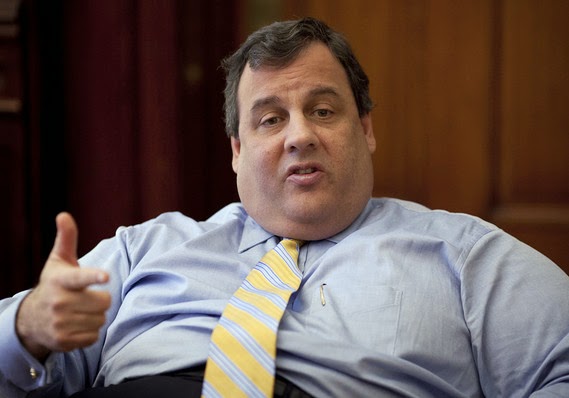
It's political correctness stood on its head.  New Jersey governor and Republican presidential nomination contender, Chris Christie, thinks American parents should have "a measure of choice" as to whether to have their kids vaccinated against measles.

No sooner did El Bloato blurt that out than he started to backpeddle.

"I didn't say I'm leaving people the option, what I'm saying is that you have to have that balance in considering parental concerns because no parent cares about anything more than they care about protecting their own child's health. And so we have to have that conversation. But that has to move and shift, in my view, from disease type. Not every vaccine is created equal, and not every disease type is as great a public health threat as others."


Meanwhile the measles outbreak has now spread to 14-states and Mexico.


This being America and all there's an obvious solution.  Rebrand measles as "ISIS Pox" and get it out via FOX News that murderous Islamist radicals are trying to attack America by exploiting its unvaccinated children.  Let that circulate for a day or two and they'll be shipping the parents of unvaccinated kids to Guantanamo.


Texas Proclaims "American Sniper" Day


It's official.  February 2nd will be Chris Kyle Day in the great state of Texas.

Governor Greg Abbott wasn't content to honour this mass killer and self-confessed murderer, he also sought to cloak Kyle in the honour of "every man and woman who has ever worn the uniform of the United States Military."

That there might be more than a few men and women veterans who want nothing to do with this now thoroughly discredited killer is obviously of no moment in the Lone Star State.

Monday, February 02, 2015

Two Feet, Please.

Only in North America would this be a big deal.  In HarperLand it would be an impossibility.

Barack Obama has signed into law a provision requiring federal infrastructure - such as roads and wastewater plants - to be built 2-feet higher as a hedge against climate change and sea level rise.  Existing infrastructure is to be raised as it comes up for maintenance.

What's remarkable about this is how contrary it is to anything undertaken by Harper & Co.  This is the United States of America not merely acknowledging but actually responding to climate change.  The Harper regime, perhaps shell-shocked by the reality of collapsed world oil prices, does nothing to prepare Canadians for the challenges in store.

Will Our Grandkids Be Smarter, Smart Enough to Fix Everything We've Broken?

It's called the Flynn Effect.  Put simply, we're getting smarter at the rate of .3 IQ points every year.  That's 3 IQ points every decade and it's happening everywhere, not just in the advanced, advantaged nations.

Here's James Flynn.


Perhaps our civilization's best hope is that our grandkids will be smart enough by the time they take the reins of power to fix everything we've broken.  Let's hope.

Are Canada's Disaffected the Raw Material for a Leftist Renaissance?


Europe is still reeling from the victory of the Syriza party in the recent Greek elections.  It was a matter of days before that spread to austerity-wracked Spain's Podemos movement that has gone from nothing to the country's second largest political party in just six months.

Now The Tyee's Crawford Killian asks whether Canada's politically disaffected might provide the fuel for a similar movement to displace our neoliberal parties.

Could we see a Syriza or Podemos in Canada? It's clear that our dismal voter-turnout numbers reflect a political alienation far deeper than we would like to admit, especially among our young people. But as bad as their experience has been since 2008, it hasn't been as brutal as that of young Greeks and Spaniards. Even our Occupy movement was more a fad than a coherent political challenge to the status quo.

...In a recent New York Times column, economist Paul Krugman damned and blasted the austerians and said, "If anything, the problem with Syriza's plans may be that they're not radical enough."

Radical or not, Syriza and Podemos pose a powerful challenge to the narrow centre-right spectrum of acceptable thought. That could encourage some of our cautious Liberals and New Democrats to try out some ideas that are radical only by comparison with the dull orthodoxy of Stephen Harper. If they do, they might find that many Canadians are way ahead of them -- including the two out of five who didn't even bother to vote in the last election.


The Liberal left has been left behind as their former party shifted decisively to the right and embraced neoliberalism.  Many New Democrats bridle at the centrism imposed on their party under Layton and Mulcair, the Blairification of the NDP.  And then, as Crawford points out, there is this massive disaffected population that feels no meaningful connection to our current political apparatus.

It's apparent that neither Trudeau nor Mulcair is reaching out to this segment of the electorate.  It may be high time for a new political movement, one that understands the value of political philosophies consigned to the dustbin by those who have implemented dysfunction as the status quo for Canadian politics today.

Alberta - Yet Again, Number One!


It seems that Alberta has claimed another world record.  This time it's for the magnitude of a fracking-induced earthquake, a 4.4-magnitude temblor last week at Fox Creek.

"The location of the earthquake is consistent with being induced by hydraulic fracturing operations," confirmed Peter Murchland, a spokesman for the Alberta Energy Regulator.

"The AER regards all changes in seismicity that have the potential to indicate an increased risk associated with hydrocarbon production seriously," Murchland added.

...For years industry and fracking experts argued the technology wouldn't cause quakes that could be felt on the surface.

But specialists in earthquake hazards such as Gail Atkinson, who holds the Canada Research Chair in Induced Seismicity Hazards at Ontario's Western University, argued the opposite.

"I have consistently maintained this kind of thing can happen," said Atkinson. "With fracking, the magnitudes have been increasing every year."

Natural Resources Canada reported a swarm of at least 15 earthquakes this January west of Fox Creek in a region where Encana, Talisman, Apache, Chevron Canada and ExxonMobile intensified the drilling and fracking of two-kilometre-long horizontal wells nearly a year ago.

These fracked earthquakes may also impact on the feasibility of underground carbon sequestration.  The fossil fuelers regularly promise to capture CO2 emitted from extraction and processing that will then be liquefied under intense pressure and pumped underground.  That CO2, if it leaks to the surface, is deadly and all it might take is a failed well cap or seismic rift to allow that to happen.

The Seven Deadly Traits of a Permanent Warfare State

Classic military science holds that war is a state of affairs that exists between periods of peace.  In other words, war is intended to achieve peace on terms acceptable to the victor.  War is not an end unto itself.  Well, guess what?  That was then, this is now and, today, war is a highly profitable end unto itself.

How is it possible to turn a democracy into a permanent warfare state? Former colonel turned academic, William J. Astore, identifies the seven keys to perpetual war.

1. The privatization of war

The U.S. military’s recourse to private contractors has strengthened the profit motive for war-making and prolonged wars as well. Unlike the citizen-soldiers of past eras, the mobilized warrior corporations of America’s new mercenary moment—the Halliburton/KBRs (nearly $40 billionin contracts for the Iraq War alone), the DynCorps ($4.1 billion to train 150,000 Iraqi police), and theBlackwater/Xe/Academis ($1.3 billion in Iraq, along withboatloads of controversy)—have no incentive to demobilize. Like most corporations, their business model is based on profit through growth, and growth is most rapid when wars and preparations for more of them are the favored options in Washington.

2. The embrace of the national security state by both major parties: 

Jimmy Carter was the last president to attempt to exercise any kind of control over the national security state. A former Navy nuclear engineer who had served under the demanding Admiral Hyman Rickover, Carter cancelled the B-1 bomber and fought for a U.S. foreign policy based on human rights. Widely pilloried for talking about nuclear war with his young daughter Amy, Carter was further attacked for being “weak” on defense. His defeat by Ronald Reagan in 1980 inaugurated 12 years of dominance by Republican presidents that opened the financial floodgates for the Department of Defense. That taught Bill Clinton and the Democratic Leadership Council a lesson when it came to the wisdom of wrapping the national security state in a welcoming embrace, which they did, however uncomfortably. This expedient turn to the right by the Democrats in the Clinton years served as a temporary booster shot when it came to charges of being “soft” on defense—until Republicans upped the ante by going “all-in” on military crusades in the aftermath of 9/11.

Since his election in 2008, Barack Obama has done little to alter the course set by his predecessors. He, too, has chosen not to challenge Washington’s prevailing catechism of war.

3. “Support Our Troops” as a substitute for thought. 

You’ve seen them everywhere: “Support Our Troops” stickers. In fact, the “support” in that slogan generally means acquiescence when it comes to American-style war. The truth is that we’ve turned the all-volunteer military into something like a foreign legion, deploying it again and again to our distant battle zones and driving it into the ground in wars that amount to strategic folly.

4. Fighting a redacted war. 

War, like the recent Senate torture report, is redacted in America. Its horrors and mistakes are suppressed, its patriotic whistleblowers punished, even as the American people are kept in a demobilized state. The act of going to war no longer represents the will of the people, as represented by formal Congressional declarations of war as the U.S. Constitution demands.

5. Threat inflation: 

There’s nothing new about threat inflation. We saw plenty of it during the Cold War (nonexistent missile and bomber gaps, for example). Fear sells and we’ve had quite a dose of it in the twenty-first century, from ISIS to Ebola. But a more important truth is that fear is a mind-killer, a debate-stifler.

Back in September, for example, Senator Lindsey Graham warned that ISIS and its radical Islamic army was coming to America to kill us all. ISIS, of course, is a regional power with no ability to mount significant operations against the United States. But fear is so commonplace, so effectively stoked in this country that Americans routinely and wildly exaggerate the threat posed by al-Qaeda or ISIS or the bogeyman du jour.

6. Defining the world as a global battlefield: 

In fortress America, all realms have by now become battle spheres. Not only much of the planet, the seas, air, and space, as well as the country’s borders and its increasingly up-armored police forces, but the world of thought, the insides of our minds. Think of the 17 intertwined intelligence outfits in “the U.S. Intelligence Community” and their ongoing “surge” for information dominance across every mode of human communication, as well as the surveillance of everything. And don’t forget the national security state’s leading role in making cyberwar a reality. (Indeed, Washington launched the first cyberwar in history by deploying the Stuxnet computer worm against Iran.)

Think of all this as a global matrix that rests on war, empowering disaster capitalism and the corporate complexes that have formed around the Pentagon, the Department of Homeland Security, and that intelligence community. A militarized matrix doesn’t blink at $1.45 trillion dollars devoted to the F-35, a single under-performing jet fighter, nor at projections of $355 billion over the next decade for “modernizing” the U.S. nuclear arsenal, weapons that Barack Obama vowed to abolish in 2009.

7. The new “normal” in America is war: 

The 9/11 attacks happened more than 13 years ago, which means that no teenagers in America can truly remember a time when the country was at peace.“War time” is their normal; peace, a fairy tale.

What’s truly “exceptional” in twenty-first-century America is any articulated vision of what a land at peace with itself and other nations might be like. Instead, war, backed by a diet of fear, is the backdrop against which the young have grown to adulthood. It’s the background noise of their world, so much a part of their lives that they hardly recognize it for what it is. And that’s the most insidious danger of them all.

Yes, this is all true of America but ask yourself to what extent these have taken hold in Canada, especially during the Harper years.  Have we not become a Surveillance "national security state"?  Of course we have.  Do we not cleave to the "support the troops" mantra so readily exploited for political gain and manipulation of the public?  Have we not inflated the threats we face, especially ISIS?  When was the last time Canada did not have military personnel deployed in an active combat zone?  Has the Canadian military not become a de facto Foreign Legion for the United States?  Is that not what the F-35 is all about?

We may not qualify as a permanent warfare state but we're a branch plant operation of one.  

We were warned.  We were all warned.


Is the F-35 the West's Flying Maginot Line?


The overpriced, overdue and under-performing F-35 could actually weaken the defences of America and her allies, including Canada.  Even pretending, for the sake of argument, that the Lockheed light attack bomber could meet the expectations we all had for it at its inception, the sheer cost of the project, especially at a time of austerity, is crippling.

The hard-right Washington Examiner compares the F-35 to France's Maginot Line.

Between the two world wars, France chose to build an impregnable defense against the sort of invasions it suffered in 1870 and 1914. The Maginot Line was over 900 miles long, took 10 years and cost billions of francs to build. The Germans rendered it irrelevant in 1940 by driving their tanks around it.

When it comes to defence budgets, the F-35 is a money magnet.  It sucks money that could be put to better use for other things.  Some purchasers, like the Netherlands, have tried to cope by paring their orders.  The Dutch initially planned to buy 85 light bombers.  They're now in for just 37.  Perhaps 37 would do less damage to the Dutch than being on the hook for 85.

As an untried and unproven weapon system, the F-35 is a potential basket full of surprises.  We're told what it can do but that's a lot like listening to a salesman pitch a car he won't let you take for a drive.  Every other warplane on the market is available for testing and evaluation.  Only the most expensive allows you to kick the tires only after your cheque has cleared the bank.

The Germans knew the Maginot Line was too tough to crack but they also knew that didn't matter if they were willing to send their tanks pouring through the Ardennes forest.  And so they did and so France fell.

The F-35 boasts the invincibility of stealth technology.  While the airplane has been mired in development challenges and setbacks, its intended adversaries, Russia and China, have made good use of their time unlocking the secrets of America's stealth technology, developing and fielding counter-stealth systems and even producing their own stealth warplanes that, quite by coincidence I'm sure, will be operational about the same time as the F-35 (if we're lucky).  

A few years ago it was reported that the Chinese were pleased at the acceptance of the F-35 as the default warplane for the West.  They were happy because they were confident it could be countered and would, like the Maginot Line and the French, drain the defence budgets of America and her allies.

So Far This Century, We're 14 for 15


Bad news for the tinfoil hat brigade.  The UN World Meteorological Organization reports that 14 of the 15 hottest years on record have occurred since 2000.  Only one year this century hasn't been a record year.  Just one.  One out of fifteen.

The WMO report combined data sets from Britain's Met Office, NASA, NOAA and others.