Simmering beneath the rise of the pro-E.U. Ukrainian government in Kiev and the pro-Russia faction of the Crimea has been the question of the loyalty of Ukraine's armed forces. With a large Russian-Ukrainian contingent, it's been unclear whether the Ukrainian forces would really turn on their ethnic Russian-Ukrainian countrymen and Moscow's forces. Where does their loyalty really lie?
The government in Kiev got what must be a worrisome omen today when the newly-appointed commander of the Ukrainian navy defected to the pro-Russian government in Crimea.
The newly appointed head of Ukraine's navy has sworn allegiance to the Crimea
region, in the presence of its unrecognised pro-Russian leader.
Sunday, March 02, 2014


We Stand on the Brink of Global Instability and There's No Running from It
Maybe we should rethink our rush to extract and export as much of Canada's fossil fuel reserves as possible. Maybe we should give some thought to the domestic needs of our future generations.
A fascinating article from The Guardian today by Dr. Nafeez Ahmed, executive director of the Institute for Policy Research and Development, explores the connection between the end of cheap energy and unrest spreading across the globe. His warning is stark. We either hasten our transition to a post-carbon world and adapt to it quickly or we face a global epidemic of rioting and instability.
If anyone had hoped that the Arab Spring and Occupy protests a few years back were one-off episodes that would soon give way to more stability, they have another thing coming. The hope was that ongoing economic recovery would return to pre-crash levels of growth, alleviating the grievances fueling the fires of civil unrest, stoked by years of recession.
But this hasn't happened. And it won't.
Instead the post-2008 crash era, including 2013 and early 2014, has seen a persistence and proliferation of civil unrest on a scale that has never been seen before in human history. This month alone has seen riots kick-off in Venezuela, Bosnia, Ukraine, Iceland, and Thailand.
This is not a coincidence. The riots are of course rooted in common, regressive economic forces playing out across every continent of the planet - but those forces themselves are symptomatic of a deeper, protracted process of global system failure as we transition from the old industrial era of dirty fossil fuels, towards something else.
Food insecurity, a major factor in the Arab Spring uprisings, and the demise of cheap energy point to a looming epidemic of rioting and instability.
In Ukraine, previous food price shocks have impacted negatively on the country's grain exports, contributing to intensifying urban poverty in particular. Accelerating levels of domestic inflation are underestimated in official statistics - Ukrainians spend on average as much as 75% on household bills, and more than half their incomes on necessities such as food and non-alcoholic drinks, and as75% on household bills. Similarly, for most of last year, Venezuela suffered from ongoing food shortages driven by policy mismanagement along with 17 year record-high inflation due mostly to rising food prices.
While dependence on increasingly expensive food imports plays a role here, at the heart of both countries is a deepening energy crisis. Ukraine is a net energy importer, having peaked in oil and gas production way back in 1976. Despite excitement about domestic shale potential, Ukraine's oil production has declined by over 60% over the last twenty years driven by both geological challenges and dearth of investment.
Currently, about 80% of Ukraine's oil, and 80% of its gas, is imported from Russia. But over half of Ukraine's energy consumption is sustained by gas. Russian natural gas prices have nearly quadrupled since 2004. The rocketing energy prices underpin the inflation that is driving excruciating poverty rates for average Ukranians, exacerbating social, ethnic, political and class divisions.
---
These local conditions are being exacerbated by global structural realities. Record high global food prices impinge on these local conditions and push them over the edge. But the food price hikes, in turn, are symptomatic of a range of overlapping problems. Global agriculture's excessive dependence on fossil fuel inputs means food prices are invariably linked to oil price spikes.
Naturally, biofuels and food commodity speculation pushes prices up even further - elite financiers alone benefit from this while working people from middle to lower classes bear the brunt.
Of course, the elephant in the room is climate change. According to Japanese media, a leaked draft of the UN Intergovernmental Panel on Climate Change's (IPCC) second major report warned that while demand for food will rise by 14%, global crop production will drop by 2% per decade due to current levels of global warming, and wreak $1.45 trillion of economic damage by the end of the century. The scenario is based on a projected rise of 2.5 degrees Celsius.
---
The epidemic of global riots is symptomatic of global system failure - a civilisational form that has outlasted its usefulness. We need a new paradigm.
Unfortunately, simply taking to the streets isn't the answer. What is needed is a meaningful vision for civilisational transition - backed up with people power and ethical consistence.
It's time that governments, corporations and the public alike woke up to the fact that we are fast entering a new post-carbon era, and that the quicker we adapt to it, the far better our chances of successfully redefining a new form of civilisation - a new form of prosperity - that is capable of living in harmony with the Earth system.
But if we continue to make like ostriches, we'll only have ourselves to blame when the epidemic becomes a pandemic at our doorsteps.
A fascinating article from The Guardian today by Dr. Nafeez Ahmed, executive director of the Institute for Policy Research and Development, explores the connection between the end of cheap energy and unrest spreading across the globe. His warning is stark. We either hasten our transition to a post-carbon world and adapt to it quickly or we face a global epidemic of rioting and instability.
If anyone had hoped that the Arab Spring and Occupy protests a few years back were one-off episodes that would soon give way to more stability, they have another thing coming. The hope was that ongoing economic recovery would return to pre-crash levels of growth, alleviating the grievances fueling the fires of civil unrest, stoked by years of recession.
But this hasn't happened. And it won't.
Instead the post-2008 crash era, including 2013 and early 2014, has seen a persistence and proliferation of civil unrest on a scale that has never been seen before in human history. This month alone has seen riots kick-off in Venezuela, Bosnia, Ukraine, Iceland, and Thailand.
This is not a coincidence. The riots are of course rooted in common, regressive economic forces playing out across every continent of the planet - but those forces themselves are symptomatic of a deeper, protracted process of global system failure as we transition from the old industrial era of dirty fossil fuels, towards something else.
Food insecurity, a major factor in the Arab Spring uprisings, and the demise of cheap energy point to a looming epidemic of rioting and instability.
In Ukraine, previous food price shocks have impacted negatively on the country's grain exports, contributing to intensifying urban poverty in particular. Accelerating levels of domestic inflation are underestimated in official statistics - Ukrainians spend on average as much as 75% on household bills, and more than half their incomes on necessities such as food and non-alcoholic drinks, and as75% on household bills. Similarly, for most of last year, Venezuela suffered from ongoing food shortages driven by policy mismanagement along with 17 year record-high inflation due mostly to rising food prices.
While dependence on increasingly expensive food imports plays a role here, at the heart of both countries is a deepening energy crisis. Ukraine is a net energy importer, having peaked in oil and gas production way back in 1976. Despite excitement about domestic shale potential, Ukraine's oil production has declined by over 60% over the last twenty years driven by both geological challenges and dearth of investment.
Currently, about 80% of Ukraine's oil, and 80% of its gas, is imported from Russia. But over half of Ukraine's energy consumption is sustained by gas. Russian natural gas prices have nearly quadrupled since 2004. The rocketing energy prices underpin the inflation that is driving excruciating poverty rates for average Ukranians, exacerbating social, ethnic, political and class divisions.
---
These local conditions are being exacerbated by global structural realities. Record high global food prices impinge on these local conditions and push them over the edge. But the food price hikes, in turn, are symptomatic of a range of overlapping problems. Global agriculture's excessive dependence on fossil fuel inputs means food prices are invariably linked to oil price spikes.
Naturally, biofuels and food commodity speculation pushes prices up even further - elite financiers alone benefit from this while working people from middle to lower classes bear the brunt.
Of course, the elephant in the room is climate change. According to Japanese media, a leaked draft of the UN Intergovernmental Panel on Climate Change's (IPCC) second major report warned that while demand for food will rise by 14%, global crop production will drop by 2% per decade due to current levels of global warming, and wreak $1.45 trillion of economic damage by the end of the century. The scenario is based on a projected rise of 2.5 degrees Celsius.
---
The epidemic of global riots is symptomatic of global system failure - a civilisational form that has outlasted its usefulness. We need a new paradigm.
Unfortunately, simply taking to the streets isn't the answer. What is needed is a meaningful vision for civilisational transition - backed up with people power and ethical consistence.
It's time that governments, corporations and the public alike woke up to the fact that we are fast entering a new post-carbon era, and that the quicker we adapt to it, the far better our chances of successfully redefining a new form of civilisation - a new form of prosperity - that is capable of living in harmony with the Earth system.
But if we continue to make like ostriches, we'll only have ourselves to blame when the epidemic becomes a pandemic at our doorsteps.
Duffy's Shadow Looms Over Harper's Future

The book, Duffy: Stardom to Senate to Scandal, is said to revisit the good old days when Leger met Duffy in Ottawa (1984-1990) and traces Duffy's television career, his pursuit of a seat in the Senate and the scandal that brought him down and continues to plague Stephen Harper.
According to Leger, he and Duffy spent hours on the deck of the senator's Cavendish cottage as Duffy spilled the beans. Duffy maintained, as he always has, that he was set up by Harper and the prime minister's office. Leger writes:
Over time, the links to the prime minister’s office became much more clear and the RCMP’s case against Duffy and the other senators came to light. Prime Minister Stephen Harper himself came into the critical spotlight. It also became obvious that Duffy and the others were being well and truly thrown under the bus by their former Conservative friends.
That’s why this is not just a story about misbehaving senators. The Duffy-Senate affair spilled across the weeks and months and into the central machinery of government. Nigel Wright’s involvement put the PMO at the centre of the scandal. Harper himself was reduced to talking points.
Friends of Ol' Duff are less than happy that the beleaguered senator spoke so freely to Leger. They fear Duffy may have given too much away too early.
Saturday, March 01, 2014
Even Preston is Calling Bullshit on Steve

Oh, methinks the Cons are worried - very, very worried. Preston Manning, self-styled Grand Dame of movement conservatism in Canada, can see that Stephen Harper's pseudo-democratic reform package is a rancid loser.
The former Reform Party leader spoke out against a provision of the government's proposed "Fair Elections Act" in a speech Saturday, hours after the bill's sponsor, Democratic Reform Minister Pierre Poilievre, appeared at the same conference.
Conservatives are increasingly not viewed as the party that most champions democratic values, Mr. Manning said, a development that is "most worrisome for me personally and calls for, I think, immediate and serious attention."
Manning's fondness for democracy in Canada is sort of a dollar short and a day late, as though he'd been cryogenically frozen these past eight years. He hasn't expressed any concern, much less outrage, at our fascist government shutting libraries or its relentless war on science or sequestering the public service from the Canadian public or wielding the levers of power within the PMO to pervert the Senate or, well, almost anything. Only now - when it appears the public has had its fill of Preston's authoritarian protégé and the Conservative brand is heading for the crapper - is Preston speaking out.
Canadian Navy's Pacific Fleet Out of Service, Waiting for Repairs

The Royal Canadian Navy's one and only supply ship for Pacific operations is awaiting a tow into the U.S. naval base at Pearl Harbor, Hawaii. According to the Times Colonist, HMCS Protecteur is currently drifting off Hawaii following a fire in the ship's engine room overnight. The ship is believed to be about 700 kms. north of Oahu.
Commodore Bob Auchterlonie, commander of Canadian Fleet Pacific, applauded the actions of sailors who raced to put out the fire. “They saved the ship last night and they saved their shipmates,” Auchterlonie said Friday. “We’ve seen incidents like this around the globe and they’ve ended much worse than this. The fact . . . they got the fire under control, put it out, and secured the ship with only minor injuries on board is a testament to their training and professionalism.”
The fire caused extensive damage to Protecteur’s main engine room. “Picture an elementary school gymnasium about three storeys high filled with machinery, engines, and a lot of moving parts on fire in the middle of the ocean,” he said. “It took some time to get that fire out.”
Fortunately, Protecteur sailors are well trained and well prepared, he said.
Onboard were 279 crew, along with 17 family members ages 14 to 73, and two civilian contractors. It’s a popular practice for family to join service members for the last part of a journey after a ship has been on an extended mission. “The idea behind it is they’re seeing what life is like in a ship,” Auchterlonie said. “Last night, they experienced more life on a ship than they probably wanted to experience again.”
Auchterlonie said about 20 people suffered minor injuries while fighting the fire. “There was dehydration, there was exhaustion, there was smoke inhalation, and that’s what the nature of the injuries were,” he said. “Fortunately, we have a doctor on board, we have physician assistance on board, and we’re aware all these people have been treated.”
Oh well, I suppose most Canadians wouldn't mind getting waylaid to Hawaii right about now. Word is the prime minister is deeply upset because this will dampen his plans to stage a naval blockade of the Russian fleet at Sevastopol.
The Magic That Was Jonathan Winters
A close friend from Detroit sent me this clip of Jonathan Winters from the Jack Parr show. Comedians this versatile are few and very far between. Watch what Winters can do with the simplest of props, a stick
Putin Flips the Switch - Russian Troops Enter Crimea
 |
| Wakin' the Neighbours, Putin Style |
The Washington Post reports that U.S. officials have confirmed that Russian forces are across the Ukrainian border.
The U.S. officials, speaking on condition of anonymity about internal deliberations, declined to provide numbers or specific locations of Russian deployments. Ukraine’s U.N. Ambassador, Yuriy Sergeyev told the Security Council that there had been an “illegal crossing [of] the borders by Russian military transport aircraft IL-76, about 10 of them, and that 11 military attack helicopters had also violated Ukrainian air space.
The administration official said options being considered by the United States and its European partners if the Russians do not pull back included cancelling attendance at the June G8 summit to be held in Sochi, site of the recently-completed winter Olympics, and rejecting Russian overtures for deepening trade and commercial ties. The official also cited an indirect impact on the value of the ruble.
On My, Don't They Love the Nanny State Now.

Americans from the "Heartland" pride themselves in being fiercely independent, self-reliant folks who'll have no truck with lefties and their Nanny State socialism but that seems to fly out the window when there is money to be had.
A class action lawsuit has been organized against the federal government on behalf of Missouri River flood victims for damages under the Fifth Amendment, the tail end of which provides that, "private property [shall not] be taken for public use, without just compensation."
Their case contends that, by not preventing their lands from being flooded, the feds are essentially taking that property and, hence, owe the landholders compensation.
Lawyer Seth Wright, representing the plantiffs, put it this way: “The claims will be based on the fact that something has changed, and this river is different.” Yes, indeed, Seth, something has changed. It's called the climate and farmers are major contributors to the greenhouse gas emissions driving it. So before you help yourself to a dollar from the collection box, be sure to put a few bucks in to cover your share.
Maude Barlow's Water Plea

Humanity is polluting, mismanaging, and displacing our finite freshwater sources at an alarming rate. Since 1990, half the rivers in China have disappeared. The Ogallala Aquifer that supplies the U.S. breadbasket will be gone “in our lifetime,” the U.S. Department of Agriculture says.
By 2030, global demand for water will outstrip supply by 40 percent, a surefire recipe for great suffering. Five hundred scientists recently told UN Secretary General Ban Ki-moon that our collective abuse of water has caused the planet to enter “a new geologic age” and that the majority of the planet’s population lives within 31 miles of an endangered water source.
What would farm policy look like if we understood that the global food system is depleting local watersheds through the export of a torrent of “virtual water”? Vast quantities of water are embedded in apples, corn, and other crops.
How would trade policy change if we understood that global trade deals give global firms the right to claim “ownership” of the water they use in other countries?
Would our energy policies change if we realized that water-guzzling biofuels may be more environmentally dangerous than the fossil fuels they’re supposed to replace?
Barlow offers a four part platform for water reform. First is recognition of water as a human right that must be more equitably shared. Second, acknowledgement of water as a common heritage of humanity that must never be allowed to be bought, sold, hoarded or commodified. Third, acceptance that water belongs to the Earth and must be shared with other species so that we can safeguard biodiversity without which we simply won't last long. Fourth, recognition that while water can spark conflict, if managed equitably it can demonstrate that there are approaches that can defuse or resolve conflict.
Devil's Advocate - An Idaho Professor Asks, "When May I Shoot a Student?"

Biology and criminal justice. Oh well, Boise State University prof. Greg Hampikian does seem to have the bases covered. The New York Times has published the professor's open letter to the chief counsel of the Idaho State Legislature asking, "when may I shoot a student?"
 |
| Revenge of the Nerds? |
Dr. Hampikian was moved to write from confusion over his state's new law allowing students and faculty to pack heat on campus. He writes:
I have had encounters with disgruntled students over the years, some of whom seemed quite upset, but I always assumed that when they reached into their backpacks they were going for a pencil. Since I carry a pen to lecture, I did not feel outgunned; and because there are no working sharpeners in the lecture hall, the most they could get off is a single point. But now that we’ll all be packing heat, I would like legal instruction in the rules of classroom engagement.
At present, the harshest penalty available here at Boise State is expulsion, used only for the most heinous crimes, like cheating on Scantron exams. But now that lethal force is an option, I need to know which infractions may be treated as de facto capital crimes.
I assume that if a student shoots first, I am allowed to empty my clip; but given the velocity of firearms, and my aging reflexes, I’d like to be proactive. For example, if I am working out a long equation on the board and several students try to correct me using their laser sights, am I allowed to fire a warning shot?
If two armed students are arguing over who should be served next at the coffee bar and I sense escalating hostility, should I aim for the legs and remind them of the campus Shared-Values Statement (which reads, in part, “Boise State strives to provide a culture of civility and success where all feel safe and free from discrimination, harassment, threats or intimidation”)?
Knee-jerk reactions from law enforcement officials and university presidents are best set aside. Ignore, for example, the lame argument that some drunken frat boys will fire their weapons in violation of best practices. This view is based on stereotypical depictions of drunken frat boys, a group whose dignity no one seems willing to defend.
The problem, of course, is not that drunken frat boys will be armed; it is that they are drunken frat boys. Arming them is clearly not the issue. They would cause damage with or without guns. I would point out that urinating against a building or firing a few rounds into a sorority house are both violations of the same honor code.
Some of my colleagues are concerned that you are encouraging firearms within a densely packed concentration of young people who are away from home for the first time, and are coincidentally the age associated with alcohol and drug experimentation, and the commission of felonies.
Once again, this reflects outdated thinking about students. My current students have grown up learning responsible weapon use through virtual training available on the Xbox and PlayStation. Far from being enamored of violence, many studies have shown, they are numb to it.
 |
| Rick Perry Goes Courting the Student Vote |
Krugman Gives TPP a Thumbs Down.
New York Times economist and Nobel laureate economist, Paul Krugman, tends to support free trade but even he wants the Trans-Pacific Partnership trade pact, or TPP, dead and buried.
Krugman's big objection is that the deal allows corporations to monopolize intellectual property and will result in monopolized trade, not free trade.
Is this a good thing from a global point of view? Doubtful. The kind of property rights we’re talking about here can alternatively be described as legal monopolies. True, temporary monopolies are, in fact, how we reward new ideas; but arguing that we need even more monopolization is very dubious — and has nothing at all to do with classical arguments for free trade.
Now, the corporations benefiting from enhanced control over intellectual property would often be American. But this doesn’t mean that the T.P.P. is in our national interest. What’s good for Big Pharma is by no means always good for America.
Krugman's big objection is that the deal allows corporations to monopolize intellectual property and will result in monopolized trade, not free trade.
Is this a good thing from a global point of view? Doubtful. The kind of property rights we’re talking about here can alternatively be described as legal monopolies. True, temporary monopolies are, in fact, how we reward new ideas; but arguing that we need even more monopolization is very dubious — and has nothing at all to do with classical arguments for free trade.
Now, the corporations benefiting from enhanced control over intellectual property would often be American. But this doesn’t mean that the T.P.P. is in our national interest. What’s good for Big Pharma is by no means always good for America.
The Stage is Set

Will he or won't he? The "please invade us" card does have a limited shelf life although it's also renewable. Then there's the question of the Ukrainian army. Although it's only about a quarter the size of Russia's, it's still a substantial force in a territory the size of Ukraine. There's a large percentage of ethnic Russians in the Ukrainian army but analysts seem to conclude they would remain loyal to Kiev, not side with Moscow.
Now we wait and see.
Update: the federal government has recommended that Canadians in Crimea leave Ukraine
Friday, February 28, 2014
Carbon Emissions Costing Americans $37 Per Tonne

Don't kid yourself, they're costing you plenty too.
The U.S. government has run the numbers on the social costs of carbon emissions to Americans.
Climate change impacts - from more extreme droughts and floods to effects like crop losses and sea-level rise - are costing Americans $37 per tonne of carbon dioxide released into the atmosphere, according to an updated estimate by the U.S. government.
The costs come in the form of higher food prices, rising insurance bills, greater spending on healthcare and more taxpayer dollars spent on things like federal emergency relief, economists say.
But the “social cost” of climate-changing emissions, updated from $21 a tonne back in 2010, probably still substantially underestimates the true costs associated with climate change, argues Laurie Johnson, chief economist with the Natural Resources Defense Fund, a New York-based environmental advocacy group.
Gernot Wagner, a senior economist with the Environmental Defense Fund, another green advocacy group, said such omissions mean the cost “can only be seen as a conservative or lower-bound estimate”.
It's hard to know quite what to make of this methodology. CO2, of course, is released into the atmosphere so it will have impacts not just in the United States but in every country to some degree.
How Long Does It Take to Get Over Something Like the Exxon Valdez Disaster? If You're a Sea Otter, 25-Years.
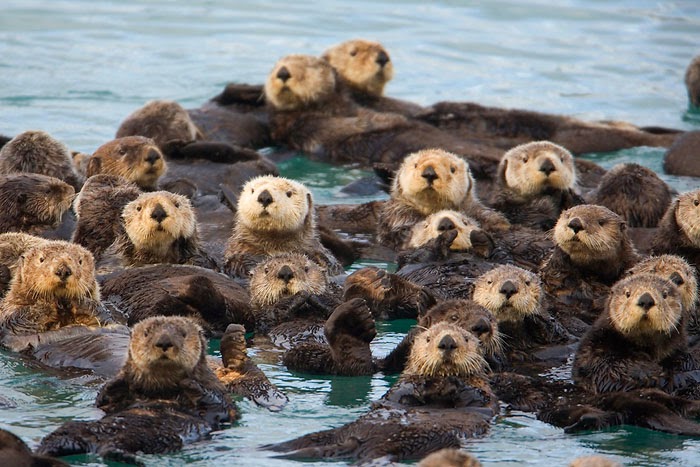
It's almost a quarter-century since the Exxon Valdez ran aground on Bligh Reef in Alaska's Prince William Sound spilling 42-million leaders of crude oil into the cold, clean waters. That oil did a lot of damage, killed a lot of wildlife including sea birds, fish and marine mammals.
25-years later the impacts of the Valdez disaster are still being felt. It's said some victims are still waiting to be compensated.
Now there's some good news. The population of sea otters, devastated by the oil spill, has finally recovered to pre-spill numbers. Fortunately the otters in Prince William Sound only had to contend with conventional crude oil. If the spill had been dilbit - diluted bitumen - it might have been a much different situation.
The Most Powerful Advocate for Gay Rights in America - The Fortune 500

...a letter arrived at her office early this week with a stern warning from some of the biggest names in the local business community.
Signed by the heads of four Arizona business consortiums, with board members including officers of Bank of America, Intel and the Arizona Cardinals football franchise, the letter urged Brewer to strike down the measure known as S.B. 1062. The letter raised the prospect that the legislation could stain Arizona’s national reputation and touch off a wave of unpredictable litigation thanks to the bill’s broad, vague wording.
"We are troubled by any legislation that could be interpreted to permit discrimination against a particular group of people in the marketplace,” the missive read. “We all have a fervent desire for Arizona to be a welcoming, attractive destination for the top talent that will be the cornerstone of our continued economic growth.”
It was a sharp admonition from some of the groups — including the Greater Phoenix Chamber of Commerce and the Arizona Chamber of Commerce and Industry — that represent the tent poles of the state’s economy. And over the next 48 hours, the private-sector pressure on Brewer just kept growing.
What Arizona proved, as much as any other in recent American politics, is that there’s currently no more powerful constituency for gay rights than the Fortune 500 list.
The corporate community’s engagement in the fight over S.B. 1062 was overpowering: American Express wrote to Brewer on Tuesday asking her to veto the law, according to a spokesman for the credit card company, which has a large presence in the state. JPMorgan, with its 11,000-odd employees in Arizona, said on Wednesday that the legislation “does not reflect the values of our country or the State of Arizona and should be vetoed.” The national bank Wells Fargo also opposed it, along with Apple, Marriott and other big corporations with significant Arizona-based investments.

If the U.S. Was in Russia's Position, How Would It React to Russian Meddling in Canada or Mexico that Threatened America's Security?

The Ukraine sits right on Russia's doorstep. It is the land route to Russia's Black Sea naval base at Sevastopol by which the Russian navy can access the Mediterranean. Severing Russia's naval access to the Med is thought to be why the U.S. has been meddling in Ukrainian affairs, funding the pro-western group that topped the country's pro-Russian president, leaving the country bloodied, badly divided and at risk of separation or worse.
Quite predictably we're awfully quick to turn all sanctimonious in our admonitions to Putin in Moscow. How would we react if the shoe was on the other foot?
What if Russia saw an opportunity to meddle in Mexico's affairs to topple the pro-U.S. government and put in a friendly regime that would welcome a Russian military presence south of the Rio Grande? A few Russian air force bases, a naval facility or two, maybe an armoured training range in the Sonoran desert and possibly a few medium-range missile batteries, for self-defence only of course.
I think it's safe to say the U.S. would create some pretext to militarily intervene before the first runway was constructed. Remember Grenada? The Gringos have a short fuse at the suggestion of anyone else, especially Russia, meddling in their backyard. Yet they have it in their heads that it's okay when they do just that to the Russians.
The Russians are a heavily armed yet nervous people with a long memory of foreign aggression. If the Americans want to reinstate the Cold War their manipulations in Ukraine are an ideal way to start. Washington is already playing a clumsy yet dangerous containment game against China with the Asia Pivot. This is a real good time to drive Moscow and Beijing even deeper into each other's arms - and armouries.
Look Whose Flag is Flying Over Southern Ukraine

The Russian flag waves over the Crimean parliament building in Simferopol. It's beginning to look as though Moscow is not going to let Crimea fall to the interim Ukranian government in Kiev.
The Crimea is historically Russian. It was transferred to the Ukraine in 1954 by Kruschev but it retains an ethnic Russian majority. Forces in unbadged uniforms but believed to be Russian Navy marines have taken control of the Crimean parliament and two airports. Russian helicopters are reported to have been seen overhead.
Crimea's Tatar Muslims, who only returned after the fall of the Soviet Union, are pro-Kiev, pro-E.U. but remain a minority.
Justin, Did You Think This One Through?

Hadrian, really?
When we hear "Hadrian" we probably think of the Roman emperor Hadrian for whom the Hadrian Wall in Britain is named. That Hadrian is considered one of Rome's 'Five Good Emperors.' Good, that is, unless you're Jewish.
You see, it was on Hadrian's watch that the Jews in Judea revolted. Hadrian flew into a tizzy, amassed a huge army, crushed the rebellion and drove the Jews from their homeland. Hadrian is credited with creating the Jewish diaspora.
According to Cassius Dio, 580,000 Jews were killed, and 50 fortified towns and 985 villages razed.[2][18] Cassius Dio claimed that "Many Romans, moreover, perished in this war. Therefore, Hadrian, in writing to the Senate, did not employ the opening phrase commonly affected by the emperors: 'If you and your children are in health, it is well; I and the army are in health.'"[10]
According to a Rabbinic midrash (the Ten Martyrs), in addition to Bar Kokhba himself the Romans executed ten leading members of the Sanhedrin: the high priest, R. Ishmael; the president of the Sanhedrin, R. Shimon ben Gamaliel; R. Akiba; R. Hanania ben Teradion; the interpreter of the Sanhedrin, R. Huspith; R. Eliezer ben Shamua; R. Hanina ben Hakinai; the secretary of the Sanhedrin, R. Yeshevav; R. Yehuda ben Dama; and R. Yehuda ben Baba. The Rabbinic account describes agonizing tortures: R. Akiba was flayed, R. Ishmael had the skin of his head pulled off slowly, and R. Hanania was burned at a stake, with wet wool held by a Torah scroll wrapped around his body to prolong his death.[19]
Hadrian attempted to root out Judaism, which he saw as the cause of continuous rebellions. He prohibited the Torah law and the Hebrew calendar, and executed Judaic scholars. The sacred scroll was ceremonially burned on the Temple Mount. At the former Temple sanctuary, he installed two statues, one of Jupiter, another of himself. In an attempt to erase any memory of Judea or Ancient Israel, he wiped the name off the map and replaced it with Syria Palaestina.[20][21][22] By destroying association of Jews to Judea and forbidding the practice of Jewish faith, Hadrian aimed to root out a nation that engaged heavy casualties on the Empire. Similarly, he re-established Jerusalem but now as the Roman pagan polis of Aelia Capitolina, and Jews were forbidden from entering it, except on the day of Tisha B'Av.[23]
Yet, Hadrian's death in 138 CE marked a significant relief to the surviving Jewish communities. Rabbinic Judaism had already become a portable religion, centered around synagogues, and the Jews themselves kept books and dispersed throughout the Roman world and beyond.
Justin, it's probably not too late. Just think this over.
Sure enough, just as I expected, the National Post twitched to the Emperor Hadrian/Jewish pogrom angle. Kinsella is raging with indignation.
Brits Throw In the Towel in Helmand

Like Canada, Britain maintained a military contingent in Afghanistan for more than a decade. Like Canada, the Brits set lofty goals of their Afghan War. Like Canada, the Brits are leaving Afghanistan with precious little to show for their sacrifice in lives and treasure.
Like Canada in Kandahr, the Brits used a carrot and stick approach in their mission to Helmand province. This consisted of taking the fight to the Taliban, the warfighting, and construction of schools, roads and other infrastructure to win over the hearts and minds of the local Afghans. According to The Guardian, even the civil assistance mission failed.
The UK has said a quiet goodbye to its political ambitions in Helmand, the corner of Afghanistan it once dreamt of remaking, handing over its former headquarters in the provincial capital.
The dusty offices of the Provincial Reconstruction Team (PRT), which once channelled hundreds of millions of dollars into trying to build everything from roads to rule of law, now belong to an Afghan government public health team.
The departure this week was agreed years ago by Nato and President Hamid Karzai, who railed against the reconstruction teams as militarised outsiders undermining the government by providing services that should be the work of his ministers.
Still, they are leaving behind a province that last year harvested a record opium crop and where violence in northern Sangin got so bad that government forces reportedly struck a deal with the Taliban.
Unemployment is rampant, electricity is scarce and malnutrition is common. "People are worried," said Ghulam Sarwar Ghafari, 65, a school teacher in Lashkar Gah who said security was getting worse. "People had jobs working for the British. They were building roads, clinics and bridges, but a lot of things are unfinished."
The British government has retreated into the vast Camp Bastion military base, and in less than a month will shut what remains of the PRT. The mission in Kabul will still include the province in its aid plans, but the days of intense focus on an area that is home to fewer than a million people are over.
These nebulous, little wars rarely, it seems, turn out well. We take a half-assed approach going in and the same approach when we pry ourselves out. Canada's mission, for all the pompous boasts of our political and military leadership, was farcical. To think that Canada could dominate the Taliban in a province of the size and population of Kandahar with a fighting force that rarely reached 1,000-troops was laughable or might have been but for the dead and wounded we sustained.
Harper was in on the gag too. Remember he proclaimed that Canadian troops would crush the insurgents, render Kandahar free of the Taliban, make it safe for democracy. Stephen Harper set the bar by which the outcome of our Afghan War would be judged victory or defeat. Given that, like the Brits, we failed to achieve our leader's stated objectives, we were defeated. At least in Korea we fought to a tie.
Thursday, February 27, 2014
Our Giant Prosperity I.O.U.

Never in our 50,000 year history have humans been so prosperous, so advanced, so wealthy. We owe a good deal of that to our mastery of cheap fossil fuel energy over the past two centuries. We discovered how to extract fossil carbon energy that had been laid down and amassed over many hundreds of millions of years and put it into our service in such a tiny fraction of the time it took to create. We used it to build the wealth we have achieved today.
Yet burning fossil fuels is just one component, albeit a major one, to our wealth. Indeed our prosperity has also depended on our willingness to rapaciously exploit natural capital and freely abuse our environment. Today's climate and the early-onset climate change impacts we're seeing constitute one giant, atmospheric I.O.U. that will very soon be called.
A new article from Scientific American says our burgeoning prosperity is the result of burning the candle from both ends:
...what can be expected if the world increases the wellbeing of an ever increasing proportion of people? In short: even more CO2.
That's the finding of a study in the journal Nature Climate Change.
Economists and policy analysts held out hope that global wealth could continue to rise without also raising CO2 emissions. But a look back at life expectancy at birth compared with per capita pollution around the world from 1970 to 2009 suggests otherwise.
Economic development in the poorest countries starts off by reducing CO2 pollution in the 1970s and 1980s, perhaps because fossil fuel burning replaces even more polluting fires in individual homes. But in more recent years that benefit has leveled off. And developed countries like the U.S. or China seem to increase emissions whenever the economy grows.
CO2 emissions are one unresolved cost of our prosperity but only one. As we grow in wealth our demands on natural capital of all forms increases. We need more water to grow the better food we want at our table and even more water yet for industry to produce the consumer goods we wish to enjoy. We generate more waste and use more fertilizers and chemicals that, in due course, work their way back to the environment for natural processes to cleanse.
The net result is that we're moving into environmental overshoot at an accelerating pace. We're already consuming better than 1.5 planet Earth's supply of renewable resources. We're achieving that remarkable feat in a variety of ways, none of them good. We're exhausting our groundwater reserves. We're wiping out one global fishery after another. We're steadily accumulating pollution in our soil, our fresh water and our atmosphere because we're exceeding nature's ability to absorb and cleanse our waste products.
Yet we in the developed world show no inclination to sacrifice some of what we have so that others, less advantaged, can have more. To the contrary, we're now land-grabbing the best agricultural land in countries that can already barely feed their own people and often fall back on us for famine relief. What kind of mentality condones that? So, as the emerging economies struggle to climb the prosperity ladder, they'll take from us what they can and follow our example of environmental overshoot wherever they must. And the flame burning at both ends of that candle is about to get a lot hotter.
Subscribe to:
Posts (Atom)