Tuesday, October 11, 2016

Ah, Jeebus! Did You Hear the One About Turkey and Iraq?


What a mess. Who will Canada side with on the looming battle to oust ISIS from Mosul? Will it be Iraq? Mosul, after all, is Iraqi. Or will it be our NATO ally, Turkey? What if Iraq and Turkey get into a shooting war just in case the war against ISIS isn't already murky enough? Here's the skinny from Foreign Policy:

Just weeks before Iraqi troops are to begin their push to retake the Islamic State-held city of Mosul, an unexpected wrinkle has appeared: Turkey wants in on the fight, and refuses to pull its troops out of Iraq despite Iraqi threats that Ankara’s refusal could lead to war.

Responding to Iraqi Prime Minister Haider al-Abadi’s call last week for Turkey to pull its 2,000 troops and two dozen tanks out of their base near Mosul, President Tayyip Recep Erdogan shot back Tuesday that Abadi should “know his limits” since “the Turkish army has not lost so much standing as to take orders from you.”

“We will approach the operation in Iraq, the operation that will be in Mosul soon, with the same attitude,” as aggressive cross-border operations in northern Syria, Erdogan said Tuesday. “Turkey cannot intervene against the threats right next to it? We don’t need permission for this, and we don’t plan on getting it.”

Turkey is concerned that once ISIS is pushed out of Mosul, the Shiite-led government in Baghdad will make it difficult for Sunni residents of the city to return, while Kurds will dominate the surrounding areas. (Kurdish forces have grabbed control over the contested city of Kirkuk thanks to the onslaught of the Islamic State.) Ankara is leery of Kurdish fighters, even though it maintains cordial relations with Iraqi Kurdistan, given its decades-long battle with Kurdish terrorist group PKK.

With about half of Turkish generals in jail or ousted, an ongoing Kurdish insurgency in its south, and deployments in Iraq and northern Syria, the Turkish military is “overstretched, but the government is trying to project power in the region and domestically,” said Gonul Tol, director of The Middle East Institute’s Center for Turkish Studies. “It wants to rebuild the image of the military,” and sticking it out in Iraq would be a big part of that.

Another reason the Turks feel the need to stay is to continue training Sunni tribal fighters to take on both ISIS and after that, likely, Iranian-backed Shiite militias. The idea is to find fighters other than Kurdish peshmerga to take the war to terrorists and other militants; too much Kurdish success, especially in northern Syria, has worried Ankara.

Iraq’s parliament responded by requesting a U.N. Security Council session to condemn the Turkish move, calling it a “blatant violation” of Iraqi sovereignty. Abadi followed that up by insisting that the Turkish presence in Iraq — which he originally negotiated in December 2014, months after Mosul fell to ISIS in the first place — had “no justification.”

Turkish Prime Minister Binali Yildirim immediately shot back at Abadi, vowing to stay “no matter what Baghdad says.”

Turkey wants to make sure that as the Islamic State is rolled back, Kurdish forces don’t fill up the vacuum. It launched an operation in August to push Kurdish fighters to the east bank of the Euphrates in northern Syria.

If the Turks are really after laying the groundwork for another Sunni/Shiite, Arab/Kurd shitstorm what in hell is Canada doing in that ethnic/sectarian nut house? You get dragged into this, who do you support and who do you fight. Better yet, how do you get out when this goes south?

Has Donald Taken the Wheels Off His Campaign War Wagon?


Harper telegraphed it was over for him and his rancid government three days before last October's election when moving trucks showed up delivering pallets of flat pack boxes and hauling away full ones from the prime minister's office.

Donald Trump doesn't have an office to vacate - and sanitize - before the votes are counted on November 8 but that doesn't mean there aren't other ways for him to telegraph his defeat.

Well behind in the polls but boisterously defiant one might expect Trump to be pouring money into ads in crucial swing states. Only he's not. Instead he's actually pulling them, giving up reserved air time. That's Trump's way of showing he knows he's already lost.

HuffPo speculates that Trump may have run out of money but there's no real sign of that. My guess is that he's doing what he's always done when a deal turns sour - he cuts his losses and gets out early, usually leaving his investors to take the big hit.

Michael Harris - He's Gonna Blow!!!


Michael Harris on the rapidly bursting blowhard.

Bang the War Drums. Rattle those Sabres. Mental Mobilization for War Proceeds Apace.


It's a form of conditioning, something we're not very good at detecting. We are being mentally mobilized for war, something that begins by demonizing our adversary.


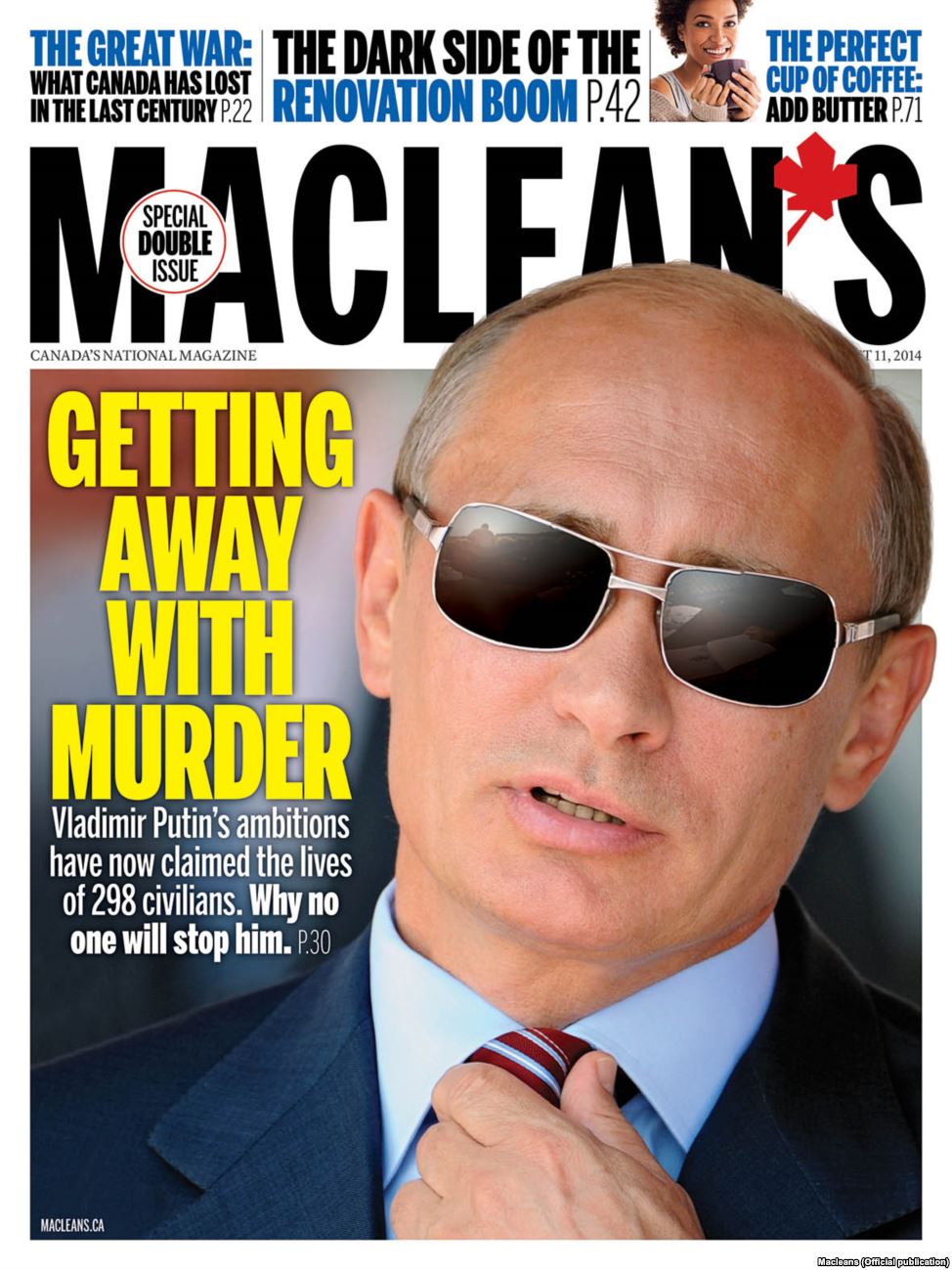
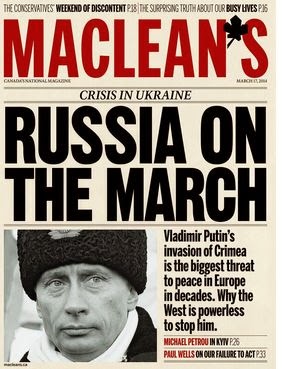
The warning came in the form of an editorial in the German financial paper, Handelsblatt. It offered the chilling observation that, in the wake of the Russian takeover of Crimea, the people of the West were being "mentally mobilized for war."


No mention of NATO's decade long march to Russia's doorstep.


No mention of how Washington fueled the uprising in Ukraine.


Now Russia is playing the same game. This time it's former Soviet leader, Mikhail Gorbachev taking to Russian airwaves warning that the US is trying to provoke war.


"The world has got to a dangerous phase," former Soviet leader Mikhail Gorbachev said in an interview with state news service RIA Novosti on Monday.

Now America seems to be drifting into a muzzle-to-muzzle confrontation with Russia in Syria. Having already been outmaneuvered by Putin in the Syrian civil war, partly a function of America's war fatigue with its 15-year long and no end in sight conflicts in the Middle East, Washington may not have as many options remaining as it would like.


Is the United States trying to provoke war with Russia? Probably not. Is the United States deliberately trying to menace Russia? Absolutely. The map above illustrates how close NATO forces in the Baltics are to Moscow. Imagine a similar deployment of Russian forces that close to Washington. Yet we treat it as tantamount to an act of war when Russia deploys Iskander missiles to its sovereign Baltic territory of Kaliningrad.


This nonsense, this drift, has to stop. We have to revisit the idea that we are responsible for creating the very conditions in which nations have backed themselves into protracted and bloody wars in the past.

Our New Normal


I've noticed it. Chances are good you have too. "It" is the marked change in local precipitation patterns.

I live in a place where we're used to pretty torrential downpours from squalls coming off the Pacific. They manifest in heavy rainfall and very high winds that can give the rains a horizontal effect. That had been the baseline for heavy storms.

It's not unusual today to experience significantly heavier rains of increasingly longer durations. Word has it we're in for a 4-day deluge starting later this week.

We all remember the floods that hit Toronto, then Calgary and just recently, Nova Scotia. In my town we had a massive downpour that lasted exactly 18-minutes, start to finish, but dumped enough water, about an inch and a half, that cars were floating down the mainstreet that itself was just a gently sloping block distant from the sea. Environment Canada has now issued a warning that we'll be hammered by heavy rains and high winds courtesy of four fronts that will arrive between Wednesday night and Sunday.

Now research is suggesting that Hurricane Sandy grade flooding is becoming the "new normal."

The frequency of floods of the magnitude of Hurricane Sandy, which devastated parts of New York City in 2012, is rising so sharply that they could become relatively normal, with a raft of new research laying bare the enormous upheavals already under way in the US due to climate change.

These findings and two other fresh pieces of research have highlighted how the US is already in the grip of significant environmental changes driven by warming temperatures, albeit in different ways to the processes that are fueling hurricanes.

The number of storms with Sandy-like floods is rising exponentially

An analysis of past storms and models of future events as the planet warms has shown that Sandy-like floods have become three times more common in the New York area since 1800. This frequency is set to climb further, from once every 400 years to once every 90 years by 2100, due to the effects of sea level rise alone.

Worse still, when the impact of future storm conditions, supercharged by the warming oceans and increased atmospheric moisture, is considered, New York could be swamped by Sandy-level flooding as frequently as once every 23 years by the end of the century, according to research led by Princeton University.

...Michael Mann, a climatologist at Penn State University, said that the studies deal with very different processes but are “examples of climate change impacts that are already threatening us here in the US and around the world, the devastating and unprecedented wildfires in Alberta last spring and the coastal flooding and massive loss of life from Hurricane Matthew being just the latest reminders, and which will only worsen if we do not act on climate”.

But the federal government, Justin's government, isn't taking this lying down. It's going to introduce carbon pricing. So? That won't do bugger all to answer our problem. The problem is what scientists call our "broken hydrological cycle." We've already heated the atmosphere. Warmer air (1) holds more water vapour which only (2) warms the air that much faster but also (3) shifts global precipitation patterns (4) triggering severe weather events of increasing frequency, intensity and duration and (5) creating both sustained and cyclical flooding and droughts. I don't care if you scored a D- in physics, you can still understand that.

This is where Justin hasn't thought things through. For the sake of political cover he's casting his carbon price as "revenue neutral." The taxes collected will be returned to the provinces in which they're harvested to go into general revenues and onward to whatever groups the governments of the day choose to reward. In this era of "everyday low taxes" that revenue doesn't have much chance of going where it's most needed.

So, where is that money most needed? It could be invested in adaptation measures to at least blunt the impacts of our broken hydrological cycle. Early 20th century storm sewer systems don't meet the demands of 21st century deluges. Cities need floodways. In my view the money collected should be directly linked to measures to cope with the impacts arising out of the problem on which the tax itself is justified. Sort of like diverting excise taxes on tobacco products to defray the cost of medical treatment of lung diseases. The whole yin/yang thing.

We have to start getting our minds about public policy responses to these challenges. So far that's just not happening.

Monday, October 10, 2016

Former Senior US Prosecutors, Republicans, Slam Trump

Add to the growing ranks of prominent Republicans turning on Donald Trump, a number of senior prosecutors and Justice Department figures. From Politico:

...former Republican appointees to senior Justice Department posts used words like “abhorrent,” “absurd” and “terrifying” to describe Trump’s threat to use the legal system to imprison Clinton.

“For Donald Trump to say he will have a special prosecutor appointed and to have tried and convicted her already and say she’d go to jail is wholly inappropriate and the kind of talk more befitting a Third World country than it is our democracy,” said Paul Charlton, who spent a decade as a federal prosecutor before serving as U.S. attorney for Arizona under President George W. Bush.

Added Charlton: “The Department of Justice isn’t a political tool and it ought not to be employed that way.”

Another GOP lawyer, Marc Jimenez, who served on the legal team backing Bush in the Bush v. Gore Supreme Court showdown and later as a Bush-appointed U.S. attorney in Miami, said he was deeply disturbed by Trump’s remarks.

“This statement demonstrates the clear and present danger that Trump presents to our justice system. For a president to ‘instruct’ an attorney general to commence any prosecution or take any particular action is abhorrent,” Jimenez said. “If it occurred, it would be a politically motivated decision that would cheapen the Department of Justice and contradict the core principle that prosecutors should never consider political factors in their charging or other decisions.”

The worst of Richard Nixon haunts Trump.

While presidents appoint the attorney general, they do not make decisions on whom to prosecute for crimes — and were Trump to do so, prosecutors warned, he would spark a constitutional crisis similar to that of the “Saturday Night Massacre” in the Nixon administration. In that case, Nixon attempted to fire the prosecutor investigating the Watergate scandal, and the top two Justice Department officials resigned on the spot.


Foreign Policy Backs Clinton


Foreign Policy magazine has, for the first time in its half-century history, endorsed a candidate for president of the United States.

While the magazine and its columnists are anything but leftist, they have repudiated Donald Trump and endorsed Mrs. Clinton. The FP endorsement begins with a truly scathing indictment of everything that is Donald Trump.

The dangers Trump presents as president stretch beyond the United States to the international economy, to global security, to America’s allies, as well as to countless innocents everywhere who would be the victims of his inexperience, his perverse policy views, and the profound unsuitability of his temperament for the office he seeks.

The litany of reasons Trump poses such a threat is so long that it is, in fact, shocking that he is a major party’s candidate for the presidency. The recent furor over his vile behavior with women illustrates the extraordinary nature of his unsuitability, as does his repudiation by so many members of his own party — who have so many reasons to reflexively support their nominee.

Beyond this, however, in the areas in which we at FP specialize, he has repeatedly demonstrated his ignorance of the most basic facts of international affairs, let alone the nuances so crucial to the responsibilities of diplomacy inherent in the U.S. president’s daily responsibilities. Trump has not only promoted the leadership of a tyrant and menace like Vladimir Putin, but he has welcomed Russian meddling in the current U.S. election. He has alternatively forgiven then defended Russia’s invasion of Crimea and employed advisors with close ties to the Russian president and his cronies. Trump has spoken so cavalierly about the use of nuclear weapons, including a repeated willingness to use them against terrorists, that it has become clear he understands little if anything about America's nuclear policies — not to mention the moral, legal, and human consequences of such actions. He has embraced the use of torture and the violation of international law against it. He has suggested he would ignore America’s treaty obligations and would only conditionally support allies in need.


Trump has played into the hands of terrorists with his fearmongering, with his sweeping and unwarranted vilification of Muslims, and by sensationalizing the threat they pose. He has promised to take punitive actions against America’s Pacific trading partners that would be devastating to the world economy and in violation of our legal obligations. He has dismissed the science of climate change and denied its looming and dangerous reality. He has promoted a delusional and narcissistic view of the world, one in which he seems to feel that the power of his personality in negotiations could redirect the course of other nations, remake or supplant treaties, and contain those tyrants he does not actually embrace.

He has repeatedly denigrated the U.S. military — its leadership, service members, veterans, and the families who stand behind them. He has also derided the intelligence community. Many of the most prominent Republican national security and foreign-policy specialists have repudiated him publicly. Indeed, he is not simply seen as a dangerous candidate by members of the Democratic Party, but virtually no single credible GOP foreign-policy advisor has joined his team. This is because Trump either undercuts or has placed himself in opposition to the best foreign-policy traditions of the Republican Party and to the standards and ideals of every GOP administration in modern history.


He has shown such a complete disregard for the truth that he has arguably done more than any other single individual to seek to usher in a new and unwelcome post-fact era in America’s political debate. That is not just odious but if it becomes more accepted could compromise and undercut governance in the United States for generations to come. His proposed policies on immigration and for dealing with Muslims in America show scorn for the Fourth Amendment. Based on a lifetime of statements and actions, Donald Trump has revealed himself to be a racist and, again and again, a misogynist. Throughout this election he has cynically embraced the support of white supremacists and anti-Semites.

He would therefore put at risk our way of life, our freedoms, and our alliances. His reckless behavior has already undermined America’s standing internationally. His proposed embrace of some bad actors and his provocations toward others, his dangerous views on the use of weapons of mass destruction, his failure to understand how the global economy works, his lack of appreciation for the importance of alliances, and his temperamental defects all suggest that were he to claim the Oval Office, he would be a destabilizing force that would undercut American leadership instantly and for generations to come.His spotty track record as a businessman compounds these flaws further still.


Indeed, we are not the first to say it, but Trump is the worst major-party candidate this republic has ever produced.

---- Now, for all of you pretend progressives who see a nullifying equivalency between Clinton and Trump, it's time to put your conspiracy theories back in your toy box and under your bed.
---- 

Fortunately, not only is Trump opposed by a worthy candidate, but his opponent is, on foreign-policy and national security issues — all of the areas we cover here at FP — one of the best qualified candidates this country has produced since World War II. As first lady, New York senator, and secretary of state, Hillary Clinton regularly distinguished herself by her intelligence, dogged work ethic, ability to work across the political aisle, and leadership on difficult issues. She has devoted her entire life to public service and has been a powerful and effective advocate for women, children, and those in need at home and abroad. Whether you agree with all the policy stances of her campaign or not, impartial eyes will conclude that her proposals on climate change, combating terrorism, and human rights are thoughtful and comprehensive — and ultimately worthy of consideration.

Hillary Clinton is a quality candidate who is unquestionably well-prepared to lead this country. What is more, we do not think it is a small thing that by her election she will be righting a deep wrong that has compromised U.S. democracy since its inception: the exclusion of women from its highest offices. Were she to be elected as this country’s first woman president, not only would it be historic and send an important signal about both inclusiveness and Americans’ commitment to electing candidates who have distinguished themselves on their merits, but she would enter office having already put down one great threat to the United States of America — the grotesque and deeply disturbing prospect of a Donald Trump presidency.


First, the Good News...


The World Energy Council predicts global demand for energy will peak in 2030 and decline thereafter.

That's the good news.

Now, for the bad news. That's "per capita" global demand for energy. And since we're about to welcome another couple of billion "capitas" gross global energy consumption will just keep increasing.

...while overall per capita energy demand would begin to fall, demand for electricity would double by 2060, the council said, requiring greater infrastructure investment in smart systems that promote energy efficiency.

The “phenomenal” growth of solar and wind energy is predicted to continue, while coal and oil will fade from the energy mix. Solar and wind accounted for 4% of power generation in 2014 but could supply up to 39% by 2060, while hydroelectric power and nuclear are also expected to grow.

But fossil fuels will remain the number one source of energy, having fallen just 5% since 1970 from 86% of energy supply to 81% in 2014.

The council drew up three scenarios to assess different areas of energy use. The range of outcomes could see fossil fuels provide anything from 50% to 70% of energy by 2060, said the council, which is the UN-accredited global energy body.

Under two of the scenarios, oil production will peak in 2030 at between 94m barrels per day (bpd) and 103 mb/d, although the third scenario would see it peak and plateau at 104 m/bpd for a decade from 2040.

...But the council warned that keeping global warming below 2C would require an “exceptional and enduring effort, far beyond already pledged commitments and with very high carbon prices”.

Its predictions for carbon emissions vary wildly depending on the strength of efforts to tackle the problem, from a reduction of 61% by 2060 to a slight increase of 5%.

Overall, the report’s theme of a grand transition envisages lower population growth, radical new technologies, greater environmental challenges and a shift in economic and geopolitical power.


Oh yeah, and for all three scenarios presented by the Council, we'll shatter the "carbon budget" in the coming 30 to 40 years. However, if we're sticking with the 1.5C carbon budget, we'll blow through that in the next five years.


Sunday, October 09, 2016

A World-Class, Non-Stop Deviant

Wherein Trump tells Howard Stern how he drifts backstage at his beauty pageants to get an "owner's eyeful."

Nourishment for a Hungry Mind


What follows is a lengthy excerpt from a book I only too recently read. I'll present this passage largely uninterrupted and unburdened with editorial comment. It's a lot better that way:

...we really do have some ability to choose our future. But we have to recognize what kind of forces we're up against, we have to have courage, and we have to be smart - not only at the time of the social earthquake and the moment of contingency that follows but well in advance. Specifically, if we're going to have the best chance of following a different and positive path, we must take four actions. First, we must reduce as much as we can the force of the underlying tectonic stresses in order to lower the risk of synchronous failure - that is, of the catastrophic collapse that cascades across boundaries between technological, social and ecological systems. Second, we need to cultivate a prospective mind so we can cope better with surprise. Third, we must boost the overall resilience of critical systems like our energy and food supply networks. And fourth, we need to prepare to turn breakdown to our advantage when it happens - because it will.

The first action, reducing the force of underlying stresses, is the most obvious, largely because it resembles a conventional management approach to dealing with our problems. Experts of all types have generated a considerable quantity of good ideas about how we can reduce the force of the tectonic stresses identified in this book - population imbalances, energy shortages, environmental damage, climate change and income gaps. Yet too often the experts operate only within the silos of their disciplines and professional communities. Demographers don't talk to energy specialists, agronomists don't speak to economists, and climate scientists don't talk to epidemiologists. Instead, experts usually target the problem they understand, and because they don't think much about how to integrate their ideas with the ideas of experts focusing on related problems, the policies they propose are too narrowly focused.

This highly compartmentalized approach doesn't work in a world of converging and synergistic stresses. We must bring experts together across disciplinary barriers, just as we must bring governments together across cultural, ideological and political barriers. And we also need to realize there's no magic bullet: there's no single technical solution, institutional response, or policy that will neatly resolve all our challenges in one fell swoop. More than ever in humanity's history, we have to be aggressively proactive on multiple fronts at the same time.

...Alas, humankind's track record when it comes to proactive policy, especially in response to slow-creep problems, doesn't inspire much confidence that we will succeed in these tasks. Today, most of us are simply too deep in denial, and our political and economic systems are too hobbled by powerful vested interests for real change to happen in the absence of a sharp push or shock from outside. With colossal effort by the relatively small numbers of people today engaged in trying to do something about these problems, and perhaps with a good deal of luck, we might divert or somewhat weaken the tectonic stresses. But we're unlikely to weaken them enough to reduce significantly the danger we face, so we'd better get ready for social earthquakes.

...We can't possibly flourish in a future filled with sharp nonlinearities and threshold effects - and, somewhat paradoxically, we can't hope to preserve at least some of what we hold dear - unless we're comfortable with change, surprise, and the essential transience of things, and unless we're open to radically new ways of thinking about our world and about the way we should lead our lives. ...Hunkering down, denying what's happening around us, and refusing to countenance anything more than incremental adjustments to our course are just about the worst things we can do. These behaviors increase our rigidity. When a social earthquake eventually occurs, we'll have no new concepts, ideas, or plans to help us cope and no alternative ways of seeing our future. Without alternatives there will be no constraint on fear and we'll be especially vulnerable to the kind of amplification effect we experienced within our psychological networks in the immediate aftermath of the 9/11 attacks.

...A prudent way to cope with invisible but inevitable dangers ...is to build resilience into all systems critical to our well-being. A resilient system can absorb large disturbances without changing its fundamental nature. ...in an increasingly uncertain and dangerous world, we should sometimes give up extra efficiency and productivity in order to gain resilience - especially to improve our ability to prevent foreshocks from triggering synchronous failure. We can do this in many ways. One involves loosening some of the coupling inside our economies and societies and among our technologies. ...The more energy we produce with solar panels on our rooftops, the less vulnerable we'll be to power disruptions far way. ...We can gain resilience, too, by increasing the buffering capacity or slack in our economies. Industries can rely less on just-in-time production - a particular obsession of the past two decades - and instead build up inventories of feedstocks and parts so they can keep running even when supplies of essential inputs are temporarily interrupted. And finally, since malicious groups and individuals will probably someday target the highly connected hubs of our scale-free energy, food, information, transportation, and financial networks, we can identify these hugs and either redesign our systems to remove them entirely or replicate them to create redundancy.

...Of course, many of these recommendations fly in the face of the ideology of today's globalized capitalism. In its most dogmatic formulation, this ideology says that larger scale, faster growth, less government, and more efficiency, connectivity and speed are always better. Slack is always waste. So resilience - even as an idea, let alone as a goal of public policy - isn't found anywhere on the agendas of our societies' leaders. ...And because our leaders hardly ever think about resilience, we keep doing things that make our lives progressively less resilient - we pile on more debt, build tract housing over the finest cropland, develop addictions to distant sources of energy, become so specialized that we can't take care of ourselves when everyday technologies fail, and fill every nook and cranny of our days with so much junk information and pointless running around that we don't have time to reflect on what we're doing or where we're going.

____


These excerpts are taken from Thomas Homer-Dixon's 2006 book, "The Upside of Down: Catastrophe, Creativity and the Renewal of Civilization." I only recently twigged to it by a recommendation from friend, Sal, "The Salamander." I picked up a good copy for a few bucks from Abe Books but I expect it'll be available from your neighbourhood library.

I am as susceptible to conformational bias as the next guy and I found in this book persuasive corroboration of ideas I've bandied about over the past decade on this blog. Many times I've sought to make the argument that our modes of organization - social, economic, industrial, political, even military - have long outlived their utility no matter how tightly our institutions and leadership cling to them. Mankind passed into a new reality sometime in the early 70s when our population first passed 3-billion and we dragged our planet, our atmosphere and every other form of life with us.

Today we consume Earth's renewable resources at a steadily increasing rate that now stands at 1.7 times their replenishment rate, our biosphere's absolute carrying capacity. And I regularly stress that the most worrisome part isn't that we're doing this but that we have allowed ourselves to become absolutely dependent on something that ensures our own destruction. It's akin to a smoker who increases his daily consumption from one year to the next, from one pack a day to two to three. How does that end? Would you call that madness? Do you think it any less mad when our leaders, political and commercial, pursue that same pattern, taking us along for the ride?

Homer-Dixon accepts the inevitable. There are too many forces looming from too many directions at the same time. This guarantees that at some point two or more of them will hit and we'll face a "synchronous failure" that our modes of organization are not designed to handle and won't. That's the doom and gloom part of Upside and it's convincingly made out.

The best part of Homer-Dixon's book is indeed the "Upside" - how we can make the best of an inevitability by preparing for its arrival and using it as an opportunity to introduce new modes of organization, free of the calamitous models today's leaders cannot let go.

Do yourself a favour. Get your hands on the book, read it - slowly. Take it all in. There's plenty of food for thought. It'll take a while to digest.


Why Next Month's Presidential Election Weighs Heavily on My Mind


For starters, I don't like Hillary either. I do, however, want her in the White House in January.

I'm worried. I'm worried about Syria, about tensions in the Baltics and along Russia's western borders, about climate change and a host of other issues that will confront the next American president.

Anyone with any sophisticated grasp of these problems knows that Hillary alone has the experience and aptitude to deal with them.

I truly believe that from here on in every presidency is going to be more challenging with ever higher stakes than what we've known for generations. We're coming into a dangerous, volatile time.

Earlier this month I came across a chilling piece in Foreign Policy suggesting that, no matter who wins next month, America is likely to get drawn into a shooting war in Syria. That could bring America muzzle to muzzle with Russia in an active war zone. The possibilities, as they say, are endless.

My thoughts wandered to all the sabre-rattling that's going on today and it is plentiful and loud. It's as though somebody found the Cold War switch and flipped it back on. That reminded me of an editorial published in Germany's prominent financial paper, Handelsblatt, in August, 2014, warning that the people of the West were being "mentally mobilized" for war. True enough then. Truer yet now. The spectrum of options narrows, displaced by the politics of escalation.

It would be comforting if Donald Trump was an aberration on the world scene. He's not. If anything, he's just America's part of a contagion that's becoming established in Central and Eastern Europe, South Asia and Asia Pacific, and could soon spread elsewhere.

This malignancy goes deep. Last week I wrote of a retired, 4-star US Navy admiral's impassioned defence of the Trans Pacific Partnership, casting it as a weapon of economic warfare against China. It reminded me of the last time the US used economic warfare against an Asian rival and how that led to the events of a Sunday morning on December 7, 1941 and ended with ushering in the age of nuclear warfare.

America is already wounded. Its democracy - save for the trappings - has been torn out to make room for the establishment of oligarchy. Even its highest court has succumbed to oligarchy, a sad fact evidenced by its decision in Citizens United. Republicans see this election as their last hope of continuing the judicial subjugation of the American people in order to underwrite the ascendancy of the corporatist state.

Will Hillary do much good? I don't know but I doubt it. That said I don't want Donald Trump to have the nuclear codes. I don't want Donald Trump calling the shots on who will fill the existing and upcoming vacancies on the U.S. Supreme Court. America's future hangs on these things and so might our own.


Saturday, October 08, 2016

Whither Clint Eastwood?


WWDHD - What would Dirty Harry do? Just this past August, movie tough guy Clint Eastwood rallied to Donald Trump's defence with this declaration:

“[Trump’s] onto something, because secretly everybody’s getting tired of political correctness, kissing up,” he said. “We’re really in a pussy generation. Everybody’s walking on eggshells. We see people accusing people of being racist and all kinds of stuff. When I grew up, those things weren’t called racist.”

Awkward choice of words, champ. I wonder what Clint thinks of his favourite serial sexual predator now?

Apparently angry old man Eastwood is laying low this weekend. Maybe we won't be hearing much from Clint for a while.

Backpfeifengesicht, Drumpf-Style


Backpfeifengesicht, that wonderful German word that, in English, means "a face in need of a fist." Today it's a perfect description of the Giant Orange Serial Sexual Predator and Republican presidential nominee, Donald Trump.

And now a few words from Robert De Niro:


American Satyr

The Boastful Man-Goat. What a spectacle. In his own words, a candid admission - no, a boast - that he's some sort of serial sexual predator. He is indeed the man Letterman recently denounced as a "badly damaged human being" who deserved to be shunned by his countrymen.

With Hillary already leading by 10 or more points nationwide, the release of Trump's candid remarks should be enough to sink him for good.

The Guardian's Richard Wolffe writes this is the end of the line.

This is Donald Trump: a man no longer fit for polite company. His name will be torn off walls just as Ailes’ was. Republican candidates up and down the land will be chased to election day with their previous endorsements and quotes praising the groper-in-chief.

Condemning Trump’s words will not be enough to save them. It was just a few days ago that the US senator in New Hampshire, Kelly Ayotte, said “absolutely” when asked if she would tell kids to look up to Trump. She has since said she “misspoke”. But no amount of regret and criticism will erase that foolish misjudgment.


Ayotte’s misjudgment is really shared by an entire party establishment that is now stampeding for the doors. Republican leaders thought they could cutely tiptoe between their Trump-loving base and Trump-disgusted moderates. Just as they have tried to appease the Tea Party, Obama-hating fringe for the last eight years. Now they find themselves consumed by their own compromises.

The Republican establishment is beside itself. People catching red-eye flights to Washington to huddle in hope of finding some way to get somebody, anybody else on the ticket in place of Trump.  The Chicago Tribune reports that isn't going to happen:

The bigger problem is that voting has already begun. Or, to be more accurate, that it's too late to get Trump off the ballot. Every state has rules guiding how and when candidates can be added to or removed from the ballot. Why? For one reason because the ballots have to be printed and the mechanics of the election put into place.

Ballotpedia maintains a list of the deadlines for getting candidates on the ballot. Florida's has passed. Michigan's and Nevada's have passed. North Carolina and Ohio and Texas and Virginia -- all passed. The rules aren't always clear, but if you think a Republican nominee could be successful without any votes from the above listed states, you might want to revisit the electoral college map. Even if Donald Trump were to step down Friday night -- which seems unlikely, given what we know about Trump -- he's on the ballot in those states. The party could sue to replace him, but, even if they were successful, it's still too late for those 34,000 votes already cast.


Some prominent Republicans, such as Ana Novarro, are washing their hands of Trump:

“He is not fit to be the president, he is not fit to be the Republican nominee, he is not fit to be called a man,” Navarro said on CNN. “How many times does he get away with saying something misogynistic before we call him a misogynist? How many times does he get away with saying something sexist before we acknowledge that he is a sexist? It is time to condemn the man.”

Navarro was not the only one to point to Trump’s long history of seemingly misogynistic comments, and while the campaign tried to regain its footing this weekend, spectators revisited some of his most appalling outbursts: “fat pigs”, “slobs” and “disgusting animals”.

Having said in the 1990s that it did not matter what the media said about him “as long as you’ve got a young and beautiful piece of ass”, Trump’s attitude appears to have remained unchanged during his bid for the Oval Office. Take, for instance, his attacks on the Fox News anchor Megyn Kelly, who grilled him over previous accusations of sexism. Trump called her a “bimbo” who was incapable of objectivity when there was “blood coming out of her whatever” - widely interpreted as a thinly veiled reference to her menstrual cycle.

Other biological processes of women to have offended Trump include the need to take a toilet break - Clinton was branded “disgusting” for doing so during a Democratic debate - and breastfeeding a baby - opposing lawyer Elizabeth Beck was also “disgusting” for requesting a break to breastfeed her three-month-old daughter during a 2011 hearing over a failed Florida real estate project in which Trump was involved.


A Tsunami isn't just one wave but a succession of powerful, destructive waves. The leaked tape is just the first. Today's New York Times has the account of Jill Harth, another woman pursued by Trump. Presumably there'll be others coming forward just as happened in Ghomeshi and many other cases of this sort. With four weeks remaining until the election, Trump could spend the rest of the campaign reeling from lurid disclosures even as Republicans abandon him to run for cover.


Friday, October 07, 2016

GOP Meltdown


 "When you’re a star they let you do it. You can do anything."


It's over for Republican presidential nominee Donald Trump after a tape leaked in which he tells Billie Bush that, as a celebrity, he can freely grope women and likes to "grab them by the p&@#y." He made the remarks while on a private bus some three months after marrying his third wife, Melania. There's no getting around this. Trump was describing his ability to sexually assault women with impunity.

The Washington Post broke the story, releasing the recording. Trump's reaction? He tried to blow it off, saying Bill Clinton has said worse.

The Republican establishment is almost catatonic with the election less than a month away. Their last best hope is that Trump will resign although many Americans have already voted by advance ballot.

Meanwhile, The New York Times, has followed up with a report of another woman who alleges she was sexually assaulted by the Republican nominee. The Great Orange Behemoth is suddenly looking like America's Caligula.

It remains to be seen if Trump will, as he claims, show up for Sunday's debate with Hillary Clinton.

Meanwhile Nate Silver released this projection of what the Electoral College vote will look like if American women turn their backs on Trump:


Then there's this, from Rachel Maddow:

New President, Same Old War


It was George w. Bush's war for nearly 7-years and Barack Obama's war for the next 8. Soon, America's longest running cluster f#@k will become a new president's war, probably Hillary Clinton's.

What a load of "firsts." The first American war to run longer than 15-years. The first American war with a black Commander in Chief. The first American war with a woman as Commander in Chief. The first American war that seems to have no discernable exit. America's first true PermaWar?

How many generations of Americans will be able to call the Afghan war their own? There may well be Americans in uniform in Afghanistan today who had one or more parents or even grandparents in uniform there when this fiasco was launched.

Whether it's Hillary or the Orange Behemoth sworn in next January, Afghanistan will become their Gordian Knot. 15 years has shown that all the King's horses and all the King's men cannot decide the issue in that barren countryside.

Meanwhile the security situation in Afghanistan grows steadily worse. The Taliban are resurgent. No one seems to be able to stop them except perhaps for the newcomer to that forbidding land, the Islamic State. The Talibs are already fighting ISIS for control of a few Afghan regions. Meanwhile the fate of Pakistan and its nuclear arsenal right next door virtually guarantees that America won't pull out of South Asia.

If ISIS develops into a credible threat to Afghanistan and/or Pakistan, crazy as it sounds, it's not inconceivable that the U.S. might find it necessary to throw in its lot with the Talibs.

Desmond Tutu Backs Assisted Dying


Archbishop Desmond Tutu wants the option of assisted dying and is urging his government to implement such a law. The 85-year old cleric and legendary anti-apartheid activist believes all dying people should be able to chose death with dignity.

“With my life closer to its end than its beginning, I wish to help give people dignity in dying,” he wrote in the Washington Post.

“Just as I have argued firmly for compassion and fairness in life, I believe that terminally ill people should be treated with the same compassion and fairness when it comes to their deaths,” he added.

“Dying people should have the right to choose how and when they leave Mother Earth. I believe that, alongside the wonderful palliative care that exists, their choices should include a dignified assisted death.”

Tutu had changed his mind over assisted suicide two years ago after a lifelong opposition but had remained ambiguous about whether he personally would choose such a death.

He said: “Today, I myself am even closer to the departures hall than arrivals, so to speak, and my thoughts turn to how I would like to be treated when the time comes. Now more than ever, I feel compelled to lend my voice to this cause.”

He believed in the sanctity of life but also that terminally ill people should not be forced to endure terrible pain and suffering, he wrote. Instead they should have control over the manner and timing of their death.

This Is Sooo Wrong. The Rise of the "Techno Tot"


Steve Jobs didn't let his own kids have iPads. Plenty of other parents don't have Steve's reservations or his insights.

Psychologist Sue Palmer says that parents are using iPads as babysitters, even pacifiers, and their children are paying the price.

Along with colleagues in the field of child development, I'd seen a rise in prescriptions for Ritalin, a drug for attention deficit and hyperactivity - a four-fold increase in less than a decade. And we'd collected a mass of research showing links between excessive screen-time and obesity, sleep disorders, aggression, poor social skills, depression and academic under-achievement.


It's little wonder, then, that the boom in iPads and smartphones has coincided with further deterioration in the physical and mental health of children of all ages. Sadly, we're seeing the rise of the 'techno-tot' for whom iPads have become the modern-day equivalent of a comfort blanket.


Recent research found 10 per cent of children under four are put to bed with a tablet computer to play with as they fall asleep. One study of families owning them found a third of children under three had their own tablets. Baby shops even sell 'apptivity seats' into which a tablet can be slotted to keep toddlers entertained.

...It's not just what children get up to onscreen that affects their overall development. It's what screens displace - all the activities they're not doing in the real world. Today's children have far fewer opportunities for what I call 'real play'. They are no longer learning through first-hand experiences how to be human and are much less likely to play or socialize outdoors or with others.


...Real play gives children opportunities to learn how to cope with challenges for themselves. Finding how to learn from their mistakes, picking themselves up when they take a tumble and sorting out squabbles with playmates all help develop the self-confidence that makes children more emotionally resilient.


This is vital for mental health, especially in our high-pressure world. So I wasn't surprised when this month Childline warned Britain is producing deeply unhappy youngsters - sad, lonely, with low self-esteem and an increasing predilection to self-harm. The charity painted a bleak portrait of our children's emotional state, blaming their unhappiness on social networking and cyber-bullying.


That's Too Much Dirt to Sweep Under the RCMP Carpet. Who Am I Kidding?


RCMP commissioner Bob Paulson has a bag just full of cash. He's hoping it's enough to make a huge problem just go away.

Paulson has $100-million tax dollars to settle harassment and sexual abuse claims by between 500 and 1,000 female members of the force. Oh yeah, Paulson upped the ante when he got teary and apologized at a press conference, praising the female officers for their bravery and courage.

So, what's missing? Oh yeah, that huge wicker basket full of heads of those who harassed and abused those female members and the top brass who, for so long, looked the other way until their hands were forced.

Then again this is Paulson, the commish who signed off on the 31-count indictment in the "immaculate bribe" case against Mike Duffy only to see each count, all 31, shot down in flames by the trial judge who pointed out the obvious - the RCMP not only didn't get their man, Duffy, but avoided getting the real culprits.

So Commander Cash & Tears appears intent on soldiering on. As for the rest of us, we have another demonstration that there's no limit on the amount of dirt that can be swept underneath the RCMP's carpet.


Think of Yourself as Collateral Damage

We're all familiar with the reality of collateral damage these days. An Afghan wedding party gets disrupted by an uninvited guest in the form of a thousand pound high explosive bomb dropped on what was mistakenly thought to be a group of terrorists. Or sustained attacks on war zone hospitals run by Medicins sans Frontieres. Something big moves, something small gets flattened.

A lot of Canadians wonder why Canada should be so eager to sign on to the Trans Pacific Partnership, the TPP. What do we get out of it? By the government's own admission, next to nothing. The best argument I've heard for it from our government is that we'll be worse off if we don't. What's that, extortion? "Nice place ya got here. It'd be a shame if somethin happened to it."

Extortion? It just might be. That comes through when you think of the Trans Pacific Partnership as America's geopolitical wet dream. For what is a trans-Pacific deal that deliberately excludes Asia's largest economy, China? Chances are it's a gambit, disguised as a trade deal, that's really intended to target China. And it comes with collateral damage, ordinary people in Canada for starters.

I read an interesting defence of the TPP in Foreign Policy. It wasn't written by some economist. No, it was penned by retired four-star US Navy admiral, Jim Stavridis, now dean of the Fletcher School of Law and Diplomacy at Tufts. To Stavridis, the failure of the TPP initiative would be America's Brexit.

The case for the TPP is economically strong, but the geopolitical logic is even more compelling. The deal is one that China will have great difficulty accepting, as it would put Beijing outside a virtuous circle of allies, partners, and friends on both sides of the Pacific. Frankly, that is a good place to keep China from the perspective of the United States, and the treaty thus brings together not only Japan, Australia, Malaysia, Vietnam, and other Asian partners, but also Chile, Mexico, Canada, and Peru. The obvious missing member from Asia is South Korea, but indications are clear that over time South Koreans will want to be part of the agreement. This will be relatively easy to facilitate as South Korea already has a robust bilateral trade agreement with the United States....What is particularly compelling about the TPP, however, is the geopolitical argument in its favor. Three key points are especially salient:

China is on the march in Asia. Beijing intends to claim essentially the entire South China Sea as its territorial waters, based on preposterous historical arguments soundly rejected by international courts. It continues to build artificial islands, destroy reefs, and practice hybrid maritime warfare with unmarked sailors in “fishing boats” intruding aggressively into Japanese, Philippine, and Vietnamese waters. China clearly intends to be the dominant actor in East Asia, and absent a strong U.S. presence, it will succeed. An Asia dominated by China does not serve U.S. interests for a host of reasons, especially given the economic vitality of the region.

This is a moment of real vulnerability for many Asian nations. The unpredictable Philippine President Rodrigo Duterte is watching this potential U.S. Brexit from Asia and already talking about increasing military ties with China. Vietnam, historically wary of its massive neighbor to the north, frequently discusses its vulnerability with U.S. leaders. Japan is rattled by Chinese activity around the Senkaku Islands, and even South Korea — which maintains strong ties with China — is worried about Beijing’s seeming reluctance to rein in the behavior of its client state, North Korea. A U.S. failure to maintain a strong economic presence in the region — highlighted by the TPP — will have significant negative effects on our political and diplomatic position over time.


Sending U.S. aircraft carriers is not enough. Some would argue that the United States can exert all the influence it needs to by simply sending enough Carrier Strike Groups sailing through the western Pacific. That kind of simplistic “show the flag” argument doesn’t work in the 21st century; we are more than 100 years on from Teddy Roosevelt’s Great White Fleet. A nation’s influence is the composition of its military, cultural, political, and — above all — economic influence. As the leader of what would be the largest free-trade zone in the world, the United States would continue to exert real leadership in this crucial region.

...Over 2,500 years ago, during the Zhou dynasty, the philosopher-warrior Sun Tzu wrote the compelling study of conflict The Art of War. There is much wisdom in that slim volume, including this quote: “The supreme art of war is to subdue the enemy without fighting.” The United States can avoid conflict best in East Asia by using a robust combination of national tools — with the TPP at the top of the list. Looking across the Atlantic to the Brexit debacle, we must avoid repeating the mistake in the Pacific.

The clear winner if the United States rejects the Trans-Pacific Partnership will be China, and an increasingly authoritarian and regionally dominant President Xi Jinping will be cheering the loudest.


Leaving Afghanistan, Iraq, Syria, Libya and Yemen aside, you can hardly go wrong taking geopolitical advice from an American general or, in this case, admiral. Those guys are the pros from Dover.

The line I like best is this: "The United States can avoid conflict best in East Asia by using a robust combination of national tools — with the TPP at the top of the list." I guess admiral Jim has forgotten that America was trying the very same thing he proposes only against Japan right up to the morning of  December 7, 1941 - Pearl Harbor.

If the TPP isn't going to do much for Canada and the price for so very little is to be herded into America's geopolitical corral for the purpose of isolating and containing China shouldn't we at least be holding out for something a lot better?

Thursday, October 06, 2016

Idiocracy - In the Flesh


Democracy cannot withstand mass idiocy. It can't and we're seeing the proof of it right now south of our border. The Guardian addressed America's civic illiteracy three weeks ago. Chris Hedges wrote a powerful lament on the subject in 2008.

Now Max Boot has penned an ode to what he calls a "confederacy of dunces."

The longer this election season goes on, the more evidence we are seeing of the cost of the shocking ignorance inculcated by our system of schooling. Late-night comedians have made a running joke out of this civic illiteracy with their “man on the street” interviews with people who cannot, for example, identifypictures of John F. Kennedy, Ronald Reagan, or Jimmy Carter. Surveys show that such ignorance is not out of the norm.

As Sol Stern of the Manhattan Institute notes in the Daily Beast: “By the end of the 1990s, two thirds of high school seniors were unable to identify the 50-year period in which the Civil War was fought; half didn’t know in which half century World War I took place. More than half could not name the three branches of government. A majority had no idea what the Gettysburg address was all about. Fifty two percent chose Germany, Japan or Italy as ‘U.S. allies’ in World War II.” It gets worse: “Several years ago Newsweek asked a sample of 1000 voters to take the same test that new immigrants applying for U.S. citizenship must pass. One third of the respondents couldn’t name the vice president and half didn’t know that the first 10 amendments to the Constitution are called the Bill of Rights. Only one third knew that the Constitution is considered the nation’s highest law.”

...This lack of basic knowledge about national and world affairs poses a real danger to the future of our democracy. Elections presuppose that voters have some intellectual apparatus to distinguish between the choices they are offered. If that’s no longer the case, American democracy will fall prey to demagogues — and if not to Trump, then to someone else. This is precisely what our Founding Fathers feared. As Federalist No. 10warned: “Men of factious tempers, of local prejudices, or of sinister designs, may, by intrigue, by corruption, or by other means, first obtain the suffrages, and then betray the interests, of the people.” (For the benefit of today’s voters, the Federalist Papers were a series of 85 essays published in 1787-1788 by Alexander Hamilton, James Madison, and John Jay promoting the Constitution. You may have heard of Hamilton — he’s a rapper with a Broadway show.)

For those who imagine this descent into intellectual oblivion is inadvertent, think again.


Bat Shit Crazy, And They Let These People Vote

Jimmy Kimmel's Lie Witness News. These people are deciding the fate of the world. Relax, sit back, enjoy

The LA Times Endorses Hillary - Sort Of.

The editorial board of the Los Angeles Times has endorsed Hillary Clinton even if it's in a backhanded way.

Today's editorial is headlined, "With the Paris Agreement ratified, the world needs to step up its fight against climate change." Clear enough. The editorial then goes on to look at the main presidential contenders, Trump and Clinton.

The swift ratification means the pact will go into effect much faster than many had thought — on Nov. 6, less than a year after the agreement was reached. The pace was propelled in no small part by international fears that a President Donald J. Trump would make good on his campaign promise to blow it all up.

...Democratic presidential nominee Hillary Clinton has given her full-throated endorsement to the pact and the science behind it, which means people serious about combatting climate change have an easy decision to make come election day.

Sounds like an endorsement to me. 

The Depleted Uranium Controversy Surfaces Again


A report will be released later this week into the use by American forces of depleted uranium (DU) weapons during the conquest of Iraq in 2003. US government documents show that upwards of 181,000 rounds of DU munitions were fired, many of them against "soft" targets such as cars, trucks and infantry emplacements.

DU rounds, of the kind fired from the A-10's 30mm. Gatling gun, are designed to destroy heavy armour - battle tanks and such. The uranium is incredibly dense and its kinetic force chews straight through heavy armour. The worrisome problem is the aftermath of toxic and radioactive debris that some believe could leave dangerous contamination lasting thousands of years.

America's M1-A1 Abrams tank also uses DU rounds for use against hostile armour.


The Americans dismiss the dangers as overblown. Then again, since they're the side that used the weapons and created the mess, that's in their interests.

Depleted uranium is what’s left over when the highly radioactive substance uranium-235 is enriched – its isotopes are separated in a process that’s used to make both nuclear bombs and energy.

DU is less radioactive than the original, but is still considered a toxic chemical and a “radiation health hazard when inside the body”,according to the US Environmental Protection Agency.

Many doctors believe any possible negative health effects would most likely stem from the inhalation of particles after a DU weapon is used, though ingestion is also a concern. Though studies have been carried out in laboratory settings and on small numbers of veterans, no extensive medical research has been carried out on civilian populations exposed to DU in conflict areas, including Iraq.


...Within the United States, DU is tightly controlled, with limits on how much can be stored at military sites, and clean-up protocols are followed at firing ranges. In 1991, when a fire broke out at an American military base in Kuwait and DU munitions contaminated the area, the US government paid for the clean-up and had 11,000 cubic metres of soil removed and shipped back to the US for storage.

Wednesday, October 05, 2016

Real Change or Another Hollow Gesture?


So a carbon tax it is then. Ten dollars a ton for the first year, stepping up by an additional ten dollars a ton over the span of five years. End point, 50 dollars per ton of emitted carbon dioxide.

Do you have any idea what that means? I'm going to filch a few ideas I left in a comment to Owen Gray's (Northern Reflections) post this morning.

I began with memories of your high school math teacher, the one who was never content with a correct answer but demanded to see your "work," your calculations, just how you came to that correct answer, step by step. I hated that guy. Still do.

In Justin's case with this carbon tax proposal, it's even worse. He's pulled out a number but we can't tell whether it's even the correct answer much less how he reached it. It might be a political number, something pulled out of his backside for all we know.

We don't even know what the government's target is or how these taxes will achieve it.

If there's no clear and meaningful link between the carbon tax levels and emission reductions then it's purely gestural, a nice collection of political numbers with little connection to scientific purpose.

Other than pissing off Saskatchewan's Poindexter, Brad Wall, of itself always a worthwhile pursuit, the government's purpose is incomprehensible. Trudeau needs to clear the air. He needs to get up to the blackboard and show us his math.

Monday, October 03, 2016

Who Said Anything about Nuclear War?


Just thought you should know. Russian president (and Trump admirer) Vlad Putin today suspended tore up a deal between Russia and the U.S. on cleaning up weapons grade plutonium.

The Russian explanation? Boil it all down and it's American hostility to Russia and Russia's distrust of America's willingness to keep its part of the treaty.

"The Obama administration has done everything in its power to destroy the atmosphere of trust which could have encouraged cooperation," the Russian foreign ministry said in a statement on the treaty's suspension.

"The step Russia has been forced to take is not intended to worsen relations with the United States. We want Washington to understand that you cannot, with one hand, introduce sanctions against us where it can be done fairly painlessly for the Americans, and with the other hand continue selective cooperation in areas where it suits them."

When then Secretary of State Clinton signed the deal in 2010 she said that there was enough weapons grade plutonium in Russia and China for 17,000 nuclear weapons.

Speaking of the Cold War, anyone remember the name of this asshole?


1.5 C by 2030. 2.0 C by 2050. Let's Go Out and Get an Electric Car.


This is one of those blog posts that was almost spiked. I wrote it last week but put it on hold. Another study on climate change. Seems we got it wrong again. The end is nigher than we thought. Sort of like standing with a megaphone on the bridge of the Titanic calling out each time the stern list worsened by a degree.

Then, this morning, I came across a fluff piece in the enviro section of The Guardian. It was a real "feel good" report about an MIT study showing how clean energy is making inroads as wind and especially solar costs plummet. And it's true. The devil, however, is in the details.

Here are some of the highlights. In the UK, electric vehicle charging stations will outnumber gas stations by 2020. Since 2008, LED costs in the US have plummeted as much as 94%.  In the US the unit cost of commercial solar energy has dropped by about 2/3rds. Wind power costs are likewise dropping and wind could generate 35% of US electricity by 2050. It's all great stuff, encouraging and to be encouraged.

The devil is what's unsaid. Not mentioned is how much US energy demand is going to increase by 2050 and what that means for overall consumption of fossil fuels. 35% by 2050 sounds great but it's simply not enough and not nearly soon enough. If this is the best we can expect from the world's most affluent economy what are we to expect from the poorer and more heavily populated countries, especially those in Africa and Asia that will be going through a baby boom of unprecedented scale?

So much for the good news.

The bad news? Most of us will be around to see global warming break through the 1.5 degree Celsius mark. The good news? Many of us won't be around to see it hit 2.0 degrees Celsius by mid-century. The other side of that coin is that our children probably will see 2C and our grandkids will see temperatures much higher yet.

You can find all the details in a report released Thursday, "The Truth About Climate Change." Lead author is Sir Robert Watson, former chair of the IPCC.

Here's the thing. The report is pretty clear except for what it leaves out. It focuses on man-made emissions, anthropogenic global warming. That's like exploring the apple and ignoring the entire bag of oranges. The oranges are non-anthropogenic global warming, what are known as natural feedback loops. That element consists of things such as the loss of Arctic sea ice, the release of seabed methane deposits thawed by warming waters, the release of methane from thawing permafrost, those sorts of things. That's what the 2 C limit, now revised to 1.5 C, was intended to avert, back when, only it's already underway.

We also learned this week that we've now driven atmospheric CO2 levels permanently past the 400 ppm mark. No one expects it to return to sub-400 levels in our lifetimes.

Here's another thing. Civilization is somewhere between 11 to 12,000 years old. Our civilization began when Earth entered the Holocene geological epoch. We had a great, albeit brief, run.

Today, however, Earth is the warmest it has been in 100,000 years, way back before human civilization. We are already there. But there's more to come. Our existing atmospheric greenhouse gas emissions ensure that Earth will hit levels not experienced for 2,000,000 years. Our species, homo sapiens, date back just 200,000 years.

We, mankind, have achieved most of this in just 200 years, two centuries. That's how powerful the impact we have had on this planet Earth. Today we're more than 7-billion bulls loose in the same planetary china shop.

So, yes, by all means get an electric car and load up on those now affordable LEDs. Gaze in adoring awe whenever you see a wind farm. Just don't let them blow smoke up your - well, you know.


Friday, September 30, 2016

Justin and Christy's Pipe Dream


What have those two been smoking? Justin Trudeau, Christy Clark and the stoner's dream of vast wealth to be had flogging liquid natural gas (fracked) to Asia.

It culminated in a photo-op vaguely reminiscent of the Wizard of Oz. There was natural resources minister, Jim Carr, as the scarecrow.  Fisheries minister Dominic Leblanc as the tin man. EnviroMin, Dame Catherine McKenna, as Dorothy, and, in their midst, Christy Clark as the cowardly lion. They were all bundled up to Richmond, B.C. to stage the announcement of federal approval for the Petronas/Lelu island LNG project.

The announcement sparked a wave of criticism and anger, especially among British Columbians growing a bit tired of Justin's bullshit.

But I suppose Trudeau must have thought it was worth it. Wait, what's that? Petronas, the Malaysian energy giant behind the project, confirms it's looking to get out of the deal.

Petroliam Nasional, or Petronas, is weighing options for the project as its finances have been squeezed after crude oil prices have collapsed by more than 50 per cent since mid-2014.

Additionally, the economics of the project have been called into question as LNG prices for delivery into the main markets in northeast Asia have slumped more than 70 per cent over nearly the same time period.

...Other options are also being considered, including putting it on ice, as finding a buyer in current market conditions would be difficult.

Petronas signed on for the project in 2012 through acquisition of Canada's Progress Energy. That year, LNG prices climbed as high as $18.17 per million British thermal units (mmBtu), but have fallen to $5.75 per mmBtu since then.

Were these nitwits in Ottawa and Victoria blindsided by Petronas? Now they're left with egg on their faces, looking like a gang of naive incompetents. Okay, maybe more than just "looking like."

Thursday, September 29, 2016

The Next Time Your Surly Old Uncle Insists Climate Change Isn't Man Made


Here's a complete answer to those annoying gits who claim that climate change isn't man made.

Step One

Show them this list.

Global warming and severe storm events of increasing intensity, frequency and duration; both cyclical and sustained droughts and floods; sea level rise; ocean acidification; deforestation; desertification; the freshwater crisis; the accelerating loss of biodiversity; pest and disease migration; species extinction and migration, especially the collapse of global fisheries; accumulating waste and pollution of all descriptions; the energy crisis including the transition to clean alternative energy; nuclear proliferation; the spread of terrorism and organized crime; overpopulation and unsustainable consumption of natural resources.

Step Two

Ask them to select, out of the 8.7 million species of eukaryotic life on Earth, one species without which none of these catastrophes would have happened. Just one.

It's the one that has exhausted once viable fertile farmland around the planet, turning it into sterile desert. It's the same one that has destroyed vast swathes of the Earth's forests. The same one that has rapaciously destroyed one global fishery after another. It's the same species that has spawned nuclear proliferation, terrorism and organized crime. The same one that has grown in numbers from a record one billion to a record seven plus billion in less than three centuries. That's the species that is driving global warming and climate change. That's the species without which Earth wouldn't be in this mess.

That's mankind.