Tuesday, October 13, 2015
Winning All the Battles and Losing All the Wars
Now that Canada is becoming a vassal state to America's military and foreign policy, perhaps this would be a good time to look back at how Head Office has been faring.
Andrew J. Bacevich is a must-read expert on this stuff. A former US Army commander who came to see the light in his second career as an academic, Bacevich has written several books that take a surgeon's scalpel to dissect the malignancy of his nation's military and political leadership.
This week he tackles GWOT, the Bush-era Global War on Terror and why everything that America and her gullible allies, Canada included, have been doing in the Islamic world has been and will continue to be an utter failure.
...when the United States launched its GWOT soon after 9/11, it did so pursuant to a grandiose agenda. U.S. forces were going to imprint onto others a specific and exalted set of values. During President George W. Bush’s first term, this “freedom agenda” formed the foundation, or at least the rationale, for U.S. policy.
The shooting would stop, Bush vowed, only when countries like Afghanistan had ceased to harbor anti-American terrorists and countries like Iraq had ceased to encourage them. Achieving this goal meant that the inhabitants of those countries would have to change. Afghans and Iraqis, followed in due course by Syrians, Libyans, Iranians, and sundry others would embrace democracy, respect human rights, and abide by the rule of law, or else. Through the concerted application of American power, they would become different -- more like us and therefore more inclined to get along with us. A bit less Mecca and Medina, a bit more “we hold these truths” and “of the people, by the people.”
...History, at least the bits and pieces to which Americans attend, seemed to endow such expectations with a modicum of plausibility. Had not such a transfer of values occurred after World War II when the defeated Axis Powers had hastily thrown in with the winning side? Had it not recurred as the Cold War was winding down, when previously committed communists succumbed to the allure of consumer goods and quarterly profit statements?
If the appropriate mix of coaching and coercion were administered, Afghans and Iraqis, too, would surely take the path once followed by good Germans and nimble Japanese, and subsequently by Czechs tired of repression and Chinese tired of want. Once liberated, grateful Afghans and Iraqis would align themselves with a conception of modernity that the United States had pioneered and now exemplified. For this transformation to occur, however, the accumulated debris of retrograde social conventions and political arrangements that had long retarded progress would have to be cleared away. This was what the invasions of Afghanistan (Operation Enduring Freedom!) and Iraq (Operation Iraqi Freedom!) were meant to accomplish in one fell swoop by a military the likes of which had (to hear Washington tell it) never been seen in history. POW!
Standing Them Up As We Stand Down
Concealed within that oft-cited “freedom” -- the all-purpose justification for deploying American power -- were several shades of meaning. The term, in fact, requires decoding. Yet within the upper reaches of the American national security apparatus, one definition takes precedence over all others. In Washington, freedom has become a euphemism for dominion. Spreading freedom means positioning the United States to call the shots. Seen in this context, Washington’s expected victories in both Afghanistan and Iraq were meant to affirm and broaden its preeminence by incorporating large parts of the Islamic world into the American imperium. They would benefit, of course, but to an even greater extent, so would we.
Alas, liberating Afghans and Iraqis turned out to be a tad more complicated than the architects of Bush’s freedom (or dominion) agenda anticipated. Well before Barack Obama succeeded Bush in January 2009, few observers -- apart from a handful of ideologues and militarists -- clung to the fairy tale of U.S. military might whipping the Greater Middle East into shape. Brutally but efficiently, war had educated the educable. As for the uneducable, they persisted in taking their cues from Fox News and the Weekly Standard.
...Rather than midwifing fundamental political and cultural change, the Pentagon was instead ordered to ramp up its already gargantuan efforts to create local militaries (and police forces) capable of maintaining order and national unity. President Bush provided aconcise formulation of the new strategy: “As the Iraqis stand up, we will stand down.” Under Obama, after his own stab at a “surge,” the dictum applied to Afghanistan as well. Nation-building had flopped. Building armies and police forces able to keep a lid on things now became the prevailing definition of success.
The United States had, of course, attempted this approach once before, with unhappy results. This was in Vietnam. There, efforts to destroy North Vietnamese and Viet Cong forces intent on unifying their divided country had exhausted both the U.S. military and the patience of the American people. Responding to the logic of events, Presidents Lyndon Johnson and Richard Nixon had a tacitly agreed upon fallback position. As the prospects of American forces successfully eliminating threats to South Vietnamese security faded, the training and equipping of the South Vietnamese to defend themselves became priority number one.
Dubbed “Vietnamization,” this enterprise ended in abject failure with the fall of Saigon in 1975. Yet that failure raised important questions to which members of the national security elite might have attended: Given a weak state with dubious legitimacy, how feasible is it to expect outsiders to invest indigenous forces with genuine fighting power? How do differences in culture or history or religion affect the prospects for doing so? Can skill ever make up for a deficit of will? Can hardware replace cohesion? Above all, if tasked with giving some version of Vietnamization another go, what did U.S. forces need to do differently to ensure a different result?
Vietnamization 2.0
For Bush in Iraq and Obama after a brief, half-hearted flirtation with counterinsurgency in Afghanistan, opting for a variant of Vietnamization proved to be a no-brainer. Doing so offered the prospect of an escape from all complexities. True enough, Plan A -- we export freedom and democracy -- had fallen short. But Plan B -- they (with our help) restore some semblance of stability -- could enable Washington to salvage at least partial success in both places. With the bar suitably lowered, a version of “Mission Accomplished” might still be within reach.
If Plan A had looked to U.S. troops to vanquish their adversaries outright, Plan B focused on prepping besieged allies to take over the fight. Winning outright was no longer the aim -- given the inability of U.S. forces to do so, this was self-evidently not in the cards -- but holding the enemy at bay was.
...Based on their performance, the security forces on which the Pentagon has lavished years of attention remain visibly not up to the job. Meanwhile, ISIS warriors, without the benefit of expensive third-party mentoring, appear plenty willing to fight and die for their cause. Ditto Taliban fighters in Afghanistan. The beneficiaries of U.S. assistance? Not so much. Based on partial but considerable returns, Vietnamization 2.0 seems to be following an eerily familiar trajectory that should remind anyone of Vietnamization 1.0. Meanwhile, the questions that ought to have been addressed back when our South Vietnamese ally went down to defeat have returned with a vengeance.
The most important of those questions challenges the assumption that has informed U.S. policy in the Greater Middle East since the freedom agenda went south: that Washington has a particular knack for organizing, training, equipping, and motivating foreign armies. Based on the evidence piling up before our eyes, that assumption appears largely false. On this score, retired Lieutenant General Karl Eikenberry, a former military commander and U.S. ambassador in Afghanistan, has rendered an authoritative judgment. “Our track record at building [foreign] security forces over the past 15 years is miserable,” he recently told the New York Times. Just so.
...Some might argue that trying harder, investing more billions, sending yet more equipment for perhaps another 15 years will produce more favorable results. But this is akin to believing that, given sufficient time, the fruits of capitalism will ultimately trickle down to benefit the least among us or that the march of technology holds the key to maximizing human happiness. You can believe it if you want, but it’s a mug’s game.
...What are the policy implications of giving up the illusion that the Pentagon knows how to build foreign armies? The largest is this: subletting war no longer figures as a plausible alternative to waging it directly. So where U.S. interests require that fighting be done, like it or not, we’re going to have to do that fighting ourselves. By extension, in circumstances where U.S. forces are demonstrably incapable of winning or where Americans balk at any further expenditure of American blood -- today in the Greater Middle East both of these conditions apply -- then perhaps we shouldn’t be there. To pretend otherwise is to throw good money after bad or, as a famous American generalonce put it, to wage (even if indirectly) “the wrong war, at the wrong place, at the wrong time, and with the wrong enemy." This we have been doing now for several decades across much of the Islamic world.
In American politics, we await the officeholder or candidate willing to state the obvious and confront its implications.
Bacevich's commentary is anything but flattering to Canada's military leadership from the Big Cod on down. Make no mistake, any country buying Lockheed's F-35 light attack bomber is mainlining America's toxic militarism. We've played this game long enough to take stock of where it's gotten us and at what cost. Failure is not an acceptable objective.
Monday, October 12, 2015
Playboy Goes PG
It began in 1953 with a nude pictorial of Marilyn Monroe. Now, 62 years later, Playboy magazine is going PG, no longer shall it publish nude images.
Magazine executives admitted that Playboy - which was founded in 1953 - had been overtaken by the changes it pioneered, according to the New York Times.
"That battle has been fought and won," Playboy chief executive Scott Flanders is quoted as saying by the newspaper.
"You're now one click away from every sex act imaginable for free. And so it's just passe at this juncture."
Gone, too, are the days when interviews with figures of the stature of Martin Luther King Jr, Malcolm X and Jimmy Carter made Playboy so culturally and politically significant, says the BBC's Nick Bryant in New York.
Magazine executives admitted that Playboy - which was founded in 1953 - had been overtaken by the changes it pioneered, according to the New York Times.
"That battle has been fought and won," Playboy chief executive Scott Flanders is quoted as saying by the newspaper.
"You're now one click away from every sex act imaginable for free. And so it's just passe at this juncture."
Gone, too, are the days when interviews with figures of the stature of Martin Luther King Jr, Malcolm X and Jimmy Carter made Playboy so culturally and politically significant, says the BBC's Nick Bryant in New York.
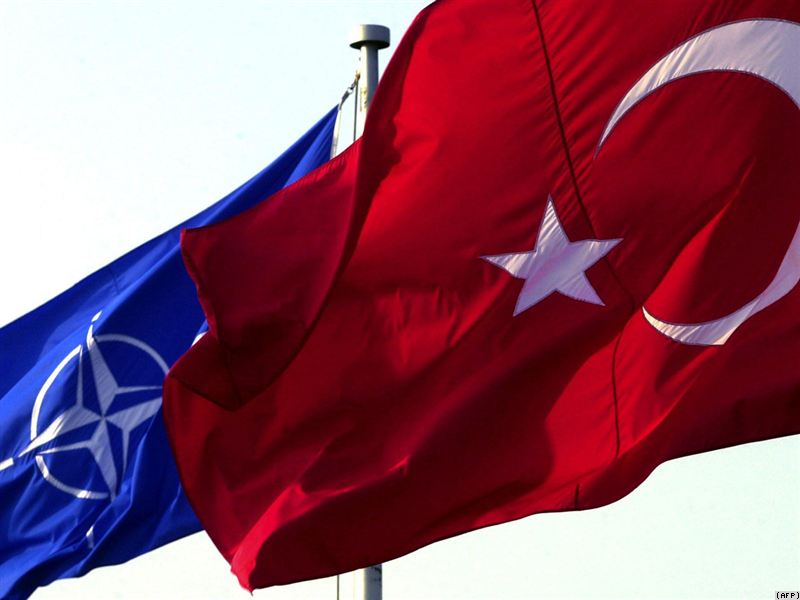
Will Turkey Become NATO's First and the Muslim World's Next Failed State?
NATO's only Muslim member state, Turkey, has made great strides in developing a modern, even high-tech society. Turkey's aerospace industry, for example, is highly advanced and may even soon field an indigenous stealth fighter.
The wars (there are more than one) in neighbouring Syria, however, are destabilizing Turkey and its government and the recent intervention of Russian forces is worsening Ankara's problems. This is compounded by America switching its support from Syria's Sunni rebel opposition to its Kurdish forces who are enemies of the Turks.
If you want to understand how Turkey has succumbed to chaos, read this analysis from Asia Times Online. And here's another take on Turkey's precipitous dilemma from Britain's New Statesman.
And You Think You've Got a Tough Commute.
The Chinese drive to modernize hasn't always been very well thought out. After all, who was the engineer who came up with the idea of a 50-lane highway into Beijing? Was it the same guy who thought you could neck that 50-lane highway down to 20-lanes and not create a traffic nightmare?
Despite 50 lanes, the G4 Beijing-Hong Kong-Macau Expressway, one of the country’s busiest roads, was turned into miles-long parking lot.
The culprit of the “carpocalypse” was a new checkpoint that forces traffic to merge from 50 lanes down to just 20, according to the People’s Daily.
The sad part is this was no fluke. China has made traffic jams into an art form. And if you’re reading this on your phone while you’re sitting in this actual traffic jam, just know it could be worse. In 2010, 10,000 vehicles were stuck for 12 days on 74 mile (120 km) stretch of road, after construction turned into hundreds of fender benders.
An Ex-Pat Canadian Sees Harper as "the Last Remnant of George w. Bush"
The Guardian has given a lot of coverage to Canada's election campaign, much of it focusing on Stephen Joseph Harper, Shifty Steve. The latest is an op-ed from a Canadian now living in the US, Marie-Marguerite Sabongui. It begs the question, "How could Canada, a country widely regarded as being full of socially progressive and tolerant people, elect someone like Harper?"
I frequently tell my American friends, who know little about Canada, that Stephen Harper is the last remnant of the George W Bush administration in North America. The response I get is usually a mixture of dismay and pity. Bush’s worldview and politics of fear have been rejected by Americans in the last two elections, many of whom now lament his era as a period of folly and hubris.
My American friends are also confused. How could Canada, a country widely regarded as being full of socially-progressive and tolerant people, elect someone from a party so antithetical to that image?
Under Bush, the White House denied the existence of man-made climate change and gutted the ability of the US Environmental Protection Agency to go after polluters. Under Harper, the government took aim at Environment Canada, slashing its budget and restricted the ability of its own regulators to crack down on cancer-linked pollution. The Conservative Party silenced the government’s own scientists, who, for the first time ever, mounted a political campaign against Harper. Canada was also one of the first countries to pull out of the Kyoto Protocol, an international agreement to address climate change and is the only country in the world to have withdrawn from a UN treaty to address desertification. And the list of environmental programs that Harper has slashed funding to is long and devastating.
...While the US is learning from its past and addressing the issue of mass incarceration, under Harper, Canada has recently undertaken the largest expansion of prisons since the 1930s, despite a record-low crime rate. Echoing the doctrine of Republicans in the States, he cut funding to the arts, cut funding to Canada’s public broadcaster and destroyed the national gun registry, which experts say had historically contributed to Canada’s low rates of gun violence.
...Internationally, Harper’s foreign policy has been focused on promoting Canadian oil, but little else, and that has damaged our strategic position in the world. Since the founding of the United Nations 70 years ago, Canada has worked diligently to earn a reputation as an honest broker and constructive problem solver. Under Harper, Canada has become known for avoiding international summits and for obstruction. A report chaired by Former UN Secretary General Kofi Annan stated that Canada, with Australia, “appear to have withdrawn entirely from constructive international engagement on climate.”
Sunday, October 11, 2015
Climate Change - Rumblin' and Tumblin' and Picking' Up Speed
They're drowning in South Carolina, seriously. Killer floods in the heart of Dixie. It's the latest craze. The new jet stream parks a rain front overhead delivering a week-long soaking. You can take that sort of thing for a day, maybe two, but after that it gets to be a bit much. More than you can handle.
Over on the Pacific coast, mid-October has brought an inferno to southern California. Another day of scorching heat and, as projected, the demand for electricity for air conditioning has caused power outages.
The latest problems occurred after utility workers tried to fix problems that occurred overnight Friday by moving customers onto other circuits, said Carol Tucker, a spokeswoman with the Los Angeles Department of Water and Power.
"Because of the demand and excessive heat, the other circuits were already being strained and overheated," Tucker said.
I think those Americans need another constitutional amendment to enshrine their right to air conditioning. Guns don't do you a lot of good when the temperatures hover, day after day, in the triple digits and the cooling appliances go out. Did I mention they've also got this drought thing going on?
In the greater scheme of things, a report in The Guardian that this year's "make it or break it" climate summit in Paris is looking like we'll break it instead of making it. That 2C target? Forget about it. Even if it would have kept us safe from runaway global warming, and it won't, we'll be blowing straight through it anyway.
In advance of the COP21 United Nations climate talks to be held in Paris from 30 November to 11 December, every country was asked to submit proposals on cutting use of fossil fuels in order to reduce their emissions of greenhouses gases and so tackle global warming. The deadline for these pledges was 1 October.
A total of 147 nations made submissions, and scientists have since been totting up how these would affect climate change. They have concluded they still fall well short of the amount needed to prevent a 2C warming by 2100, a fact that will be underlined later this week when the Grantham Research Institute releases its analysis of the COP21 submissions. This will show that the world’s carbon emissions, currently around 50bn tonnes a year, will still rise over the next 15 years, even if all the national pledges made to the UN are implemented. The institute’s figures suggest they will reach 55bn to 60bn by 2030.
In advance of the COP21 United Nations climate talks to be held in Paris from 30 November to 11 December, every country was asked to submit proposals on cutting use of fossil fuels in order to reduce their emissions of greenhouses gases and so tackle global warming. The deadline for these pledges was 1 October.
A total of 147 nations made submissions, and scientists have since been totting up how these would affect climate change. They have concluded they still fall well short of the amount needed to prevent a 2C warming by 2100, a fact that will be underlined later this week when the Grantham Research Institute releases its analysis of the COP21 submissions. This will show that the world’s carbon emissions, currently around 50bn tonnes a year, will still rise over the next 15 years, even if all the national pledges made to the UN are implemented. The institute’s figures suggest they will reach 55bn to 60bn by 2030.
The thing is, we haven't got 15-years to continue to grow emissions. We haven't got five years before we have to begin slashing current emissions to the order of at least five per cent per year (based on current emissions) forever. That would mean a radical transformation of our domestic and global economies and our societies and there's nothing remotely like that on the horizon. Nothing. Look at what we've got on offer - Steve, Justin and Tom. They don't think on this level. They're still playing in the sandbox of 80s politics.
I just received my "new to me" copy of Gwynne Dyer's updated book "Climate Wars." I bought the original years ago but I've obviously loaned it to somebody but I no longer recall who that was. Part of the aging thing, I suppose.
Gwynne sure cuts to the chase. He sums up his whole book in the introduction. Here are a few passages setting out his four conclusions:
First, this thing is coming at us a whole lot faster than the publicly acknowledged wisdom has it. When you talk to the people at the sharp end of the climate business, scientists and policy-makers alike, there is an air of suppressed panic in many of the conversations. We are not going to get through this without taking a lot of casualties, if we get through it at all.
Second, all the stuff about changing the light-bulbs and driving less, although useful for raising consciousness and gives people some sense of control over their fate, is practically irrelevant to the outcome of the crisis. We have to decarbonise our economies wholesale, and if we haven't reached zero greenhouse-gas emissions globally by 2050 - and, preferably, 80 per cent cuts by 2030 - then the second half of this century will not be a time you would chose to live in...
Third, it is unrealistic to believe that we re really going to make those deadlines. Maybe if we had gotten serious about climate change fifteen years ago, or even ten, we might have had a chance, but it's too late now. Global greenhouse-gas emissions were rising 1 per cent a year when the original climate-change treaty was signed in 1992; now they are growing at 3 per cent a year, and most of Asia, home to half the human race, is rapidly moving into industrialised consumer societies. To keep the global average temperature low enough to avoid hitting some really ugly feedbacks, we need greenhouse-gas emissions to be falling by 4 per cent now, and you just can't turn the supertanker around that fast...
And fourth, for every degree that the average global temperature rises, so do the mass movements of population, the number of failed and failing states, and very probably the incidence of internal and international wars. Which, if they become big and frequent enough, will sabotage the global cooperation that is the only way to stop the temperature from continuing to climb.
When Dyer wrote those words in 2008 they seemed grim to the point of apocalyptic. Now they seem prescient. A good deal has happened over the seven years since Climate Wars was released. There's been a flood of research, a mountain of analysis and the consensus has become, in the context of science, watertight.
Since 2008, nature has been showing her hand in ways back then we didn't imagine we would see until the end of the century. We just keep getting overtaken by events. This thing is not linear as we had optimistically imagined only a decade ago.
That 2C target, that political number? Do you even remember what that was all about? It was a limit for the amount of warming we believed would keep us safe from tipping points that would lead to runaway global warming. These tipping points were the triggers for natural feedback loops that would lead to devastating, catastrophic climate change completely beyond our control.
Since Dyer wrote his book in 2008 we've seen these feedback loops become reality, evidence that we've passed a number of major "never exceed" tipping points. The ice caps are melting. The tundra is drying out and catching fire. The permafrost beneath is melting, releasing massive amounts of methane into the atmosphere. Seabed methane clathrates are melting sending plumes of methane to the surface and on to the atmosphere. Our oceans are acidifying and the circulation patterns on which our civilization was built are changing irreversibly.
Meanwhile, aboard the supertanker, SS Canada, there's nobody in the wheelhouse, nobody willing to turn that helm hard over. No, they're all down in the hold squabbling over daycare, balanced budgets and funding for the arts.
I just received my "new to me" copy of Gwynne Dyer's updated book "Climate Wars." I bought the original years ago but I've obviously loaned it to somebody but I no longer recall who that was. Part of the aging thing, I suppose.
Gwynne sure cuts to the chase. He sums up his whole book in the introduction. Here are a few passages setting out his four conclusions:
First, this thing is coming at us a whole lot faster than the publicly acknowledged wisdom has it. When you talk to the people at the sharp end of the climate business, scientists and policy-makers alike, there is an air of suppressed panic in many of the conversations. We are not going to get through this without taking a lot of casualties, if we get through it at all.
Second, all the stuff about changing the light-bulbs and driving less, although useful for raising consciousness and gives people some sense of control over their fate, is practically irrelevant to the outcome of the crisis. We have to decarbonise our economies wholesale, and if we haven't reached zero greenhouse-gas emissions globally by 2050 - and, preferably, 80 per cent cuts by 2030 - then the second half of this century will not be a time you would chose to live in...
Third, it is unrealistic to believe that we re really going to make those deadlines. Maybe if we had gotten serious about climate change fifteen years ago, or even ten, we might have had a chance, but it's too late now. Global greenhouse-gas emissions were rising 1 per cent a year when the original climate-change treaty was signed in 1992; now they are growing at 3 per cent a year, and most of Asia, home to half the human race, is rapidly moving into industrialised consumer societies. To keep the global average temperature low enough to avoid hitting some really ugly feedbacks, we need greenhouse-gas emissions to be falling by 4 per cent now, and you just can't turn the supertanker around that fast...
And fourth, for every degree that the average global temperature rises, so do the mass movements of population, the number of failed and failing states, and very probably the incidence of internal and international wars. Which, if they become big and frequent enough, will sabotage the global cooperation that is the only way to stop the temperature from continuing to climb.
When Dyer wrote those words in 2008 they seemed grim to the point of apocalyptic. Now they seem prescient. A good deal has happened over the seven years since Climate Wars was released. There's been a flood of research, a mountain of analysis and the consensus has become, in the context of science, watertight.
Since 2008, nature has been showing her hand in ways back then we didn't imagine we would see until the end of the century. We just keep getting overtaken by events. This thing is not linear as we had optimistically imagined only a decade ago.
That 2C target, that political number? Do you even remember what that was all about? It was a limit for the amount of warming we believed would keep us safe from tipping points that would lead to runaway global warming. These tipping points were the triggers for natural feedback loops that would lead to devastating, catastrophic climate change completely beyond our control.
Since Dyer wrote his book in 2008 we've seen these feedback loops become reality, evidence that we've passed a number of major "never exceed" tipping points. The ice caps are melting. The tundra is drying out and catching fire. The permafrost beneath is melting, releasing massive amounts of methane into the atmosphere. Seabed methane clathrates are melting sending plumes of methane to the surface and on to the atmosphere. Our oceans are acidifying and the circulation patterns on which our civilization was built are changing irreversibly.
Meanwhile, aboard the supertanker, SS Canada, there's nobody in the wheelhouse, nobody willing to turn that helm hard over. No, they're all down in the hold squabbling over daycare, balanced budgets and funding for the arts.
Saturday, October 10, 2015
Casting Pearls Before Swine or My Election Day Blues
"Do not give what is holy to the dogs; nor cast your pearls before swine,
lest they trample them under their feet, and turn and tear you in pieces."
I wish I could vote on issues - policies and priorities that I wanted the government to pursue. Not an exhaustive list, mind you. Maybe just the top two or three things on which I'd like the government to give a little extra attention. I'd probably put the environment and climate change first, democratic reform second and inequality third. Then again most people might go for the usual - the economy, jobs, low taxes - and my altruism would be trampled underfoot.
Okay, forget all that stuff. One vote it is. But if it is to be just the one vote shouldn't we have better candidates? Shouldn't our candidates have to take some courses, pass some tests, to prove that they're not complete dumb asses like the Born Again dumb ass who used to hold my riding? He was the guy they had in mind when they coined the phrase, "useless as tits on a boar hog." There were a lot of his constituents who couldn't remember his name and I couldn't find anyone, no one, who could recall a single goddamned thing he did for us or our riding.
Now admittedly he snuck into Parliament as a Reformer. There was a party that openly revered ignorance. I suppose ignorance, the Old Testament and thinly veiled racism were their platform. Then, through the effluxion of time, he got laundered into a Conservative although he remained fiercely committed to being bone lazy and stupid.
Can you imagine a candidate saying, "Vote for me. I'm everything you want in a member of parliament. I'm bone lazy and I'm stupid and I promise, if you send me to Ottawa, I'll stay that way. Fuck them Liberal elites with their book learnin' and their fancy facts." I can think of a good number of MPs from Harper's caucus who could run under that slogan. Yesterday I wrote about another guy, Mel Arnold, from the North Okanagan-Shuswap riding who's trying to join that club.
I know it's none of my business who the folks of North Okanagan-Shuswap elect to be their next MP. Only that's not quite true. You and I and every Canadian and all of our institutions and the future of our kids are going to be affected by the next honourable member for North Okanagan-Shuswap and every vote that dumb ass casts on the floor of the House of Commons.
Now Mel has cultivated the art of stupidity, elevating it to near religious status. Here's how Mel responded to a question about man-made climate change. "Until science can prove conclusively and empirically that humans are the main cause of climate change, I will withhold my personal opinion."
The truth is, Mel isn't withholding anything. He's got a personal opinion. He believes the science isn't in. He believes that anthropogenic global warming hasn't been proved to his satisfaction. I'm sure the fact that Mel's entrepreneurship runs to selling high-performance, gas guzzling speedboats that spend summer days racing from one end of Shuswap Lake to the fuel dock at the other has nothing to do with his "belief" or the magical thinking on which it rests.
I don't want to pick on Mel, not when there are so many other Mels and Ronas and Cletises in the field, but I use Mel to make a point. You wouldn't want your kids boarding a school bus if the driver wasn't licensed. You wouldn't want your brakes adjusted by a guy who couldn't tell a wrench from a ladle either.
You see, all this matters - a lot. Right now we get by with the likes of Mel and Rona and all the other nasty, narrow-minded, bigoted dumb asses because their intellectual, spiritual and cognitive defects don't matter. They don't matter because our parties whip their votes. What they think or even if they think at all doesn't matter so long as they damn well do as they're told. And there's your problem.
We need more free votes in Parliament. They should be the rule, not the exception. We need free votes on serious matters, not just on frivolous distractions. But, to have a culture of free votes in Parliament, we need MPs of a certain standard. We need people who will make the effort to learn what they need to know to cast informed votes. We need people who understand that being a MP, casting a free vote in the House, is a solemn responsibility that can't be met by bone lazy dumb asses.
Maybe there should be SAT-type tests that have to be passed before individuals could even stand as candidates. These might embody things like the citizenship exams immigrants must pass and basic tests of reading comprehension, simple math and logic. We don't have to set the bar very high. Serving in Parliament is a learning experience unto itself. Still is it unreasonable to expect those who aspire to high office to at least have a learner's permit?
Friday, October 09, 2015
Kudos to Tunisia.
Congratulations to Tunisia's National Dialogue Quartet for their well-deserved Nobel Peace Prize, 2015.
"In this context, the prize marks a remarkable achievement in the history of a nation that rose up five years ago and overthrew a strikingly durable and repressive regime. Since then Tunisians have exercised remarkable restraint and compromise as they have struggled to overcome the legacy of autocracy and the rise of new extremist threats."
In March I argued that Canada should stop wasting time and effort waging a futile bombing campaign against ISIS in Iraq and Syria and should, instead, allocate our forces in support of Tunisia should Islamist radicals try to get a toehold there.
If we wanted to give ISIS a setback, we could begin with Tunisia. That's a great place to draw the line, to stop the spread of radical Sunni Islamists. We might not get to bomb anybody but sometimes you have to sacrifice for the greater good.
Why Tunisia? Because it has a population ready to turn out by the tens of thousands to denounce extremism. And these people know a thing or two because they're the same crowd that sparked the "Arab Spring" and achieved a stable democratic system for it.
Let's back Tunisia. Let's give them at least as much support as we're squandering on Iraq to make sure they have everything they need to anchor their democracy and deny ISIS the power vacuum so instrumental to its spread. Draw the line, stop the fanatical brigands here, and then slowly begin rolling them back.
We're doing this not just for Tunisia but for us too and for everyone else. Where better but a stable, democratic and free (from both Islamic and Western dogma) Arab state to bring the Muslim world into the 21st century and show that Islam and democracy are not remotely mutually exclusive.
Tunisia should really be seen by the outside world as the true, irreplaceable gem in the crown. Where are we if we lose that?
I am delighted that this Tunisian peace group won the Nobel prize but that's no guarantee it won't encourage the Islamists to try to knock them off the rails. It was just four months ago that Islamist gunmen massacred tourists on Tunisia's beaches. More could follow. The idea that I raised in March still stands. Canada should stand surety for Tunisia's democracy, liberty and peace.
Keep Those Snow Shovels Handy
It's unknown how this will translate on our side of the Atlantic this winter but Britain is bracing for four months of very heavy snowfall. British meteorologists have made the call based on the interaction of a record El Nino event, a negative phase of the North Atlantic Oscillation combined with a negative shift in the Arctic Oscillation that could trigger months of polar outflow winds.
The weather models suggest that Britain, top to bottom, could be under a heavy blanket of snow from December to March.
Global Food Security - Rubbing Salt in the Wounds of the Already Insecure
The Brits have a term for it, "chasing the sun." This describes how Britain's industrial agri-giants ensure that consumers will always find high-value products such as fresh strawberries on the shelves at Sainsbury's. They do it by establishing a global chain of production facilities. As the growing season in the UK closes, strawberry production shifts to Spain. After that it moves to Africa and so on. This ensures that somewhere around the world strawberries are being grown for shipment to British markets.
This is fine in theory but monstrous in practice. A lot of the production occurs in poorer nations that are already food insecure. Industrial producers come in and simply muscle out the locals, often land-grabbing the best farmland to meet the market demands thousands of miles distant. It's a piece of cake displacing the locals from the land their ancestors might have farmed for centuries thanks to corrupt government officials and the lack of any land title registration. Families don't get titles to their ancestral lands because there are no titles available. Foreign companies, however, get title deeds quick enough.
One of these countries I studied last year was Kenya. It could be a poster child for land grabbing. Which is why I was dismayed to read an article today that almost half the food grown in Kenya for Europe is wasted.
"Last December I traveled to Kenya to meet farmers and exporters supplying fresh produce to European retailers. I visited farms and pack houses around the country that were routinely throwing away vast amounts of perfectly good food and were losing money as a result. An average of 44.5 percent of the food grown for Europe was being discarded, not because of spoilage, but because it did not meet the cosmetic specifications of the major European retailers.
"Every exporter and producer I met had experienced rejecting their produce because it did not meet the grade. In addition, the drive for producing perfect food meant that farmers always over produced, using unnecessary quanities of resources like land and water to grow food that would never be eaten."
"Last minute order cancellations, whether explicit or based upon false quality claims, unfairly transfer financial risk from the market towards those at the bottom of the food chain, resulting in colossal amounts of food and resources being wasted. With diminishing selling power, fresh produce suppliers are unable to sell their highly perishable produce, meaning it is fed to livestock or dumped."
This is fine in theory but monstrous in practice. A lot of the production occurs in poorer nations that are already food insecure. Industrial producers come in and simply muscle out the locals, often land-grabbing the best farmland to meet the market demands thousands of miles distant. It's a piece of cake displacing the locals from the land their ancestors might have farmed for centuries thanks to corrupt government officials and the lack of any land title registration. Families don't get titles to their ancestral lands because there are no titles available. Foreign companies, however, get title deeds quick enough.
One of these countries I studied last year was Kenya. It could be a poster child for land grabbing. Which is why I was dismayed to read an article today that almost half the food grown in Kenya for Europe is wasted.
"Last December I traveled to Kenya to meet farmers and exporters supplying fresh produce to European retailers. I visited farms and pack houses around the country that were routinely throwing away vast amounts of perfectly good food and were losing money as a result. An average of 44.5 percent of the food grown for Europe was being discarded, not because of spoilage, but because it did not meet the cosmetic specifications of the major European retailers.
"Every exporter and producer I met had experienced rejecting their produce because it did not meet the grade. In addition, the drive for producing perfect food meant that farmers always over produced, using unnecessary quanities of resources like land and water to grow food that would never be eaten."
But, of course, the consumer almost never sees the dark side that lurks behind that lovely fresh produce in the grocery stores. Big Agra goes to great lengths to ensure we never will.
Since When Did "Dumb Ass" Become a Credential?
![]() |
| That's Mel on the Right |
Mel Arnold is not a scientist. Mel Arnold is a dumb ass. He's running for the Cons in North Okanagan-Shuswap and he's showing that he has what it takes to be a loyal member of Team Harper.
Mel has come to the media's attention for his perfectly Harperian views on anthropogenic (man-made) climate change. As far as Mel is concerned, it's not anthropogenic. It's not man-made.
"I don't know that it has been determined for sure that human activity is the main cause. It is part of the process," said Arnold. "But how much of it is actually naturally occurring, that's I think where the debate is."
Arnold said he believes approximately 1.5 per cent of greenhouse gas emissions in Canada are man-made and believes cycles of climate change could be responsible for the rise in global temperatures following the industrial revolution.
"As you know, this area was once buried in kilometres of thick ice during the ice ages. And we have approximately 30 year cycles on weather conditions here. Those types of things are still in play."
Like any good Tory candidate, Mel is long on belief and opinion and desperately short on science and fact. He still uses words such as "know" and "think" when he really means "believe" and "guess." Very much like how Shifty Steve knows that marijuana is "infinitely worse" than tobacco when medical science consistently says that's not true or believes that Canada is in the midst of a major crime spree when crime rates have been falling steadily for decades.
Guys like Mel and Shifty are all we need to realize that, when it comes to Conservatives and their approach to governance, "dumb ass" is their default operating mode.
Looking for the Exit Door
So, what are you doing for the rest of the century? In the context of Canada and the Middle East that might be a question worth asking.
Let's start with the Golden Oldies: Operation Desert Storm. Ah, who can forget those wonderful days, those seven magical months from August, 1990 until February, 1991 when we put aside our differences long enough to drive Saddam out of Kuwait?
Barring a brief ceasefire or two, our side and their side have been at it pretty much continuously ever since. That's a quarter century now. Four times longer than WWII, impressive.
What's less than impressive is what we've achieved for our quarter-century of precision-guided mayhem. No, I don't mean the development of new weapons of carnage such as drones. I mean things such as peace and stability, the hallmarks of victory. For all the cruise missiles, the drone attacks, our never-ending "whack-a-mole" air campaigns and our ground conquests, all the money and the lives, we've got remarkably little positive to show for it. Plenty on the negative side, however.
There's al Qaeda, al Nusra and ISIS, the Islamic State, and all their branch plant operations that have now spread from northwest Africa to Indonesia and China. We've done wonders at rekindling the embers of theological civil war between the Sunni and Shiite Muslim camps. I wonder how many extended Muslim families don't have some cousin waging Jihad somewhere. There are so many opportunities to pick from.
You know you're in trouble when the Golden Rule, the one about "my enemy's enemy" has gone all to hell. In the Middle East, our "friends" are attacking those who are fighting our enemies, and we're just fine with it. We support Shiites battling Sunnis here and Sunnis battling Shiites there. It's sort of like sending reinforcements to Robert E. Lee here and Ulysses S. Grant there. Cognitive dissonance meet laser-guided munitions.
Now you might have thought we'd have paid some attention to de-clustering this enormous clusterf__k of our own making. Hardly. Welcome to "mine enemy's enemy is mine enemy too." Yet that doesn't stop us from picking sides a la carte and being all self-righteous about it.
Buggered if we'd ever admit it but it's hard not to see our handiwork at play in the spread of Islamist radicalism across the span of the Muslim world. We sort of got it kick-started when we backed Osama & Co. in the Soviet war in Afghanistan from 1979 to 1989. Like most of our adventures into the realm of the Prophet we were using the mujis, including al Qaeda, for our purposes, not for their benefit. That's why we really didn't give a shit what our "friends" did after the Russian armoured columns retreated back to the Rodina. At least not until our "friends" started bombing embassies and warships and, finally, Manhattan real estate. Then, oh yes, we gave a shit, did we ever.
If they turned it into a university course it might have a catchy name like "Failed states - a "how to" guide, 101." Or maybe we could turn it into a recipe, "just add water and stir" or "rinse and repeat."
We could give it on all our campuses - Afghanistan, Iraq, Syria, Lebanon, Egypt (opening soon), Libya, Algeria, Pakistan and Saudi Arabia. Wait, did I just say Saudi Arabia? Why, yes, I did. An interesting article in Foreign Policy suggests the crown jewel of the Sunni Muslim world may be starting to come apart at the seams.
As if there weren’t already enough problems to worry about in the Middle East, Saudi Arabia might be headed for trouble. From plummeting oil prices to foreign-policy missteps to growing tensions with Iran, a confluence of recent events is mounting to pose some serious challenges for the Saudi regime. If not properly managed, these events could eventually coalesce into a perfect storm that significantly increases the risk of instability within the kingdom, with untold consequences for global oil markets and security in the Middle East.
Here's the gist of it. The unrest begins with dissent within the Saudi royal family itself.
Last week, the Guardian published two letters that an anonymous Saudi prince recently circulated among senior members of the royal family, calling on them to stage a palace coup against King Salman. The letters allege that Salman, who ascended to the throne in January, and his powerful 30-something son Deputy Crown Prince Mohammed bin Salman have pursued dangerous policies that are leading the country to political, economic, and military ruin. In an interview with theGuardian, the prince insisted that his demand for a change in leadership not only had growing support within the royal family but across broader Saudi society as well.
Then there's the Saudis' David and Goliath war on Yemen's Houthi rebels that is playing out according to the Biblical script.
In its story on the prince’s letters, the Guardian reported that “many Saudis are sickened by the sight of the Arab world’s richest country pummelling its poorest.” Particular blame is attached to Prince Mohammed bin Salman, who also serves as the kingdom’s defense minister and by all accounts has been the driving force behind the war effort. Tagged with the unofficial nickname “Reckless,” Prince Mohammed bin Salman has been accused of rushing into Yemen without a clear strategy or exit plan, resulting in mounting costs in blood and treasure, an ever-expanding humanitarian crisis, and growing international criticism.
For a people who don't seem to blink an eye at the live TV broadcast of some woman being butchered by a headsman's sword in the public square to go all wobbly over the plight of Yemenis suggests something is indeed afoot.
Then there's the Saudi economy, long may it falter.
Saudi Arabia’s 2015 budget was based on the assumption that oil would be selling at about $90 per barrel. Today, it’s closer to half that. At the same time, the Saudis have incurred a rash of expenses that weren’t planned for, including those associated with King Salman’s ascendance to the throne (securing loyalty for a new king can be expensive business) and the war in Yemen.
The result is a budget deficit approaching 20 percent, well over $100 billion, requiring the Saudis to deplete their huge foreign exchange reserves at a record rate (about $12 billion per month) while also accelerating bond sales. The Saudis have reportedlyliquidated more than $70 billion of their holdings with global asset managers in just the past 6 months.
Get this. The "oil rich" Saudis may soon start running out of oil. That's much akin to being in a jetliner over a vast ocean and running out of fuel.
Adding to long-term concerns is the fact that Saudi net oil exports have been in slow decline for years as internal energy consumption rises dramatically. Indeed, analysts now suggest that rapidly expanding domestic demand could render the kingdom a net importer of oil by the 2030s. It goes without saying that such a development poses a mortal threat to the kingdom, where oil sales still account for 80 to 90 percent of state revenues.
As for battling deficits by cutting expenses and imposing austerity, it’s hardly an attractive option for a government whose main weapon for staving off domestic discontent since the start of the 2011 Arab uprisings has been to shower its people with more free stuff. Energy subsidies alone have comprised about 20 percent of Saudi GDP. There are also extensive subsides for food, housing, water, and a wide range of other consumer goods. As they mull the risks of reform, you can be sure that the Saudis are acutely aware of the role that sharp increases in the cost of living played in triggering revolts across the Middle East, including in Tunisia, Egypt, and Yemen.
And then there's the Saudi royal family's rapidly fraying lifeline, the United States.
Russia’s dramatic intervention in Syria has underscored a much broader threat now rocking the kingdom: the growing reality that America is abandoning its traditional role as guarantor of Middle East stability. That’s of course very bad news for the Saudis, who have hitched their survival for 70 years to Pax Americana. Now, that U.S.-defended order appears to be unraveling before their eyes. Instead, the new normal is Washington cutting diplomatic deals that promise to embolden the kingdom’s worst enemy in Iran, while protesting meekly as its main geopolitical rival, Russia, seeks to overturn the region’s balance of power. As surely as night follows day, the rapid decline of American power and reliability inevitably leaves Saudi Arabia increasingly exposed and vulnerable.
And, to sum up:
Call up any list of warning signs that a society may be approaching the danger zone with respect to possible instability and match it up against what seems to be happening in the kingdom today. Growing elite fissures: check. Mired in a costly foreign war: check. Increasing economic stress: check. Signs of eroding legitimacy: check. Rising power of hostile foreign actors: check. Declining power of traditional foreign protectors: check.
No one knows how this is going to play out because a lot of that hinges on Washington. However, for Canada, the reality that Washington has become dysfunctional, perhaps even psychotic governmentally, should be our cue to get while the getting's good. "Whack-a-mole" is not a strategy now matter how strenuously our incompetent military and political leadership claim otherwise.
In the Middle East we don't know who our friends are, mainly because we don't have any, not really. We're not doing a damn bit of good over there unless, perhaps, you're in the Afghan opium trade or hold shares in America's corporate war machine. Those hissing noises are fuzes burning fiercely. Vlad Putin is now eating our lunch in Syria. There are too many players going in too many directions that establishing a rational policy is a matter of herding cats.
It's time to put on our long pants and start acting like grownups. We can start with one rule - no more wars without end. No wars unless we know going in what victory looks like and that we have the means and the will to prevail in the limited time before public support evaporates. Of course that means, for Canada, no more Middle Eastern wars even if we're just in some hapless coalition. It's time to find the exit door.
The result is a budget deficit approaching 20 percent, well over $100 billion, requiring the Saudis to deplete their huge foreign exchange reserves at a record rate (about $12 billion per month) while also accelerating bond sales. The Saudis have reportedlyliquidated more than $70 billion of their holdings with global asset managers in just the past 6 months.
Get this. The "oil rich" Saudis may soon start running out of oil. That's much akin to being in a jetliner over a vast ocean and running out of fuel.
Adding to long-term concerns is the fact that Saudi net oil exports have been in slow decline for years as internal energy consumption rises dramatically. Indeed, analysts now suggest that rapidly expanding domestic demand could render the kingdom a net importer of oil by the 2030s. It goes without saying that such a development poses a mortal threat to the kingdom, where oil sales still account for 80 to 90 percent of state revenues.
As for battling deficits by cutting expenses and imposing austerity, it’s hardly an attractive option for a government whose main weapon for staving off domestic discontent since the start of the 2011 Arab uprisings has been to shower its people with more free stuff. Energy subsidies alone have comprised about 20 percent of Saudi GDP. There are also extensive subsides for food, housing, water, and a wide range of other consumer goods. As they mull the risks of reform, you can be sure that the Saudis are acutely aware of the role that sharp increases in the cost of living played in triggering revolts across the Middle East, including in Tunisia, Egypt, and Yemen.
And then there's the Saudi royal family's rapidly fraying lifeline, the United States.
Russia’s dramatic intervention in Syria has underscored a much broader threat now rocking the kingdom: the growing reality that America is abandoning its traditional role as guarantor of Middle East stability. That’s of course very bad news for the Saudis, who have hitched their survival for 70 years to Pax Americana. Now, that U.S.-defended order appears to be unraveling before their eyes. Instead, the new normal is Washington cutting diplomatic deals that promise to embolden the kingdom’s worst enemy in Iran, while protesting meekly as its main geopolitical rival, Russia, seeks to overturn the region’s balance of power. As surely as night follows day, the rapid decline of American power and reliability inevitably leaves Saudi Arabia increasingly exposed and vulnerable.
And, to sum up:
Call up any list of warning signs that a society may be approaching the danger zone with respect to possible instability and match it up against what seems to be happening in the kingdom today. Growing elite fissures: check. Mired in a costly foreign war: check. Increasing economic stress: check. Signs of eroding legitimacy: check. Rising power of hostile foreign actors: check. Declining power of traditional foreign protectors: check.
No one knows how this is going to play out because a lot of that hinges on Washington. However, for Canada, the reality that Washington has become dysfunctional, perhaps even psychotic governmentally, should be our cue to get while the getting's good. "Whack-a-mole" is not a strategy now matter how strenuously our incompetent military and political leadership claim otherwise.
In the Middle East we don't know who our friends are, mainly because we don't have any, not really. We're not doing a damn bit of good over there unless, perhaps, you're in the Afghan opium trade or hold shares in America's corporate war machine. Those hissing noises are fuzes burning fiercely. Vlad Putin is now eating our lunch in Syria. There are too many players going in too many directions that establishing a rational policy is a matter of herding cats.
It's time to put on our long pants and start acting like grownups. We can start with one rule - no more wars without end. No wars unless we know going in what victory looks like and that we have the means and the will to prevail in the limited time before public support evaporates. Of course that means, for Canada, no more Middle Eastern wars even if we're just in some hapless coalition. It's time to find the exit door.
Thursday, October 08, 2015
Does TPP Sabotage Climate Change Action?
Clause 20 of the Trans-Pacific Partnership agreement sounds pretty good. "The 12 Parties agree to effectively enforce their environmental laws; and not to weaken environmental laws in order to encourage trade or investment." What's not to like there?
All is not as it seems. While the TPP purports to uphold existing environmental laws, it may leave signatory nations incapable of passing new environmental enactments. Cracking down on carbon emissions, new carbon taxes, upgraded cap and trade schemes could all run afoul of corporate polluters who could sue for injunctions or compensation.
Marijuana (Users) "Infintely Worse" Than Cigarette Smokers
To Shifty Steve Harper's little mind, marijuana is 'infinitely worse' than tobacco as a public health hazard. Of course Shifty's lizard brain isn't programmed to tell the truth. Fact is he couldn't give a Shifty Shit about the public health aspects of marijuana versus tobacco. Let's decode what he's really trying to say.
Marijuana users are infinitely worse for Steve's re-election prospects when they actually manage to get to the voting booth. Cigarette smokers, by contrast, tend to fall into the "dumb ass" category more likely to vote Harper.
There, now it all makes sense. Marijuana is infinitely worse.
Marijuana users are infinitely worse for Steve's re-election prospects when they actually manage to get to the voting booth. Cigarette smokers, by contrast, tend to fall into the "dumb ass" category more likely to vote Harper.
There, now it all makes sense. Marijuana is infinitely worse.
Wednesday, October 07, 2015
The Real Killer Will be Heat Stress
The death certificate may list kidney disease or heart failure but that could mask the real cause of death - heat stress. A New Zealand expert on the subject, Dr. Tord Kjellstrom, warns that, with 4-billion people from the world's temperate, tropical and sub-tropical zones already at risk, heat stress may be the most lethal impact of climate change for the balance of this century.
For nearly 20 years Kjellstrom, and more lately the RCRC team, have researched the impact of climate change heat-stress on working people and the lost production and resulting downward slide in national Gross Domestic Product (GDP).
Kjellstrom, is a softly spoken medical doctor and also holds a masters in mechanical engineering. He has 40 years experience of teaching and research in environmental and occupational health, and epidemiology. He has held professor positions in universities in Sweden, New Zealand, Australia, and United Kingdom.
He worked 12 years at the World Health Organization in Geneva and was the WHO's Office of Global and Integrated Environmental Health director ,with responsibility, for climate change and health from 1994 to 1997.
Kjellstrom said it is not storms or rising sea levels that will be climate change's greatest threat to human life in the next 100 years - but heat exposure. He says it is here already and people are dying.
"
..."We have 4000 million people already at risk."
The ideal core body temperature for humans is around 37 degrees C. Once it rises to 39C heat stress and strain sets in, organs can be damaged and at higher temperatures death may occur.
Kjellstrom said poor workers were already dying in parts of the world from kidney disease and heart failure in locations ranging from the sugar cane fields of El Salvador and Nicaragua to Qatar where 185 workers died in 2013 building stadiums and infrastructure for the 2022 FIFA World Cup in sweltering conditions.
Poor manual workers in hot countries faced major hurdles, he said. They had to work to survive, they could often not carry or source enough potable water to hydrate daily, they usually lived without cooling systems and they faced major migration barriers.
The overall results were health impacts, deaths and was lower production output.
"There are millions and millions of people who do all the work by hand. When it gets up to a certain heat level you can not keep up the pace of work," he said.
..."We have 4000 million people already at risk."
The ideal core body temperature for humans is around 37 degrees C. Once it rises to 39C heat stress and strain sets in, organs can be damaged and at higher temperatures death may occur.
Kjellstrom said poor workers were already dying in parts of the world from kidney disease and heart failure in locations ranging from the sugar cane fields of El Salvador and Nicaragua to Qatar where 185 workers died in 2013 building stadiums and infrastructure for the 2022 FIFA World Cup in sweltering conditions.
Poor manual workers in hot countries faced major hurdles, he said. They had to work to survive, they could often not carry or source enough potable water to hydrate daily, they usually lived without cooling systems and they faced major migration barriers.
The overall results were health impacts, deaths and was lower production output.
"There are millions and millions of people who do all the work by hand. When it gets up to a certain heat level you can not keep up the pace of work," he said.
"If you lose two per cent of your annual GDP over a 30 years period your average income in the country will be half as much as it could have been."
Even small changes in temperature impact on people.
"Even now construction workers in hot parts of the year can not work in the afternoons. This aspect of heat and how it affects people's lives has, until recently been more or less ignored or not given much emphasis."
Danny Williams States the Obvious - We Can't Trust Harper - on TPP or Anything
Former Newfoundland PC premier, Danny Williams, doesn't mince words when it comes to Stephen Joseph Harper. In fact, he thinks the guy is a real snake:
As Clear as Mud
In under 2-minutes, the BBC explains who is fighting whom in Syria. It's as clear as mud.
So What's Our Excuse?
Amnesty International is urging Britain's Cameron government to stop arms shipments to Saudi Arabia. Amnesty claims the weapons are being used to deliberately slaughter civilians in Houthi-rebel controlled parts of Yemen.
Amnesty said it found a pattern of “appalling disregard” for civilian lives by the Saudi-led coalition in an investigation of 13 air strikes in north-eastern Saada governorate during May, June and July: these killed some 100 civilians – including 59 children and 22 women and injured a further 56, including 18 children.
Since last March coalition air strikes have hit homes, schools, markets and other civilian infrastructure, as well as miltiary objectives. Saada, a Houthi stronghold, has been badly hit. Thousands who remain in the governorate “live in constant fear of the airstrikes and dire humanitarian conditions”, Amnesty says.
Amnesty said it found a pattern of “appalling disregard” for civilian lives by the Saudi-led coalition in an investigation of 13 air strikes in north-eastern Saada governorate during May, June and July: these killed some 100 civilians – including 59 children and 22 women and injured a further 56, including 18 children.
Since last March coalition air strikes have hit homes, schools, markets and other civilian infrastructure, as well as miltiary objectives. Saada, a Houthi stronghold, has been badly hit. Thousands who remain in the governorate “live in constant fear of the airstrikes and dire humanitarian conditions”, Amnesty says.
Canada is also on the Saudi weapons of indiscriminate destruction/war crimes gravy train with Harper having inked a $15-billion deal for the sale of light armoured fighting vehicles (light tanks) presumably for democracy suppression patrols. The deal supposedly gags Harper from discussing (having to explain) the sale but seemingly leaves him quite free to excuse it on the basis that, if we didn't sell Saudis its instruments of carnage then some other nation would.
For the radical Sunni Muslim House of Saud, being a Shiite Muslim is enough to qualify you for live-fire target practice. Fortunately, that exempts the devoutly Sunni al Qaeda, al Nusra and ISIS terrorists/insurgents from Saudi bloodlust. Yemen's Houthi rebels daily fight ISIS and al Qaeda forces while the Saudis, with the active support of Canada, Britain and the US, wage a ground and air war against the Houthis.
If you're interested in this curious murderous mess, check out this episode of VICE TV. The Houthi segment begins at the 17:00 minute mark. It's an eye-opener.
Keeping with the theme of "So What's Our Excuse?" let's talk bitumen and the armada of supertankers that may soon ply British Columbia's coast. Roger Annis has written an important report, "The Canadian Election and the Global Climate Crisis," for CounterPunch that should be required reading for every British Columbian before they vote in the federal election. The only party that's even partly standing up for this province and our incredibly fragile ecosystems is Elizabeth May's Green Party and even May is a bit wobbly on bitumen trafficking.
Which brings us to the first segment of the VICE TV episode above concerning the BP Deepwater Horizon oil spill catastrophe in the Gulf of Mexico and how BP used a highly toxic chemical, Corexit, that, instead of dispersing the oil as promised simply made it far more lethal and sank it to contaminate the bottom and the marine life that is found there. Watch it. It's a genuine call to arms.
h/t Northern PoV
Keeping with the theme of "So What's Our Excuse?" let's talk bitumen and the armada of supertankers that may soon ply British Columbia's coast. Roger Annis has written an important report, "The Canadian Election and the Global Climate Crisis," for CounterPunch that should be required reading for every British Columbian before they vote in the federal election. The only party that's even partly standing up for this province and our incredibly fragile ecosystems is Elizabeth May's Green Party and even May is a bit wobbly on bitumen trafficking.
Which brings us to the first segment of the VICE TV episode above concerning the BP Deepwater Horizon oil spill catastrophe in the Gulf of Mexico and how BP used a highly toxic chemical, Corexit, that, instead of dispersing the oil as promised simply made it far more lethal and sank it to contaminate the bottom and the marine life that is found there. Watch it. It's a genuine call to arms.
h/t Northern PoV
Labels:
Amnesty International,
bitumen,
British Columbia,
Canada,
Deepwater Horizon,
federal election,
Green Party,
Harper,
House of Saud,
Houthi,
oil spill risks,
Saudi Arabia,
war crimes,
Yemen
Tuesday, October 06, 2015
I Should Go Away More Often
It's pleasant having a few days off, in this case for a daughter's wedding. Let's put it another way - no news is good news, at least every now and then.
This morning I hit up CBC's web site to learn that they figure the election is now a two way knife fight. They're calling the runoff Trudeau versus Harper. Mulcair, it seems, is being written off.
"What [Justin] Trudeau's team is trying to do, what Trudeau is trying to do, is look at who they would deem is their prime competition, which is the prime minister," said Conservative strategist Jason Lietaer. "Likewise, you won't see the prime minister mentioning [Tom] Mulcair very much from now on until the end."
The Conservative and Liberal battleground is well known — the Greater Toronto Area and Lower Mainland of B.C., Lietaer said, and both parties "will be throwing everything they've got" into those two areas, trying to drive home their message to Canadians.
"I expect there to be a very clear choice presented by both the Liberals and the Conservatives over the next two weeks about what the various options are. At the very end of this, there's very likely to be either Prime Minister Stephen Harper or Prime Minister Justin Trudeau. And I think both of them won't shy away from, in their own way, presenting that choice."
Much as I hate to give unsolicited advice to New Dems maybe, just maybe, this is the time for Mr. Mulcair to decide whether he really wants Harper to be prime minister again.
Destroyer Down - Again
Canada's geriatric Atlantic fleet flagship, HMCS Athabaskan, is getting a reputation for impromptu port calls when its tired engines falter and fail.
The old warrior was on its way to scare the bejeezus out of Vlad Putin when one of its engines crapped out sending it dockside in the UK to await repairs. Ottawa Citizen defence correspondent, David Pugliese, writes that the navy's last destroyer, a veteran of 43-years service, has been having a pretty rough time of it lately.
HMCS Athabaskan, the flagship of Canada’s Atlantic fleet, was also sidelined earlier in the summer with cracks in its hull and various other engine issues, the Citizen reported in July.
Earlier this year, the ship broke down in Florida because of engine problems. It later broke down in the Caribbean, again because of engine issues.
HMCS Athabaskan sailors have contacted the Citizen to note a litany of problems, including limitations on fresh water on board the vessel. The ship has also been stripped of some of its radars and weapon systems, sailors say.
But the navy says it has confidence in the ship’s ability to continue to meet its duties. “It should be mentioned that HMCS Athabaskan’s role within the fleet has evolved over time,” said navy spokeswoman Lt. Linda Coleman. “During its service life, it has served as a platform capable of long-range anti-submarine warfare, area air defence, and enhanced command and control. Today, HMCS Athabaskan continues to fill a role that meets the current requirements of the fleet.”
The navy is trying to cope with a dwindling number of ships. The destroyers HMCS Algonquin and HMCS Iroquois were recently decommissioned. Iroquois was taken out of service after cracks were found in her hull. Another destroyer, HMCS Huron, was decommissioned, then sunk in 2007.
Of course Athabaskan's role "has evolved over time." With any luck, some day it'll evolve into an artificial reef.
The Real Bruce Carson Scandal - The One You Paid For
Former Harper aide Bruce Carson had a one-day trial last month for illegal lobbying. That involved a water purification venture that he pitched to First Nations groups on behalf of his then stripper/escort/girlfriend. Dirty Old Man stuff indeed.
But old Brucie's fat is still very much in the fire. This time it goes beyond Carson's sordid indulgences and extends right into Harper's cabinet, his PMO, the University of Calgary and Canada's major oil producers. The Tyee's Andrew Nikiforuk describes it as Canada's biggest political scandal you never heard of.
The tale involves Big Oil, millions of taxpayer dollars, call girls and someone the RCMP describes as "one of the prime minister's longest serving advisors": Bruce Carson.
And it largely took place at Stephen Harper's alma mater: the University of Calgary between 2009 and 2011 with a cast of industry CEOs as well as several Harper ministers and aides, including Nigel Wright.
The whole case shows clearly that [the] prime minister didn't care about the ethics of who worked for him as long as he thought they could help him win and stay in power," says Duff Conacher, co-founder of Democracy Watch and visiting professor at the University of Ottawa.
"And it shows clearly that the Conservatives broke their promises to clean up the federal government."
Carson, who looks like pugilist, long has had ties to Stephen Harper and the Conservatives. He served as director of policy and research for the federal leader of the Opposition from 2004 to 2006.
Harper liked what he saw. After the election Harper promptly elevated Carson to senior advisor from 2006 to 2008. In 2009, Carson also assisted the government with its federal budget.
The political power broker had a formidable reputation. He often described himself as the "mechanic," a political fixer who got things done in the corridors of power.
In fact, Harper often began conversations with his former top advisor "in his usual complimentary way," writes Carson, by saying since you are "familiar with every vice known to man," can you help me with this or that problem.
..."The Duffy scandal was about trying to cover up an expenses scandal, but the Carson saga shows the rot goes much deeper," says Keith Stewart, head of the climate and energy campaign for Greenpeace Canada.
"Carson could lobby for the oil industry at the highest levels without anyone raising an eyebrow because the Harper government forgot that they work for Canadians, not oil CEOs."
The courts have yet to rule on any of the charges against Carson.
Stewart met Carson just once at an Energy Café organized by Shell in Calgary in 2011 before Carson's energy world came undone.
According to Stewart, when Stewart introduced himself, Carson blurted: "Will you take down that blog you wrote about me?"
Stewart's blog detailed EPIC's lobbying efforts. But Carson was most upset that Stewart had mentioned that the former advisor had been disbarred as a lawyer.
The blog remains.
But old Brucie's fat is still very much in the fire. This time it goes beyond Carson's sordid indulgences and extends right into Harper's cabinet, his PMO, the University of Calgary and Canada's major oil producers. The Tyee's Andrew Nikiforuk describes it as Canada's biggest political scandal you never heard of.
The tale involves Big Oil, millions of taxpayer dollars, call girls and someone the RCMP describes as "one of the prime minister's longest serving advisors": Bruce Carson.
And it largely took place at Stephen Harper's alma mater: the University of Calgary between 2009 and 2011 with a cast of industry CEOs as well as several Harper ministers and aides, including Nigel Wright.
The basic plan was to use $15 million in taxpayers' money for a university think-tank, chaired by Carson, to foster with industry and the federal government a plan to rebrand the oilsands mega-project as "responsible" and "sustainable" and "clean."
The name of that think-tank Carson would run: the Canada School of Energy and Environment (CSEE).
CANADA'S NO-TEETH LOBBYING ACT
The 1989 Lobbying Act bans public office holders from lobbying for five years after they have left office.
The act requires anyone paid to communicate or set up meetings with federal public office holders on a variety of subjects set out in the statute to register their activities in the Registry of Lobbyists, a federal list with more than 5,000 names.
The act, however, is weakly enforced and full of loopholes. Between 2005 and 2010, the nation's lobbying commissioner referred only 11 cases to the RCMP. No charges were laid.
Since then the Office of the Lobbying Commissioner, the RCMP and Crown prosecutors have decided not to penalize 67 lobbyists caught violating the act and Lobbyists' Code of Conduct.
Their identities have been kept secret.
To date, only one person has been found guilty of violating the act, and only two other people have been charged with violating it, including Bruce Carson.
Democracy Watch calculates that nearly 1,600 people have violated the Lobbying Act and Lobbyists' Code of Conduct since 2004, but that 95 per cent of them were not caught and that 81 per cent were left off the hook.
"Lobbying Commissioner Karen Shepherd has clearly failed to enforce the federal lobbying law and code effectively as she has failed to even name and shame 81 per cent of the lobbyists caught violating the law," saidDuff Conacher, co-founder of Democracy Watch and visiting professor at the University of Ottawa in a 2015 press release.
"Together with the RCMP and Crown prosecutors, she has a negligently weak enforcement record as bad as the former integrity commissioner's record, and so Democracy Watch is calling on the auditor general to do a similar review as the auditor did in 2010 of the former integrity commissioner's performance."
Conacher says the act needs to be strengthened as recommended by a 2012 reportby the House of Commons Standing Committee on Access to Information to end secret and unethical lobbying.
The Harper government promised during the 2006 election to end secret lobbying of the federal government, but to date it has not kept its promise. -- Andrew Nikiforuk
The name of that think-tank Carson would run: the Canada School of Energy and Environment (CSEE).
CANADA'S NO-TEETH LOBBYING ACT
The 1989 Lobbying Act bans public office holders from lobbying for five years after they have left office.
The act requires anyone paid to communicate or set up meetings with federal public office holders on a variety of subjects set out in the statute to register their activities in the Registry of Lobbyists, a federal list with more than 5,000 names.
The act, however, is weakly enforced and full of loopholes. Between 2005 and 2010, the nation's lobbying commissioner referred only 11 cases to the RCMP. No charges were laid.
Since then the Office of the Lobbying Commissioner, the RCMP and Crown prosecutors have decided not to penalize 67 lobbyists caught violating the act and Lobbyists' Code of Conduct.
Their identities have been kept secret.
To date, only one person has been found guilty of violating the act, and only two other people have been charged with violating it, including Bruce Carson.
Democracy Watch calculates that nearly 1,600 people have violated the Lobbying Act and Lobbyists' Code of Conduct since 2004, but that 95 per cent of them were not caught and that 81 per cent were left off the hook.
"Lobbying Commissioner Karen Shepherd has clearly failed to enforce the federal lobbying law and code effectively as she has failed to even name and shame 81 per cent of the lobbyists caught violating the law," saidDuff Conacher, co-founder of Democracy Watch and visiting professor at the University of Ottawa in a 2015 press release.
"Together with the RCMP and Crown prosecutors, she has a negligently weak enforcement record as bad as the former integrity commissioner's record, and so Democracy Watch is calling on the auditor general to do a similar review as the auditor did in 2010 of the former integrity commissioner's performance."
Conacher says the act needs to be strengthened as recommended by a 2012 reportby the House of Commons Standing Committee on Access to Information to end secret and unethical lobbying.
The Harper government promised during the 2006 election to end secret lobbying of the federal government, but to date it has not kept its promise. -- Andrew Nikiforuk
"And it shows clearly that the Conservatives broke their promises to clean up the federal government."
Which brings us back to the PMO and Harper's litany of lies when the media finally got wise to the jailbird in the prime minister's office. In true Harper form, this equally unprincipled prime minister, anted up with the opening lie. This began with the story that Harper was let down by his staffers who failed to properly vet Carson before he was allowed into the PMO. Harper said if only he'd known about Carson's criminal background he would have never set foot inside the PMO. When that bluff didn't work, Harper went for the follow-up lies, eventually conceding that he knew just a little bit of Carson's background but thought the guy deserved a second chance, an opportunity for redemption.
By Nikiforuk's account, that was all pure, unadulterated, prime ministerial bullshit.
Harper liked what he saw. After the election Harper promptly elevated Carson to senior advisor from 2006 to 2008. In 2009, Carson also assisted the government with its federal budget.
The political power broker had a formidable reputation. He often described himself as the "mechanic," a political fixer who got things done in the corridors of power.
In fact, Harper often began conversations with his former top advisor "in his usual complimentary way," writes Carson, by saying since you are "familiar with every vice known to man," can you help me with this or that problem.
..."The Duffy scandal was about trying to cover up an expenses scandal, but the Carson saga shows the rot goes much deeper," says Keith Stewart, head of the climate and energy campaign for Greenpeace Canada.
"Carson could lobby for the oil industry at the highest levels without anyone raising an eyebrow because the Harper government forgot that they work for Canadians, not oil CEOs."
The courts have yet to rule on any of the charges against Carson.
Stewart met Carson just once at an Energy Café organized by Shell in Calgary in 2011 before Carson's energy world came undone.
According to Stewart, when Stewart introduced himself, Carson blurted: "Will you take down that blog you wrote about me?"
Stewart's blog detailed EPIC's lobbying efforts. But Carson was most upset that Stewart had mentioned that the former advisor had been disbarred as a lawyer.
The blog remains.
Putin Rides to the Defence of Westphalia
Few would dispute that Vlad Putin can be a little thuggish but, when it comes to Russian intervention in Syria, his arguments do hold some water.
Putin points an accusing finger at the West's recent history of demolishing sovereign states and leaving utter chaos in their wake - Afghanistan, Iraq, Libya, Kosovo and now Syria. Our side doesn't have a lot of successes to boast of - unless you consider Grenada or Panama great victories. Mark Twain was thinking of someone remarkably like us when he wrote that, to a man who has only a hammer, everything looks like a nail.
Experts in this sort of thing regularly point out that, around the world, the nation state is becoming an endangered species. The stitching is beginning to fray from any number of causes - ethnic tensions and tribalism; the rise of non-state actors from militias to rebels, insurgents and organized, transnational criminal gangs; water and food insecurity and the destabilizing ravages of climate change. The status quo that once held us together domestically and internationally is weakening and, in some obvious hotspots, collapsing.
The very concept of state sovereignty is considered to be rooted in the Peace of Westphalia of 1648. It embodied notions of territorial integrity, self-determination, legal equality between states and non-intervention. The Soviets, in their time, wiped their boots on these principles but, in the course of this century, it's been the West that has tossed Westphalia into the rubbish bin, which, in the context of Syria, presented Putin with an open door.
"The only way to solve this problem for good is to restore statehood where it has been destroyed," Putin said, by shoring up "the legitimate government of Syria".
A leading Putinologist at the Brookings Institution, Fiona Hill, told me: "There shouldn't be so much mystification about what the Russians are doing. They've been very consistent and very direct. They've been asking: if not Assad, who? They want to see a strongman in place who can keep order."
What else does Russia want in Syria? Some hawks charge that Putin's decision looks like a campaign to make Russia a major military power in the entire Middle East. But Hill and other experts describe Russian goals as more limited and practical, and even defensive.
The Assad regime has been Russia's most dependable ally in the Middle East for more than 40 years. Assad's father, president Hafez Assad, asked the Soviet Union for military aid and gave the Soviet navy a base in Tartus, on the Mediterranean coast, in 1971, when Bashar Assad was six years old.
Russia's initial airstrikes were clearly designed to help Assad defend his home territory in western Syria against a growing rebel threat. That's why the first targets included units of the US-backed rebel coalition instead of Islamic State, which is concentrated in eastern Syria.
Still, Russia is worried about Islamic State, too. Russian officials say more than 2000 Russian citizens have joined the extremist group, many of them Muslims from Chechnya, the rebellious republic in southern Russia. "Now that those thugs have tasted blood, we can't allow them to return home," Putin said at the UN.
So Russia is involved in Syria for practical domestic reasons, not merely the pursuit of prestige. But global factors are real, too. Mired in diplomatic isolation by his 2014 invasion of Ukraine, Putin clearly didn't mind being able to command a meeting with the US President last week.
And that brings us to American policy in Syria, which is, alas, much less clear than Russia's. While Russia has sent planes and troops to shore up its client, Obama has refused to put American forces directly into the fight, except for airstrikes against Islamic State.
Putin's policy is ugly – Russian airstrikes produced immediate reports of civilian casualties – but effective for its purpose. Obama's policy is high-minded and prudent, but it has been painfully ineffective.
US officials think Putin's strategy will in the long run earn Russia lasting enmity from the Sunni Arabs who are a majority in the Middle East. But in the short run, Putin appears to be getting what he wants: a guaranteed seat at the table.
When will we come to our senses and recognize that "whack-a-mole" endless, ineffective, even counterproductive bombing campaigns are simply bad policy; bad foreign policy, bad military policy. Killing people does not a military victory make. I'm not sure our military and political leadership even recall what a victory is or why it matters.
Read more: http://www.smh.com.au/comment/what-does-russia-want-in-syria-20151006-gk24hh.html#ixzz3nno3Bozv
Follow us: @smh on Twitter | sydneymorningherald on Facebook
Putin points an accusing finger at the West's recent history of demolishing sovereign states and leaving utter chaos in their wake - Afghanistan, Iraq, Libya, Kosovo and now Syria. Our side doesn't have a lot of successes to boast of - unless you consider Grenada or Panama great victories. Mark Twain was thinking of someone remarkably like us when he wrote that, to a man who has only a hammer, everything looks like a nail.
Experts in this sort of thing regularly point out that, around the world, the nation state is becoming an endangered species. The stitching is beginning to fray from any number of causes - ethnic tensions and tribalism; the rise of non-state actors from militias to rebels, insurgents and organized, transnational criminal gangs; water and food insecurity and the destabilizing ravages of climate change. The status quo that once held us together domestically and internationally is weakening and, in some obvious hotspots, collapsing.
The very concept of state sovereignty is considered to be rooted in the Peace of Westphalia of 1648. It embodied notions of territorial integrity, self-determination, legal equality between states and non-intervention. The Soviets, in their time, wiped their boots on these principles but, in the course of this century, it's been the West that has tossed Westphalia into the rubbish bin, which, in the context of Syria, presented Putin with an open door.
"The only way to solve this problem for good is to restore statehood where it has been destroyed," Putin said, by shoring up "the legitimate government of Syria".
A leading Putinologist at the Brookings Institution, Fiona Hill, told me: "There shouldn't be so much mystification about what the Russians are doing. They've been very consistent and very direct. They've been asking: if not Assad, who? They want to see a strongman in place who can keep order."
What else does Russia want in Syria? Some hawks charge that Putin's decision looks like a campaign to make Russia a major military power in the entire Middle East. But Hill and other experts describe Russian goals as more limited and practical, and even defensive.
The Assad regime has been Russia's most dependable ally in the Middle East for more than 40 years. Assad's father, president Hafez Assad, asked the Soviet Union for military aid and gave the Soviet navy a base in Tartus, on the Mediterranean coast, in 1971, when Bashar Assad was six years old.
Russia's initial airstrikes were clearly designed to help Assad defend his home territory in western Syria against a growing rebel threat. That's why the first targets included units of the US-backed rebel coalition instead of Islamic State, which is concentrated in eastern Syria.
Still, Russia is worried about Islamic State, too. Russian officials say more than 2000 Russian citizens have joined the extremist group, many of them Muslims from Chechnya, the rebellious republic in southern Russia. "Now that those thugs have tasted blood, we can't allow them to return home," Putin said at the UN.
So Russia is involved in Syria for practical domestic reasons, not merely the pursuit of prestige. But global factors are real, too. Mired in diplomatic isolation by his 2014 invasion of Ukraine, Putin clearly didn't mind being able to command a meeting with the US President last week.
And that brings us to American policy in Syria, which is, alas, much less clear than Russia's. While Russia has sent planes and troops to shore up its client, Obama has refused to put American forces directly into the fight, except for airstrikes against Islamic State.
Putin's policy is ugly – Russian airstrikes produced immediate reports of civilian casualties – but effective for its purpose. Obama's policy is high-minded and prudent, but it has been painfully ineffective.
US officials think Putin's strategy will in the long run earn Russia lasting enmity from the Sunni Arabs who are a majority in the Middle East. But in the short run, Putin appears to be getting what he wants: a guaranteed seat at the table.
When will we come to our senses and recognize that "whack-a-mole" endless, ineffective, even counterproductive bombing campaigns are simply bad policy; bad foreign policy, bad military policy. Killing people does not a military victory make. I'm not sure our military and political leadership even recall what a victory is or why it matters.
Read more: http://www.smh.com.au/comment/what-does-russia-want-in-syria-20151006-gk24hh.html#ixzz3nno3Bozv
Follow us: @smh on Twitter | sydneymorningherald on Facebook
Thursday, October 01, 2015
Perfect Timing! Harper is Closing in the Polls so Mulcair Moves to Attack Trudeau.
Where have I heard that song before?
Harper's poll numbers are rebounding and so, in the full tradition of the Great Layton, Mulcair is focusing the NDP's efforts on attacking Trudeau.
How I cast my vote on October 19th is irrelevant, utterly inconsequential, especially in contrast to what Mulcair is doing to aid and abet Stephen Harper's bid to cling to power. It's what the NDP did to Martin. It's what they did to Ignatieff. And now it's Mulcair's turn to do the same goddamned thing to the Trudeau Liberals.
Might as well enjoy it. I'm sorry and I hate to point this out but, if this music doesn't embed itself in you at some quasi-primal lebel, you got to ask yourself just what that tells you.
Are We Heading for the Crimean Showdown Only in Syria?
For months there were great fears that the standoff between NATO and Russia over Ukraine could get out of control, Cold War II turning into WWIII in a heartbeat. Putin even grumbled about using his considerable arsenal of nuclear weapons if pushed too hard.
True to form, the West got all hot and bothered until, in due course, it got bored with playing SitzKrieg on Ukraine's borders. Besides there were plenty of Muslims for the bombing in Iraq and Syria. If there's one game that never gets old, it's "Whack-a-Mole."
Putin could have done victory laps of Red Square to mark his stare down victory over the West. He could have but that's not Vlad's style. So where could he put a burr under our saddle? Of course, Syria!
There's a certain symmetry to what's going on. We, the West, are backing the Sunni Muslim potentates. We're even willing to overlook their indiscretions such as birthing outfits like al Qaeda and ISIS. So, in classic Cold War 101 fashion, if one side aligns with one side, the other cozies up to the other. We had first pick and chose the Sunnis. They'll take our leavings, the Shiites.
By throwing in with Assad, Putin gets something we can't have - a base of operations inside Syria itself. The Russkies took over a Syrian airfield, built up the runways, landed a bunch of tanks and naval infantry (Speznatz maybe?) before flying in a bunch of bombers and strike fighters. Word has it they're also bringing in Russia's supremely capable surface to air missiles, the S-300. Hey, at least they're not bringing in the S-400.
The S-300 batteries are Putin's calling card to the West. The rebs don't have an air force and neither does ISIS. No, the S-300 is designed to turn modern Western warplanes into lawn darts. Those missile batteries are Putin's way of proclaiming A2/AD, the ever popular anti-access and area denial capability. It's sort of like telling the West, "we'll let you fly here but we do reserve the right to change our minds." Short of a pre-emptive attack on Russian forces, we have to concede the point.
We're mighty miffed that Putin's warplanes aren't attacking ISIS but are, instead, going after the anti-Assad rebels that we're backing. So what? Assad, monster that he may be, is still the legitimate head of state of Syria and Russia is in Syria as his guest. And if, on behalf of their man Assad, Russian warplanes are targeting anti-Assad rebels, what are we going to do about it?
Are we going to funnel sophisticated anti-aircraft missiles to the rebels knowing how ISIS often succeeds in getting its hands on that sort of thing? Dare we risk having the rebels down Russian warplanes, legally in Syria, with our weaponry that could have been given to them for just that purpose?
There's more of a showdown to this than we imagine and it has the potential to escalate. So far Putin hasn't deployed his capable air superiority fighters, the Su-30/35s. They would pose a direct and lethal challenge to Western aircraft, one that would invite Western escalation.
Update: Iran is now in the game in Syria. Hundreds of Iranian troops have been deployed to Syria to support a government offensive against the rebels and ISIS. It's hard to see how Israel will respond to having an Iranian military presence in Syria. Think Golan Heights.
A Civilization Living in an Antique Shop
You know as soon as you disembark from your train at London's Victoria Station that you're strolling through a genuine antique, a window in time. The station, which came into full operation in the 1860s, sports ornate overhead girder structures supporting an array of glass panels that really seem, well, Victorian.
They don't make'em like that anymore and more's the pity. Yet we're surrounded by antiquated infrastructure that largely goes out of sight/out of mind. It's only when these structures and systems fail that we pay them any notice.
Take your electricity grid, especially you residents of Quebec and Ontario. It's a grid but it's more like a patchwork quilt combining new and old, high and low capacity sections and these critical nodes that when even one fails can bring the whole grid down meaning "lights out" for vast sections of eastern Canada and the U.S.
There have been plenty of warnings about the need for a new grid but privately owned utilities aren't all that keen on costly, long-term investments. Not good for the bottom line.
Aging, antiquated and enfeebled grid system meet climate change your new nemesis. Don't worry, you're not alone. Most of the other infrastructure is in the same boat. Everything is vulnerable to some threat be it storms, flooding, heatwaves or sea level rise.
The world’s energy infrastructure is at risk from the extreme weather expected to result from climate change, a group of prominent energy companies has warned.
Energy systems, including fossil fuel power stations, distribution grids, and the networks that reach to people’s homes, are all at risk from effects such as flooding, severe storms and sea level rises, according to a new report from the World Energy Council, which brings together energy companies, academics and public sector agencies.
When energy systems fail, the knock-on effects on other aspects of modern infrastructure - from water and sewage to transport and health - can be catastrophic.
WEC warned that the number of extreme weather events globally had risen by a factor of more than four in the past three decades, from about 38 events - such as major storms, heatwaves and flooding - to 174 events in 2014. The insurance industry has struggled to keep up, with global insured losses from natural catastrophes and man-made disasters reaching $35bn (£23bn) last year, with the losses of the uninsured exceeding $130bn.
Well, there's another urgent warning that'll be flushed straight down the memory hole. We're getting really, really good at that.
Ah, Jeebus! Is Everything Rigged?
Last week it was Volkswagen getting caught having embedded "defeat device" code into its diesel engine systems to confound emissions testers. Then it was news that just about every other manufacturer's diesels are likewise nowhere near as clean as they claim.
Okay, I get it - diesels are bad, almost as bad as the companies that foist them off on the public. But this? Televisions?
Independent lab tests have found that some Samsung TVs in Europe appear to use less energy during official testing conditions than they do during real-world use, raising questions about whether they are set up to game energy efficiency tests.
The European commission says it will investigate any allegations of cheating the tests and has pledged to tighten energy efficiency regulations to outlaw the use of so-called “defeat devices” in TVs or other consumer products, after several EU states raised similar concerns.
Isn't it time we gave this deregulation movement the boot? The Listeria crisis of 2008 showed what can happen when industry is invited to regulate itself. Giving the pipeline companies freedom from the regulator's boot has brought predictable results. Now we discover everyone from the automotive to the electronics industry are well established at gaming the system. Industry won't protect us. No, that costs money. Protecting us is our government's job even though they may have fettered their powers to do that under various trade agreements (without our knowledge or consent).
Subscribe to:
Posts (Atom)