He enlists for life. He will follow any order. He'll pick up a roadside bomb and tear it apart. Killing doesn't bother him at all. If he's wounded, he's really easy to patch up and if he's killed nobody cares very much. He is completely immune to Post Traumatic Stress Disorder and he'll never expect a pension or veterans' benefits. He is warfare without conflict.
"He" is actually "it", the latest variant of combat robot currently under devlopment in the United States. The military is hoping that "It" will be the solution to its ultimate nemesis - the people back home and their angry refusal to accept friendly casualties.
Just over 3,000 American military personnel have died in Iraq. Back in grandpa's army, that was just a bad day at war and the folks at home were pretty much resigned to it. That was then, this is now and the current generation with their Ipods and Blackberries want bloodless wars. If they don't get what they want they will elect leaders who will do their bidding and there goes your war right out the window.
Harper's magazine this month has a feature article on the robot army of the near future now under development in the US. A host of new companies are springing up in competition with the old stalwarts, names like Raytheon and Boeing, and there are billions and billions up for grabs.
Robot weapons aren't new. Primitive models have been around since the First World War. Their numbers have been limited mainly because their capability was limited. They were invariably remote control, often via cables, and had no capacity to sense much less think. Those days are gone.
The new generation of robotic weapons will be able to locate, sense and identify targets and to attack, sometimes autonomously, with precision guided munitions. If that sounds like something out of "The Terminator" well it is, sort of.
Unmanned aerial vehicles, unmanned ground vehicles - their arrival was inevitable, their attraction irresistable. There is, however, a dark dimension to this. Are we ready for warfare by software? Will killing matter anymore if it goes unseen, unmentioned? What is the value of the lives of our enemies, real or just perceived, or the innocent civilians for whom war will be anything but bloodless? When the casualties of war become mere entries in a database, will we lose our revulsion at killing? Will we become indifferent to waging wars?
How far has this gotten in development? Well the manufacturers are already staging conventions to show off their wares to the military types. That's pretty far down the pike.
Sunday, January 21, 2007


Is Hillary What the World Needs Now?

Hillary Clinton is on a roll and she's following the example of the Iron Lady herself. That's right, Clinton wants to emulate the image of Margaret Thatcher - strong, decisive, with a clear vision of world affairs.
Clinton may turn out to be the most conservative candidate in the next election - of either party.
In an interview with the Times of London, Hillary's campaign manager, Terry McAuliffe, said there are similarities:
"'Their policies are totally different but they are both perceived as very tough,' said McAuliffe. 'She’s strong on foreign policy. No matter what people say, you still have to check that box on national security. People have got to know you are going to keep them safe.'
Their policies are totally different? We won't know that until Clinton reads the polls and finds out which policies will best serve her ambitions. As for tough, that she is - no question.
"'She has the name recognition, the money, the glitz that goes with all this — she’s got it all,' said Terry McAuliffe, her campaign chairman, in an interview with The Sunday Times. 'She has got a great case to make about why she should be president of the United States.'
Name recognition, money and glitz - yeah, that pretty much covers all the bases to qualify for president.
The problem is that Americans, while they may be willing to elect a Democrat, even a woman, to the White House, still won't accept a "liberal." That means the eventual winner will have to stand as a conservative.
David Gergen presented a telling example of this when he appeared on Charlie Rose's show a couple of months back. Gergen, who is now at the Kennedy School at Harvard, served four presidents, beginning with Richard Nixon. He noted that a Nixon, who took some initiatives to aid the poor and minorities, could not even hope to get elected today because he would be viewed as too liberal. Nixon, a liberal? Yes, that's how far to the right the political centre has shifted in the US.
Hillary may lead the push for universal medicare but that path has already been paved by Massacheusetts and California so she would have a much easier time of it than she encountered when her husband was president.
Still, Hillary will have to focus on "guy issues" lest she be seen as soft or a leftie. She will, in effect, be running against George W. Bush. On major questions such as global warming, the environment and the Third World, Clinton won't lead, she'll follow the polls and American self-interest.
Unfortunately the world doesn't have the time for a president who is focused on going back to refight the wars that George Bush screwed up. What's needed isn't a "better" but backward vision but a fresh, forward vision that clearly sees the issues that will need to be addressed in the coming generation. I don't think Hillary Clinton is up to that job, she's not what the world needs now.
Well, Kiss Whistler Goodbye
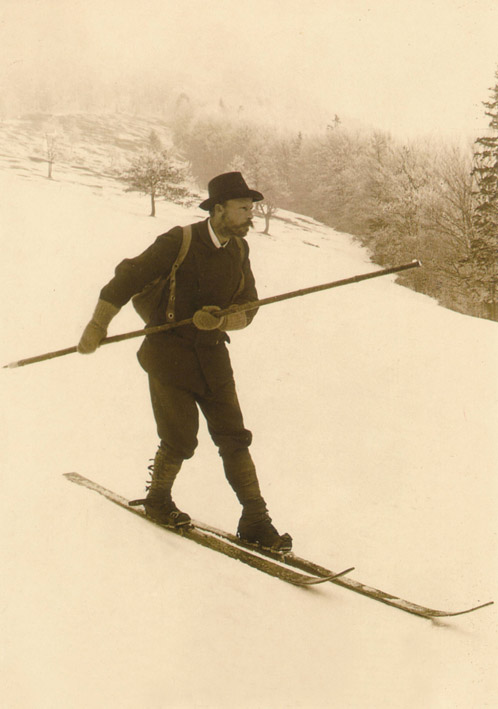
Good news for some, bad news for others. It's bad news for European ski resorts, good news for Canadian ski resorts like Whistler. Good news for wealthy European skiers, bad news for ordinary Canadians.
Europe's alpine ski resorts are in danger of running out of snow. That's the conclusion of a report by the Organization of Economic Co-operation and Development (OECD). Global warming will put an end to all but the highest of European ski resorts.
On the other hand, North America's top resorts in the western mountains are doing just fine - for snow, that is. That's already caused ads for places like Whistler to appear in newspapers in Europe. The message? Want to ski? Head to Canada and don't forget to bring your wallet. Locals who once skied places like Whistler are going to find packed slopes and higher prices brought by increased demand.
"Shardul Agrawala, author of 'Climate Change in the European Alps', said the report shows the impact of global warming is already very real. 'There tends to be a view that climate change is decades away and that it will affect faraway places. But if you look at the Alps, whose recent warming has advanced at three times the average world rate, you can tell it is happening already.'"
Fiddling Figures

BP, British Petroleum, is about to take another hit to its reputation.
The US Chemical Safety Board's report into a March, 2005 refinery explosion at BP's Texas City refinery that claimed 15 lives, accuses BP of complacency and disregard for inherent danger.
CSB chairman, Carolyn Merritt, told The Observer that, "...the impact of cost-sutting on safety would be central in the CSB report," and maintains there is a causal connection between relaxed maintenance and the explosion.
BP's response demonstrates PR spin at its finest. A BP spokesman said the company invested heavily in maintenance. BP's spending on its five US refineries increased on average by 10 per cent a year from 2000 to 2005. Wow, 10 per cent a year for five consecutive years. That's a pretty big increase in the maintenance budget. Isn't it?
Well, maybe it wasn't that great. "...CSB officials point to a history of cost-cutting at Texas City: from 1992 to 1998 maintenance spending fell by 41 per cent. When the figures are extended to the eight years between 1992 and 2000 the fall was 84 per cent. They add that reports commissioned by BP said clearly that funding was inadequate, but attempts to increase spending were not effective."
Kind of puts a different spin on it when you hear both sides, doesn't it?
Crime Capital of the World? The Vatican

Of course, it's all a matter of how you work the numbers but, on a per capita basis, the Vatican is inarguably the crime capital of the world.
Before you go blaming the Pope and his gang, in the main they're not the lawbreakers but, according to Spiegel, the numbers speak for themselves:
"The Vatican's attorney general Nicola Picardi released the astounding statistic at the start of 2007: The tiny nation's justice department in 2006 had to contend with 341 civil and 486 criminal cases. In a population of 492, that measures out to 1.5 cases per person -- twenty times the corresponding rate in Italy.
"By this measurement at least, crime is soaring in the Vatican in spite of a security force that would put a police state to shame. The seat of the Catholic Church has one Swiss guard for every four citizens, not to mention museum guards and police assigned to the Vatican by Italy.
"Picardi did say that most criminal cases were matters of pickpocketing or purse-snatching."
European Aftermath
 A hillside forest swept clean of trees
From the North Sea to Bulgaria, hurricane force winds inflicted massive devastation across Europe last week, claiming 47 lives. Here are some images of the mega-storm's aftermath:


from Der Spiegel
Why Let the Youngsters Have All the Misery?

It's Splitsville for Grandma and Grandpa.
A story in the National Post reveals that divorce isn't just for kids anymore:
"This is the new face of divorce: She is a woman in her eighties, married for a half-century, a devoted, seemingly contented wife who one day decides she has had enough.
"There is no secret affair, no mystery lover, no harbouring of a lifetime of abuse or ill-treatment that precipitates the divorce. Rather, the octogenarian divorcee abandons the marriage because she 'could not go on living the same old life, in the same old rut, with the same old boring person.'
"'One woman had been married for 53 years, had never worked outside her marriage, had no idea of how she would survive financially and had just survived an organ transplant," says Deirdre Bair, the author of "Calling It Quits: Late-Life Divorce and Starting Over."
"She told me, 'I don't know how many years I have left; I just know I don't want to live them with him.' "
But Grandma, if you go who's going to get the dentures?
The Taliban Board of Education?

The Associated Press reports that the Taliban have decided to establish a school system in those regions of Afghanistan now under their control.
The schools, which supposedly will open for business in March, are to open in the provinces of Kandahar, Zabul, Uruzgan, Helmand, Nimroz and Farah and will teach Sharia or Islamic education using textbooks formerly used when the Taliban were in power.
A Taliban spokesman claims the initiative is being undertaken with the approval of local, tribal elders and will, eventually, offer classes to girls also.
Education has become a hotpoint issue in the insurgency. Since the Taliban were ousted there has been a fivefold increase in school enrollments in Afghanistan. The insurgents have responded by 200 arson attacks on schools in the last year alone and the murder of 20-teachers.
Meanwhile, the Taliban flared up again yesterday in southern Afghanistan which has enjoyed weeks of relative peace. In one incident, Canadians manning a highway checkpoint engaged in a 3-hour firefight against Taliban attackers. The insurgents were finally driven off by heavy artillery, tanks and air support.
Muqtada Returns to the Fold

The dance continues. Iraqi legislators loyal to radical Shiite leader Muqtada al-Sadr are ending their boycott and returning to their seats in government. There are 30-lawmakers loyal to Sadr who also has six ministers in the Maliki governments 38-member cabinet.
Observers suspect the move is intended to shore up prime minister al-Maliki while returning Sadr's block to influence in advance of the American "surge" in Baghdad.
It has also been reported that Sadr, fearing an American raid, has moved his family to a place of refuge.
American Soldiers Killed in Insurgent Commando Raid
It wasn't the typical roadside bomb or even a sniper ambush. The attack that killed five US soldiers yesterday showed a degree of co-ordination, planning and timing rarely seen in the past.
The soldiers were killed while meeting with local Iraqi officials at a provincial headquarters to make security arrangments for an upcoming Shiite festival.
The attackers were disguised in military uniforms and used the type of vehicles ordinarily associated with diplomats to sail through security checkpoints unchallenged.
At the headquarters building, they used percussion or "stun" bombs to secure entry into the building. Following the assault the convoy drove to Babil province were police confirm they disappeared.
This incident has the hallmarks of a commando raid by highly-professional forces, not the clumsy sort of ambush associated with rag-tag militiamen. The raiders appear to have escaped to safety unscathed.
Saturday, January 20, 2007
If Congress Really Wants an End to This War

Here's what Congress could do to stop the war, find a way to tax the American people for the existing and ongoing war debt. Progressive taxation - the rich pay most. Work out how much this war is actually costing, including incidental and indirect costs, and apply it to the tax rolls.
After all, why should the country not make some sacrifice to pay for their president's adventure. Why should the White House be allowed to pass these costs, together with accrued interest, onto a generation to come? With the troubles coming down the pike, the next generation is going to have their hands full without having to pay off George Bush's war debt.
Bush would obviously veto it but that wouldn't prevent the Congress issuing tax notices to let each taxpayer know how much he or she is dumping onto those who will follow.
What would happen? I think you could well have a taxpayer (read voter) revolt, one that would cause even Republicans to send an ultimatum to the White House. If that didn't work it would be time to topple a tyrant. There exist ample grounds for impeachment and what better time could there be to send the frat boy and his bald pal into retirement?
Israeli Apartheid?

Jimmy Carter was lambasted as an anti-Semite for urging Israel not to permit a state of apartheid to creep into its dealings with the Palestinians. Carter didn't actually accuse Israel of that but no matter, using the word "apartheid" in any conjunction with "Israel" is inherently anti-semitic, or so the line goes.
That's why I was surprised to read this article in the Israeli paper, Haaretz, about an incident in which an Israeli settler abused a Palestinian family:
"Amid cabinet members' expressions of shock in response to a female settler seen abusing a Hebron family came this comment by Ephraim Sneh: "The laws of the state are not being implemented in the city with due haste, particularly regarding Israeli citizens." The deputy defense minister's words were meant as criticism of how the security forces impose law and order in Hebron, but they contained the idea that the problem lies not in the "laws of the state," but only in their "implementation."
"To which laws and which state was the deputy minister referring? After all, Hebron has not been annexed to Israel, and ostensibly is subject to military rule. But in the 40th year of the occupation, a deputy minister can disregard such legal nuances and refer to Hebron as if it were annexed territory - just like any Israeli community, Israeli vehicle or Jew in the territories can be referred to as Israel's.
"The annexation for Jews alone has created a dual system under which rule of law is determined based on an individual's or a community's national identity. The "local" population is subject to only the original law, as amended in thousands of military injunctions. The right to choose is reserved for Jews. When it's convenient, they are Israeli citizens in every way. When it's less convenient, like when it comes to matters of higher education and especially infrastructure planning, they are subject to the local law. The latter lags behind the Israeli law, and therefore allows for manipulations.
"The confrontation between the female settler and the Palestinian woman from Hebron was a clash between two parallel worlds: The Jewish woman possesses all the rights of a citizen of a free country, who is entitled to the protection of its security forces. On the other side is a woman from an occupied people, who is also entitled to protection. However, the army of the occupation forgot long ago that under international law, its role is to protect the "protected population." The army has become the settlers' militia and views the local people as hostile elements.
"It's easy to condemn the vulgarity of the settler from Hebron, and it's easy to dismiss the Jewish enclave there as a gang of violent thugs. But they are only weeds that sprout from the rotten ground of the cruel regime that prevails beyond the Green Line. It's a regime based on ethnic discrimination and separation, double standards and an absence of the rule of law.
"Just which law does the deputy minister wish to see applied with "all due haste"? That of the settler woman or of the Palestinian woman? In a place where laws differ and discriminate based on national and personal identities, no law prevails. What do we expect of soldiers and police officers? Not to be influenced by orders that instruct them to act in a discriminatory and selective fashion?
"The outrage over the woman's crude tirade is just a distraction from the reality that prevails beyond the Green Line, where life is ostensibly normal. It won't be long before it's the liberals who are seeking to have the Green Line erased from the maps, once it has been permanently transformed from a symbol of the aspiration for peace to a line delineating the realms of apartheid."
Jimmy Carter an anti-semite or one whose crime is to speak truth to power?
Waterboarding

If the Americans are still torturing terrorism suspects, and George Bush assures us they're not so we have ample reason to worry, we're not hearing a lot about it. This seem to have changed since the good old days of Abu Ghraib. For starters, it seems that very little leaks out any more.
In Germany there is a complaint before the courts against former US defense secretary Donald Rumsfeld over torture during his time at the Pentagon. Included in the materials is this account of waterboarding taken from the 1958 memoir of French journalist Henri Alleg. Any doubts about waterboarding as full-bore torture are put to rest by Alleg's account:
"Together they picked up the plank to which I was attached and carried me into the kitchen. They rested the top of the plank, where my head was, against the sink. Lo - fixed a rubber tube to the metal tap, which shone just above my face. He wrapped my head in a rag and held my nose. He tried to jam a pice of wood between my lips in such a way that I could not close my mouth or spit out the tube. When everything was ready, he said to me, 'When you want to talk, all you have to do is move your fingers.' And he turned on the tap.
"The rag was soaked rapidly. Water flowed everywhere: in my mouth, in my nose, all over my face. But for a while I could still breathe in some small gulps of air. I tried, by contracting my throat, to take in as little water as possible and to resist suffocation by keeping air in my lungs as long as I could. But I couldn't hold on for more than a few moments. I had the impression of drowning, and a terrible agony, that of death itself, took possession of me. In spite of myself, all the muscles of my body struggled uselessly to save myself from suffociation. In spite of myself, the fingers of my two hands shook uncontrollably. 'That's it! He's going to talk,' said a voice.
"The water stopped running and they took away the rag. Iwas able to breathe. In the gloom, I saw the lieutenants and the captain, who, with a cigarette between his lips, was hitting my stomach with his fist to make me throw up the water I had swallowed. Befuddled by the air I was breathing, I hardly felt the blows. "Well then?' I remained silent. 'He's playing games with us! Put his head under again!'
"This time I clenched my fists, forcing the nails into my palm. I had decided I was not going to move my fingers again. It was better to die of asphyxiation right away. I feared to undergo again that terrible moment when I felt myself losing consciousness, while at the same time fighting with all my might not to die. I did not move my hands, but three times I again knew this insupportable agony.
"In extremis, they let me get my breath back while I threw up the water. The last time, I lost consciousness."
And those bastards wanted to debate that this is torture? Here was Cheney's take on waterboarding last October:
"WASHINGTON — Vice President Dick Cheney has confirmed U.S. interrogators subjected captured senior al-Qaida suspects to a controversial interrogation technique called waterboarding, which creates a sensation of drowning.
"Cheney indicated the Bush administration doesn't regard waterboarding as torture and allows the CIA to use it. "It's a no-brainer for me," Cheney said.
"Cheney's comments, in a White House interview Tuesday with a conservative radio talk-show host, appeared to reflect the Bush administration's view that the president has the constitutional power to do whatever he deems necessary to fight terrorism.
Shown in the photograph is a Cambodian waterboard. The Cambodians knew they couldn't expect to get any reliable information from its victims. They used it to extract confessions.
You're Not Going to Believe This, There's Safety in Being Fat

We all know obesity is a serious health risk - hypertension, heart attacks, diabetes - you name it. That made it all the more startling to read in the Sydney Morning Herald that, according to a UCLA study, being fat increases your chances of surviving a heart attack:
The report, which appears in the American Heart Journal, indicates that this "obesity paradox," which was previously described in patients with chronic heart failure, may also apply to patients with rapidly worsening or "decompensated" heart failure.
"This study suggests that overweight and obese patients may have a greater metabolic reserve to call upon during an acute heart failure episode which may lessen in-hospital (death) risk," said lead investigator Dr Gregg Fonarow.
"Patients were grouped by body mass index (BMI), a measure of weight relative to height.
"The team found that in-hospital deaths fell as BMI rose, even after accounting for factors including age, gender, blood pressure, and heart rate.
"For example, the overall in-hospital death rate was five per cent in those with the lowest BMI versus 2.2 per cent in those with the highest.
"For every five unit increase in BMI, the death risk fell by 10 per cent.
"The team calls for further study to investigate underlying factors.
"'These findings raise the possibility that nutritional/metabolic support may have therapeutic benefit in specific patients hospitalised with heart failure,' Fonarow said."
Of course what the report doesn't mention is that, if you have a high BMI, you're a lot more likely to have a heart attack in the first place. So don't go running out for an order of fries.
Sure, But Can They Shoot a Puck?
An interesting piece from Stewart Bell in today's National Post. Bell reports that Canada has a real presence in the new government of Somalia - 18 MPs. They left their homes in Ottawa and Toronto to return to their homeland and help it emerge from anarchy. One of them, Ahmed Afra, told Bell so many are in the Somalia Parliament because of their time in Canada:
"That's why you find so many Somali-Canadians in Parliament, because of the degrees and expertise, the knowledge they got in Canada."
http://www.canada.com/nationalpost/story.html?id=8cbcdfd5-bc9d-447d-b325-7f46c3f92878
"That's why you find so many Somali-Canadians in Parliament, because of the degrees and expertise, the knowledge they got in Canada."
http://www.canada.com/nationalpost/story.html?id=8cbcdfd5-bc9d-447d-b325-7f46c3f92878
Conservatism Is Dead - Andrew Coyne
Wow, I was floored to read National Post columnist Andrew Coyne declare that the grand Harper experiment with conservatism is over, fini
"After a year of Conservative rule, it is now clear, conservatism isn't just dying--it's dead. And it's the Conservatives who killed it."
"The more the party has chased the middle, however, the faster it has seemed to recede; with each abandonment of its principles, the opposition and the media, those arbiters of the status quo, simply yawn and move the goalposts a little further down the field. So that even so humiliating a climb down as the past week's reinstatement of the very Liberal environmental programs the Tories abolished in their first weeks in office wins them no points whatever."
Read the whole piece here:
http://www.canada.com/nationalpost/story.html?id=e61304d2-df34-4b15-b7ef-f4aaf924215d
We Beat Islam, Hands Down - Conrad Says So.

Conrad Black weighs in on the total superiority of Christianity over Islam. From the National Post. Read the rest, if you can.
http://www.canada.com/nationalpost/news/story.html?id=e710294d-29cd-49ea-b92a-2a4044a6ed50&k=15189
"Our religious practice is a good deal more spontaneous, intellectually distinguished, and conducive to productive activity and general civility than all but the most unrepresentatively thoughtful versions of Islam. No Islamic leader has a fraction of the moral or intellectual credibility or mere market share of the Pope. Rome and all the West, secular and ecumenical, have seen off more serious challenges than this."
Hey, is that why he was so determined to become "Lord" Black?
Why We Lose to Insurgencies
 The Right Man For The Job
I love it when I find an "expert" espousing positions that I've written here in the past. I had one of these joyous moments when I came across an article in this month's Harper's magazine by Edward N. Luttwak, a senior fellow at the Center for Strategic & International Studies in Washington. It came with the catchy title, "Dead End, Counterinsurgency warfare as military malpractice." Who could pass that up?
Luttwak devotes the first several pages of the article to our Western misconception of the nature and mechanisms of insurgencies but I won't bore you with that. What I found most helpful were his concluding remarks under the subtitle "The Easy and Reliable Way of Defeating All Insurgencies Everywhere."
Defeating all insurgencies everywhere, everytime? Why then did the Brits lose the American revolution? Why did the French flee Indochina and Algeria? Why are the insurgencies in Iraq and Afghanistan proving so hard to crack?
The short answer is that we are not prepared to do what is necessary to win. Our laws and culture, our very societies simply cannot abide the essence of victory. We are, at the end of the day, unwilling to turn barbaric enough to win.
Here are a few of Luttwak's observations:
"Pefectly ordinary regular armed forces, with no counterinsurgency doctrine or training whatever, have in the past regularly defeated insurgents, by using a number of well-proven methods. It is enough to consider these methods to see why the armed forces of the United States or any other democratic country cannot possibly use them."
Luttwak proceeds to draw upon two examples of successful counterinsurgency warfare - the Roman Empire and the Ottoman Empire.
"...whenever insurgents are believed to be present in any village, small town, or district - a very common occurrence in Iraq (and Afghanistan) at present, - the local notables can be compelled to surrender them to the authorities, under the threat of escalating punishments, all the way to mass executions. That is how the Ottoman Empire could control entire provinces with a few feared janissaries and a squadron or two of cavalry. ...A massacre once in a while remained an effective warning for decades."
Luttwak notes the Romans also used inducements such as public baths and free circus shows to "de-bellicize" unruly populations. Those who still refused were killed or, if captured, sold into slavery. Towns under seige could either surrender and be accepted as peaceful subjects or the town and all within would be utterly destroyed.
"...In the first two and most successful centuries of imperial Rome, some 300,000 soldiers in all, only half of them highly trained legionary troops, were enough to secure a vast empire that stretched well beyond the Mediterranean basin, today the territory of some thirty European, Middle Eastern and North African states. ...they relied on deterrence, which was periodically reinforced by exemplary punishments. Most inhabitants of the empire never rebelled after their initial conquest."
The author points out that, despite the myths of heroic resistance, the Germans were actually very successful in using terrible reprisals to occupy lands with very few troops. The key, argues Luttwak, is to develop a willingness to out-terrorize the insurgents, the very thing Western democracies are not prepared to tolerate.
"All its best methods, all its clever tactics, all the treasure and blood that the United States has been willing to expend, cannot overcome the crippling ambivalence of occupiers who refuse to govern, and their principled and inevitable refusal to out-terrorize the insurgents, the necessary and sufficient condition of a tranquil occupation."
There it is - we're just too damned nice for our own good.
Putting the Spotlight on Stephen Harper's Lies

Kudos to Les Whittington of the Toronto Star for this piece bringing a little accountability to the wave of Tory deceit that has been spewed so freely by the Harpies. Here's Whittington's take on how reality fits with Tory claims.
"...even allowing for the fact that hyperbole and sweeping generalities are the common fare of public life, the federal Tories have often let their rhetoric overtake reality:
Finance Minister Jim Flaherty said his budget last May lowered taxes for Canadians.
The reality: The budget raised the lowest income-tax rate by half a percentage point to 15.5 per cent as of July 1, 2006.
On Canada's military activities: In an interview with CBC-TV, Harper said Canada is on the front lines in Afghanistan – a role he said was in marked contrast to the traditional Canadian approach. "For a lot of the last 30 or 40 years, we were the ones hanging back," Harper told CBC.
The reality: More than 125 Canadian soldiers have died on peacekeeping operations around the world since 1956.
In changing how equalization payments to have-not provinces are calculated, Harper said his party, if elected, "would ensure that non-renewable natural resource revenue is removed from the equalization formula to encourage economic growth."
The reality: The provinces are convinced that Flaherty's new formula for calculating payments to poorer provinces will include half of each province's natural resource revenue – an expectation that is sparking stiff resistance in Newfoundland, Saskatchewan and Alberta.
On the Liberals' gun control record: "What this last government did is that, instead of worrying about insane people or criminals, they simply went after farmers," Harper said during question period in the House of Commons.
The reality: The Liberals' firearms licensing and registry program – with its background checks and requirements for training and safe storage – applied to all would-be gun owners, not just farmers.
After Liberal MP and former leadership candidate Michael Ignatieff said that an Israeli air strike in Qana during the Israeli-Hezbollah conflict was a war crime, Harper responded: "This is consistent with the anti-Israeli position that has been taken by virtually all of the candidates for the Liberal leadership."
The reality: Liberal leadership candidates denounced the remark as an inaccurate and unstatesmanlike "insult" that risked dividing Canadians for partisan political motives.
"Canada's back," Harper said on Sept. 20 in New York.
The reality: But Harper used a string of statistics and figures to illustrate that the return to fiscal health and economic growth in Canada began under the Liberals.
During the last election campaign, the Tories said if elected they would "stop the Liberal attack on retirement savings and preserve income trusts by not imposing any new taxes on them."
The reality: In a surprise decision on Oct. 31, the Conservative government moved to do away with income trusts, a decision that saw more than $20 billion in value lopped off the stock market.
On climate change, Harper slammed the Liberals in a year-end interview with the Star, saying "literally nothing was done for 13 years at all on the environment, literally nothing."
The reality: While the Liberals did not halt the increase in greenhouse gas emissions, they used their final months in power to introduce "Project Green," an eight-year program at an estimated $10-billion cost designed to reduce greenhouse gas emissions by 270 megatonnes between 2008 and 2012.
On child care, Harper said that during 13 years of Liberal government, not a single child-care space was created.
The reality: The Liberals' $5-billion, five-year plan to create a national child-care program along with the provinces led to the opening of more than 5,000 new spaces in Ontario alone, with 20,000 more on the drawing board. But plans for more spaces in Ontario were slashed after the federal Conservatives announced they were cancelling the previous government's funding for the provinces as of this year."
Is This Some Sort of Weird Reality Show?
 Gee, Her Eyes Are Red
Jungle Girl, the Ultimate Survivor.
When the story broke last week, her "father" described her as "bare-bones skinny" and positively feral, scurrying around like a money, plucking grains of rice off the floor and glaring at perople with her "red like tigers' eyes."
When Jungle Girl, Rochom P'ngieng, emerged in front of the cameras yesterday she looked about as emaciated and wild as a nanny.
The putative father, Sal Lou, is clamming up. He's already refused DNA testing to confirm his paternity of Rochom, if that is her name. Meanwhile the story is just getting better.
It's now reported that Jungle Girl was seen running around naked with Jungle Boy who was wearing a similar costume. Her fella, it seems, fled into the bush when Rochom was taken. No word on where Cheeta was while all this was going on.
Hillary's In - How Nice

Hillary Clinton, to no one's surprise, has surprised everyone by announcing that she's going to run for president. And, of course, she's going to make Iraq the central theme of her campaign but, then again, who isn't?
Hilly, as I call her when we speak off the record, was as enthusiastic as a Rotarian in her support for the Iraq war, long past the point at which that was appropriate but enough of that now.
This promises to be a bruising campaign - if you happen to be an American infantryman. They're going to get kicked from one end of Baghdad to the other over the next two years and their fate and their mission is now in the calloused hands of political fortune as read by pollsters.
The New York Times:
"Mrs. Clinton said that candidates in the 2008 race should be thoughtful and responsible when talking about war, rather than trying to score easy political points with red-meat rhetoric.
“'I am cursed with the responsibility gene.' she said. 'I am. I admit to that. You’ve got to be very careful in how you proceed with any combat situation in which American lives are at stake.'
"On Iraq, she has never repudiated her vote in 2002 authorizing military action. But last month she said that she “certainly wouldn’t have voted” to go to war if she had the same information in 2002 that she does now.
No red-meat rhetoric, for sure. Pork tenderloin sophistry with a mild, dijon/fennel sauce is the limit. As for Hilly's genetic affliction, maybe they can find a cure for that in stem cell research.
Senator Clinton also had some harsh words for Iraqi PM al-Maliki:
"Mrs. Clinton was sharply critical of Iraq’s prime minister, Nouri al-Maliki, saying she believed he had given her “lip service” during a meeting on Saturday about his government’s commitment to cooperating with the American mission there."
Lip service? Don't use language like that, Hilly, it reminds us of Bill.
By the way folks, Clinton isn't exactly Canada-friendly.
Me Too, Me Too

It's the hottest thing in the Middle East - nuclear technology. Israel started it, Saddam tried to get it, Iran is well on its way. Now Jordan has said it wants nuclear "energy" too.
In an interview in Haaretz, Jordan's King Abdullah, shown here in some serious threads, says his country has a hankering to develop peaceful nuclear technology, just like Egypt and Saudi Arabia and every other jumpy Sunni Arab state worried about Iran getting its own peaceful technology first.
Whether King Ab is serious or simply doing his bit to ratchet up the pressure on the US to stop Iran isn't clear.
And He Was Expecting ...What?

Peter MacKay seems to be traipsing along in the wake of his American Idol, Condoleeza Rice. She went to the Middle East so he packed his toothbrush and hopped a flight there too. It looks like our foreign affairs minister decided to exercise some of Canada's new found muscle on the international scene, a dollop of the enormous vat of global political capital earned for us by his highly principled boss, Stephen Harper.
So the air must have been rife with the aroma of power diplomacy when MacKay met with Palestine president Mahmoud Abbas to share a bit of Tory enlightenment with the vulgar Arab, right? Well, not exactly.
Abbas did meet with MacKay. They were supposed to have a chat this weekend but Abbas decided he'd rather be in Damascus to meet with Syrian president Haddas instead. He didn't snub Canada though. He managed to squeeze MacKay in - and out - yesterday, somewhere between the falafel and the delicious dates.
What actually happened? Did we manage to iron the creases out of the crumpled Roadmap? Here are a few insights from The Globe:
"In an interview before the meeting, Rafik Husseini, Mr. Abbas's chief of staff, said that because of the 10-month-old boycott, the Palestinian side knew little about the year-old Canadian government.
"Canada is not a big player in general and because, of course, of what has happened with the [economic] siege and with the no-talk policy towards Hamas, we cannot tell the difference between the old and the new government,' he said.
"Mr. Husseini's impression was that Canada has become less friendly to the Palestinians under Prime Minister Stephen Harper. He didn't attend the Amman talks, but said that had he been in the room, he would have confronted Mr. MacKay over Canada's pro-Israel swing under Mr. Harper, and the fact Canada's policies in the region are now almost indistinguishable from those of the United States.
"Following the 45-minute meeting at Mr. Abbas's Amman residence, Mr. MacKay said he had come to the region largely to listen "and to look for ways we can make a positive contribution." It was strikingly similar to the justification U.S. Secretary of State Condoleezza Rice gave for her trip to the region last week, a visit that was widely ridiculed as having created little other than some photo opportunities."
No word yet on whether Peter's truncated schedule is going to let him catch up with Condi but wouldn't that be cute? Ah Peter, make the trip worthwhile - bring home some of that terrific hummus.
Friday, January 19, 2007

I Guess It Depends on How You Define "Slow"
Never hesitant about resorting to weasel words, US president George Bush today admitted his first four year adventure in Iraq was a "slow failure" and then proceeded to lambaste those urging quick withdrawal as endorsing "expedited failure." I'm sorry folks, but four years isn't slow failure, it's persistent failure, chronic failure even abject failure and the guy responsible for acheiving that track record may not be the best person to pass judgment on anyone else's alternatives. Then again, you have to give it to the guy, he's got the cojones of a street hustler.
Blue Chips Turn Green
What to Alcoa, BP, DuPont and the Caterpillar corporation have in common with the Natural Resources Defence Council and Environmental Defense? They all have grasped the reality of global warming and they all want their United States government to get serious about it.
This coalition of the willing and determined are calling on president George Bush for "...swift federal action on reducing greenhouse gas emissions and speeding the adoption of climate-friendly technology".
From The Independent:
"The age of global warming denial, meanwhile, also appears to be drawing to a close. Exxon Mobil, the world's largest oil company, has cut its funding to groups who argue global warming is a hoax, and is now working to develop strategies it can accept for emissions reduction.
"That's a huge change from just a few months ago, when Exxon Mobil's chief executive, Lee Raymond, arguably the world's most prominent global warming sceptic, was still at the helm, and the Senate Energy Committee was headed by the Oklahoma Republican James Inhofe, who made it his business to dismiss scientific opinion on climate change as a conspiracy.
"The biggest hold-out against radical policy change is probably the Bush White House. Aides to the President have indicated his State of the Union speech will include some provisions on energy, notably championing the use of ethanol-based fuels. The administration remains opposed, however, to any mandatory caps on carbon dioxide emissions."
Now, for all the enlightened flat-earthers who get their environmental insights from NewsMax and FOX, the science has won out, live with it. Stop eating that stuff Charlie, it's horse shit.
Hurricane Katrina - the Saga Continues

Former FEMA director Michael Brown has dropped yet another bomb on the Bush administration and its mishandling of the hurricane Katrina disaster.
Brown claims he recommended that all 90,000 square miles along the Gulf Coast affected by the hurricane be federalized, making the federal government in charge of all agencies responding to the disaster.
Instead, he maintains, the White House seized upon an opportunity to use the disaster for partisan ends against Louisiana's Democratic governor, "Unbeknownst to me, certain people in the White House were thinking 'We had to federalize Louisiana because she's a white, female Democratic governor and we have a chance to rub her nose in it.'"
There's no love lost between the White House and Brown who was scapegoated in a botched attempt to divert attention from his president's negligent indifference to the disaster. In the wake of the hurricane and while Brown was being heaped with blame, Bush said no one at the White House had any idea this sort of disaster might occur. Subsequently, video was released of a conference call prior to the arrival of the hurricane in which Bush was present and being warned of the impending cataclysm.
The White House now claims that Brown is making up this partisan business. Yeah, okay. Those who've seen the Bush video will know that, at the moment, the score stands at Brown 1, Bush no score.
Whatever Happened To.... al Qaeda?
In the Global War Without End on Terror, George Bush's one recognized success is the apparent demise of al Qaeda. Much is made of the fact that the United States hasn't suffered another terrorist attack since the atrocities of 9/11. Last April, Director of National Intelligence, John Negroponte described it as a "somewhat weakened organization" that was pretty much reduced to "serving as an inspiration for some of these terroristically inclined groups elsewhere."
Maybe not. In the latest edition of The New Republic, terrorism expert Peter Bergen says al-Qaeda is back, bigger and badder than ever and it is only a matter of time before it attacks the US again:
"In the months and years immediately following the Taliban's ouster, Al Qaeda lost its main sanctuary and struggled to regroup in the largely lawless zone along Afghanistan's border with Pakistan. Key leaders were captured or killed. Years passed during which the group mounted few major attacks.
"But, today, from Algeria to Afghanistan, from Britain to Baghdad, the organization once believed to be on the verge of impotence is again ascendant. Attacks by jihadists have reached epidemic levels in the past three years, with terrorists carrying out dramatic operations in Madrid in 2004 and London in 2005, as well as multiple suicide attacks across the Middle East and Asia--not only in Iraq, but also in Egypt, Jordan, Saudi Arabia, Pakistan, India, and Indonesia. Meanwhile, jihadists have made inroads in the horn of Africa; the Taliban's efforts to turn Afghanistan back into a failed state appear to be succeeding; and Al Qaeda's Iraqi branch recently declared sovereignty over the country's vast Anbar province.
"The story of Al Qaeda's renaissance begins with its eviction from Afghanistan in late 2001. Unfortunately, the group didn't disintegrate--it merely moved across the border to the tribal regions of western Pakistan, where today it operates a network of training camps. A former American intelligence official stationed in Pakistan told me that there are currently more than 2,000 foreign fighters in the region.
"...on both sides of the Afghanistan-Pakistan border, the Taliban has staged a comeback while virtually merging with Al Qaeda. The Taliban were a provincial bunch when they held power in Afghanistan, but, in the past couple of years, they have increasingly identified as part of the global jihadist movement, their rhetoric full of references to Iraq and Palestine in a manner that mirrors bin Laden's public statements.
Bergen predicts that al-Qaeda will be around for years to come but he gives four reasons why the group's days are numbered:
"First, it has killed a lot of Muslims. This is doubly problematic for Al Qaeda, as the Koran forbids killing both civilians and fellow Muslims.
"Second, while bin Laden enjoys personal popularity in much of the Muslim world, this popularity does not translate into mass support for Al Qaeda--the kind of mass support that, say, Hezbollah enjoys in Lebanon. This is not surprising, since there are no Al Qaeda social welfare services, schools, hospitals, or clinics.
"Third, Al Qaeda's leaders have constantly expanded their list of enemies, to the point where it now includes all Middle Eastern regimes; Muslims who don't share their views; most Western countries; Jews and Christians; the governments of India, Pakistan, Afghanistan, and Russia; most news organizations; the United Nations; and international NGOs. It's very hard to think of a category of person, institution, or government that Al Qaeda does not oppose. Making a world of enemies is never a winning strategy.
"Finally, we know what bin Laden is against; but what is he really for? If you asked him, he would say the restoration of the caliphate. For bin Laden, that doesn't mean the return of something like the Ottoman Empire, but rather the installation of Taliban-style theocracies stretching from Indonesia to Morocco. A silent majority of Muslims don't want that."
Even though al-Qaeda's long-term prospects are poor, Bergen says the Western presence in Afghanistan and Iraq is fueling the terrorists, garnering al-Qaeda support and giving it a powerful recruiting tool. He foresees two types of attacks al-Qaeda most wants to inflict on the West - bringing down an airliner and detonation of a radiological "dirty" bomb, probably in a European city. The first might devastate global aviation and tourism, the latter could easily undermine global investor confidence.
George Bush had a real chance to destroy al-Qaeda in Afghanistan in 2001. Instead he gave al-Qaeda what it hoped for most, he invaded Iraq. We're not going to get rid of al-Qaeda now. That job has to be taken up by the Arab states themselves.
A German Answer to North Korea's Famine

The answser is bunnies - very, very big bunnies. Karl Szmolinsky breeds the world's biggest wabbits. They weigh in at around 10.5 kgs. or about 23 lbs.
Szmolinsky says each rabbit yields about 7 kgs. of meat, something that most North Koreans don't see these days.
He was initially approached by the North Korean embassy and asked whether he would sell a few of his megabunnies and help set up a breeding programme in the communist state. He has sent 12 of his rabbits to Korea so far which he says is enough to breed 60-more within a year.
Eating Crow - Big Time
He's hoping you won't notice or, if you do, that you'll forget by the time we have another election. Stephen Harper and Global Warming, who'd a thunk it? Stephen the Green and it all seemed to happen virtually overnight.
Stevie now gets it, right? He's gone from global warming denier to global warming advocate in about the time it takes him to change his underwear.
He gets it so much that he's bringing back many of the Liberal initiatives he so recently scorned. A big announcement is expected today that will do just that, of course without admitting it. How about something close to a billion dollars for wind power programmes or Liberal initiatives to encourage energy-saving home upgrades?
Whatever you do, just don't call them Liberal. You gotta forget all that. These are Tory initiatives, always were - right? There'll be a lot of tweaking to make it appear distinct from the Liberal programmes, solar and tidal power technology as though these areas would never have been thought of by Stephane Dion.
Hey, when was the last time you heard Stevie puff himself up and bellow "energy superpower"? He seems to have dummied up on that one lately.
By the way, has anyone noticed that CanWest still can't bring itself to use the term "global warming" substituting the Republican alternative "climate change" instead? Hey Asper, don't sugar coat it. It is global warming, accept it, Stevie has.
The Star Scores a Scoop

The Toronto Star claims to have gotten the inside track on a UN study to be released on February 2 that will pose a body blow to the global warming doubters.
"A major new United Nations report shows global scientists are more convinced than ever that human activity is causing climate change, the Toronto Star has learned.
"The rate of warming between now and 2030 is likely to be twice that of the previous century, it says.
"And it concludes that most of the global warming since the middle of the last century has been caused by man-made greenhouse gases.
"The report, to be released in Paris Feb. 2, should all but end any debate on climate change and compel governments and industries to take urgent measures to deal with it, scientists say.
"One crucial prediction has been made a bit less worrying: Although sea level is rising – for now, mainly because the oceans are warming to a depth of at least 3,000 metres, and expanding – the estimates for how much it will go up have been lowered.
"Regional forecasts of climate change effects are better than in the previous report, and they predict the greatest warming at northern latitudes and high altitudes, and the least over the North Atlantic and the southern oceans.
"The north faces the biggest increase in precipitation."
Mission Creep - That's Good News
According to The Star, the Canadian Forces are going to reinforce our contingent in Afghanistan. Unfortunately we won't be getting more infantry even though the existing force is far too small for the job we've taken on. The good news is that the existing troops will be getting additional support although military spokesmen in Ottawa won't say just what or when that support will arrive.
Best guesses? A flight of CF-18 Hornet fighters for dedicated ground attack in support of Canadian troops. Heavy artillery, M777 howitzers, that were recently purchased from Britain. For surveillance and command, the CP-140 Aurora maritime patrol aircraft configured for use in Afghanistan.
One blogger recently posted photographs of two trains carrying a great quantity of Canadian military vehicles into the United States. It is logical to assume we're relying on the American military to get this equipment to our troops in Afghanistan. We simply don't have the means to get them in the field in time.
Read Between the Lines

Henry Kissinger is back. The guy who presided over America's final failure in Vietnam has some advice on Iraq for Washington - continue the occupation.
In an editorial in the International Herald Tribune, Kissinger lays out America's ongoing role in Iraq and how it must not withdraw.
Reading between the lines you quickly come up with one glaring omission in Kissinger's logic, the notion that Iraq has become a sovereign state. In fact he presents his arguments from the sole perspective of America's interests, not Iraq's. What Henry Kissinger depicts is an indefinite occupation of Iraq in which the Baghdad government functions more like a bureaucracy to carry out the occupier's instructions.
Kissinger wants to use the Iraq occupation as a means to leverage a regional re-alignment extending all the way to the Palestinian question:
"Two levels of diplomatic effort are necessary:
"The creation of a contact group, assembling neighboring countries whose interests are directly affected and which rely on American support. This group should include Turkey, Saudi Arabia, Egypt and Jordan. Its function should be to advise on ending the internal conflict and to create a united front against outside domination.
"Parallel negotiations should be conducted with Syria and Iran, which now appear as adversaries, to give them an opportunity to participate in a peaceful regional order.
"Both categories of consultations should lead to an international conference including all countries that will have to play a stabilizing role in the eventual outcome, specifically the permanent members of the UN Security Council as well as such countries as Indonesia, India and Pakistan.
"A balance of risks and opportunities needs to be created so that Iran is obliged to choose between a significant but not dominant role or riding the crest of Shia fundamentalism. In the latter case, it must pay a serious, not a rhetorical, price for choosing the militant option.
"In all this, the United States cannot indefinitely bear alone the burden for both the military outcome and the political structure."
"American forces are indispensable. They are in Iraq not as a favor to its government or as a reward for its conduct. They are there as an expression of the American national interest to prevent the Iranian combination of imperialism and fundamentalist ideology from dominating a region on which the energy supplies of the industrial democracies depend.
Kissinger proclaims that "withdrawal is not an option" and that the occupation must continue:
"An abrupt American departure will greatly complicate efforts to help stem the terrorist tide far beyond Iraq; fragile governments from Lebanon to the Gulf will be tempted into pre-emptive concessions. It might drive the sectarian conflict within Iraq to genocidal dimensions."
Kissinger's approach has all the blinders of a typically academic solution. It conveniently omits from the equation several practical considerations. America is a democracy and the American voters want their soldiers out of Iraq. In less than two years those same America voters will be electing a new president and a gaggle of congressmen, a lot of them Republicans. Unless the American government can produce a miracle and resuscitate the support of the American people, the American war is going to come to a premature end by 2008, if not sooner.
That's what you call democracy, warts and all.
Why Blame Only China?

So China used a ballistic missile to take out one of its own weather satellites and the world rose up in anger.
Why are we so upset about China? I don't particularly like that country and I certainly don't like its repressive system of government but it is a sovereign state, an emerging industrial power and a steadily expanding global actor.
What has China done that the US didn't do over a decade ago with nary a whimper? Nothing. It took out one of its old satellites. Strictly "old hat" to the US Air Force.
Why have we sat silent while the United States continuously provoked China? Just how did we think China would respond?
Provocation? Yeah, there's been plenty of that. What do you think accounts for Washington's recently acquired fondness for India and its fledgling military alliances with that country? If you guessed China, bingo!
Take a look at America's new naval partner, India, and its rapidly expanding, blue water navy. The Indian navy has quite openly defined its "area of influence" to extend eastward all the way to the Sakhalin Islands. That blankets every inch of China's coastline. For what earthly reason does India, a country in grave need of infrastructure development at home, need to project naval power into the Philippine Sea, the East China Sea, the Sea of Japan and the westernmost Pacific Ocean all the way up to the coastal waters of Russia? Bingo again.
China, like the European Union and India, understands the importance of space. Like India, China is working hard on developing a manned space programme, long the exclusive preserve of the US and Russia. It is also making rapid advances in commercial space applications.
Just as China is getting into the space game, Bush declares American hegemony over space. Bush's space doctrine provides that America will decide which nations may have a presence in space and reserves the right to prevent nations acquiring a space presence that Washington considers hostile to its interests. Bush further declares that the US will not be bound by any treaties restricting the deployment of actual weapons in space. In parallel to this, America is developing an anti-missile system to defeat an attack on the US. Roll these factors into the Bush Doctrine of pre-emptive attack and you have an incredibly threatening posture that is if you're China.
How many protests did you hear coming from world capitals about any of those maneuvres? The Chinese and Russians were miffed but that was about it. We certainly bit our tongues and have now crept, hat in hand, to offer Washington our co-operation in its anti-missile programme.
Why should we be conerned about what Washington is doing in space? Have you heard of HMS Dreadnought? It was Britain's super-battleship before WWI whose very existence drove other nations to come up with similar warships of their own. London fueled a naval arms race that reached from Britain to Germany, the United States and as far away as Japan. It was an arms race that survived the defeat of Germany and continued on into the Second World War. It brought us names like Hood and Nelson, Arizona, Bismark and Yamato. These things take on a certain life of their own.
What was China's intent in taking down its own satellite? It probably had several goals. China wanted to make clear that it intends to have free access to space regardless of the Bush doctrine. China wanted the world to sit up and take notice of its new technological prowess. Above all I believe that China wants a space treaty with the US, a genuine agreement that would ensure the demilitarization of space. China needs that. Then again we all do.
Thursday, January 18, 2007
The Alarms Are Going Off - Can You Hear Them?

There is a lot of news these days about global disasters but that's mainly because there are a lot of global crises that are looming.
The most common subject, of course, is global warming. Then there's the depletion of non-renewable resources which is an enormous problem for a world built on ready and secure access to cheap gas. One that we don't hear about nearly as often but which threatens to undermine societies around the world is groundwater exhaustion.
We can't live without water, we all know that. We also can't grow our food without water. Eating and drinking is dependent on the supply of water. In fact, our market economy is dependent on access to nearly limitless supplies of cheap water. In many parts of the world man relies on irrigation to produce water for livestock and for crops.
Roughly four-fifths of the world's freshwater is underground in what are called aquifers. There are two types of acquifers: replenishable and fossil. The key difference is in what happens when man exhausts them. In fossil aquifers, when they're tapped they're gone - for all practical purposes they're gone forever. In replenishable aquifers you can pump them out to your heart's content until they're drained but, after that, you can still get water from them but only at the rate of recharge which is usually pretty minimal and vulnerable to weather conditions such as drought.
Most of us know virtually nothing about the state of the world's aquifers and because of that we're not showing much interest in what's coming in the near future.
Today India and China are recognized not only as the world's most populous countries but also as emerging economic superpowers. Don't bet on it. In both countries the aquifers that support their agriculture are becoming severely distressed.
The effects are already being felt in major cuts in food production. Saudi Arabia's wheat production peaked at just over 4-million tons in 1992. By 2004 it had fallen to 1.6-million tons, a 60% decline.
China's wheat harvest peaked in 1997 at 123-million tons. By 2004 it had dropped to 90-million tons because of a lack of water for irrigation in China's semi-arid north, its wheat belt.
India is far worse off than China. Water shortages are a scourge of life in most Indian cities but it is in the agricultural lands that the real danger to the country lies. There are an estimated 21-million drilled wells in India and, in some states, they are causing groundwater tables to drop by 6 metres per year. In some states half of all electricity is now used to pump water.
In the Indian state of Tamil Nadu, 95% of small farmers' wells have dried up causing productive farmland to fall by half.
Northern Mexico is facing a critical water shortage as are parts of the United States. In the southern Great Plains the amount of irrigated farmland has fallen by 24% since 1980 and parts of the "corn belt", particularly in Kansas are now running out of groundwater as the fossil, High Plains aquifer is exhausted. This problem will be made worse by the American reliance on corn for ethanol production.
So, what is being done about this looming crisis? Would you be surprised if I said nothing, zip, nada? At the end of the day this may prove to be nature's way of culling the herd. Sad as that may be, we must appreciate that this could bring an enormous degree of instability to an already and increasingly dangerous world.
Canada, being a temperate, northern country with a huge landmass and relatively small population is blessed, there's no other word for it. That said, we need to begin giving serious thought to Canada's freshwater supplies and we need to develop a real appreciation of how very essential they are to the future of this country and our need to preserve them. It is not beyond the realm of possibility that Canada eventually may have to protect our water resources.
Hey Guys, Here's A Tip

If you want a woman to think you're handsome, find a good-looking woman to fawn over you. Her attention may be enough to make the one you're after find you much more attractive. From The Telegraph:
"The research, published in a prestigious scientific journal, gives objective credence to a common practice among American men of asking a female friend to be their “lady wingman”, or even hiring a beautiful woman to flirt with them in a bar, party or club to make them appear more attractive to others.
“'What our findings suggest is that these services probably work to some extent,' commented Dr Ben Jones of the University of Aberdeen, one of the team that puts this practice on a scientific basis today in the Proceedings of the Royal Society B: Biological Sciences.
"First 28 female participants were shown eight pairs of faces and had to indicate which one in each pair they thought was more attractive. After this, participants viewed a short slideshow where they saw women looking at one of the faces in each pair with either a smiling expression (signalling a positive attitude to the looked-at man) or a neutral expression (signalling a more negative, bored, attitude to the looked-at man).
"After the slideshow, participants repeated the initial face preference test and the team found that just 30 seconds of interest from another woman was enough to make a man seem more desirable.
Now, if I can just find a woman - any woman - to smile at me...
The Coalition of the Indifferent?

Tony Blair got a letter today, one that he won't be able to ignore.
It was signed by 100 British and Iraqi doctors, pleading for aid to stop the needless deaths of hundreds of Iraqi children for want of basic, and often cheap, medical supplies in Iraqi hospitals.
From The Independent:
"The doctors are backed by a group of international lawyers who contend that the conditions in Iraqi hospitals are a breach of Geneva conventions that require Britain and the US, as occupying powers, to protect human life.
"'Sick or injured children who could otherwise be treated by simple means are left to die in hundreds because they do not have access to basic medicines or other resources,' the doctors say. 'Children who have lost hands, feet and limbs are left without prostheses. Children with grave psychological distress are left untreated,' they add.
"They say babies are being ventilated with a plastic tube in their noses and dying for want of an oxygen mask, while other babies are dying because of the lack of a phial of vitamin K or sterile needles, all costing about 95p. Hospitals have little hope of stopping fatal infections spreading from baby to baby because of the lack of surgical gloves, which cost about 3.5p a pair.
"Cases the doctors highlight include a child who died because the doctor only had a sterile needle for an adult and could not find a needle small enough to fit the vein, and another child who died because the doctors had no oxygen mask that fitted.
"The doctors say the UK, as one of the occupying powers under UN resolution 1483, has to comply with the Geneva and Hague conventions that require the UK and the US to 'maintain order and to look after the medical needs of the population'. But, the doctors say: 'This they failed to do and the knock-on effect of this failure is affecting Iraqi children's hospitals with increasing ferocity.'
"They call on the UK to account properly for the $33bn (£16.7bn) in the development fund for Iraq which should have supplied the means for hospitals to treat children properly. They say more than half of the money - $14bn - is believed to have vanished through corruption, theft and payments to mercenaries."
Nearing four years after the invasion it is incredible to believe that the US and Britain, despite the hundreds of billions of dollars spent on this war of choice, have allowed Iraq's hospitals to deteriorate to this point. Incredible.
It Beats Emulating Bush

Britain's prime minister in waiting, Gordon Brown, says he wants to rule like Ghandi. From The Independent:
"Seeming to spell out a moral vision of his expected premiership, Mr Brown said he hoped Gandhi would inspire "the way I will deal with the challenges the country and the world face, including the security challenge. That means having the strength of belief... to do what is right for the long-term even when there are easier short-term gains on offer."
"Mr Brown was speaking after strewing rose petals and laying a wreath at Rajghat, the spot where Gandhi was cremated on the banks of the river Yamuna in Delhi. The Chancellor was wearing what looked like the flimsy white slippers given out for free at expensive hotels to comply with the Hindu requirement to remove his shoes.
"The Indian independence leader lived among the poor. By contrast, for all the fine words, Mr Brown's visit has so far largely stuck to the usual script, moving from the headquarters of one major company in Bangalore to another, and posing for pictures on the manicured lawns that are a world away from most of India.
"The only glimpses of India's poor have been the slums where the people have watched indifferently as his motorcade swept by."
Is The FLQ Making a Comeback?

According to Canadian Press, the RCMP has received a threatening letter from a group claiming to be a new cell of the FLQ.
The letter claims a combination of car bombs, letter bombs and remote controlled devices will be used to cause mayhem, mainly in English-speaking, West Montreal, from February 15 to March 15.
"It mentions crowded shopping malls, bridges, rail lines, airport facilities, water supplies, municipal buildings and service stations.
"'We will especially target traffic on main highways,' it warns.
"The letter, which is signed: "FLQ, Camille-Laurin Cell," is the second of its kind. The first one was received on Nov. 15, 2006.
The RCMP is taking the threats seriously but noted that there has been nothing to date suggesting the group, if there is one, is capable of conducting the threatened attacks.
The Quebec Liberation Front triggered a crisis in Canada in 1970 with the kidnapping of James Cross and the murder of Quebec labour minister Pierre LaPorte. That ultimately led Pierre Trudeau to invoke martial law under the War Measures Act.
CanWest and Harper - Birds of a Feather
As a former journalist I'm very concerned about the independence and diversity of the news media. Put simply, the more voices that we hear and the broader the range of opinion, the better informed we are as a people. An informed electorate is necessary for the functioning of a healthy democracy. Voters who are ill-informed or, worse, misinformed are vulnerable to political manipulation.
We have no shortage of proof of this in the experience of the United States since 11 September, 2001. A shaken, even traumatized people turned to what they perceived to be the voices of strength and resolve - the far-right media epitomized by FoxNews and ultra-conservative commentators such as Ann Coulter, Bill O'Reilly, Sean Hannity and, of course, Rush Limbaugh.
A powerful symbiosis evolved between the corporate media and their political benefactors, the Bush Republicans. Media ownership concentration was the reward for media collaboration and it paid off handsomely for the Bush administration. Even today, Condoleeza Rice is overheard virtually gushing over "my boys at Fox" and, when he wants to spew his spin unmolested, it is to Fox that Dick Cheney inevitably turns.
In a healthy democracy, the national media have a tempered, adversarial role to government. The media serves the public as its watchdog over government. That breaks down, and democracy suffers accordingly, when the media transforms into the lapdog of government, doing tricks in return for treats.
A media outlet that can deliver, say 1,200 radio stations, to the political purposes of a particular party is a treasured ally and one that will receive reciprocal attentions - one scratching the other's back. One of these rewards is a relaxation of the government's role in curbing excessive concentration of media ownership. When that happens the circle of mutual benefit is perfected and, in its perfection, perpetuated. As for the public, well they are merely targets for predation and manipulation.
In my day (when ships were made of oak and men were made of iron) our governments sought to restrain both concentration of media ownership and cross-ownership of media outlets. Both were considered impediments to the free flow of ideas and information. This was largely effected through control of licensing of television and radio stations.
It was a complicated business but, in its simplest terms, was aimed at ensuring that, in a market that had, say 20 radio stations, no chain or group held more than one AM and one FM licence. Likewise, licensing restrictions would be used to prevent a newspaper chain from taking a dominant position in a market's broadcast media. Where concentration became a problem through cross-ownership, the chain might be forced to divest itself of a radio or television licence, just to keep the mix healthy.
How things change. Now we have an emerging media giant, CanWest. From its base in Winnipeg, Leonard Asper reigns over a national media conglomerate comprising the CanWest broadcast network and the former Southin newspaper chain acquired from Conrad Black.
There is very little editorial independence at the Asper newspapers. Indeed Asper himself writes the editorials from his offices in Winnipeg and he likewise controls the news content that is forwarded to his papers for publication. That means Mr. Asper also gets to determine what is to be excluded from all of his newspapers. That's fair enough if there are plenty of competing news outlets to ensure your access to the stories Mr. Asper doesn't want run or the views he's not prepared to publish or broadcast. It's anything but fair when he holds a dominant position over certain markets or even regions, such as his media domination in British Columbia.
Leonard Asper is committed to promoting the interests and views of Israel. Oddly enough, so are the Harper Tories. This gives rise to a powerful mutuality of interests that creates yet another level of influence in CanWest's editorial outlook. Okay if there are plenty of alternate voices to be heard. Dangerous when there aren't.
For good and bad, news reports help shape our views. Studies have shown that FoxNews viewers remained far more ignorant than the general population over the Iraq war, the non-existant link between Saddam and al-Qaeda and the non-existance of Iraqi weapons of mass destruction. Those so powerfully misled, in turn, were much more ready to support the Bush administration. You didn't have to be powerfully ignorant to support George Bush but it sure helped.
It was from this background that I stumbled upon an interesting article by Richard Fricker today at consortiumnews.com, an American reporter's take on the Harper government and our right-wing media:
"I first took note of the right-wing U.S. strategies that Harper was importing to Canada while visiting my wife’s relatives in Ontario last summer.
"As an American journalist, I had always been struck by how ardently Canada’s political discourse focused on substance – the budget, health care, schools, roads – without the cheap theatrics and angry divisions common in the United States.
"But suddenly I noticed that the tone of Canada had changed. There was a nastier edge to the commentary. There were not so subtle appeals to racism and xenophobia, references to Muslim neighborhoods in Quebec as “Quebecistan” and to Lebanese-Canadians as “Hezbocrats,” a play on the Muslim group Hezbollah.
"It was as if a virus that had long infected the people south of the border had overnight jumped containment and spread northward establishing itself in a new host population. But – as I began to study this new phenomenon – it became clear that this infection did not just accidentally break quarantine.
"Rather, it was willfully injected into the Canadian body politic by conservative strategists and right-wing media moguls who had studied the modern American model and were seeking to replicate it.
"Harper even had brought in Republican advisers, such as political consultant Frank Luntz, to give pointers on how the Conservative Party could become as dominant in Canada as the GOP was in the United States.
"Canada had its version of Rupert Murdoch and Fox News in the Asper brothers and their CanWest Global Communications Corp., which owns the National Post, the Montreal Gazette and nine other Canadian newspapers, 25 television outlets and two radio stations.
"It was the Montreal Gazette and the National Post that trumpeted the phrase “Quebecistan” after demonstrators in Ottawa and Montreal protested Israel’s bombardment of Lebanon in summer 2006.
"CanWest’s National Post even offered up a Canadian version of Ann Coulter in columnist Barbara Kay.
"In one of Kay’s columns, she noted that 50,000 Lebanese-Canadians lived in Montreal and added, “We can expect those numbers to swell as Hezbollah-supporting residents of southern Lebanon cash in on their Canadian citizenship and flee to safety.”
"Kay denounced Quebec as “the most anti-Israel of the provinces and therefore the most vulnerable to tolerance for Islamist terrorist sympathizers.”
“'The word would go out to the Islamophere that Quebec was the Londonistan,' Kay wrote. 'It won’t if our political class takes its cues from principled Stephen Harper rather than shameless Quebec politicians who led the pro-terrorist rally.'
"As this Americanized version of Canadian conservatism took shape, Harper was cribbing, too, from another rising U.S. politician, George W. Bush. Harper said his goal was to tap into a political base “similar to what George Bush tapped.”
"Amid a surge of anti-minority sentiments, Harper merged his operations at the Canadian Conservative Alliance with those of Peter MacKay, the last leader of the Progressive Conservative Party. In 2003, they officially formed the Conservative Party of Canada.
"Their timing was perfect. As with the congressional Democrats in the United States a decade earlier, the Canadian Liberal Party found itself beset with corruption allegations and suffering from growing public resentment about high taxes.
"In contrast to these tainted Liberals was the fresh-faced Harper at the head of a shiny new movement with powerful backing from right-wing interest groups, neoconservative media outlets and stirred-up social conservatives.
"Though Conrad Black’s media empire had collapsed in a financial scandal, some of his properties, such as the National Post, were snapped up by CanWest Global, which shared Black’s staunchly pro-Israeli stance on Middle East affairs.
"Harper also brought into play evangelical Protestants, through his membership in the Christian and Missionary Alliance, which opposed gay rights, was staunchly anti-abortion and targeted North Africa’s Muslims for conversion to Christianity.
"In 2004, Harper engineered a political breakthrough for the Conservatives in Ontario, boosting their standing in the House of Commons by 25 seats.
"This new conservative coalition flexed its muscles again in January 2006, denying the Liberals control of Parliament by claiming 124 seats (out of 308) and putting Harper in position to piece together a coalition government, which he did.
"Harper was sworn in as Canada’s prime minister on Feb. 6, 2006, consolidating right-wing political power across the North American continent. President Bush finally had a likeminded Canadian leader who also shared Washington’s neoconservative doctrine for confronting the Islamic world.
"The tone of Canadian political discourse followed this shift in the government, especially with CanWest media outlets ready to trumpet news that puts the Islamic world in the worst possible light.
"For instance, on May 19, 2006, the National Post published a front-page article by expatriate Iranian journalist Amir Taheri, claiming that Iran was enacting legislation that would require color-coded “badges” for Christians, Jews and Zoroastrians.
“'Jews would be marked out with a yellow strip of cloth sewn in front of their clothes while Christians will be assigned the colour red' and Zoroastrians would wear blue, Taheri reported in the article distributed by Benador Associates, a public relations firm representing neoconservative writers, such as Michael Ledeen and Richard Perle.
"With its obvious Holocaust allusion, Taheri’s story flashed around the world, picked up by the New York Post, Rush Limbaugh and the powerful U.S.-Israeli lobbying group, the American Israel Public Affairs Committee. Harper and Australia’s Prime Minister John Howard, who was visiting Canada, joined in denouncing Iran for the purported badge legislation.
"However, Taheri’s article turned out to be untrue. The Iranian legislation contained nothing about making religious minorities wear colored badges. After the facts were challenged, the National Post retracted the story and later published an apology.
Power Outage
"Despite the lingering embarrassment over the bogus “colored badge” story, CanWest’s neoconservative attitudes resurfaced in July 2006 when war broke out between Israel and Lebanon.
"As Israeli bombers inflicted heavy civilian casualties in Lebanon in retaliation for Hezbollah’s capture of two Israeli soldiers, Lebanese-Canadians staged protests demanding that Israel cease its attacks.
"CanWest’s newspapers responded by injecting buzz words like “Quebecistan” and “Hezbocrats” into Canada’s public debate.
"While this kind of divisive rhetoric is common in the United States and is even encouraged as a way to energize the political base, it marked an escalation of political stridency for Canada.
"Some of the fury subsided after a ceasefire between Lebanon and Israel in late summer. But the larger question remained whether Harper would succeed in transforming Canada into a more belligerent and bellicose nation, much as Bush had done in the United States.
"For generations, Canada has prided itself on its well-liked image around the world. It is a nation renowned for sending peacekeepers abroad not occupying armies.
"There was also the possibility that having seen the consequences of right-wing governance in the United States, Canadians would recoil at the thought of losing their pleasant country with its national health insurance and fairly comfortable lifestyle, in favor of the more cut-throat economic system south of the border.
"Some analysts suspected, too, that the Bush connection would ultimately hurt Harper. With Canadian troops dying in Afghanistan and violence rising in the Middle East, Harper’s coziness with Bush had the risk of becoming a liability as it was for Tony Blair.
"Now, with the Republican congressional defeat in the United States, Harper’s political movement also has lost the glow of inevitability, one of the chief organizing principles for the planned right-wing dominance across North America.
"Instead, Canada appears to be turning against right-wing extremism, much as Americans did, in favor of more pragmatic politics.
"In seeking his party’s leadership, the 51-year-old Dion chided Harper for being too cozy with Bush, especially on policies in the Middle East.
“'I don’t want Afghanistan to become an Iraq,' Dion told the CBC. 'And, if we do what Harper is doing, to be the macho, to say ‘it’s me and we will do it’, copying the language and style of the President of the United States. We have a Prime Minister who thinks that the United States is not only an ally for us but a model, and not only for foreign affairs, but also domestically.'”
"Dion has made clear that he intends to hammer away at the similarities between Harper and Bush. In an interview with MacLean’s magazine, Dion said Harper had reprised so many of Bush’s speeches that the U.S. President “may request royalties.”
"Harper’s use of U.S. political consultants and his alliance with American evangelical groups also have rubbed many Canadians the wrong way.
"Much as Bush’s picture next to Republican candidates became a staple of Democratic campaign ads in 2006, Canada’s Liberals appear certain to pair up Bush and Harper during the looming campaign for control of Parliament.
"As Republicans were hurt by the impression they were Bush’s rubber stamps, Harper may have to overcome his earlier decision to mimic the strategy and tactics of the American Right.
"If the Nov. 7 election results in the United States and opinion polls in Canada mean anything, it may be that Bush’s tough-guy swagger has lost much of its appeal in the United States and may be in even greater disrepute in Canada.
“The conservative wave across Canada has crested,” declared Liberal Party spokesman Tait Simpson.
Fickers article serves as a welcome reminder of where the Harper fundamentalists have taken our nation and what is at stake if that's not undone. When Stephane Dion forms a government we will need to revisit the debate over concentration of ownership and cross-ownership.
We must do this because the existing state of affairs is impacting negatively on Canadian democracy. Canada, like other nations, is going to be facing some unprecedented challenges in the decades to come. If we're going to meet those challenges, we're going to need an informed populace that has been able to get all the competing points of view.
All His Eggs in One Basket?

You need votes to win an election but you also need those votes in the right places.
Therein lies Stephen Harper's dilemma. His numbers aren't at all bad - only one per cent shy of the Liberals - but too many of those numbers come from one place, Alberta.
If Steve wants to be the Prime Minister of Alberta, he's a shoo-in, but he wants to govern Canada and he wants to govern with a majority government. It's great to have won the hearts and minds of the Wile Rose province but not as great as getting a real breakthrough in Ontario or Quebec where is support appears to be stalled.
This inbalance works to the direct advantage of Harper's key rival, Stephane Dion, whose Libs lead the Tories by 7 points outside Alberta.
There Goes the Neighbourhood

The space race is back on, that is the race to militarize space.
Last year the US announced an aggressive new space policy, one that saw Washington reject any efforts to restrict the deployment of offensive weapons in space while also putting the world on notice that the US reserved the right to deny space access to any nation it considered threatening to American interests. Not quite "it's all ours" but close enough.
Having put a space-size chip on its shoulder, it wasn't long before another nation responded - China.
Washington has criticized China for conducting an anti-satellite weapon test in which China used a rocket to destroy one of its old, weather satellites.
"The United States believes China's development and testing of such weapons is inconsistent with the spirit of co-operation that both countries aspire to in the civil space area," was the official response. Spirit of co-operation? Okay, sure, just so long as you ignore the current US space policy.
Oh, as for co-operation, the US has had its own ASAT weapons under development and testing for more than a decade. It seems these things are only a problem if someone else gets them.
Meanwhile India is looking to join the space race. India is about to launch its first recoverable satellite. The idea is to test India's ability to cope with re-entry heat and retrieval at sea.
Keeping Kahn Under Wraps
It's no wonder Stephen Harper is keeping Wajid Kahn's Middle East report under wraps: it supports the Arab initiative for Israel to return to its pre-1967 borders.
The Arab initiative, launched by the Saudis, is widely considered the last, best hope for peace between Israel and the Arab world. Israel would go back to its pre-67 borders and the Arab states would acknowledge the fact of the Israeli state and its right to exist as well as establishing normal trade relations. That would mean an Israeli withdrawal from the West Bank, Golan Heights, Gaza and East Jerusalem.
That, however, doesn't jibe with Stevie's views on the Middle East. While Opposition Leader, Harper told the Canadian Council for Israel and Jewish Advocacy that it was unrealistic to ask Israel to withdraw behind its pre-67 borders.
Subscribe to:
Posts (Atom)